
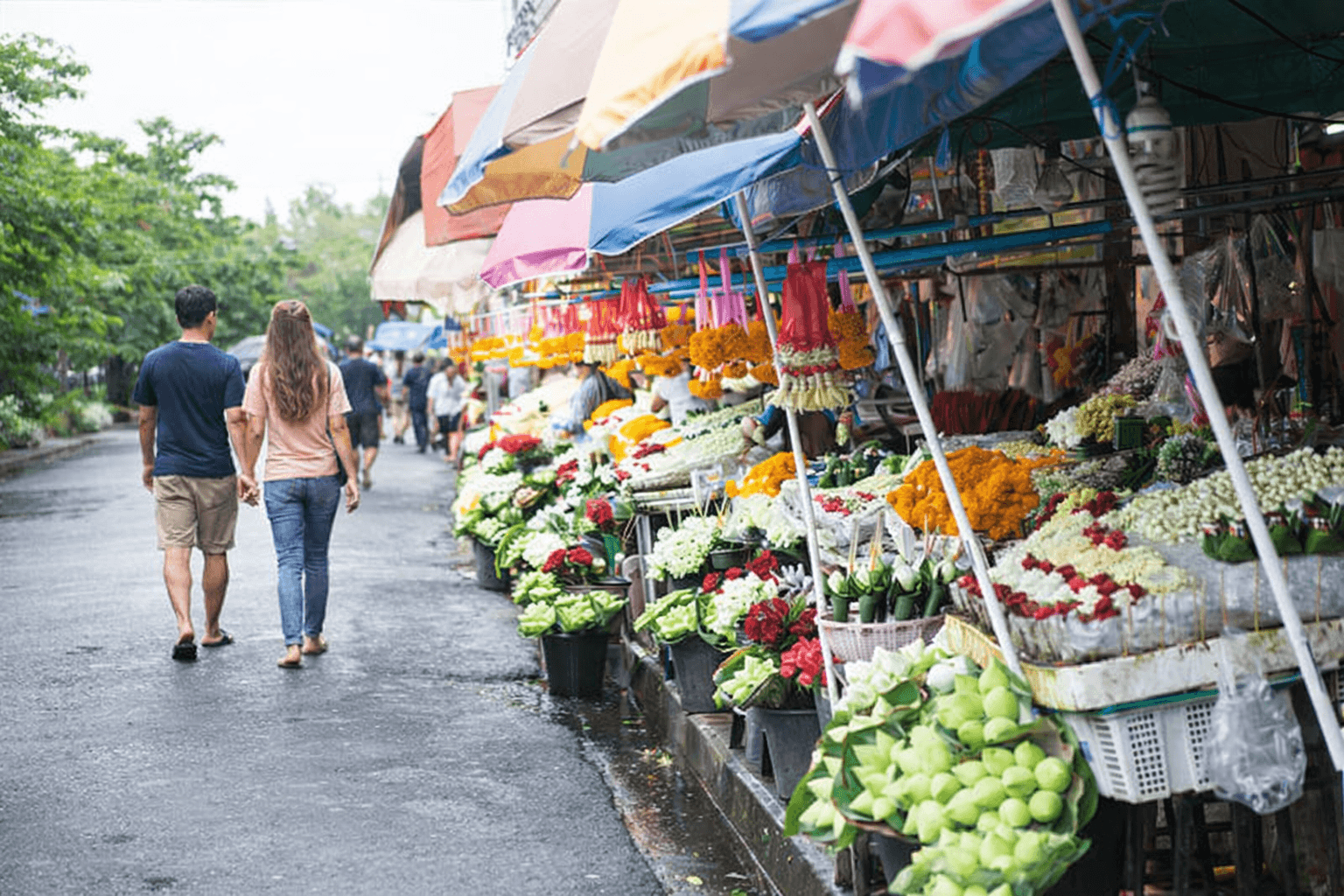
TL;DR:
This Chiang Mai markets guide explores where locals actually shop, eat, and source goods across the city. Instead of focusing on staged night markets, it highlights produce hubs, student markets, neighborhood food streets, and wholesale craft markets that power Chiang Mai’s real market ecosystem.
This Chiang Mai market guide 2026 explores the hidden authentic markets locals actually use, from early-morning produce hubs to student markets and neighborhood food streets.
If you start researching Chiang Mai markets online, you’ll quickly notice a pattern. Most articles repeat the same handful of places — Night Bazaar, Saturday Walking Street, Sunday Walking Street — as if those markets represent how things actually work in the city.
They don’t.
In this guide, we’re going a step further. Not only will we show you markets locals actually use, we’ll even take you to the wholesale hub where many vendors across Chiang Mai source their goods — from produce and ingredients to handicrafts and finished products. Much of what you see later at the famous Saturday and Sunday Walking Street markets, night markets, and even souvenir shops around the Old City begins its journey here. Once you see where many stall owners actually buy their stock, the entire market ecosystem in Chiang Mai starts to make a lot more sense — and we’ll point you to the best markets most visitors never hear about.
The well-known markets in Chiang Mai are carefully staged evening events built mainly for visitors. They’re lively, colorful, and interesting to see on one visit, but they aren’t real, where locals actually buy their vegetables, grab dinner after work, or shop for everyday things like household items
Many of these areas also have some of the best cafes in Chiang Mai nearby, making it easy to slow down after exploring the markets.
.
The legit market culture of Chiang Mai happens elsewhere — in fresh markets that open before sunrise, student markets around the university, neighborhood food streets, and wholesale markets scattered across the city. These are the places where prices are relatively low, vendors have an established relationship with their regular customers, and the atmosphere of daily life is clear to observe.
Note: Most of the markets mentioned here are open daily or several days a week, so the structure below isn’t meant to be followed like a strict itinerary. Think of it more as a way to explore different corners of Chiang Mai’s market scene while avoiding the typical tourist loop.
If you want to understand how markets actually function in this city — where locals eat, shop, and gather — these are the authentic places worth exploring.
If you’re exploring markets for what to actually eat, this connects directly to our full Chiang Mai food guide, where we break down the local dishes and spots these markets feed into across the city.
Table of Contents
The Strategic Map: Geography Over Hype
Chiang Mai Market Locations Map
Chiang Mai’s markets fall into three broad zones.
The Old City and Night Bazaar area is where most foreign visitors end up. These markets focus heavily on souvenirs, handicrafts, and street food catered towards tourists.
Around Chiang Mai University, markets cater to students. Prices are lower, the food is more varied, and the atmosphere is energetic.
Then there are the river districts and outer neighborhoods, where markets serve daily life. Fresh produce markets, wholesale markets, and community markets define life here. These places rarely appear in travel guides, but they are a massive necessity of how the city operates.
Once you understand this layout, understanding Chiang Mai’s markets becomes much easier.
The 7-Day Market Strategy
Monday: Muang Mai Market
The classic tourist starting point is the Night Bazaar. It’s lively and entertaining, but it functions more as a shopping street for visitors than an authentic market.
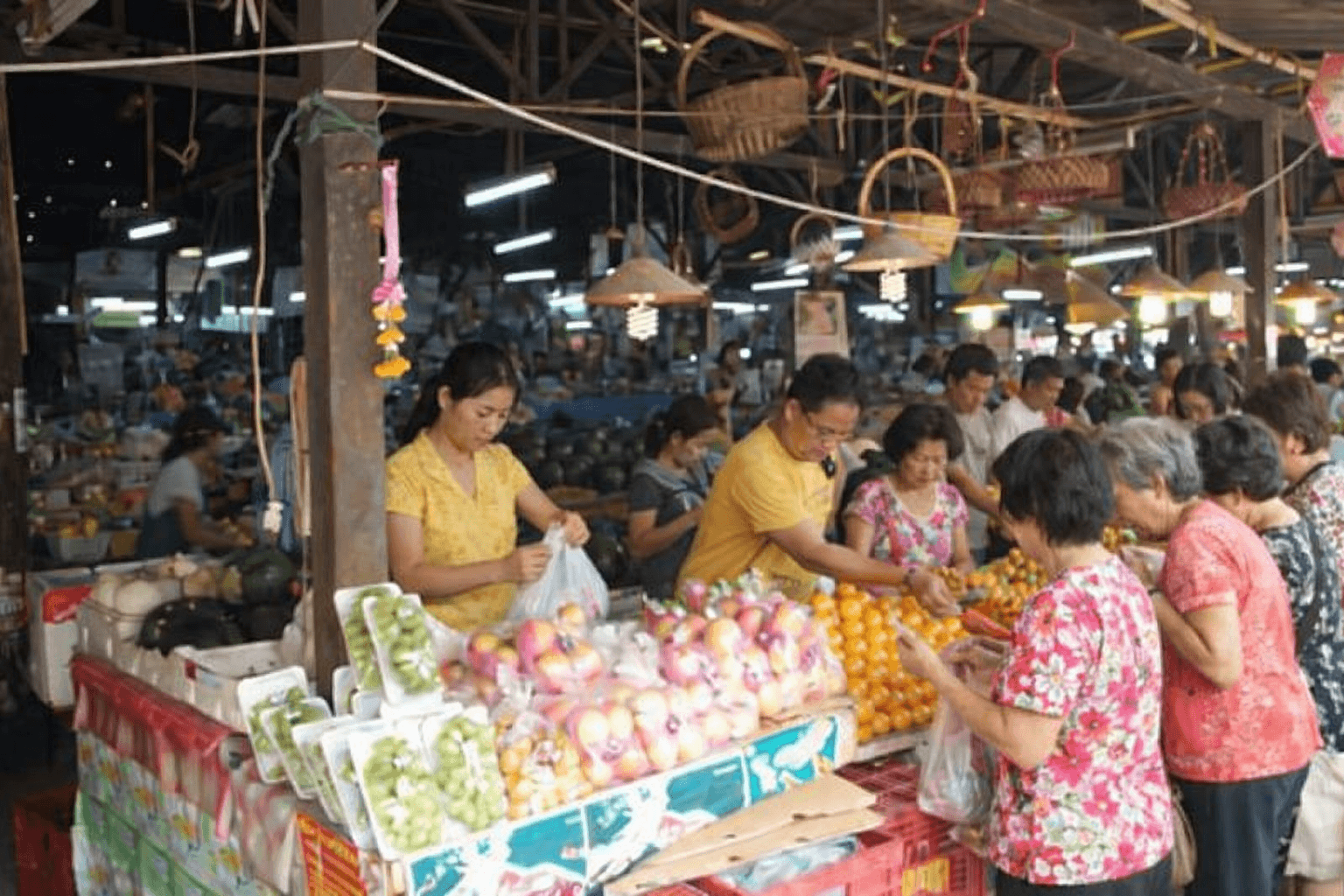
If you want to see where Chiang Mai sources its food, go to Muang Mai Market instead.
Located near Warorot Market, this is one of the main produce markets in the city. Restaurants from across Chiang Mai come here early in the morning to buy vegetables, fruit, and ingredients for the day.
It’s not polished. In fact, it can be a little chaotic. The smell of fresh produce mixed with fish and herbs sometimes reminds me of Khlong Toei Market in Bangkok (you can read more about that market in our Bangkok hidden markets guide here). But that’s part of the authenticity.
In the wee hours of the morning you’ll see vendors unloading trucks, chefs selecting ingredients, and locals buying bags of vegetables at real market prices. Stalls here sell clothing too, but not souvenir shirts or tourist designs. These are the kinds of clothes locals actually wear and need for daily life.
If you want a glimpse of how Thailand’s market system really works, this is one of the best places in Chiang Mai.
Tuesday: CMU & Malin Plaza
Many visitors never venture near Chiang Mai University, which is a mistake because some of the city’s most interesting markets are located in this area. It’s actually not far from Nimmanhaemin and the Maya Shopping Mall, yet most travelers never explore beyond those spots.
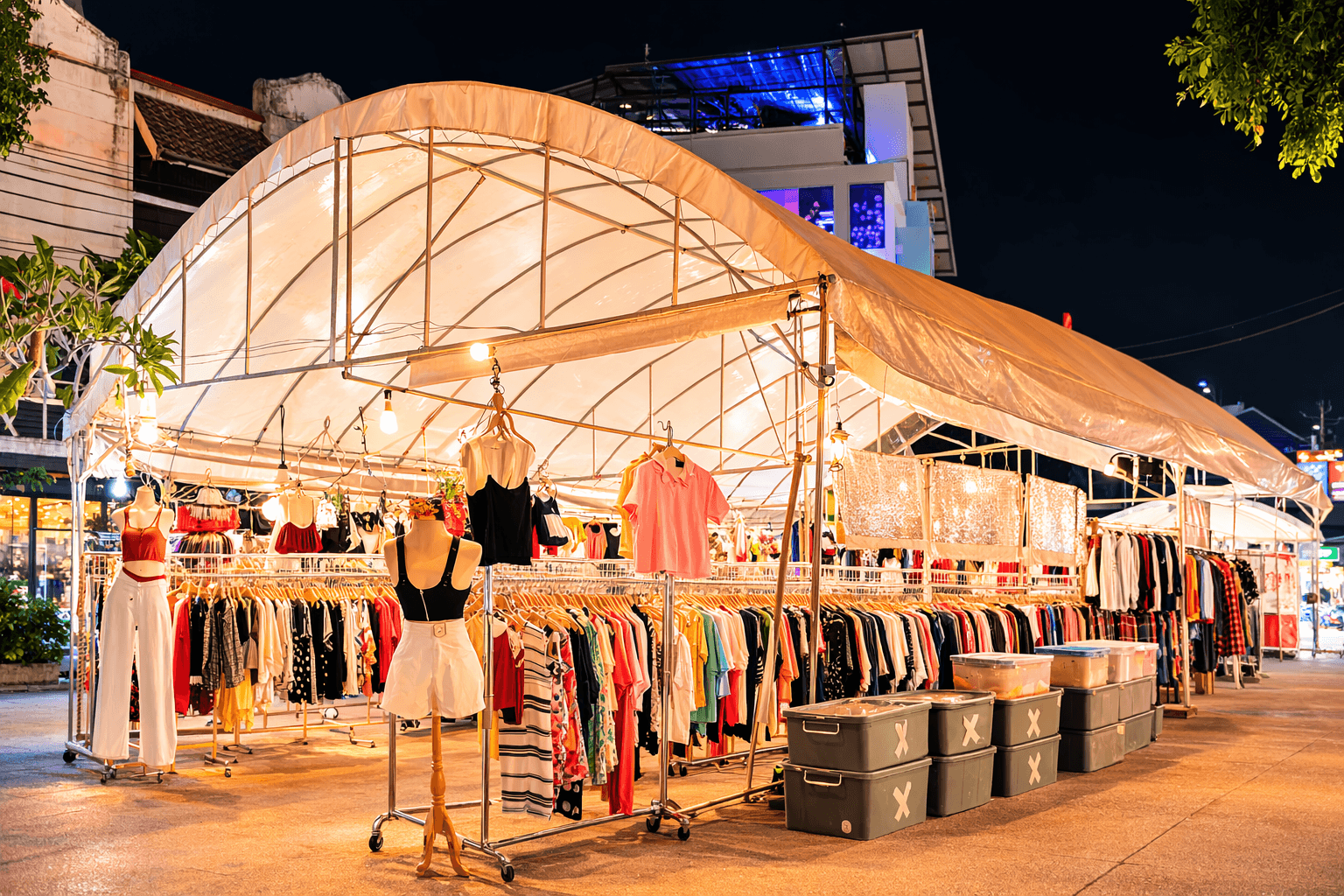
Malin Plaza, located near CMU, is one of the best student markets in Thailand.
The first thing you’ll notice is the pricing. Because the market caters to students, vendors can’t overcharge. T-shirts here often sell for around 90 baht, and they’re not the generic tourist designs you see everywhere else. Many stalls produce their own designs specifically for this market making the selection very unique.
Beyond clothing, the variety is impressive. You’ll find sunglasses shops, nail salons, small hair salons, and plenty of casual food stalls.
There’s also a large food court area where you can sit anywhere and order from different vendors. Grilled food, hot pot, noodle dishes, fried snacks — the selection is massive. Across the food court are dessert stalls with everything from Thai sweets, fruits, to iced drinks.
Cheap handbags, shoes, bags, and accessories are also everywhere, and surprisingly, the quality is decent.
For value, originality, and variety, Malin Plaza might be the best market in Chiang Mai, and potentially all of Thailand.
Wednesday: Kad Manee Market
Kad Manee was one of my personal favorites when I briefly worked in Chiang Mai.
For a few months I stayed at a hotel directly across from the market compound while working outside the city, so this place became part of my daily routine.
This place feels like a real Thai market. It’s the kind of market you’ll see in towns across northern Thailand.
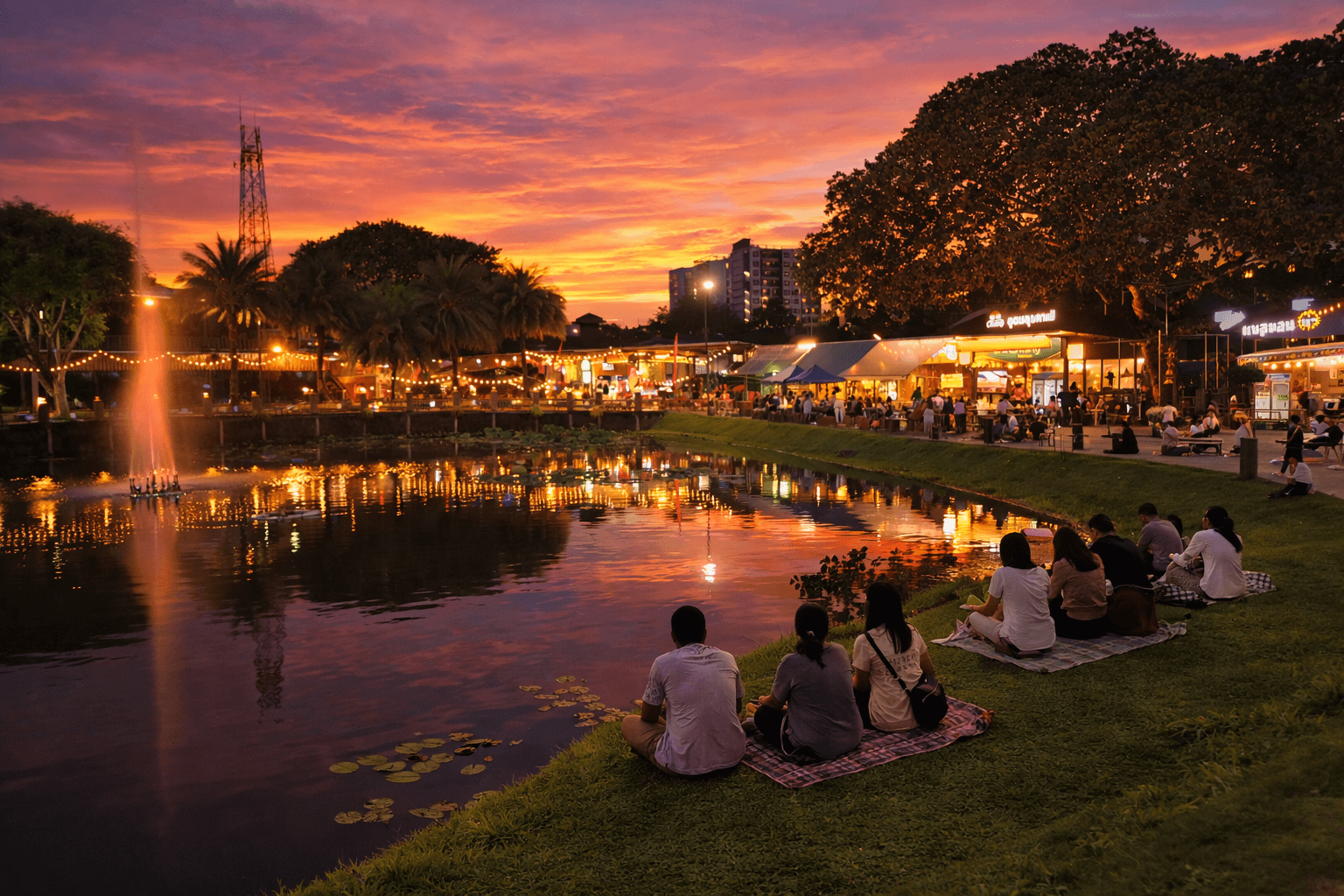
Food stalls are everywhere, fresh fruit vendors line the walkways, and the whole market has a relaxed but energetic atmosphere. There’s a large lake nearby and several beer garden areas where people gather in the evening.
At the time I was living nearby, I’d often walk across after work. There was always something happening — food cooking, people chatting, music playing. It never felt dull.
What stands out about Kad Manee is the variety. From grilled meats and noodle stalls to fruit vendors and local snacks, it feels like a small ecosystem rather than a tourist attraction.
Markets like this are how Chiang Mai actually functions for everyday people.
Thursday: Amulet Market
The Amulet Market is not for everyone, but it can be fascinating if you’re interested in Thai culture.
Many vendors specialize in Buddhist amulets, small protective charms worn or carried for luck, protection, or spiritual reasons. Some stalls sell antique pieces, while others offer newly blessed amulets from temples.
You’ll also find stalls selling religious statues, small Buddha figures, incense holders, and other spiritual objects.
Even if you’re not buying anything, the atmosphere is interesting. Serious collectors sometimes gather here to inspect amulets closely, discussing age, materials, and temple origins.
For visitors curious about Thailand’s spiritual traditions, it offers a unique perspective.
Friday: Baan Haw Muslim Market
Chiang Mai is more culturally diverse than many people expect, and Baan Haw Muslim Market is a good example.
I first came here with an Indian friend who told me he sometimes visits when he misses home because of the way they make their milk and chai.
This market feels very community-focused. Many of the vendors know each other, and there’s a strong sense that the market operates within its own network of buyers and sellers.
Food is the highlight here. Chai, milk tea, halal dishes, and samosas reflect the influence of Muslim communities that have lived in northern Thailand for generations.
You’ll also notice architectural differences in the surrounding area, reflecting the cultural identity of the neighborhood.
Visiting markets like this helps reveal a side of Chiang Mai many travelers never hear of.
Saturday: Baan Tawai Woodcarving Village
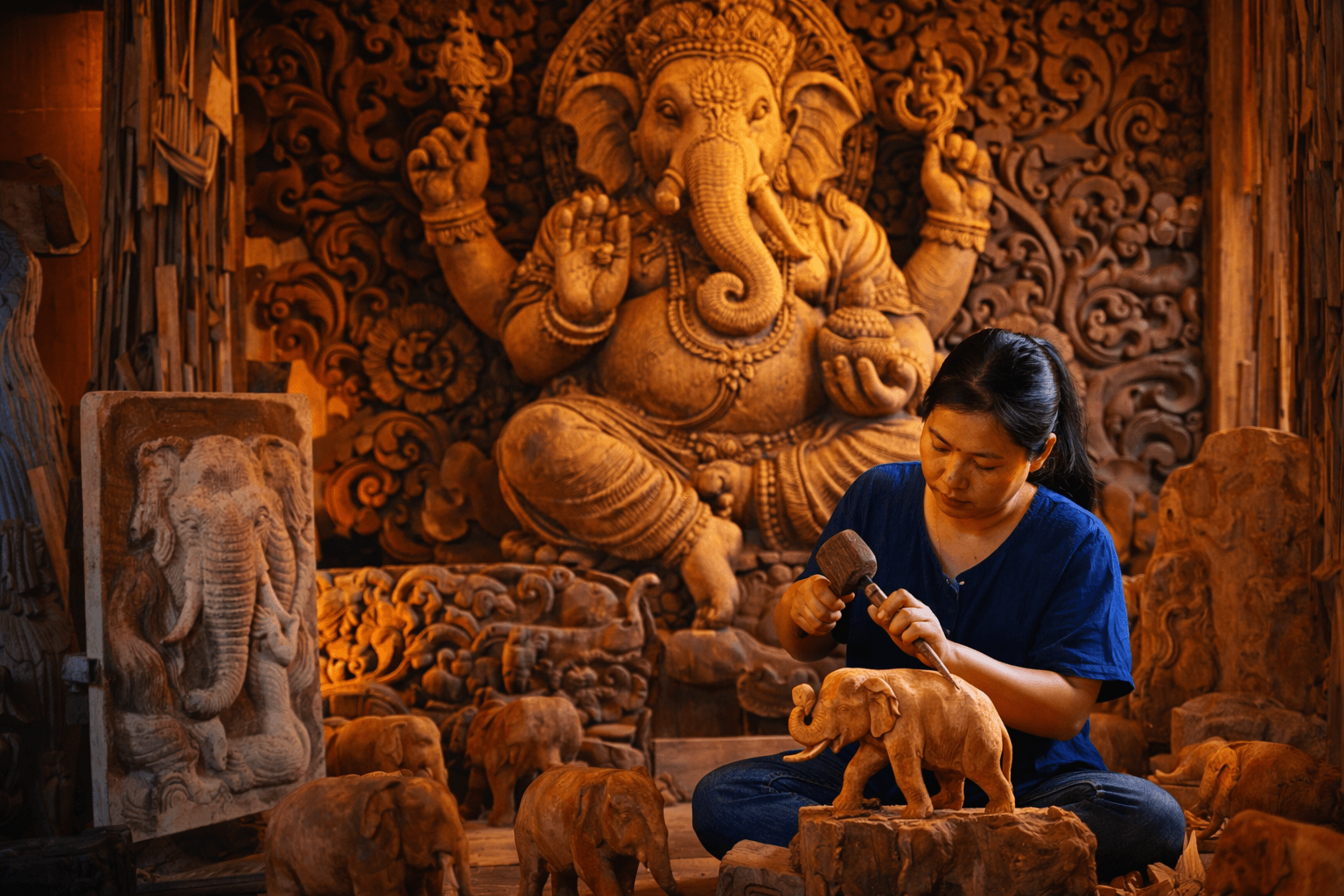
Technically outside the city center, Baan Tawai is one of the most interesting craft markets in northern Thailand.
This is a woodcarving village where many decorative items sold in markets across Thailand originate. Buddha statues, spirit houses, lanterns, carved panels, and Ganesh sculptures are all produced here.
Hotels, decorators, and wholesale buyers often come here to source pieces directly from workshops.
Walking through the village, you’ll see artisans working with wood, carving intricate patterns, and assembling decorative objects.
If this place appeared on every travel blog, it would likely become overrun with visitors. But for now it remains surprisingly low-profile.
For travelers interested in craftsmanship, design or even export, it’s one of the most unique market experiences around Chiang Mai.
Sunday: Chang Phuak Gate Market
Sunday Walking Street is one of Chiang Mai’s most famous markets. It’s worth seeing once, but it becomes extremely crowded after sunset.
If you want something that feels more grounded in everyday life, Chang Phuak Gate Market is a more authentic experience.
This open-air market is busy with street food vendors and small stalls selling all kinds of goods.
One unusual feature is the used electronics section, where vendors sell second-hand phones, laptops, and gadgets. It’s surprisingly active and reasonably priced.
The food stalls serve grilled meats, noodle dishes, and classic Thai street snacks.
Many vendors here don’t speak much English, which is actually a good sign that the market is still serving locals. Having offline Google Translate can help with communication.
It’s busy, energetic, and very much part of daily Chiang Mai life.
Culinary Deep Dive: Beyond the Basics
Markets are also one of the best places to experience northern Thai food.
One interesting dish worth trying is Sai Oua, a herbal sausage made with pork, lemongrass, kaffir lime leaves, and chili. It’s grilled over charcoal and sliced into bite-sized pieces. The fragrance alone tells you when you’ve found a good stall.
Another regional specialty is Khao Soi Noi, a lesser-known Shan-style noodle dish.
Then there’s Khanom Krok, small coconut pancakes cooked in cast-iron pans. The outside is slightly crisp while the inside stays soft and creamy.
Rules of Engagement: Market Etiquette
Markets in Chiang Mai operate on a few simple principles.
- Bring your own tote bag where possible.
- Respect the 6 PM national anthem when it plays.
- Bargaining is normal for souvenirs but unnecessary at food markets.
Conclusion
Chiang Mai has no shortage of markets. The challenge isn’t finding the real ones — it’s knowing which ones reflect the genuine heartbeat of the city.
The famous markets around the Old City are of course still very entertaining, but they represent only one small portion of Chiang Mai’s market culture.
The rest of it unfolds in student markets, fresh produce markets, neighborhood food streets, and wholesale markets scattered throughout the city.
Travelers tend to shop. Explorers tend to understand how places actually work.
We’ve spent years filtering through Chiang Mai’s markets to understand where locals really go and how the city functions beyond the obvious attractions.
If you’d like help navigating it all, we can arrange private local guides and drivers who’ll pick you up directly from your hotel so you can explore these places with someone who understands the city and its markets inside out.
FAQ (Chiang Mai Market Guide 2026)
What are the most authentic markets in Chiang Mai?
Some of the most authentic markets in Chiang Mai are the places locals actually use in everyday life, such as Muang Mai Market for produce, Malin Plaza for student shopping and food, Kad Manee Market for neighborhood energy, and Baan Haw Muslim Market for a more community-focused food scene.
Are Chiang Mai night markets worth visiting?
Yes, but with the right expectations. Famous markets like the Night Bazaar and Sunday Walking Street are entertaining and worth seeing once, but they are more visitor-focused than the produce markets, student markets, and neighborhood markets that locals rely on regularly.
Where do locals shop in Chiang Mai?
Locals in Chiang Mai often shop at produce markets like Muang Mai, student-oriented markets around Chiang Mai University, neighborhood markets such as Kad Manee, and community markets scattered across the city. These places tend to be more practical, lower-priced, and rooted in daily life.
What is the best market in Chiang Mai for cheap food and shopping?
Malin Plaza is one of the best-value markets in Chiang Mai for cheap food, clothing, accessories, and everyday shopping. Because it serves students near Chiang Mai University, prices stay competitive and the variety is much broader than what you usually find at tourist markets.
What food should you try at Chiang Mai markets?
Good things to look for at Chiang Mai markets include Sai Oua, Khao Soi Noi, and Khanom Krok. These kinds of dishes often signal that you are in a market serving real local demand rather than just a tourist crowd.
Which Chiang Mai market is best for crafts and wholesale goods?
Baan Tawai Woodcarving Village is one of the most interesting places near Chiang Mai for crafts, carved woodwork, statues, lanterns, and decorative goods. It gives a much better look at where many finished products originate before they appear in more tourist-facing markets and souvenir shops.

About the author
Written by Thaewan, Thai-born founder of Off Path Thailand. My life changed after renting a scooter in Chiang Mai nearly a decade ago. I still remember the moment my jaw dropped at the natural beauty around me — riding into the distance with mountains on both sides felt more alive than any PS4 game I had ever played. Since that day, I’ve been hooked on this kind of travel — because there’s so much wonder to discover in Thailand’s quiet, hidden places. I’ve spent close to ten years exploring these off the beaten path corners and helping others experience parts of the country that feel far more meaningful than the usual tourist stops. About the founder
If you want to explore more peaceful destinations like this, start with our Northern Thailand hidden gems guide and see how Chiang Dao fits into a slower, more authentic journey through the region.