
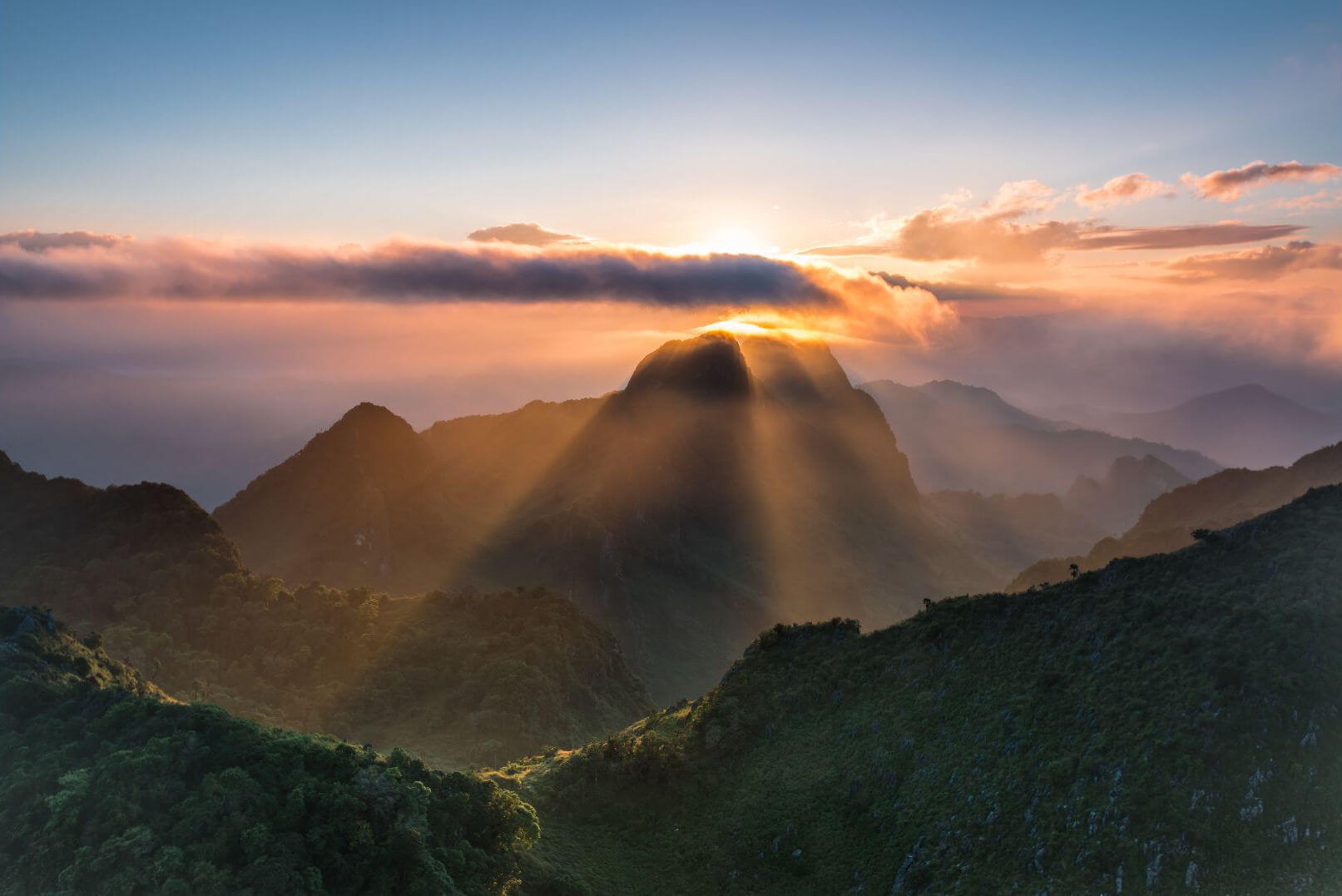
TL;DR: Chiang Dao Guide 2026 — Chiang Dao is one of Northern Thailand’s most peaceful destinations, located about 70 km north of Chiang Mai beneath the dramatic limestone cliffs of Doi Chiang Dao. Expect forest temples, caves, hot springs, quiet countryside roads, and a slower pace of travel that rewards exploration.
- Map: Chiang Dao Explorer Map
- Introduction: The Vertical Landscape
- When to Visit Chiang Dao
- The Tuesday Morning Market
- Riding the Valley
- Stargazing: The City of Stars
- Where to Stay in Chiang Dao
- Why Chiang Dao Feels Different
- Conclusion: The Northern Vibe
- What are the most authentic markets in Chiang Mai?
- Are Chiang Mai night markets worth visiting?
- Where do locals shop in Chiang Mai?
- What is the best market in Chiang Mai for cheap food and shopping?
- What food should you try at Chiang Mai markets?
- Which Chiang Mai market is best for crafts and wholesale goods?
Map: Chiang Dao Explorer Map
Introduction: The Vertical Landscape
I didn’t travel to Chiang Mai expecting to discover one of my favorite places in Thailand.
At the time I simply needed a change from Bangkok. The city had started to feel intense and crowded, and I wanted somewhere quieter where I could work remotely for a few months. Chiang Mai seemed like the obvious solution. It had reliable infrastructure, good cafés, coworking spaces, and a familiar environment for remote workers.
I was already familiar with the city from previous visits. A couple of years earlier I had attended a coworking conference there, and in January of the year I eventually discovered Chiang Dao, I returned again for a digital nomad conference. My impression of Chiang Mai was largely shaped by that world: laptops in cafés, flexible work schedules, and a social routine built around the remote work community.
At that point in my life I had always considered myself more of a beach traveler anyway — most of my trips in Thailand had revolved around the southern islands or the east coast. Chiang Mai was simply meant to be a comfortable base for a few months of remote work.
I had no idea that Northern Thailand would quietly end up reshaping that preference entirely.
If you’re starting in the city before heading out to places like Chiang Dao, this Chiang Mai food guide breaks down what to eat and where locals actually go.
So when I came back again to spend a few months working remotely, I expected more of the same.
What I didn’t expect was how dramatically the surrounding nature would reshape that experience, and ultimately change the direction of my life.
One day I rented a scooter.
It wasn’t part of any grand plan. I rented a scooter mostly out of boredom and curiosity, just to see what it was like to have a scooter for a few days in a big city. That small decision ended up defining the entire trip. The rental quickly stretched into four months, and before long I was spending large parts of my days riding through the countryside outside Chiang Mai.
It really became like a new toy. I’d wake up in the morning and the only thing on my mind was getting back on the scooter. I kept riding further and further beyond Chiang Mai — through rainy countryside roads, small villages, and green valleys I hadn’t even realized existed. The more I explored, the more I realized how little of Northern Thailand I had actually seen during my earlier visits.
That experience changed my relationship with travel forever.
When I eventually returned home from that trip, I sold my PS4. After months of exploring real landscapes on a motorbike, I couldn’t unsee how empty video games felt in comparison. Those rides had brought me to life in a way that sitting in front of a screen never could. Multiplayer games that once felt exciting suddenly seemed like the opposite — something that dulled you, even left me feeling strangely anxious.
During those months of riding around Chiang Mai, one destination kept coming up in conversations.
Chiang Dao.
Friends and locals described it with a certain reverence. They talked about the lush valley, the peaceful atmosphere, and the towering limestone mountain that dominates the entire area.
Eventually curiosity got the better of me.
Chiang Dao sits roughly 70 kilometers north of Chiang Mai, beneath one of Thailand’s most beautiful geological formations: Doi Chiang Dao aka Doi Luang. The mountain rises from the valley floor, pale limestone cliffs bursting almost vertically into the sky. Many travelers discover Chiang Dao while exploring Chiang Mai’s hidden gems, making it one of the easiest mountain escapes from the city.
For a complete overview of what to see and how the area is structured, see the Chiang Dao destination guide.
Unlike the countless green mountains typical to Northern Thailand, Doi Chiang Dao feels monumental. Especially when the limestone face catches the morning light, it glows gold, and shines above the surrounding farmland.
Roads wind through orchards and rice fields. Small villages sit scattered beneath the mountain. Mornings often begin with mist hovering around the cliffs, while evenings slowly reveal the rock face as the sun sets behind the hills.
In recent years, Chiang Dao has quietly become a key destination in regards to slow travel in Northern Thailand. Travelers looking to move beyond crowded tourist circuits are beginning to appreciate places like this — destinations where the landscape itself is the experience.
For me, Chiang Dao became far more than a short side trip.
It became my favorite place in all of Thailand.
If you want to experience Chiang Dao as part of a slower, well-paced journey, this Chiang Dao itinerary shows how to include it naturally without rushing through it.
Chiang Mai to Chiang Dao Logistics
My first visit to Chiang Dao happened by accident.
At the time I had rented an apartment in Chiang Mai, but there was a two-day booking gap in the middle of my stay. Instead of finding another place, I decided to use the gap as an excuse to explore somewhere new.
As Chiang Dao had already been recommended to me several times, the choice was easy.
I took the public bus north from Chiang Mai’s Arcade Bus Station, which is still one of the simplest ways to travel between Chiang Mai and Chiang Dao. The route follows Highway 107, gradually leaving the city behind as smaller towns and agricultural valleys begin to appear along the road.
The trip takes roughly 90 minutes.
Eventually the limestone peaks begin appearing on the horizon.
Once I arrived, I rented a scooter locally.
Having your own wheels in Chiang Dao changes everything. The valley is spread across quiet curvy roads, rural villages, hot springs, and forest areas that are near impossible to explore without some form of transport.
For that first visit I stayed in an Airbnb overlooking Doi Chiang Dao.
The host was incredibly helpful, sharing local tips and showing me a few places around the valley. The house itself had a direct view of the mountain.
Even during that short visit, it was obvious that Chiang Dao was something special.
If you are planning a visit today, one small tip matters more than most people realize: arrive in mid-afternoon.
That timing allows you to see the limestone cliffs during the valley’s golden hour, when the rock face catches the soft evening light.
It’s the moment when the mountain truly reveals its scale.
If you’re already planning a trip through Northern Thailand, our Northern Thailand hidden gems guide highlights several destinations that pair well with Chiang Dao.
When to Visit Chiang Dao
One of the advantages of Chiang Dao compared with many destinations in Thailand is that it remains pleasant for much of the year.
The most comfortable season runs from November to February, when Northern Thailand experiences cooler temperatures and clearer skies. During these months, mornings in the Chiang Dao valley often begin with light mist drifting around the base of the limestone cliffs, while evenings can become surprisingly cool compared with Bangkok or the South.
March and April bring warmer temperatures across Northern Thailand. This period also overlaps with the burning season, when agricultural fires can affect air quality throughout the region.
From May through October, the rainy season transforms the valley into an intensely green landscape. Rice fields fill with water, forests become denser, and waterfalls in the national park area run stronger.
For travelers interested in slow travel in Northern Thailand, the rainy season can actually be one of the most beautiful times to visit. The countryside becomes lush and quiet, and visitor numbers remain relatively low (which also drives the price down).
If you want a simple structure for exploring the area, this Chiang Dao itinerary outlines a relaxed route through caves, viewpoints, local cafés, and quiet mountain roads.
Wat Tham Pha Plong: The Architecture of Stillness
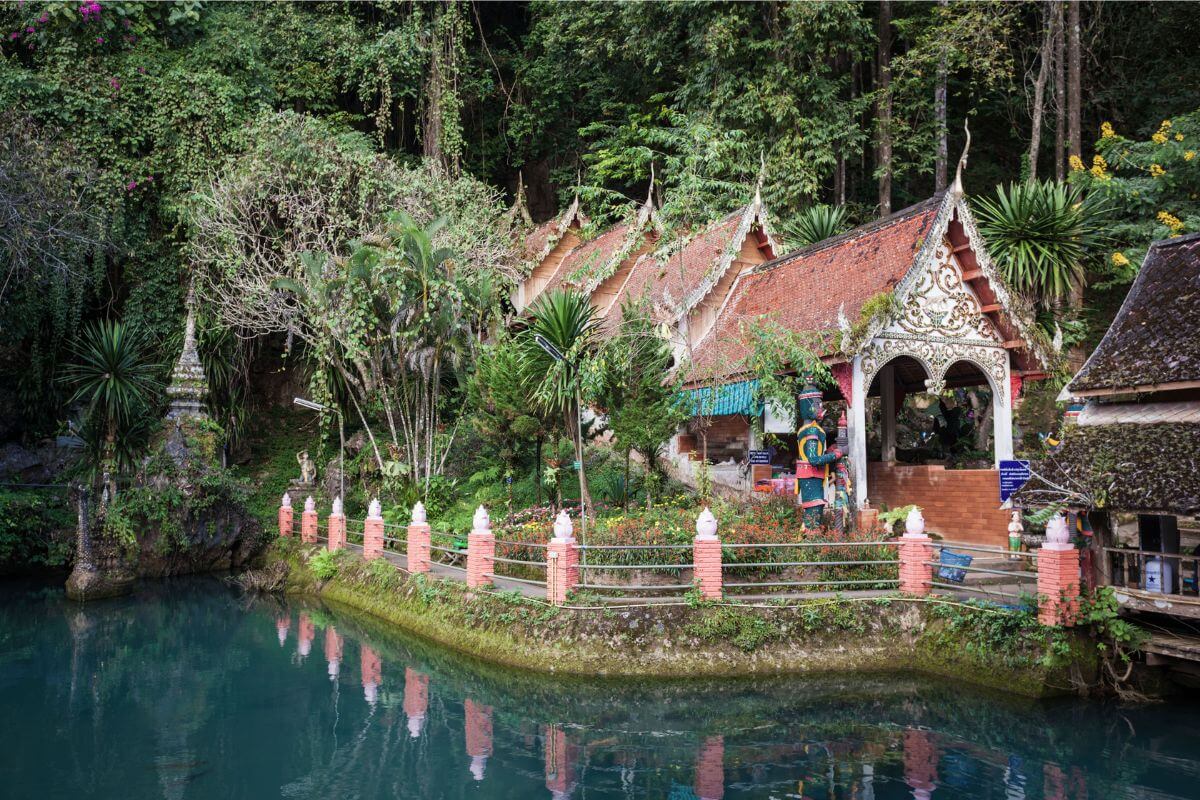
Among the most memorable things to do in Chiang Dao is visiting Wat Tham Pha Plong.
This temple sits on a forested hillside and requires climbing roughly 500 steps through dense tree cover to reach it. Along the staircase, small signs display Buddhist teachings and reflections that encourage visitors to slow down and pay attention.
The climb itself is an experience.
Unlike many temples that feel built for visitors, Wat Tham Pha Plong is simply quiet. The staircase climbs through thick forest, and as you make your way up, the noise of the valley gradually disappears.
By the time you reach the temple at the top, everything feels immediately more peaceful.
Wat Tham Pha Plong is closely associated with Luang Pu Sim Phutthacaro, a revered meditation monk who helped establish the temple as a place dedicated to spiritual practice rather than spectacle.
That intention still defines the site today.
There are no displays, no elaborate decorations competing for attention. The architecture feels restrained, almost minimalist. Everything about the temple encourages the stillness of the mind.
Chiang Dao Cave: The Mountain’s Interior
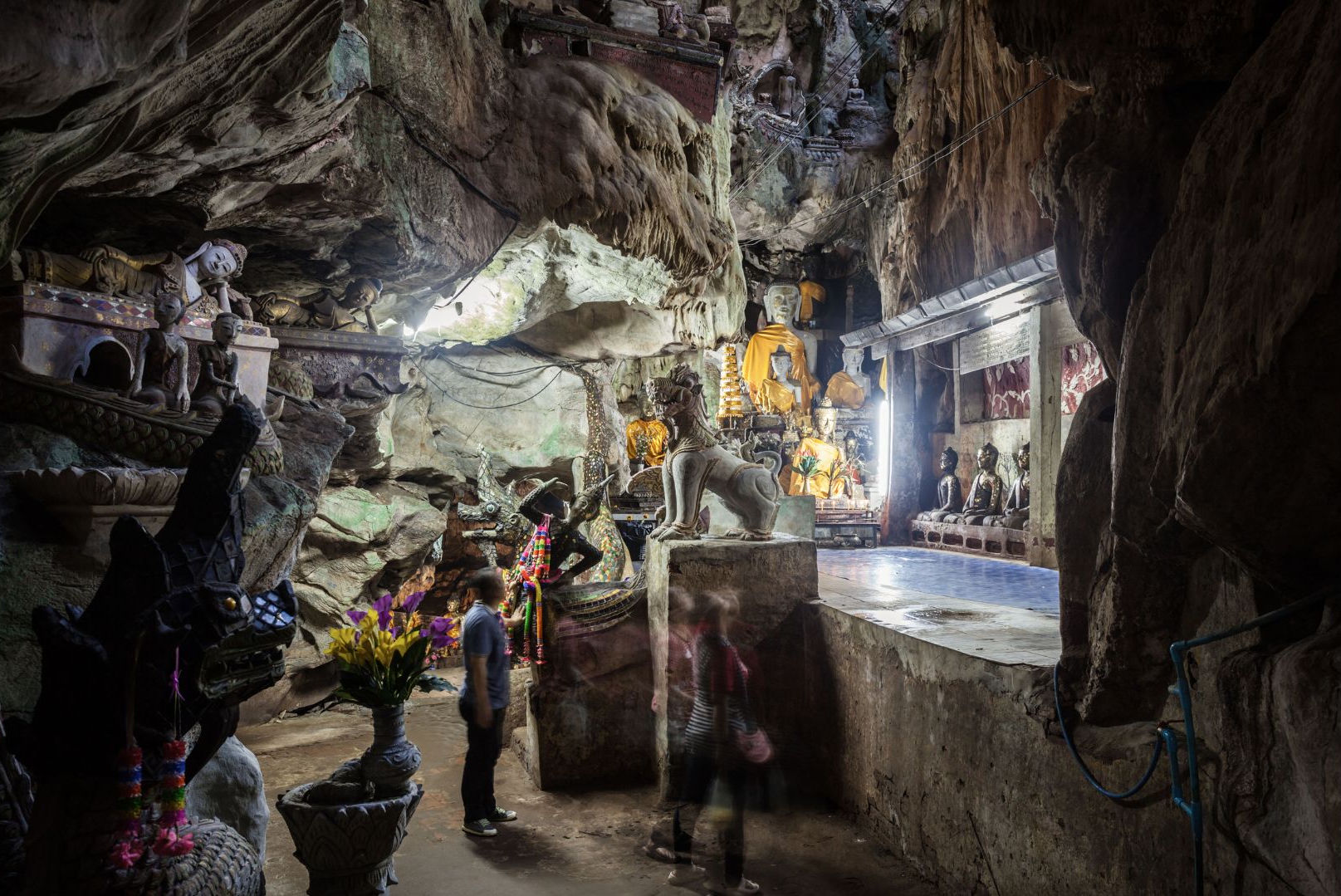
Another place that deserves attention in any Chiang Dao guide is Chiang Dao Cave (Tham Chiang Dao).
Located at the base of Doi Chiang Dao, this cave system runs deep into the limestone mountain itself. For centuries it has been used as both a religious site and a place of quiet meditation. Inside, a network of chambers opens gradually into the mountain, many illuminated with shrines, others narrow and dark where visitors rely on local guides carrying lanterns.
Near the entrance, the cave is an underground temple. Buddha statues sit between stalactites and stalagmites that have slowly formed over thousands of years. Small shrines are placed naturally among the rock formations, giving the space a calm, devotional atmosphere rather than the feeling of a typical tourist attraction.
The deeper sections of the cave require a guide, and many visitors choose to explore those darker passages. But even the main chambers near the entrance are enough to understand why this place has held spiritual importance for so long.
During my visit, I ended up finding a quiet spot inside the cave where I sat down to meditate for a while.
After I finished and stood up to leave, something unexpected happened.
A few people who had watched from nearby quietly moved over and sat down in the same spot to meditate themselves.
It was one of those small moments that perfectly captured the atmosphere of what Chiang Dao and the caves truly represents. The cave isn’t staged or performative. Instead, it naturally encourages people to stop and become more present.
That connection between landscape and spirituality is something you notice repeatedly around Chiang Dao.
Temples, caves, meditation centers, and forest monasteries are scattered across the slopes of Doi Chiang Dao. The mountain itself has long been considered sacred, and many of these places were built specifically to take advantage of the quiet environment surrounding it.
Chiang Dao Cave simply happens to be the most accessible example of that relationship between the mountain and the spiritual life that has been attracted to it.
Riding Beyond Chiang Dao
As mentioned earlier, my first visit to Chiang Dao lasted only a couple of nights.
During that time I explored only a little — riding around lakes, visiting a couple of hot springs, and drifting along small valley roads without much of a plan. I spent a good amount of time simply chilling in the Airbnb house as well, looking out at the mountain.
The experience felt unfinished in the best possible way.
About a month later, as I was preparing to leave Chiang Mai and return to Bangkok, this time I rode my scooter north to visit Chiang Dao again.
This time the trip became something entirely different.
Without time pressure and with my own scooter, I explored much further into the surrounding mountains. One ride took me deep into the northern hills toward Ban Arunothai, a small Chinese-Yunnanese village near the Myanmar border.
The journey itself was long and an adventure. The roads gradually became more off grid, winding through forests and small settlements scattered along the mountains.
When I finally reached the village, the atmosphere immediately felt different from the rest of Northern Thailand.
Many of the villagers spoke Chinese rather than Thai. They were second- or third-generation families living near the border region. Small shops carried products that looked unfamiliar compared with stores in Chiang Mai or Bangkok as they were probably illegally imported from China.
At one small shop a woman spoke broken Thai and seemed genuinely surprised that I had ridden all the way there from Chiang Dao town on a scooter.
Another hour north and I likely would have reached Myanmar.
Experiences like that reveal something fascinating about Northern Thailand and its provinces — the cultural layering that still exists along the edges of the country.
Chiang Dao Hot Springs
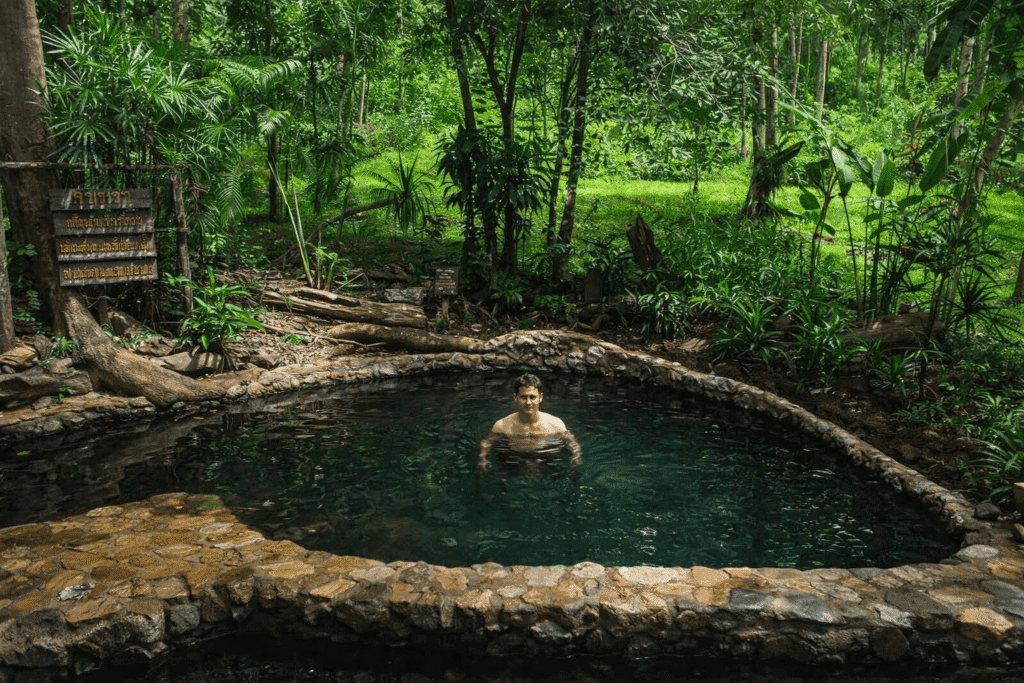
One of my favorite hot springs in all of Thailand so far is Chiang Dao Hot Springs, located in the quiet valley of Chiang Dao in Chiang Mai Province. The springs sit within Pha Daeng National Park (formerly Chiang Dao National Park), a protected area of more than 1,000 square kilometers made up of limestone mountains, bamboo forests, and mist-covered peaks that rise sharply from the surrounding landscape.
The park itself is known for its biodiversity. Wildlife such as gibbons, barking deer, and hundreds of bird species live in these forests, and several hill tribe communities, including Lisu and Karen villages, are scattered throughout the mountains. At the center of it all stands Doi Chiang Dao, Thailand’s third-highest peak at 2,175 meters, which dominates the skyline and gives the entire valley its dramatic character.
The hot springs themselves are fed by natural geothermal activity beneath the region’s limestone mountains. Locals have used the mineral-rich waters for generations, believing the sulfur content helps soothe aches and improve skin health. Over time the area gained a small Japanese influence as travelers introduced elements of onsen-style bathing, which you can still see in the simple wooden signage and garden-like bathing areas.
Despite these additions, the hot springs remain relatively understated compared with many developed spa resorts in Thailand.
The grounds are beautifully maintained and feel almost like a quiet botanical garden. Shaded paths wind through tropical plants and old trees, while mineral pools sit among natural rock formations and small streams of cool water. The pools vary in temperature, from comfortably warm to extremely hot near the source, where the water can reach around 70–80°C.
What I appreciated most was the atmosphere.
Unlike some hot spring destinations that feel heavily commercialized, Chiang Dao Hot Springs still feels calm and local. Most visitors are either nearby residents or travelers who have taken the time to explore the valley properly.
I enjoyed the place so much that I returned almost every day during my stay in Chiang Dao. Many mornings started there, soaking in the warm water while the valley was still quiet.
The entrance fee is modest — around 100 baht for the garden-style bathing area — while simpler basins nearby are free to use. The ticket also gives access to nearby spots within the national park, including Sri Sangwan Waterfall, a multi-tiered cascade just a short walk away.
Because of this, the area feels less like a single attraction and more like a small natural complex. You can move easily between the hot springs, forest paths, waterfalls, and nearby caves, all within the same quiet part of the valley.
For me, it became one of the places that defined my time in Chiang Dao.
The Tuesday Morning Market
One of the simplest ways to understand Chiang Dao is to visit the local Tuesday morning market.
Markets in Northern Thailand often reveal the cultural mix of the surrounding region, and Chiang Dao is no exception. The valley sits near several ethnic communities, including Tai Yai (Shan) groups whose food and crafts appear regularly in local markets.
Walking through the stalls, you’ll see ingredients and dishes that differ slightly from those commonly found in central Thailand.
Fresh herbs, northern curries, handmade snacks, and locally grown vegetables dominate the stalls. Many vendors come from nearby villages, bringing produce directly from their farms.
Unlike markets in major tourist centers, this one still functions primarily for the local community.
That authenticity makes it one of the most interesting everyday experiences in Chiang Dao.
Riding the Valley

Most of my time in Chiang Dao was spent doing something beautifully simple: riding.
I never followed a strict map or planned itinerary. Instead, I rented a scooter and followed whichever road looked interesting—quiet lanes winding between rice paddies, forest roads shaded by bamboo and teak, and narrow rural tracks that looped slowly around the valley floor. Most of these roads were nearly empty, aside from the occasional farmer, schoolkids on bicycles, or a wandering water buffalo crossing the road.
The landscape changed constantly as I rode. In the wet season, the rice fields reflected the sky like mirrors; later in the year they turned golden as harvest approached. Small Lisu and Karen villages appeared between fields, with wooden houses raised on stilts and flowering plants spilling into the yards.
And in almost every direction, Doi Luang Chiang Dao dominated the horizon.
At 2,175 meters, it’s Thailand’s third-highest mountain, and it seems to appear from every angle in the valley. Sometimes it stood sharp and clear against the sky, sometimes softened by morning mist, and in the late afternoon the limestone cliffs would catch the warm light of the setting sun.
Those rides became the highlight of my days. I would stop whenever something caught my attention—a quiet viewpoint, a small stream beside the road, or simply a stretch of countryside that felt particularly peaceful.
In a region known for famous motorcycle routes like the Mae Hong Son Loop, Chiang Dao offered something different.
There were no crowds and no pressure to keep moving.
Most of the joy came from simply riding slowly through the valley and seeing where the road would lead.
Those quiet rides remain some of my strongest memories of Northern Thailand.
Stargazing: The City of Stars
Chiang Dao is sometimes translated as “City of Stars.”
At night the name makes sense.
Compared with Chiang Mai, the valley has very little light pollution. Once darkness settles in, the sky becomes noticeably clearer and deeper.
You don’t need equipment or planning to appreciate it. Simply stepping outside and looking up is often enough.
Where to Stay in Chiang Dao
Accommodation choices in Chiang Dao generally fall into two categories.
For travelers looking for comfort with easy access to the valley, places like The Nest or Azalea Village are well-known options. For those who prefer something more immersive, eco-focused stays such as Chiang Dao Roundhouses or Mae Mae Treehouse place visitors much closer to the surrounding nature.
My own stay in a mountain-view Airbnb turned out to be perfect. In Chiang Dao especially, where you stay can shape the entire experience. Sometimes the best choice is simply a quiet place with a clear view of the mountain.
If you’re unsure where to base yourself, we can also help design a stay that fits your travel style. Whether that means a peaceful farmhouse surrounded by rice fields, a comfortable mountain resort, or a place close to the valley’s hot springs, we can recommend options that prioritize both comfort and sustainability. When we help plan trips in Northern Thailand, we try to support smaller, locally run properties and experiences that respect the natural environment around Chiang Dao.
If you’d like help planning your stay, we can also arrange accommodation, local transport, and a trusted driver so you can explore the valley and surrounding mountains at your own pace.
Why Chiang Dao Feels Different
After spending time in Chiang Dao, it becomes clear that the place operates at a different pace from many destinations in Thailand.
Cities like Chiang Mai offer endless activity and convenience. Islands offer beaches and nightlife. Historical cities offer temples and heritage sites.
Chiang Dao offers something quieter.
Morning coffee becomes a view of the cliffs. Afternoon rides drift through farmland and mountain roads. Evenings settle quietly as the valley cools and the sky begins to fill with stars.
For travelers accustomed to fast itineraries, this can feel unusual at first. But for those who stay long enough, it becomes the defining charm of Chiang Dao.
It’s the kind of place that works just as well for a quiet romantic escape, a few days of slow exploration through the mountains, or simply a place to rest and recharge in nature.
In fact, after that first visit, I returned to Chiang Mai several times in the following years — but I didn’t always return to Chiang Dao right away. On one trip during the burning season, I deliberately skipped it. I wanted to come back when the valley felt the way I remembered it: clear skies, quiet roads, and the mountain rising sharply above the fields.
It might sound strange to avoid a place you love, but in a way it made returning even more special.
Some places are like that.
They aren’t just destinations you pass through once — they become places you return to when the moment feels right.
Conclusion: The Northern Vibe
I’ve traveled widely across Thailand — from the islands to historical cities and northern provinces.
Places like Koh Phangan, Koh Samui, Koh Chang, Chiang Rai, Ayutthaya, and Sukhothai all offer memorable experiences.
But Chiang Dao remains my favorite place in the country.
That might sound surprising, especially since I genuinely love Thailand’s beaches.
Yet Chiang Dao offers something rare: a destination where the landscape itself encourages you to breathe.
It isn’t about rushing between attractions.
It’s about appreciating quiet valleys, soaking in hot springs, watching the limestone mountain change color in the evening light, and realizing that some places are simply meant to be experienced at their own pace.
Chiang Dao is one of those places.
FAQ (Chiang Mai Market Guide 2026)
What are the most authentic markets in Chiang Mai?
Some of the most authentic markets in Chiang Mai are the places locals actually use in everyday life, such as Muang Mai Market for produce, Malin Plaza for student shopping and food, Kad Manee Market for neighborhood energy, and Baan Haw Muslim Market for a more community-focused food scene.
Are Chiang Mai night markets worth visiting?
Yes, but with the right expectations. Famous markets like the Night Bazaar and Sunday Walking Street are entertaining and worth seeing once, but they are more visitor-focused than the produce markets, student markets, and neighborhood markets that locals rely on regularly.
Where do locals shop in Chiang Mai?
Locals in Chiang Mai often shop at produce markets like Muang Mai, student-oriented markets around Chiang Mai University, neighborhood markets such as Kad Manee, and community markets scattered across the city. These places tend to be more practical, lower-priced, and rooted in daily life.
What is the best market in Chiang Mai for cheap food and shopping?
Malin Plaza is one of the best-value markets in Chiang Mai for cheap food, clothing, accessories, and everyday shopping. Because it serves students near Chiang Mai University, prices stay competitive and the variety is much broader than what you usually find at tourist markets.
What food should you try at Chiang Mai markets?
Good things to look for at Chiang Mai markets include Sai Oua, Khao Soi Noi, and Khanom Krok. These kinds of dishes often signal that you are in a market serving real local demand rather than just a tourist crowd.
Which Chiang Mai market is best for crafts and wholesale goods?
Baan Tawai Woodcarving Village is one of the most interesting places near Chiang Mai for crafts, carved woodwork, statues, lanterns, and decorative goods. It gives a much better look at where many finished products originate before they appear in more tourist-facing markets and souvenir shops.

About the author
Written by Thaewan, Thai-born founder of Off Path Thailand. My life changed after renting a scooter in Chiang Mai nearly a decade ago. I still remember the moment my jaw dropped at the natural beauty around me — riding into the distance with mountains on both sides felt more alive than any PS4 game I had ever played. Since that day, I’ve been hooked on this kind of travel — because there’s so much wonder to discover in Thailand’s quiet, hidden places. I’ve spent close to ten years exploring these off the beaten path corners and helping others experience parts of the country that feel far more meaningful than the usual tourist stops. About the founder
If you want to explore more peaceful destinations like this, start with our Northern Thailand hidden gems guide and see how Chiang Dao fits into a slower, more authentic journey through the region.