
Last Updated: September 17, 2026
The Ultimate Chiang Mai 4 Day Itinerary: A Local’s Guide
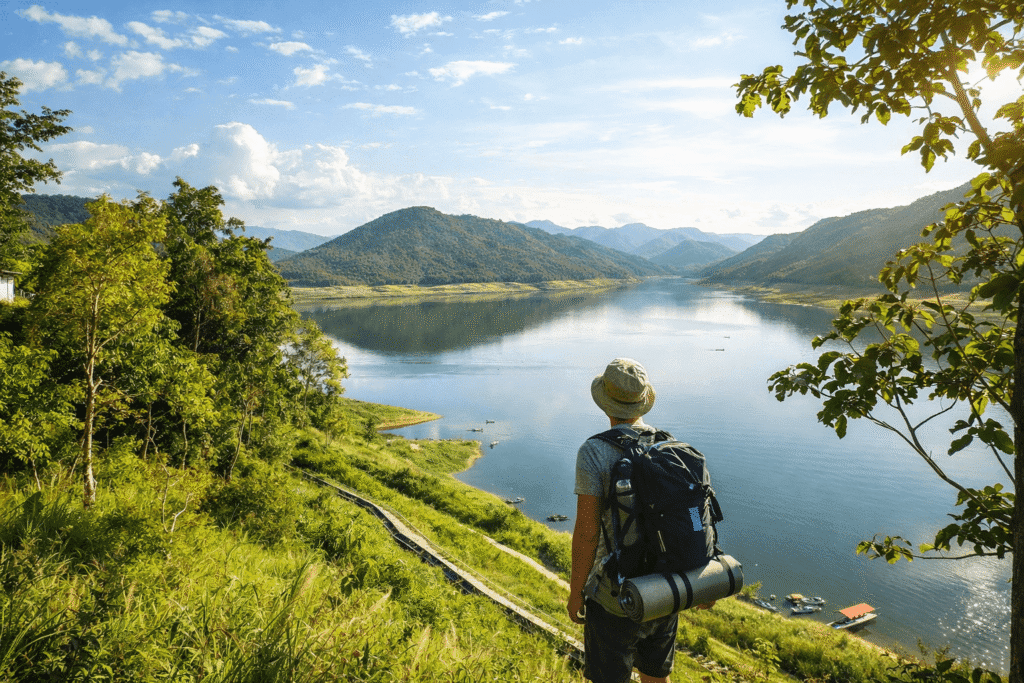
TL;DR: This Chiang Mai 4 day itinerary is designed for travelers who want a perfect balance of temples, nature, local culture, and good food, without feeling rushed. Day 1 eases you in with massage and night market vibes, Day 2 takes you up Doi Suthep with waterfalls and temples, Day 3 focuses on authentic markets, cooking experiences, and relaxed local exploration, and Day 4 heads out to the Mae On countryside for hot springs, quieter nature, and a proper outdoor finish to the trip. Ideal for first-timers and repeat visitors who prefer a slower, more meaningful pace.
Many people actually prefer Chiang Mai over Bangkok for its peaceful mountain setting and slower pace of life.
If you want to make the most of a short window and reach spots outside the city, our Chiang Mai private guide and driver guide explains how a private arrangement maximizes what’s possible in limited time.
If you’re wondering what to do for a Chiang Mai 4 day itinerary, this is exactly how I’d plan it. I’ve been to Chiang Mai many times, and if I only had a short 4-day trip, I wouldn’t rush straight into sightseeing—I’d start slow, ease into the city with a proper massage and some time in a café, let my body reset first.
Then I’d build into it, heading up into the mountains that sit just behind the city center—places like Doi Suthep that most people treat as a quick stop, but are actually worth a full day if you take your time.
Waterfalls, forest temples, quiet trails—it’s all right there without needing to go far. Then I’d bring it back down again for the final day, focusing on markets, local food, and more everyday Chiang Mai experiences. Nothing forced, nothing rushed—just a more natural way to experience the city.
Chiang Mai is a bigger city than just the Old City. You can try—tick off temples, squeeze in day trips, move between cafés and markets—but it rarely feels right when you do. The city opens up more when you take it slow.
I’ve been living here on and off for the past 6 years, and if I only had a few days, this is how I’d structure it.
Chiang Mai has a lot of layers to it, and this guide is meant to show you the options for a Chiang Mai 4 day itinerary rather than lock you into a rigid plan. You can stay longer in places you enjoy, or take it further, head out on a hike, spend more time in the mountains, if that’s the kind of trip you’re after.
We specialize in customizing tours specifically for Chiang Mai for those interested more in off-the-beaten-path spots and authenticity.
If you’d rather keep things in the city, there’s plenty there too—old bookstores, small museums, quiet cafés, and temples you can sit in for as long as you want. Nothing here needs to be rushed. If you find a place that resonates, stay. No one’s forcing you to move on after an hour.
Chiang Mai, for me, deserves far more than just a week. I’ve spent months there, and even then it didn’t feel like enough—I left still wanting more. It’s the kind of place that keeps revealing itself the longer you stay. But if you’re working with limited time, this is a more compressed way to experience it—enough to get a feel for its different sides without turning it into a rushed checklist.
If you’re planning to visit Chiang Mai between May and October, you’ll be arriving during the rainy season — which I actually prefer. The showers keep the weather cooler, the landscapes lush and green, and the crowds much thinner.
To help you manage your daily expenses, we’ve put together a realistic guide on Chiang Mai street food prices 2026, including local vs tourist area comparisons.
Also, comparing Chiang Mai vs Pai helps you determine whether a lively cultural hub or a quiet mountain escape fits better into your Northern Thailand journey.
If you want to escape the crowded city center and experience the region’s true hidden gems, check out our guide on how we design custom tours in Northern Thailand.

- The Ultimate Chiang Mai 4 Day Itinerary: A Local’s Guide
- My History With Chiang Mai
- Chiang Mai 4 Day Itinerary: The Full Day-by-Day Plan
- Day 1: Ease In Massage, Coffee & a Soft Landing into Chiang Mai
- A Proper Thai Massage Changes the Tone of the Whole Trip
- Ease Into the Evening with a Night Market
- Day 2: What to Do in Chiang Mai in 4 Days: Exploring Doi Suthep Temples and Nature
- Stop 1: Huay Kaew Waterfall (Base of the Mountain)
- Quick Information
- Stop 2: Wat Pha Lat (Forest Temple)
- Quick Information
- Quick Information
- Stop 4: Wat Phra That Doi Suthep (Main Temple)
- Quick Information
- Optional: Doi Pui & Beyond
- Late Evening: Back to the City
- Night: Old City Walk + That Night's Market (There's One Almost Every Day)
- Day 3: Markets, Culture & a Slower Close
- Day 4: Mae On, Hot Springs, and Slowing Down
- Chiang Mai 4 Day Itinerary: All Stops Mapped
- FAQ: Planning Your Chiang Mai 4 Day Itinerary
- How do I create a balanced Chiang Mai 4 day itinerary?
- Is a Chiang Mai 4 day itinerary enough time to see the city?
- How can I make a Chiang Mai 4 day itinerary without rushing?
- What should first-timers include in a Chiang Mai 4 day itinerary?
- How to structure a Chiang Mai 4 day itinerary for nature lovers?
- What is the best Chiang Mai 4 day itinerary for foodies?
- Should Doi Suthep be included in a Chiang Mai 4 day itinerary?
- Can I do a Chiang Mai 4 day itinerary without hiking?
- Where should I stay for a Chiang Mai 4 day itinerary?
- Is 4 days better than 3 days in Chiang Mai?
- What extra activities can I add on day 4 in Chiang Mai?
- Can Off Path Thailand help build my Chiang Mai 4 day itinerary?
- Get in Touch with Us
- Leave everything to us and experience Thailand Off The Beaten Path
My History With Chiang Mai
My relationship with Chiang Mai goes back further than I can even properly remember. I was brought here as a baby, long before I had any say in it, which means in a strange way, this city has technically been part of my life longer than almost anywhere else I’ve traveled.
The first trip I actually remember was as a teenager, back for a basketball tournament. I was one of the younger members on the team at the time, not the captain yet, just trying to hold my own. We took the overnight bus up from wherever we were based, and stayed in the athlete’s quarters that had originally been built for the SEA Games, right at the 700th Anniversary Stadium, still the venue where Chiang Mai hosts its official games to this day.
We competed against international schools from across Thailand, teams from Bangkok, the Eastern Seaboard, and Chiang Mai itself. I don’t think I appreciated the city at all back then. I was focused on the games, the team, the schedule. Chiang Mai was just the backdrop.
It wasn’t until my late twenties that I came back with fresh eyes, this time for a co-working conference. That trip was different. I wasn’t here to compete or pass through, I was here to actually be present, to sit in cafes, to notice the city instead of just moving through it. That conference planted something. I left thinking about Chiang Mai in a way I never had as a kid or a teenager.
Then came the trip that really changed everything. I was working remotely out of the city, feeling a bit bored one day, and decided to rent a scooter for four days with no real plan. I never intended to leave the city limits. But once I got past the edges of town, I couldn’t stop. Valleys, waterfalls, hidden hot springs, conversations with strangers on the road, it pulled something out of me I didn’t know was there.
What was supposed to be a short break turned into four months. By the time I went back to Bangkok, I’d sold my PS4 and quietly decided I wanted a life closer to nature and further from the noise. That one scooter ride is genuinely the reason Off Path Thailand exists today.
From there, my thirties turned me into something like a regular. I’ve been back to work an actual job here, a marketing executive role at a furniture company, which meant real mornings, real routines, and a version of Chiang Mai that had nothing to do with vacation. I’ve come back purely to explore, with no goal beyond wandering.
And somewhere in all of this, the city quietly reshaped parts of who I am, it’s where I first got serious about meditation and spirituality, not as some abstract interest but as something that became part of my actual rhythm, mornings at quiet temple grounds, real stillness before the day started. It’s also where I transitioned into eating more plant-based, something that felt almost inevitable once I was surrounded by Chiang Mai’s wellness-driven, spiritually curious community.
So when people ask how many times I’ve been to Chiang Mai, I genuinely don’t have an exact number. What I can tell you is that I’ve been here as a baby without a single memory of it, as a teenager chasing a basketball trophy, as an adult chasing a conference badge, and eventually as someone who just kept finding reasons to come back until it stopped needing a reason at all. Every version of me that’s passed through this city has left with something different, and that’s really the lens this entire guide is written through.
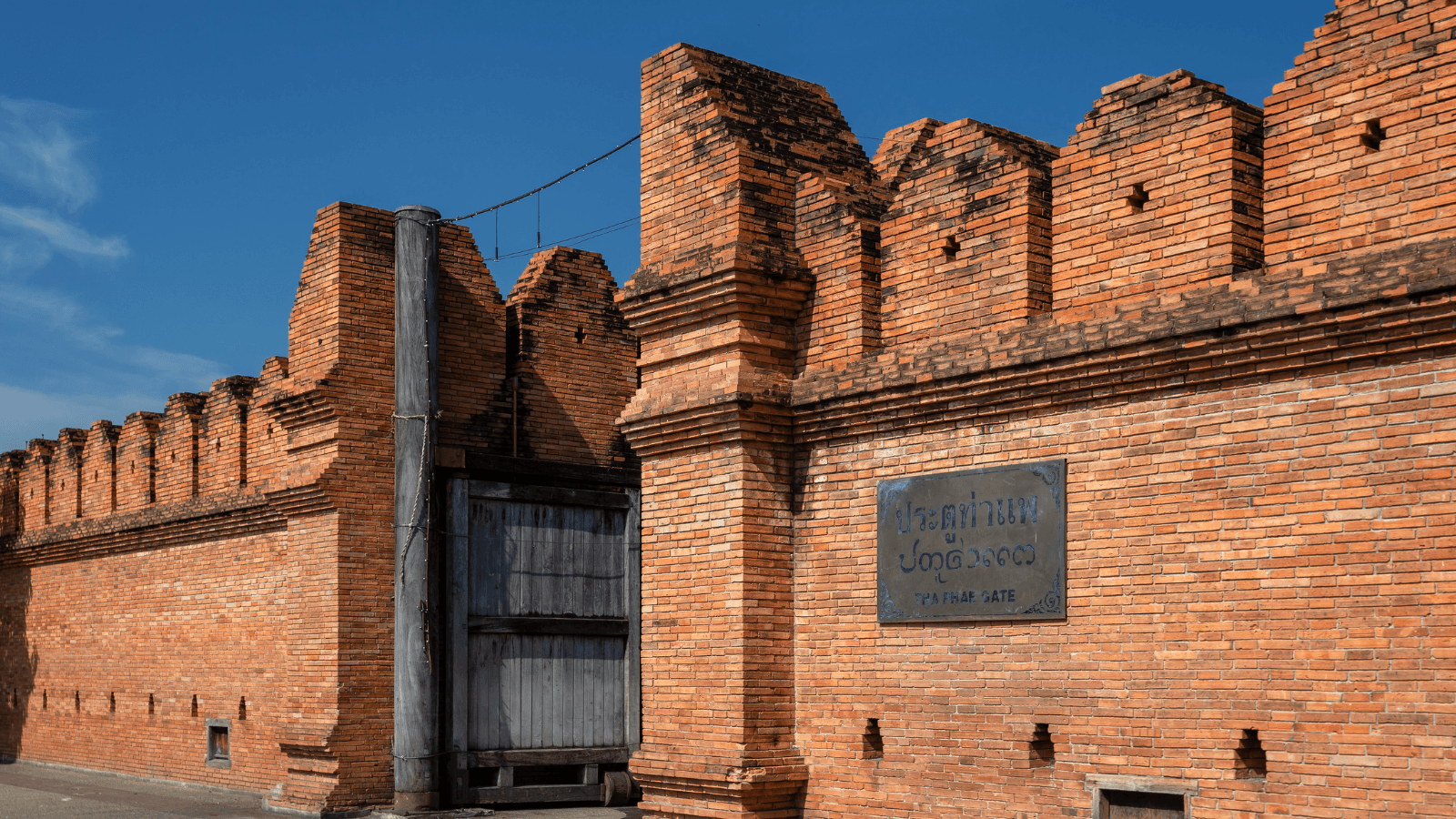
Chiang Mai 4 Day Itinerary: The Full Day-by-Day Plan
Day 1: Ease In Massage, Coffee & a Soft Landing into Chiang Mai
Afternoon:
The first day should not feel like you’re trying to “win” Chiang Mai.
Personally, I’ve noticed that the moment I start rushing things after arriving, the whole trip begins to feel like a chore. When planning a Chiang Mai 4 day itinerary, it is easy to go from enjoying where you are to just moving between places and ticking things off, which becomes surprisingly unenjoyable. After a long flight, the last thing you want to do is tax your body even more. Your energy is already off, your posture’s been fixed for hours, and you’re not fully present yet.
That’s why I always start with something simple. A café near where I’m staying, ideally in the Old City where everything feels a bit slower—shaded streets, less noise, easy to walk around without thinking too much.
You don’t need a curated list here. Cafés are everywhere in Chiang Mai, just like massage spots, and the overall standard is solid. It’s easy to find somewhere with proper beans, comfortable seating, and an environment that actually lets you relax.
What I usually look for is straightforward:
- Good reviews
- Seating that makes you want to stay a while
- Not overly crowded or rushed
Then I just sit. No plan, no pressure to move on.
This part ends up being more important than people think. It’s where your body starts to adjust—especially after a long-haul flight. Your energy levels settle, your mind slows down, and you ease into the pace of the city instead of fighting it. Once that shift happens, everything that comes after feels better.
A Proper Thai Massage Changes the Tone of the Whole Trip
After a long travel day, a massage always gets rid of the lactic acid for me. An oil massage especially helps iron out the stiffness from sitting in one position on a plane for hours.
It’s one of the fastest ways to reset your body. And it’s not just physical. Once your body relaxes, everything else slows down with it. When planning the first day of your Chiang Mai 4 day itinerary, this kind of relaxation is exactly what you need to feel refreshed immediately after. You might even fall asleep during the session. That’s normal. If anything, it means you needed it.
Keep this simple:
- Find a place near your hotel
- Or book directly at your hotel
There’s no need to travel across the city looking for “the best massage.” These places rotate constantly anyway—new ones open, old ones close. The difference between a good one and a great one isn’t worth the effort on Day 1. Conserve your energy. That’s the whole point.
A Massage That Actually Gives Back
One massage I can recommend is Lila Thai Massage (or the similar Women’s Massage Center by Ex-Prisoners), staffed entirely by women who trained in Thai massage while incarcerated at the Chiang Mai Women’s Correctional Institution. It’s part of an official vocational program that helps them build a real skill and a source of income for after their release, something that can otherwise be genuinely hard to come by once you’ve been to prison in Thailand. I like supporting it specifically because it directly helps with their reintegration into society, you’re not just getting a good massage, you’re contributing to something with a real, tangible purpose behind it.
One practical heads-up: queues fill up fast, especially on weekends and during peak tourist season, and most locations don’t take advance bookings. Your best bet is to swing by as early as you can to grab a time slot, then go explore the city or grab a coffee nearby while you wait for your turn. It’s a small bit of planning for what ends up being one of the more meaningful, low-cost experiences you can add to your day in Chiang Mai.

Ease Into the Evening with a Night Market
By evening, you’ll feel noticeably better. This is when you ease into Chiang Mai properly.
Start with the Chiang Mai Night Bazaar. Walk it without a plan:
- Stop when something looks good
- Eat when you feel like it
- Move on when you don’t
Some stalls are better than others, but that’s part of it. You’re not here for perfection—you’re here for the rhythm of it.
Get a massage, grab a Thai dessert, pick up a few souvenirs for friends and family back home, and enjoy the uniqueness of Lanna culture and the hospitality Chiang Mai has to offer.
Relax into the evening at a night market like Kadmanee, plenty of food stalls, a laid-back beer garden, and a short ride from the Old City.
If you still have energy after that, head over to The North Gate Jazz Co-Op for some live music. It’s easily my favorite spot in the city—nothing too fancy, nothing too forced. Just incredible local talent, a great atmosphere, and a relaxed crowd spilling out onto the sidewalk.
However, if you’re tired, don’t force it and call it early. If not, let the night stretch a bit.
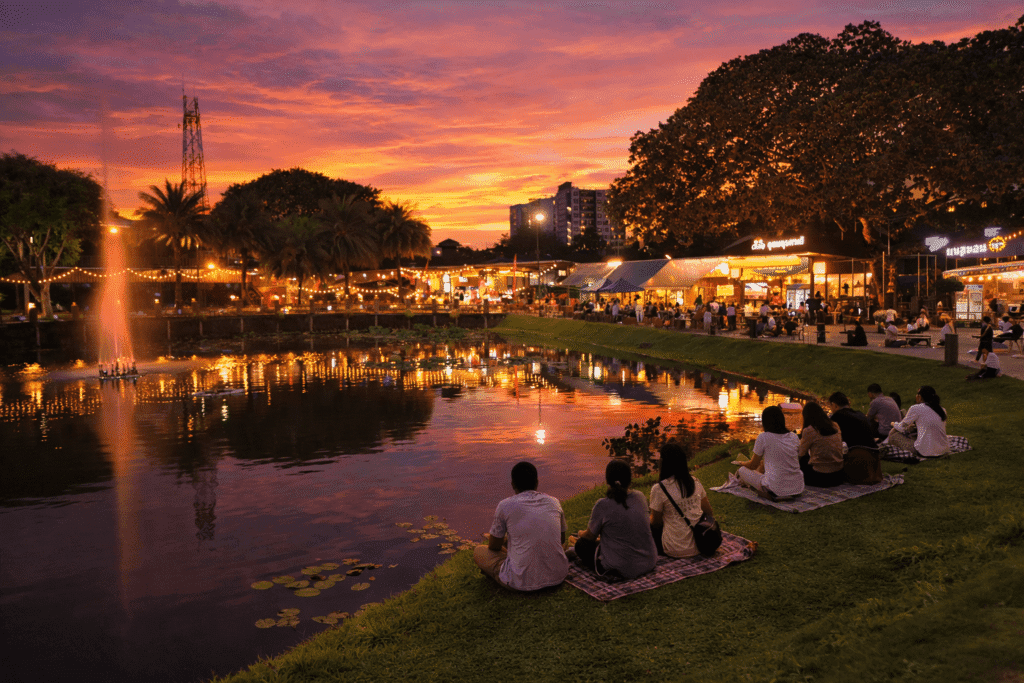
Day 2: What to Do in Chiang Mai in 4 Days: Exploring Doi Suthep Temples and Nature
Late Morning
Doi Suthep is easily my favorite escape from the city—and what’s surprising is how close it actually is.
It sits right behind Chiang Mai University. From Old City, you’re looking at 20–30 minutes depending on traffic. When I was working out of a coworking space nearby, I’d hop on a bike and go up whenever I needed a reset—clear my head, get out of the heat, change the environment.
I remember meeting a Chiang Mai local who works at the airport. She told me she’d only been up there once, around ten years ago, whereas I’m from Bangkok and I was going up every other day. That says everything about how different the local pace is compared to travelers looking for what to do in Chiang Mai in 4 days.
Most people treat Doi Suthep as a single stop—drive up, see the temple, leave. That’s missing the entire point. You’re going to do it properly.
In terms of getting up there, you’ve got a few options depending on how you want to do the day:
- Rent a car or a scooter if you’re comfortable driving—this gives you the most flexibility to stop along the way
- Take a songthaew (red taxi) if you want a more budget-friendly, no-hassle option
- Or, if you want it seamless, we can arrange a private car with a driver and a local guide so you don’t have to think about logistics at all
You’ll also see people actually cycling up the mountain, but that’s not casual—it’s serious business. It’s only really worth considering if you have the fitness level and experience for it—perfect for the kind of adventure travel style we curate.
However you decide to get up there, the key is having the flexibility to stop along the way—that’s what makes the whole route more enjoyable.
To help plan a trip that focuses on a relaxed pace and deeper local experiences, feel free to check out our complete guide to Chiang Dao slow travel.
Stop 1: Huay Kaew Waterfall (Base of the Mountain)
Afternoon
The first stop is right at the base of the mountain, just behind the zoo and Chiang Mai University. It’s one of those places most people drive straight past without noticing—but it’s actually the perfect place to start.
- Easy access
- No entrance fee
- Shaded, calm, and quiet in the morning
- Beautiful waterfall setting
This is your transition point—from city energy into mountain pace.
It’s also just a genuinely nice spot to spend a bit of time. If you feel like it, there are trails that lead further up the mountain from here, so you can turn it into a light hike depending on your energy.
When planning what to do in Chiang Mai in 4 days, this serves as a peaceful and flexible option where you can just walk around, sit by the water, and take a few photos.
Spend 20–30 minutes here, or longer if it feels right. No need to rush—just do what you feel.
Quick Information
Location: At the base of Doi Suthep, next to Chiang Mai Zoo (~6 km from Old City)
Opening Hours: 8:00 AM – 5:00 PM daily
Entrance Fee: Free
Best Time to Visit: Morning or late afternoon (best water flow is post-monsoon, July–November)
Highlights: Shaded walking trails, natural rock pools, easy access, scenic picnic spots
Stop 2: Wat Pha Lat (Forest Temple)
Afternoon
This is where the experience really shifts.
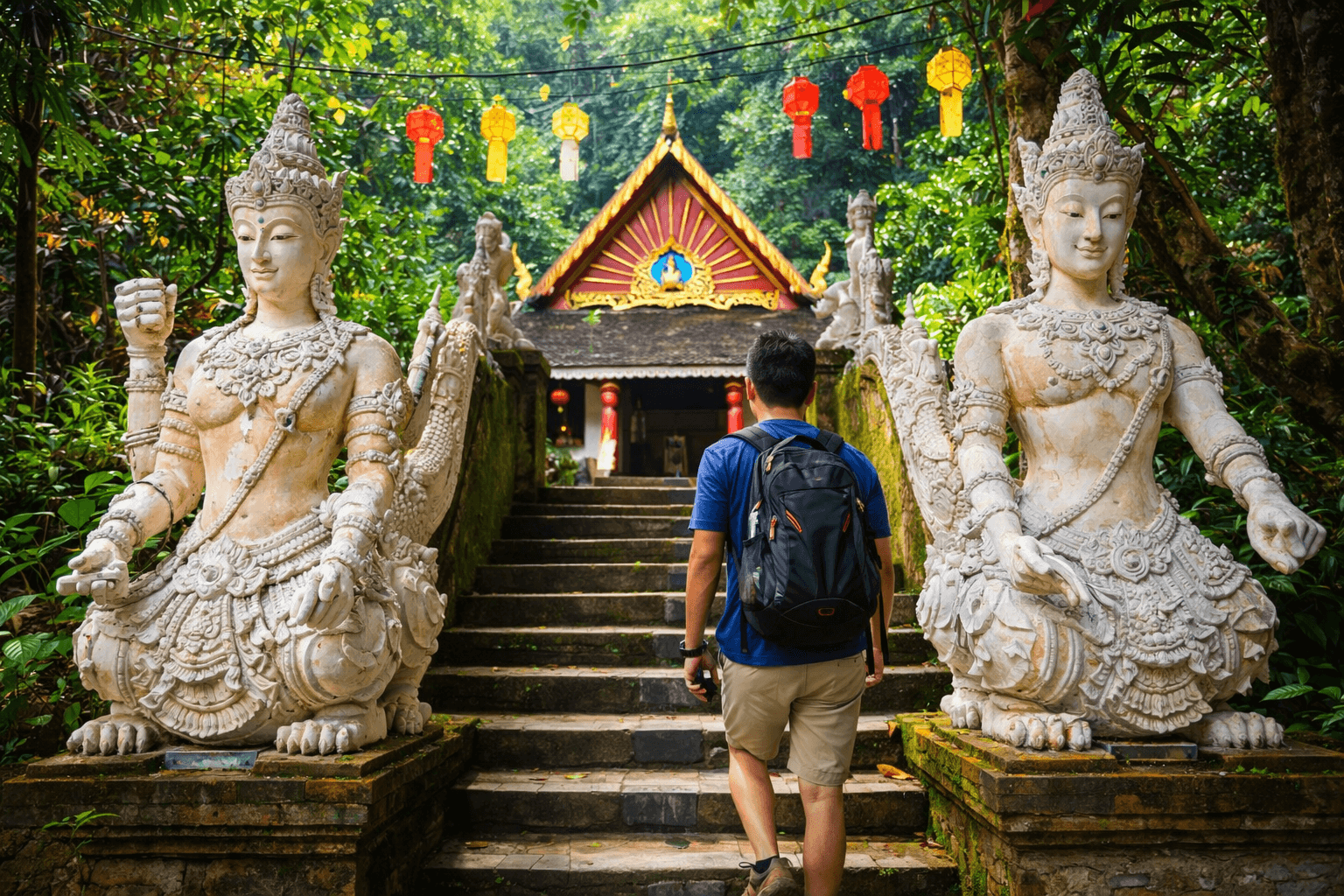
Up until now, you’re easing into the mountain—but Wat Pha Lat is where it actually starts to feel different. The temple is set directly into the forest. Stone walkways cut through trees, moss grows over the structures, and streams run naturally through the grounds. It doesn’t feel like a typical temple visit at all—it feels more peaceful, integrated, almost like you’ve stepped into something that wasn’t built to be visited, but simply existed for its original purpose.
There’s a small waterfall flowing through the complex, and a series of chedis and platforms where you can sit, pause, and just take it in. The Monk’s Trail also passes through here, so you’ll see hikers coming up or down, but even with that, it never feels crowded in the same way as other temples.
I always end up staying longer than I expect here.
It’s the kind of place where you don’t need to move on quickly. You might walk around for a bit, then sit, then wander again. There are quiet corners everywhere. If you’re into meditation, this is probably the best place on the mountain to do it. The environment already does most of the work for you.
Even if you’re not, it’s still worth stopping down here. Just sit for a bit, admire the architecture, listen to the water, and let things settle. It’s one of those moments that makes a Chiang Mai 4 day itinerary feel unhurried. Give it at least an hour, but don’t treat that as a limit—if you feel like staying longer, stay.
Quick Information
Location: Doi Suthep hillside, off Suthep Road (~7 km west of Old City)
Opening Hours: 6:00 AM – 6:00 PM daily
Entrance Fee: Free (donations appreciated)
Best Time to Visit: Early morning (around 7:00–8:30 AM) to beat crowds and heat
Highlights: Jungle setting, stream & mossy stone bridges, Lanna architecture, Monk’s Trail hike
Stop 3: Upper Waterfalls & Nature Trails (Optional)
Late Afternoon
As you continue further up, the mountain starts to open up more.
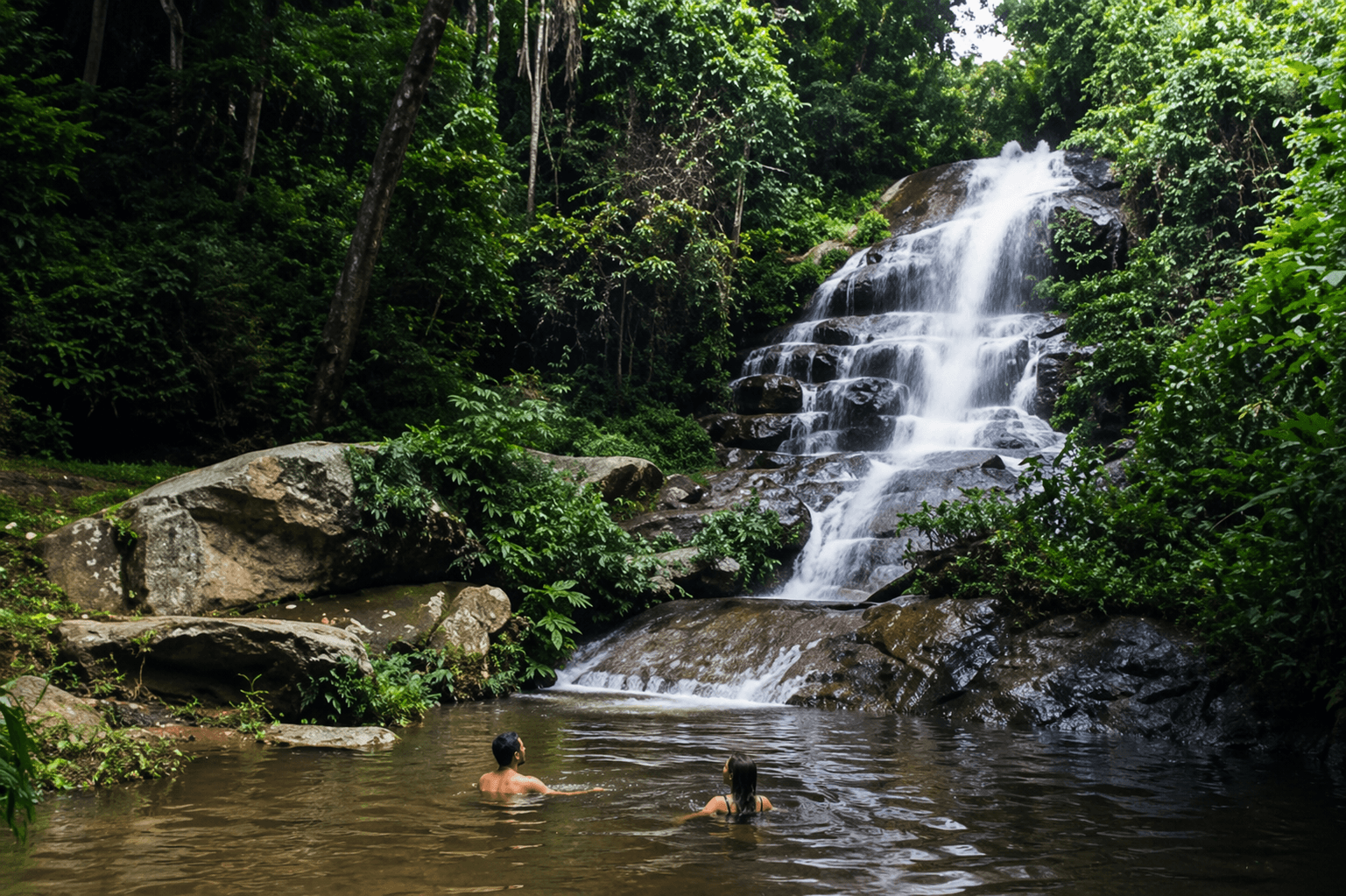
Montathan Waterfalls is one of the more developed waterfall areas in Chiang Mai, but in a good way. It’s not just a single viewpoint—you’ve got multiple tiers, proper nature trails, camping grounds, and plenty of space to move around without it feeling cramped.
There are different levels you can explore:
- Lower sections → easier access, quick stops
- Upper sections → quieter, more space, better if you want to walk a bit
This part of the day is less structured. It really depends on how you feel.
- Walk between waterfall levels along the nature trail
- Sit by the water and just stay there for a while
- Take photos (there are plenty of good spots here)
- Swim in certain areas depending on the season and water flow
- Explore nearby camping and picnic zones
If you’ve got the energy and you enjoy nature, this can easily stretch into 1–2 hours without feeling forced. It’s one of those places where you naturally slow down again after moving around earlier in the day.
If not, that’s fine too—do a shorter loop, take it in, and continue up the mountain.
No need to “complete” it. Just take what you want from it and move on when you’re ready.
Quick Information
Location: Doi Suthep-Pui National Park (~10 km west of Old City, along the road to Doi Suthep)
Opening Hours: 8:00 AM – 5:00 PM daily
Entrance Fee: 100 THB for foreigners (+ 20–30 THB vehicle fee)
Best Time to Visit: Morning for a quiet jungle walk and fresh mountain air
Highlights: Multi-tiered waterfall, shaded bamboo forest trails, peaceful swimming spot
Stop 4: Wat Phra That Doi Suthep (Main Temple)
Evening (Sunset)
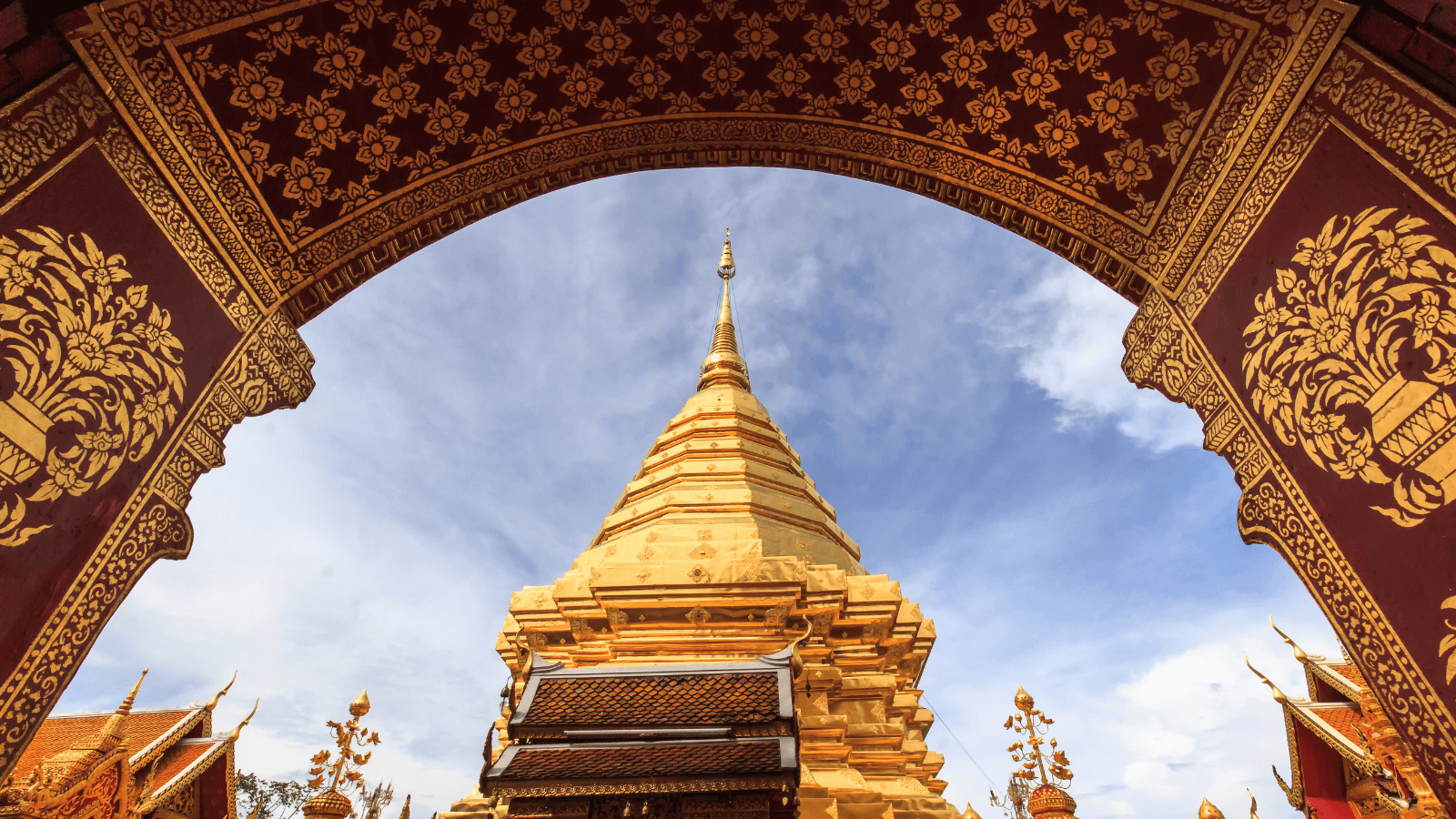
This is the main landmark. Give it 3–4 hours if you can.
Most people rush in, see the golden stupa, take a photo, and leave. But there’s a lot more going on here beyond the main courtyard.
The temple dates back to the 14th century and is one of the most important in Northern Thailand. According to local legend, the site was chosen by a sacred white elephant carrying a relic of the Buddha because it climbed the mountain, stopped, and passed away here, which is why the temple was built on this exact spot. Visiting Wat Phra That Doi Suthep is an absolute must on any Chiang Mai 4 day itinerary.
I’ve been here many times. The first time was with a couple of friends after hiking the Monk’s Trail up the mountain. Most of the other times have been on my own—I used to come up here regularly on a bike whenever I wanted to get out of the city and spend some time in nature.
Once you’re inside, please don’t just stop at the main stupa.
Take your time moving through the grounds:
- Walk the full perimeter of the golden stupa (you’ll notice locals doing this quietly as part of their practice)
- Step into the smaller shrines and side halls—some are nearly empty compared to the main area
- Head toward the viewpoints overlooking the city—you get a clear view of Chiang Mai, including the airport runway where you can watch planes land and take off from above
- Pay attention to the details—murals, bells, statues—there’s more depth here than it first appears
There’s also a quieter side to the temple that most people don’t explore. If you wander a bit further out, you’ll find the monk quarters. Tucked within that area is a meditation space that I always end up going back to when I’m here. It’s one of the most peaceful moments you can experience on this Chiang Mai 4 day itinerary, noticeably calmer, away from the main flow of visitors, and it shifts the entire experience.
That’s really the key here—this isn’t just a viewpoint or a photo stop. The more time you give it, the more it opens up. Move slowly, explore beyond the obvious sections, and let the place reveal itself a bit.
If you want an official overview of the temple’s background, the Tourism Authority of Thailand page for Wat Phra That Doi Suthep is a useful reference.
Note: It can get quite chilly beyond Doi Suthep Temple, so bring a sweater or hoodie.
Quick Information
Location: Suthep, Mueang Chiang Mai District (~15 km mountain drive from Old City)
Opening Hours: 5:00 AM – 9:00 PM daily
Entrance Fee: 50 THB for foreigners (plus optional 20 THB for the funicular elevator)
Best Time to Visit: Early morning before 8:30 AM to avoid crowds, or late afternoon for sunset and panoramic night views
Highlights: Golden chedi (stupa), 306-step Naga staircase, sweeping views of Chiang Mai city
Optional: Doi Pui & Beyond
If you still have energy after the temple, you could continue further up the road toward Doi Pui. That said, I’d honestly save it for another day, by this point your day is already fairly packed, and Doi Pui deserves its own unrushed visit rather than being squeezed in at the end.
You’ll first come across the main Hmong village area, which is the one most visitors stop at. It’s more developed and slightly staged for tourists, but still worth walking through. If you’re planning a Chiang Mai 4 day itinerary, visiting these villages makes for a memorable half-day trip and a true highlight of the region.
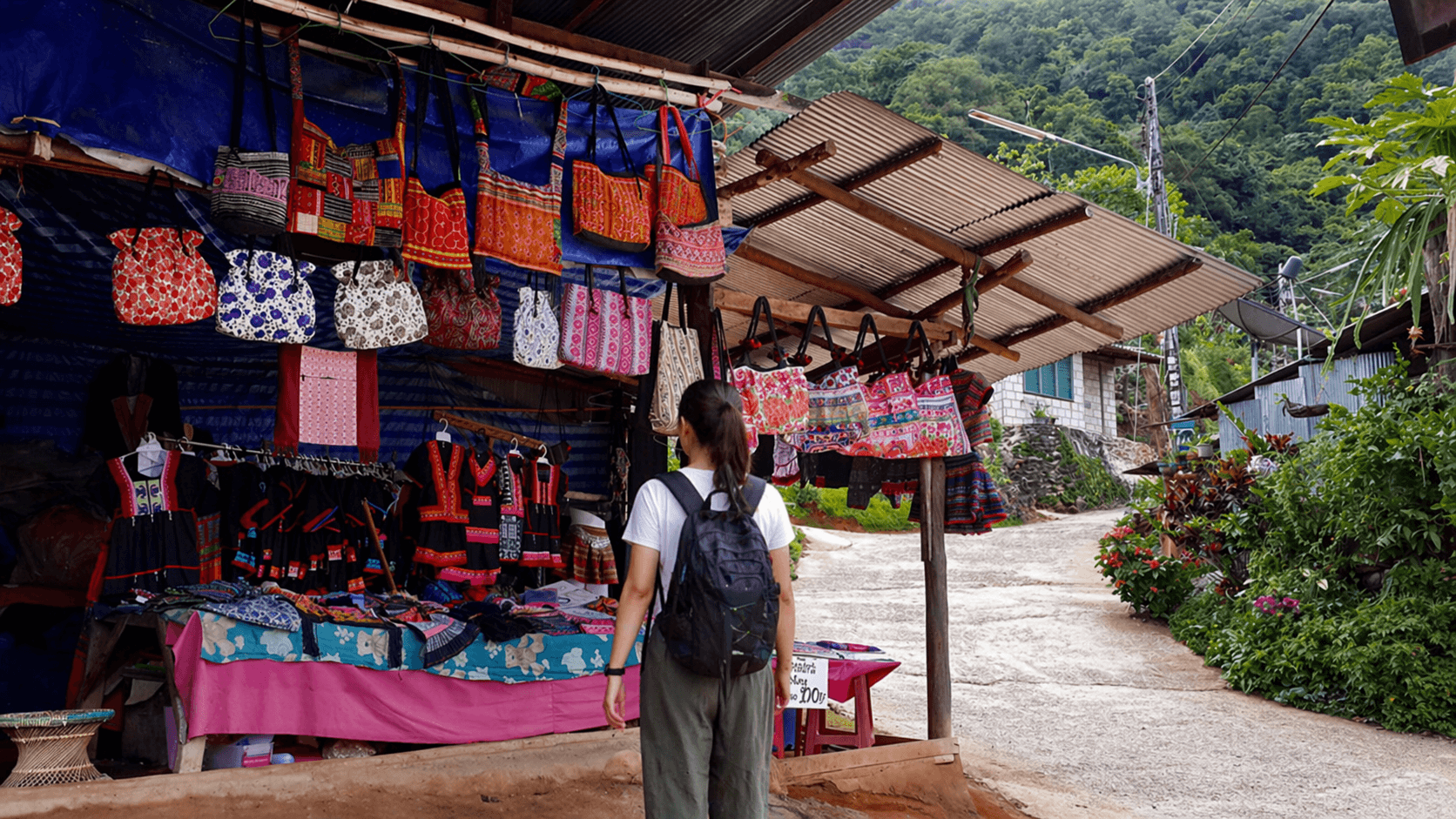
The entrance area is lined with stalls selling handcrafted goods:
- Embroidered textiles and traditional clothing
- Handmade bags, purses, and accessories
- Silver jewelry and small ornaments
- Locally grown teas and snacks
A lot of the embroidery you’ll see is tied to traditional Hmong designs—bright, detailed, and done by hand. Even if you’re not buying anything, it’s worth slowing down and actually looking at the work that goes into it.
Further inside, there’s a more structured section with:
- A small cultural display area
- Flower gardens (especially nice during cooler months)
- A few viewpoints looking back toward the mountain
It’s easy to dismiss this part as “just for tourists,” but if you take your time and move past the entrance stalls, it becomes more interesting. The key is not to rush through it.
The Hmong people themselves originate from southern China and are spread across Laos, Myanmar, and Thailand, often living in higher mountain regions. In Thailand, many were granted citizenship and land during the reign of King Rama IX, which is why you’ll find established communities like this around Doi Suthep and Doi Pui. Learning about this history firsthand is a fascinating addition to your itinerary for what to do in Chiang Mai in 4 days.
Most people stop at the main village and turn back. If you keep going, the experience changes quite a bit.
As you continue further up:
- The crowds disappear
- It feels more local
- You start passing actual Hmong villages rather than tourist stalls
You’ll find:
- Quieter, less maintained flower gardens and viewpoints
- Small roadside cafés with almost no tourists
- Sections where people actually live and go about their day
This part feels closer to what mountain life here for the Hmong people actually looks like. If you’re comfortable, you can stop briefly, walk around, and take it in. People are generally very friendly, but it’s still someone’s home, so please be respectful. If you’ve still got energy at this point, exploring this area is a worthwhile extension to your list of what to do in Chiang Mai in 4 days. Like the rest of the day, you can take it as far as you want.
If you want broader background on the wider area, this Doi Suthep-Pui National Park reference is useful.
If you’re heading to the rest of northern Thailand and unsure whether to visit Chiang Dao or Pai, be sure to read our detailed comparison.
Late Evening: Back to the City
Start making your way back down in the late evening, whenever it feels right. The drive down is a big part of the experience as well—cooler air, changing light, views opening up as you descend back toward the city.
This is where you reset again.
Don’t jump straight into evening plans. Keep it simple:
- Sit down for a proper meal—not just a quick bite, something you can take your time with
- Stop for a smoothie or a drink somewhere comfortable, ideally close to where you’re staying
- Give yourself time to rest—shower, lie down for a bit, let your body catch up
Once your energy comes back, then decide what you want to do with the evening. Some people will want to head out again—walk the Old City, check out a market, maybe catch some live music. Others might just want a relaxed dinner and an early night. Both are perfectly valid options for a Chiang Mai 4 day itinerary. The key is not to force the second half of the day. Let it come naturally based on how you feel.
Night: Old City Walk + That Night’s Market (There’s One Almost Every Day)
Walk the Old City without a fixed route—this is where Chiang Mai starts to feel different.
You’ll naturally pass:
- Small galleries that stay open into the evening
- Cafés that transition into more relaxed night spots
- Corners of the city that don’t show up on any list
There’s no need to map this out. Just walk, turn when something looks interesting, and let it unfold.
If you want a bit of structure or inspiration, check out the Chiang Mai Walking Guide for routes and ideas—but don’t feel like you need to follow it exactly.
If you want to layer something into the evening, this is a good time for a night market—but pick based on the day:
- Saturday Night Market — runs along Wua Lai Road, slightly more local feel, a bit less overwhelming
- Sunday Walking Street — the biggest one, stretches through the Old City, more variety but also more crowded
- Chang Phuak Gate Night Market — near the North Gate, more food-focused, easy to drop in for a quick meal without committing to a full market walk
- Malin Plaza — right by Chiang Mai University, honestly some of the best prices you’ll find anywhere in Thailand, plus genuinely great food.
Don’t treat these like something you need to “complete.” Walk through, eat a few things, and leave when you feel like it.
If you still have energy after that, Chiang Mai’s live music scene is worth experiencing:
- North Gate Jazz Co-Op — probably the most well-known spot, casual, often packed, musicians rotating in and out, very spontaneous feel
- Red Jazz Bar — a bit more hidden, slightly quieter, easier if you want to sit and actually listen
Or just find a quieter bar, grab a drink. This part of the evening isn’t about doing more, it’s about seeing how the city feels when it slows down.

Day 3: Markets, Culture & a Slower Close
The third day is where you stop trying to “see” Chiang Mai and start actually living your Chiang Mai 4 day itinerary, moving through the city more naturally instead of chasing a checklist.
Morning: Warorot Market
Warorot market is where Chiang Mai feels the most authentic.
I usually come here in the morning, grab something simple to eat, and just walk with no plan or route. Seeing locals doing their daily shopping, vendors setting up for the day, and food being prepared right in front of you is a great addition to any Chiang Mai 4 day itinerary. It’s a glimpse into everyday life for Chiang Mai locals, not something arranged for visitors.
The market itself is a mix of everything:
- Fresh produce, meats, spices, dried goods
- Ready-to-eat food stalls—breakfast options, snacks, sweets
- Household items, fabrics, small everyday products
What makes it interesting isn’t one specific thing—it’s how everything comes together.
I usually just pick a stall that looks active—something with locals lining up—and grab a quick snack and tea. Then I walk it off, moving between sections, stepping in and out of the building, seeing what’s happening.
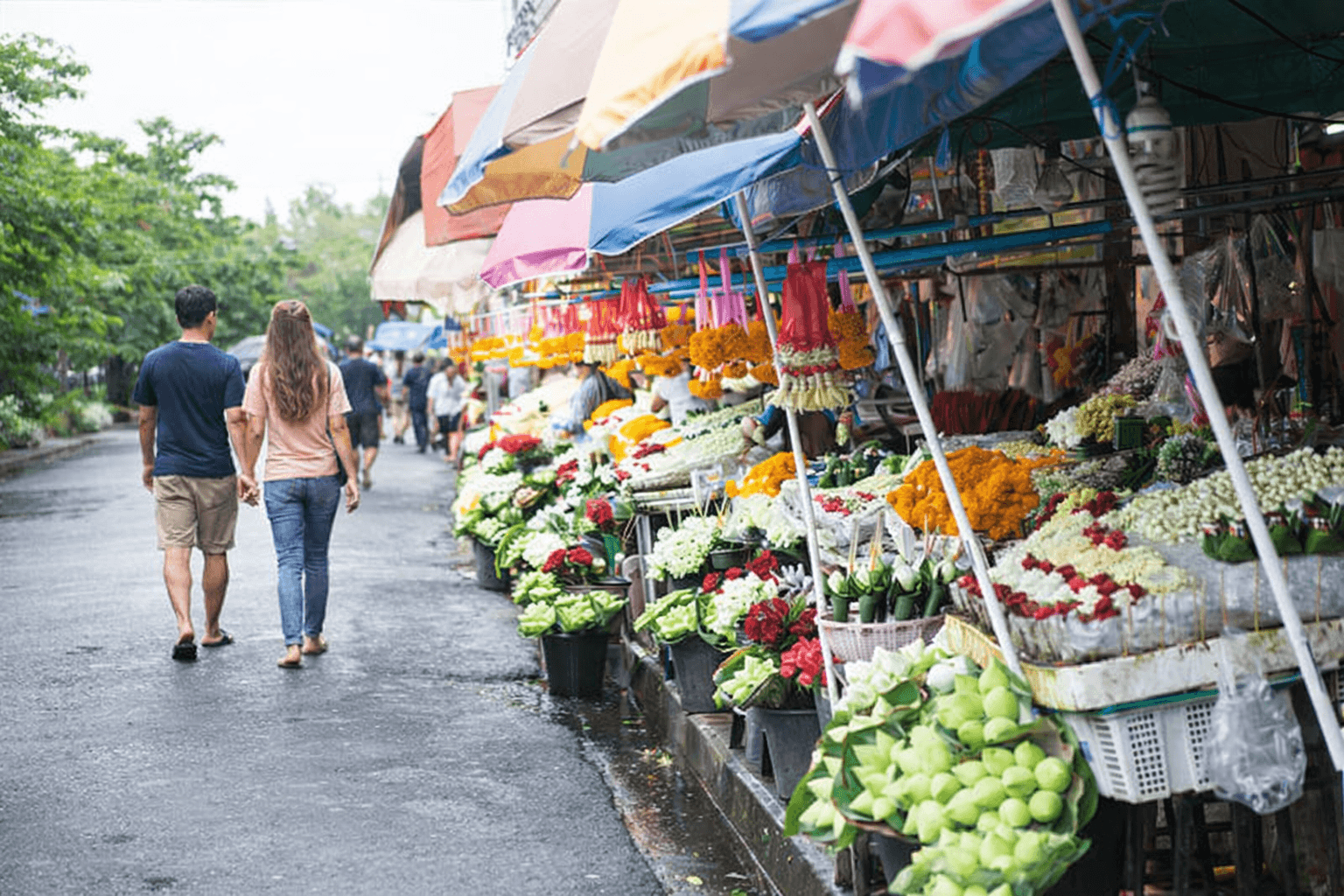
It’s also worth stepping outside the main structure.
The surrounding streets open up into:
- The flower market, especially active in the morning
- Small Chinese-Thai shops selling traditional wooden goods
- Old storefronts that have been there for generations
This area has a slightly different feel from the Old City—more commercial, more lived-in, less polished. It’s not curated. That’s exactly why it works.
Give yourself time here—at least an hour or two, maybe more if you enjoy this kind of environment. There’s no highlight to chase. Just move through it, take it in, and let it show you what it is.
Quick Information
Location: Wichayanon Rd, Chang Moi (~1 km east of Old City near Ping River)
Opening Hours: 4:00 AM – 6:00 PM daily (Day Market)
Entrance Fee: Free
Best Time to Visit: Early morning (7:00 AM – 10:00 AM) for fresh street food and local atmosphere
Highlights: Northern Thai snacks (sai ua, sai krok), local textiles, spices, authentic local shopping
Late Morning: Surrounding Streets, Bookstores & Slower Corners
Don’t leave right after the market.
The surrounding streets are just as interesting:
- Small family-run shops
- Traditional goods
- Snacks you won’t find in night markets
- Premium cafés if you want to stop again
This area blends into the old Chinese trading district, which gives it a slightly different feel from the Old City.
If you want to keep the day more urban and slower-paced, this is also a good time to duck into an old bookstore, a small museum, or just let yourself wander into streets you wouldn’t normally prioritize on a shorter trip. These relaxed explorations are some of the most enjoyable parts of a Chiang Mai 4 day itinerary.

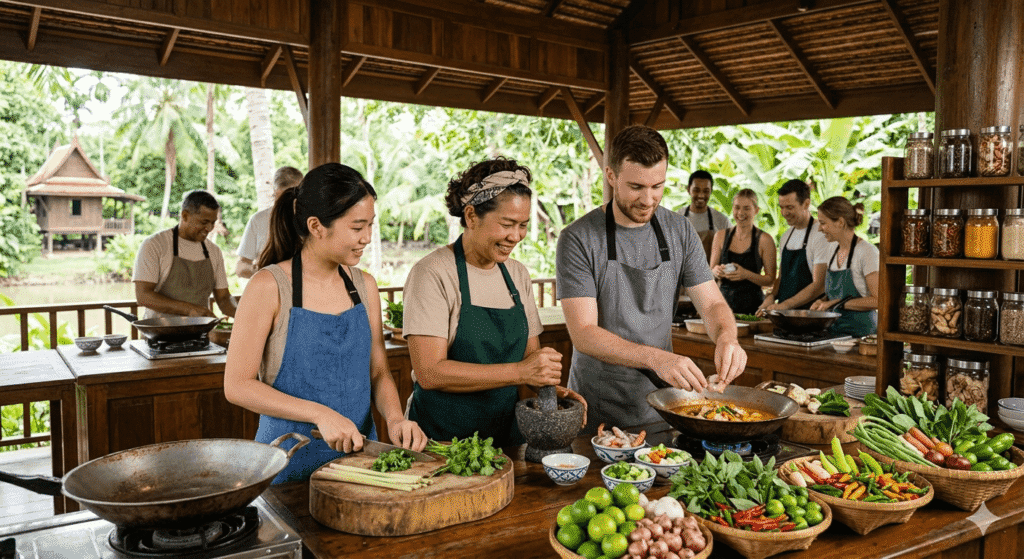
Midday: Cooking Class or Cultural Experience
A cooking class is worth doing here, it gives context to everything you’ve been eating. Instead of just consuming, you understand ingredients, the balance of flavors, and how dishes actually come together. It’s one of the most rewarding activities you can add to your Chiang Mai 4 day itinerary.
Or keep it simple with:
- Craft workshops
- Cultural sessions
- A slower lunch built around places locals actually return to
If food is the main pull, our authentic Chiang Mai restaurants guide is a good place to start.
Late Afternoon: Ping River Reset
Head toward the Ping River:
- Walk along quieter sections of the river
- Sit at a riverside café
- Do nothing for a bit
This is where the trip settles.
By this point, you’ve done enough. The point isn’t to keep squeezing more in. It’s to let Chiang Mai land properly before the trip ends.
Evening: Flexible Close
Keep your last night open.
Options:
- Return to a spot you liked earlier
- Try a smaller market
- Sit down for a proper Northern Thai meal
Or keep it simple:
- One last walk
- A quiet drink
- Early night
Chiang Mai isn’t a city you need to complete. Ending it without forcing anything usually feels better.
If this is the kind of Chiang Mai you’re drawn to, our Northern Thailand hidden gems guide and our Chiang Dao guide are good next reads.
If you’re planning a Chiang Mai 4 day itinerary, the biggest difference usually comes down to pacing. You don’t need to cram in every temple, café, or market. A slower structure almost always makes the city feel better.
Day 4: Mae On, Hot Springs, and Slowing Down
Morning: The Drive Out to Mae On
Start the morning early with the drive out to Mae On. It’s one of the more scenic routes near Chiang Mai, winding through green hills and small mountain villages, so take it slow and actually enjoy the views rather than treating it as time to just get through.
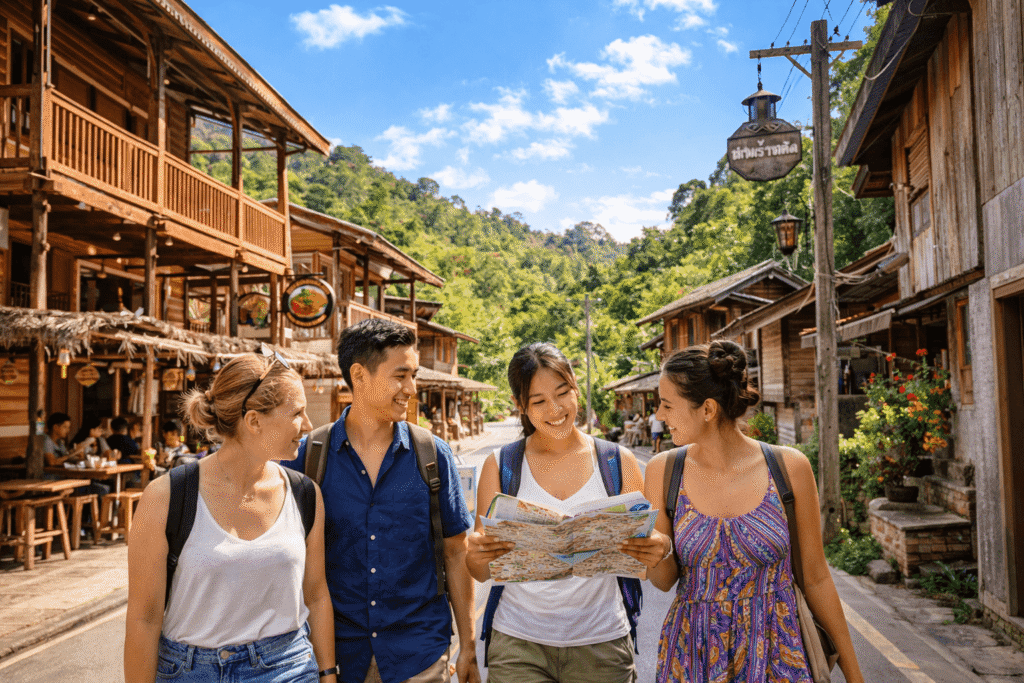
Late Morning: Mae Kampong
First proper stop is Mae Kampong, a small mountain village built into the hillside, known for its waterfalls and quiet, misty atmosphere. Grab a coffee at one of the small local cafés built right into the wooden houses along the stream, this is a good moment to just sit for a bit before continuing on.
From there, head to the waterfalls nearby, a short walk through the village leads you to a series of small cascades tucked into the forest, cool, shaded, and a nice contrast to the heat of the city.
Afternoon: Mae Kuang Dam and Mae On Caves
Once you’ve had enough time at the waterfalls, continue on to Mae Kuang Dam, where the reservoir opens up into wide mountain views, a good spot to stretch your legs and take in the scenery before the next stop.
After the dam, make your way to the Mae On caves, a quieter, less-visited stop compared to the bigger cave systems further north, but worth the detour if you enjoy exploring somewhere off the usual route.
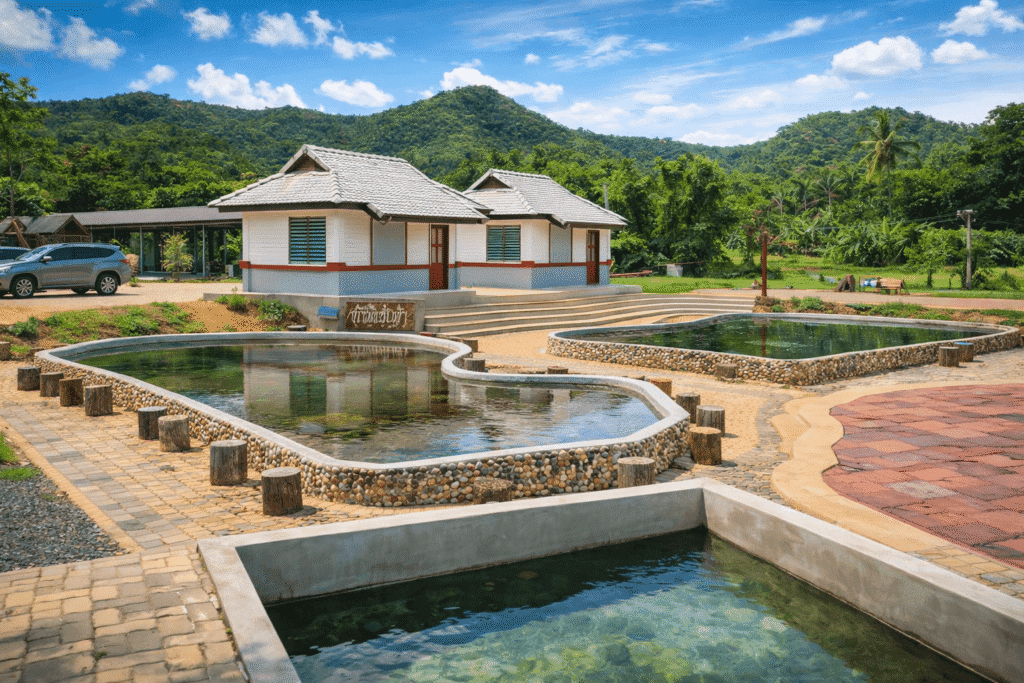
Early Evening: Doi Saket Hot Springs
To close out the day, head to Doi Saket hot springs. After a full day of driving and walking, it’s a genuinely good way to unwind, soaking in the warm mineral water as the light starts to fade is a fitting way to end both the day and the trip.
Quick Information
Location: Mae On District (~45–50 km east of Chiang Mai city, roughly a 1-hour drive)
Opening Hours: Varies by attraction; most sites within the district run roughly 8:00 AM – 5:00 PM daily
Entrance Fee: Free to enter the district; individual attractions (caves, hot springs) charge separate small entry fees
Best Time to Visit: Morning start recommended to comfortably fit the full loop before evening
Highlights: Mae Kampong mountain village, Mae Kampong Waterfall, Muang On Caves, Mae Kuang Dam, Doi Saket Hot Springs
Chiang Mai 4 Day Itinerary: All Stops Mapped
FAQ: Planning Your Chiang Mai 4 Day Itinerary
How do I create a balanced Chiang Mai 4 day itinerary?
The best approach to a Chiang Mai 4 day itinerary is balancing city culture, mountain nature, local food, and one slower, unstructured day. A strong 4-day structure usually includes a slower arrival day to recharge, one full mountain day (Doi Suthep), one day dedicated to markets, food, and local neighborhoods, and a fourth day for something you’d otherwise have to skip, a cooking class, a further-out day trip, or simply more time to explore at your own pace.
Is a Chiang Mai 4 day itinerary enough time to see the city?
Four days is genuinely enough time to get a well-rounded feel for the city without rushing, as long as your Chiang Mai 4 day itinerary focuses on pacing rather than cramming in every attraction. You won’t see everything, but you’ll experience Chiang Mai in a way that feels grounded, varied, and memorable, with enough breathing room that it doesn’t feel like a checklist.
How can I make a Chiang Mai 4 day itinerary without rushing?
To build a relaxed Chiang Mai 4 day itinerary, avoid stacking too many attractions into a single day. Spend longer in the places you enjoy, build in coffee breaks, and treat Doi Suthep as an immersive experience rather than a quick temple photo stop. The extra day compared to a standard 3-day trip is exactly what gives you room to slow down.
What should first-timers include in a Chiang Mai 4 day itinerary?
For first-time visitors, an ideal Chiang Mai 4 day itinerary covers the city’s main moods. That means easing into the Old City on day one, spending a full day in the mountains around Doi Suthep on day two, exploring markets, local food, and neighborhood life on day three, and using day four for something more specific to your interests, whether that’s a cooking class, a further day trip, or simply revisiting a favorite spot.
How to structure a Chiang Mai 4 day itinerary for nature lovers?
If nature is your priority, your Chiang Mai 4 day itinerary should feature Doi Suthep, forest temples like Wat Pha Lat, waterfall stops, and time in the upper mountain sections, with the extra day opening up room for a further destination like Doi Inthanon National Park. Chiang Mai works especially well for travelers who want mountains and fresh air close to the city center.
What is the best Chiang Mai 4 day itinerary for foodies?
If food matters most, your Chiang Mai 4 day itinerary should include Warorot Market in the morning, night street markets in the evening, and at least one sit-down meal at a local spot. Adding a local cooking class is also a fantastic addition, and with four days you have enough time to fit one in without sacrificing anything else.
Should Doi Suthep be included in a Chiang Mai 4 day itinerary?
Yes! Doi Suthep should be one of the main anchors of any Chiang Mai 4 day itinerary. Most travelers only see the main temple, but the mountain offers much more, hidden waterfalls, quiet forest trails, scenic viewpoints, and peaceful mountain air.
Can I do a Chiang Mai 4 day itinerary without hiking?
Absolutely. You do not need to hike to enjoy a Chiang Mai 4 day itinerary. This style of trip works just as well with scenic drives, temple visits, market strolls, and relaxing cafés. The mountain day can easily be tailored for comfort.
Where should I stay for a Chiang Mai 4 day itinerary?
For most travelers following a Chiang Mai 4 day itinerary, the Old City is the easiest base. It provides quick access to temples, cafés, walking streets, and evening markets, making your day-to-day transit seamless.
Is 4 days better than 3 days in Chiang Mai?
For most travelers, yes. A Chiang Mai 4 day itinerary gives you the same core experience as a 3-day trip, Old City, Doi Suthep, markets, but without the rushed feeling that often comes with trying to fit everything into three days. The extra day is usually enough to add a cooking class, a further day trip like Doi Inthanon, or simply a slower, less scheduled day.
What extra activities can I add on day 4 in Chiang Mai?
Popular additions for the fourth day of a Chiang Mai 4 day itinerary include a Thai cooking class, a day trip to Doi Inthanon National Park or the Sticky Waterfalls, a visit to an ethical elephant sanctuary if you didn’t fit one in earlier, or simply a slower day exploring Nimmanhaemin’s cafés and smaller neighborhood markets without a fixed schedule.
Can Off Path Thailand help build my Chiang Mai 4 day itinerary?
Yes. If this style of travel resonates with you, we can help craft a personalized Chiang Mai 4 day itinerary around your pace, interests, and style, whether you want more nature, hidden food spots, or a smooth experience with transport completely handled.

About the author
Written by Dee, Thai-born founder of Off Path Thailand. Nearly a decade ago, a rented scooter in Chiang Mai changed everything, mountains on both sides, more alive than any game I’d ever played. I’ve been hooked on Thailand’s quiet, hidden corners ever since, and I’ve spent the years since helping others discover the same. About the founder
Prefer a quick chat or email?
Get in Touch with Us
If you already have an idea of your trip, send us a message or email — we’ll guide you through the best options for your travel style.
Tell us your dates and vibe — Our team replies within 24 hours to begin crafting your trip.
Leave everything to us and experience Thailand Off The Beaten Path
Travel feels better when it moves at the right pace. If this slower, more grounded side of Chiang Mai resonates with you, we can help shape it into something seamless, personal, and well considered.