
Chiang Dao Day Trip Guide 2026: Why This Is Thailand’s Best Kept Secret
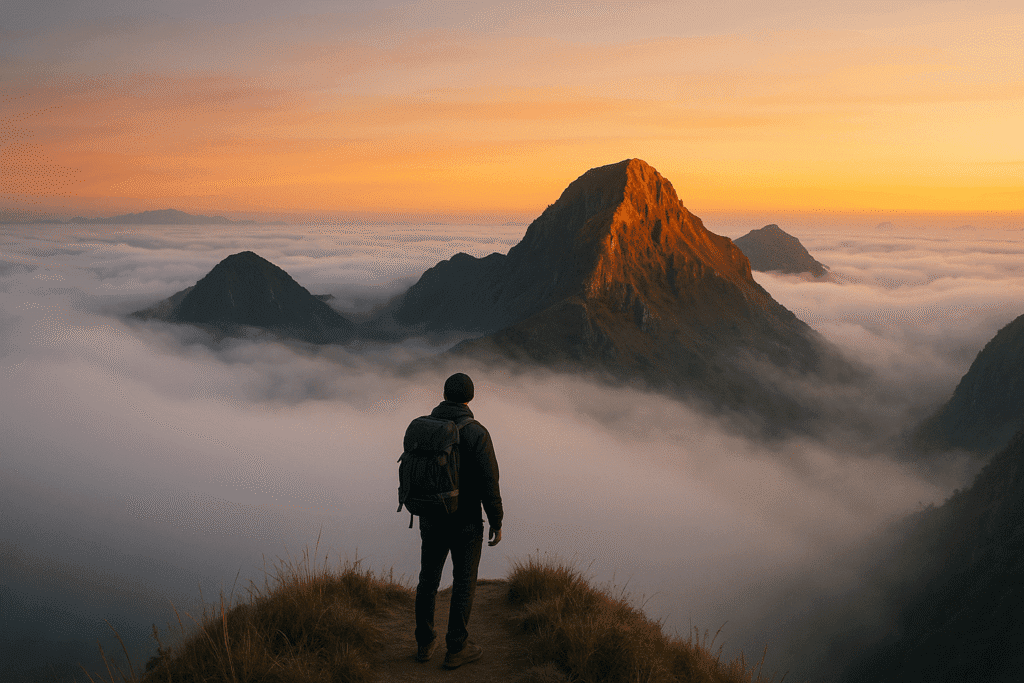
TL;DR: Chiang Dao is a peaceful valley town about 70 km north of Chiang Mai, sitting at the base of Thailand’s third-highest mountain. It offers misty mornings, bright green rice fields, an impressive cave system, nearby hill tribe villages, and almost none of the tourist crowds you find elsewhere in Northern Thailand. It’s an easy Chiang Dao day trip from the city, about an hour or so each way.
Written by Dee · Founder of Off Path Thailand
Chiang Dao is my favorite place in Thailand. I first stayed overnight in 2020, and I’ve been going back ever since, riding the valley by day and soaking in the hot springs by evening. About Dee →
The best time to plan a Chiang Dao day trip is between November and February, when the weather is cool and clear.
Please be sure to avoid the burning season (roughly late February to April) unless you check the air quality first.
In my honest opinion, taking a Chiang Dao day trip gives you the most breathtaking taste of Northern Thailand, while remaining surprisingly off the tourist radar.
If you want to spend a few days experiencing this mountainous region, check out our full overview of where to stay in Chiang Dao.
To really get the most out of the area without the stress of navigating, exploring Chiang Dao with a private guide is definitely the way to go.
Contact us for a private driver and guide, and explore at your own pace.
- Chiang Dao Day Trip Guide 2026: Why This Is Thailand's Best Kept Secret
- My favorite town in all of Thailand
- What Makes Chiang Dao Special?
- Here is the honest truth about planning a Chiang Dao day trip
- Chiang Dao Day Trip Travel Itinerary
- Things to Do on a Chiang Dao Day Trip (Beyond the Tourist Trail)
- How to Get to Chiang Dao
- Practical Tips for Visiting Chiang Dao
- Is Chiang Dao Right For You?
- Conclusion
- Map of Chiang Dao
- FAQ: Planning Your Chiang Dao Day Trip
- Is a Chiang Dao day trip worth it from Chiang Mai?
- How do I get to Chiang Dao for a day trip?
- What should I include on a 1-day Chiang Dao day trip itinerary?
- What is the best time of year for a Chiang Dao day trip?
- Can I visit Chiang Dao on a day trip without renting a scooter?
- How long does the drive take for a Chiang Dao day trip?
- How can I book a guided Chiang Dao day trip?
- Leave everything to us and experience Thailand Off The Beaten Path
My favorite town in all of Thailand
This is a special place very dear to my heart, somewhere on the road north of Chiang Mai, past the left turn up to Pai on the 107 when the traffic thins, the buildings start to disappear, and a mountain so vast and green it almost looks like you’ve been dropped into a set of Jurassic Park. That moment is the beginning of Chiang Dao, my favorite place in all of Thailand.
And once you’ve felt it, the buzz and foot traffic of Chiang Mai’s old city starts to feel like a completely different world, because it is.
I’ve been traveling Thailand my whole life. I grew up here. But Chiang Dao still leaves me in awe. My first visit was a high school trip. We took the overnight train from Bangkok up to Chiang Mai and made our way to the hills, camping at a resort, hiking through jungle paths that seemed to go on forever. I was young, and I enjoyed it the way teenagers enjoy things: briefly, loudly, without really paying attention.
It wasn’t until 2020 that I truly fell in love with the place.
Personal Story: I was living and working remotely in Chiang Mai when my apartment situation threw me an unexpected curve-ball. The flat I wanted to move into had a single booking in the middle of the month, two nights, already reserved, and the owner politely informed me that if I wanted to move in, I would need to find somewhere else to sleep in the meantime.
Chiang Dao had been coming up constantly in conversations around me. Friends, café owners, the woman who made my smoothie every morning, everyone seemed to mention it with the same half-dreamy look on their face. Even as someone who is Thai and had technically been there before, I couldn’t remember it being especially remarkable. So, with two days free and nowhere particular to be, I jumped on a bus north.
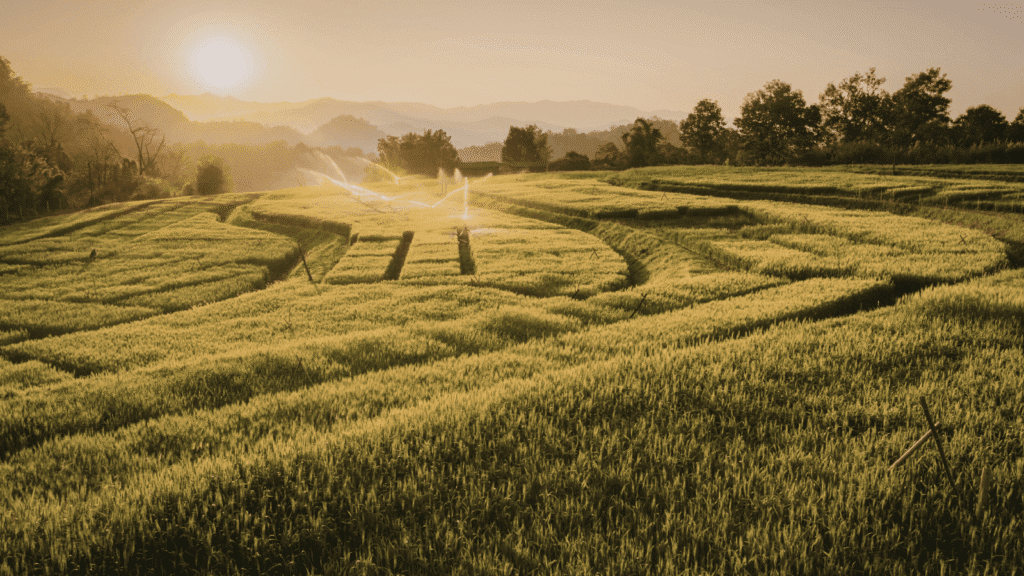
What I found genuinely blew my mind. The farmhouse I rented sat just behind Doi Luang Chiang Dao, the enormous limestone mountain that dominates the skyline, and stretched out in front of it were rice fields in a shade of green so vivid it looked almost artificial.
Like a fairy tale. Like someone had turned the saturation dial up three notches on reality.
I rented a motorbike and rode all the way up north to a Chinese village (Arunothai Village (大谷地村莊)) near the Burmese border, a community of people who are ethnically Chinese, from China, living at the edge of Thailand. And even I, as a Thai person, had never seen anything like it.
Even if you only start with a single Chiang Dao day trip, it is easy to get hooked. I ended up riding my motorbike back up from Chiang Mai to spend days exploring viewpoints, caves, and temples, guided by a host who WhatsApped me hidden spots before breakfast. I fell so in love with the area that when I visited Chiang Mai during burning season, I chose to stay away. I wanted to keep my memory of Chiang Dao pristine, unmarred by grey skies.
I’ve been back three or four times since, and each visit has been better than the last. My routine there is simple: I ride out into the valley during the day, and in the evening I’m at the hot springs. Then I rinse and repeat for as many days as I’m there.
Making the most of a Chiang Dao day trip isn’t about rushing from spot to spot, but giving yourself space to soak in the atmosphere. This approach ensures your day trip feels intentional rather than rushed. If you read this guide carefully and follow even a fraction of it, you will leave with something most visitors never find: the sense that you have truly experienced somewhere special.
If you’re planning a trip to northern Thailand and trying to decide between Chiang Dao and Pai, this comparison will help you choose the right destination for your style.
What Makes Chiang Dao Special?
Chiang Dao sits roughly 70 kilometers north of Chiang Mai, cradled in a valley with Doi Luang Chiang Dao, Thailand’s third highest peak at 2,195 meters, as its backdrop. The mountain is a UNESCO Biosphere Reserve, which means development has been meaningfully constrained and the natural environment has been protected in ways that most popular Thai destinations simply haven’t managed.
But its geography is only the beginning.
What makes a Chiang Dao day trip so much better than other escapes from Chiang Mai is the specific combination of things it offers: dramatic mountain scenery, working rice paddies, misty mornings, a warm local community, and an almost complete absence of heavy tourist crowds.
There are no rooftop bars. No infinity pools facing a mountain branded for Instagram. No tuk-tuks waiting at a bus terminal to drag you to a gem shop. What you get instead are narrow roads lined with bamboo, open-air restaurants where the owner is also the cook, and a pace of life that slows you down almost immediately without you even noticing.
There is also something rare here from a cultural perspective. The area around Chiang Dao is home to a mix of communities, Thai, hill tribe, and further north, Chinese settlements that have existed along these old trade and migration routes for generations. This rich complexity is exactly what makes Chiang Dao slow travel so rewarding; it rarely shows up in standard travel writing about northern Thailand, and it makes every ride or walk through the area feel genuinely exploratory rather than curated.
For travelers who want to engage deeply with this heritage rather than just pass through it, we can custom-design immersive cultural travel styles centered around these unique communities. Whether your interest lies in learning about traditional textile weaving from Akha artisans, exploring the historical migration stories behind the region’s Yunnanese Chinese settlements, or spending unhurried days learning about sustainable farming practices alongside local families, we tailor every journey to match your specific curiosity, ensuring your exploration is both deeply personal and highly respectful.
For travelers who have already done Pai, and perhaps found it a little too busy, a little too geared toward a certain type of tourist, Chiang Dao offers something more grounded. It’s quieter, it’s closer to Chiang Mai, and the nature is more dramatic. It is, in my honest opinion, the single most beautiful landscape in northern Thailand.
Here is the honest truth about planning a Chiang Dao day trip
Every travel guide gives you the same sanitized breakdown of Thailand’s seasons. I want to give you an honest one.
Cool Season: November to February
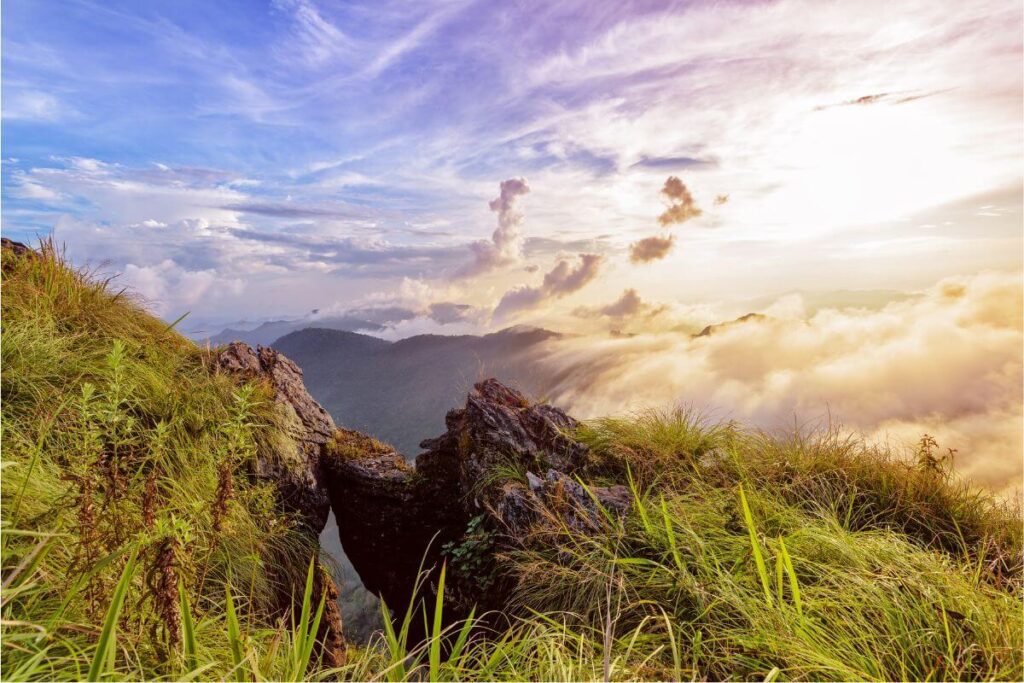
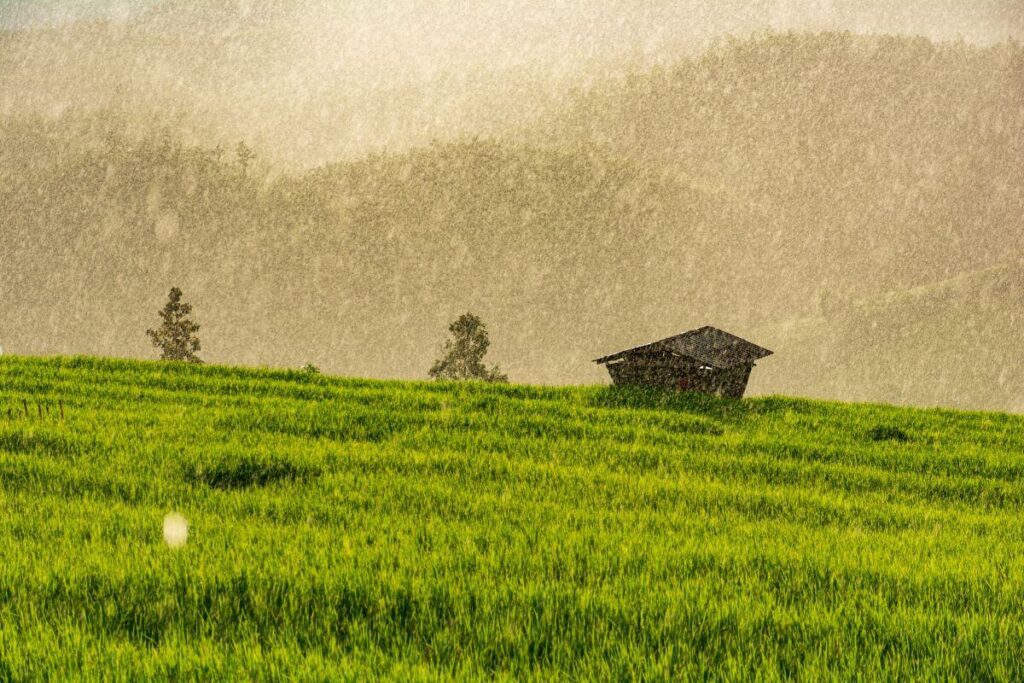
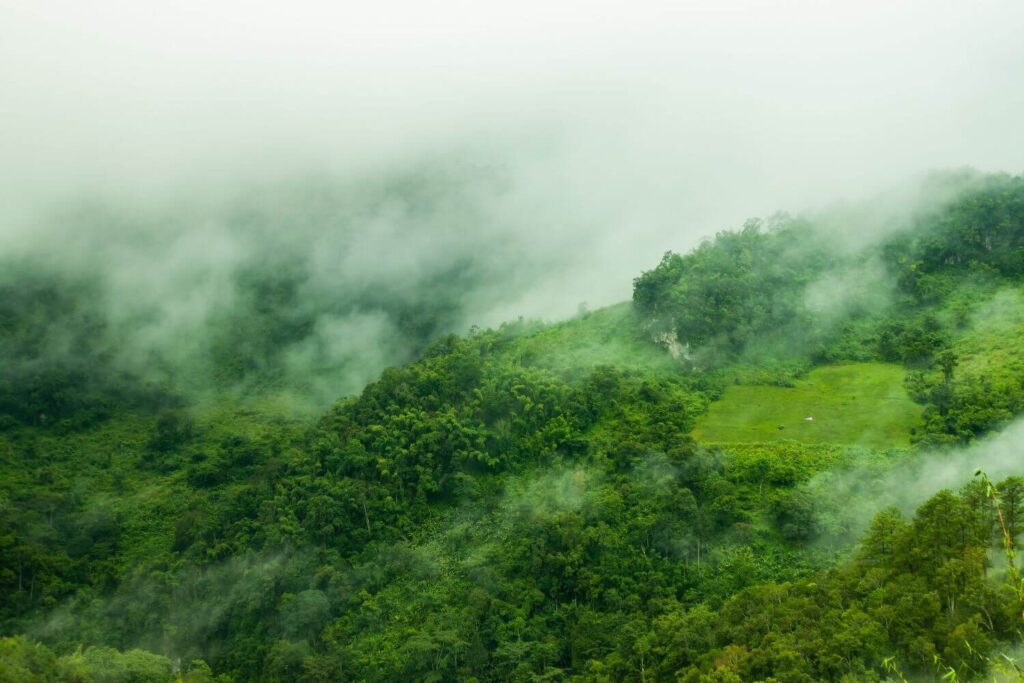
This is the best time for a Chiang Dao day trip, full stop. Temperatures in the valley sit between roughly 10–25°C, and at higher elevations it can dip below 10°C at night, which means you will want a proper outfit in the mornings and evenings. The mornings are misty and extraordinary: the mountain disappears into low cloud, rice fields shimmer with dew, and the light between about 6am and 9am is genuinely breathtaking. If you are planning a Chiang Dao day trip for photography, landscapes, or simply the pleasure of cool mountain air, this is your window.
December and January are peak months, which means the handful of really special guesthouses do book up. Let us know early via WhatsApp and we can start making arrangements for you.
Warm Season: March to May
March marks the start of the seasonal shift. Days get hotter, up to 35°C, and the landscape shifts from lush green to dry gold. There is a stark beauty to it that some travelers actually prefer, and you will notice far fewer people on a Chiang Dao day trip. By April and into May, it is properly hot and dry.
Here is the honest part: late February to April is also the smoke season in northern Thailand, including Chiang Dao. Agricultural burning, combined with forest fires in neighboring Myanmar and Laos, can fill the valley with haze for days or weeks at a time. I have personally skipped Chiang Dao trips because of this. Air quality can be genuinely poor. It doesn’t happen every day and it varies year to year, but if clear mountain views are the point of your trip, you’re gambling if you visit during this period.
Green Season: June to October
The rains arrive and the landscape transforms. Rice planting begins, the paddies turn electric green, and Doi Luang is wreathed in dramatic clouds that shift and roll throughout the day. The waterfalls, including Nam Tok Chiang Dao, are at their most spectacular. Temperatures drop back into a comfortable range.
The trade-off is mud, occasional road closures on unpaved tracks, and slippery hiking trails. If you are planning a Chiang Dao day trip on a motorbike along dirt roads, rain complicates things. But if you want lush scenery and far fewer visitors, taking a Chiang Dao day trip during the green season delivers something truly special that the cool-season crowds never see.
Be sure to check out my guide on the region’s rainy season as it offers valuable insights for a Chiang Dao day trip too.
Chiang Dao Day Trip Travel Itinerary
The key word here is “slow.” I’ve deliberately left breathing room in the day to ensure your experience aligns perfectly with the philosophy of Chiang Dao slow travel. Resist the temptation to fill it. If you’d like to stay longer than a day, see our full Chiang Dao itinerary.
Note: All our itineraries are highly customizable. Feel free to remove places, add activities, extend relaxation time, or adjust the pace to your liking. Or simply leave everything to us, we’ll happily design the perfect trip tailored just for you.
Chiang Dao Day Trip Itinerary
| Time | Activity | Chiang Dao Day Trip Highlights |
|---|---|---|
| 7:00 AM – 8:30 AM | Chiang Mai to Chiang Dao Drive | Depart early from Chiang Mai to beat the traffic and heat. Enjoy the scenic 70 km drive north along Highway 107 as urban streets give way to mountain views. |
| 8:30 AM – 9:30 AM | Morning Coffee & Mountain View | Arrive in the valley and start your Chiang Dao day trip with local northern coffee and breakfast. Pick a local cafe near the base of Doi Luang to take in the morning fog lifting off the peak. |
| 9:30 AM – 11:30 AM | Chiang Dao Cave Exploration | Head to Wat Tham Chiang Dao to explore the ancient limestone caverns. Tour the lit main chambers or hire a local guide with a gas lamp to navigate the deeper dark passages. |
| 11:30 AM – 1:00 PM | Forest Temple Walk | Climb the 500 naga-lined stairs through the jungle to Wat Tham Pha Plong. This quiet mountain temple offers peaceful views over the lush forest canopy. |
| 1:00 PM – 2:30 PM | Local Thai Lunch | Refuel with authentic Northern Thai dishes like Khao Soi or local rice dishes at a family-run restaurant surrounded by views of lush green rice paddies. |
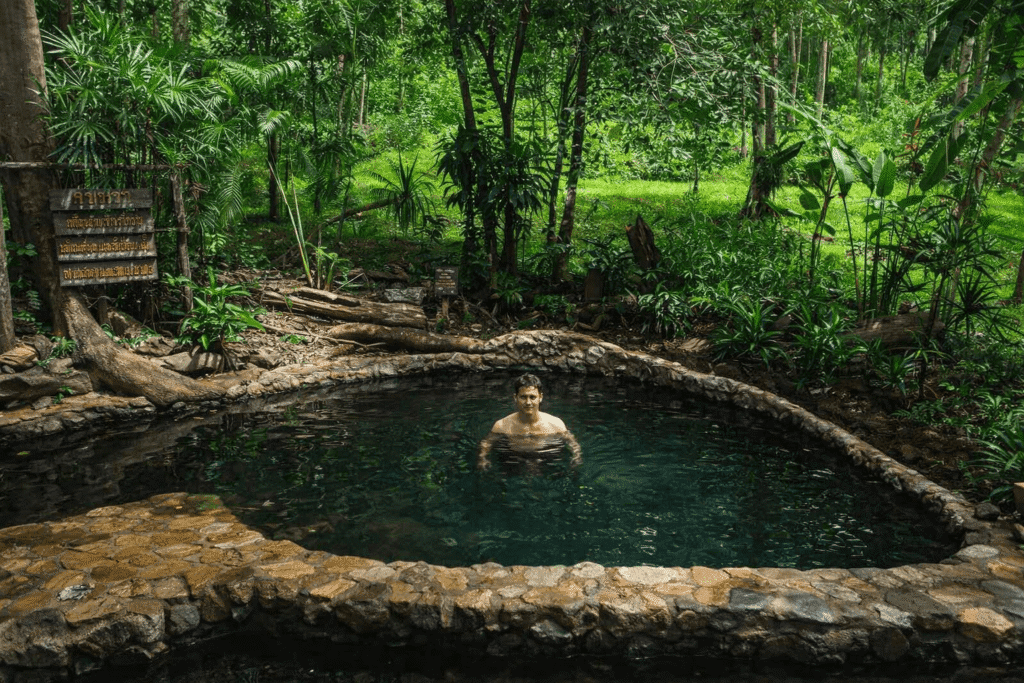
| 2:30 PM – 4:00 PM | Soak at Chiang Dao Hot Springs | Unwind at the public Chiang Dao Hot Springs. Soak in the natural mineral tubs beside the cool river stream to relax before the drive back. See my Chiang Dao hot springs guide for both options. |
| 4:00 PM – 5:30 PM | Return Drive to Chiang Mai | Wrap up your Chiang Dao day trip and drive back down to Chiang Mai, returning in time for dinner or the evening night markets. |
Things to Do on a Chiang Dao Day Trip (Beyond the Tourist Trail)
Nature, Hiking & Viewpoints
Doi Luang Chiang Dao is the defining physical fact of this place. At 2,195 meters, it’s Thailand’s third highest peak and a UNESCO Biosphere Reserve. You do not need to summit to be humbled by it, the approach trails through bamboo and pine forest, and the ridge line viewpoints along the way, are rewarding enough. For the full list, see my guide to the best things to do in Chiang Dao.
Always go with one of our registered local guides; the mountain is large, the terrain changes with weather, and the experience is dramatically better with someone who knows the mountain’s moods.
Pha Daeng National Park borders the area and is one of the most under-visited national parks in northern Thailand. Wildlife, waterfalls, and a quiet that feels complete.
Nam Tok Chiang Dao (Chiang Dao Waterfall) is best visited in the green or early cool season when the water is high and the surrounding forest is thick and alive. It’s a relatively easy walk and a genuinely beautiful spot.
The viewpoints scattered across the valley roads, many of them unmarked, many of them shared with you by a local rather than found on Google Maps, are some of the greatest pleasures of being here. Ride slowly. Stop when something looks good. This is the principle that underpins the best version of any Chiang Dao visit.
The Caves
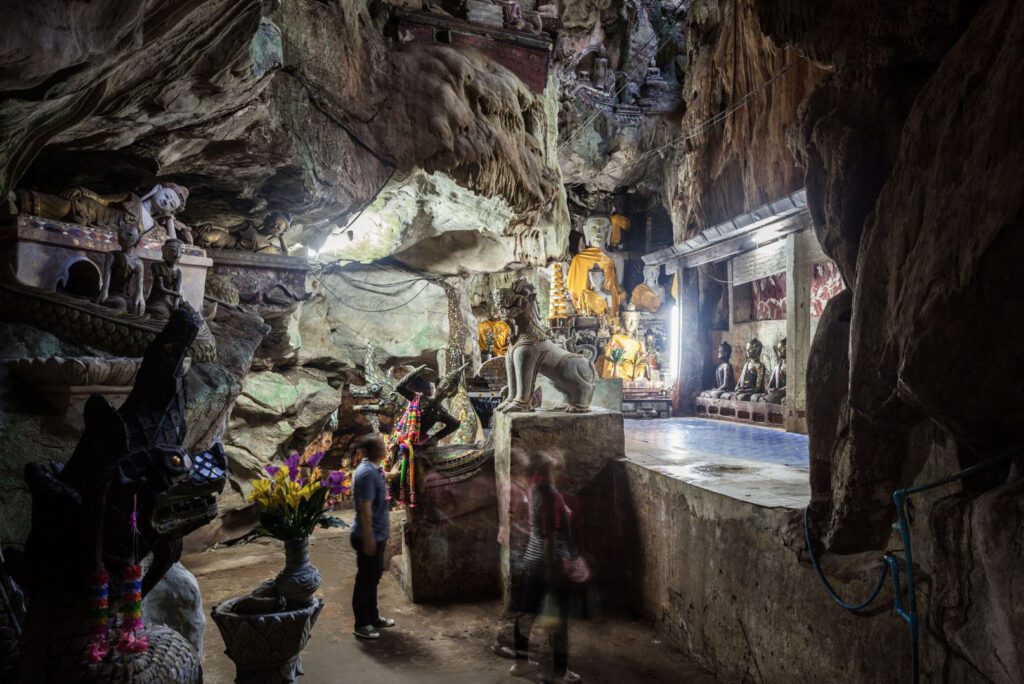
Tham Chiang Dao is one of the largest cave systems in Thailand and arguably the most atmospheric. The outer section, lit and accessible without a guide, is impressive. The inner chambers, which require a lantern-carrying local guide, are extraordinary: cathedral spaces, formations that look like they were arranged by a sculptor, the kind of absolute silence that makes you hyper-aware of your own breathing. Don’t skip the inner section.
Local Villages & Culture
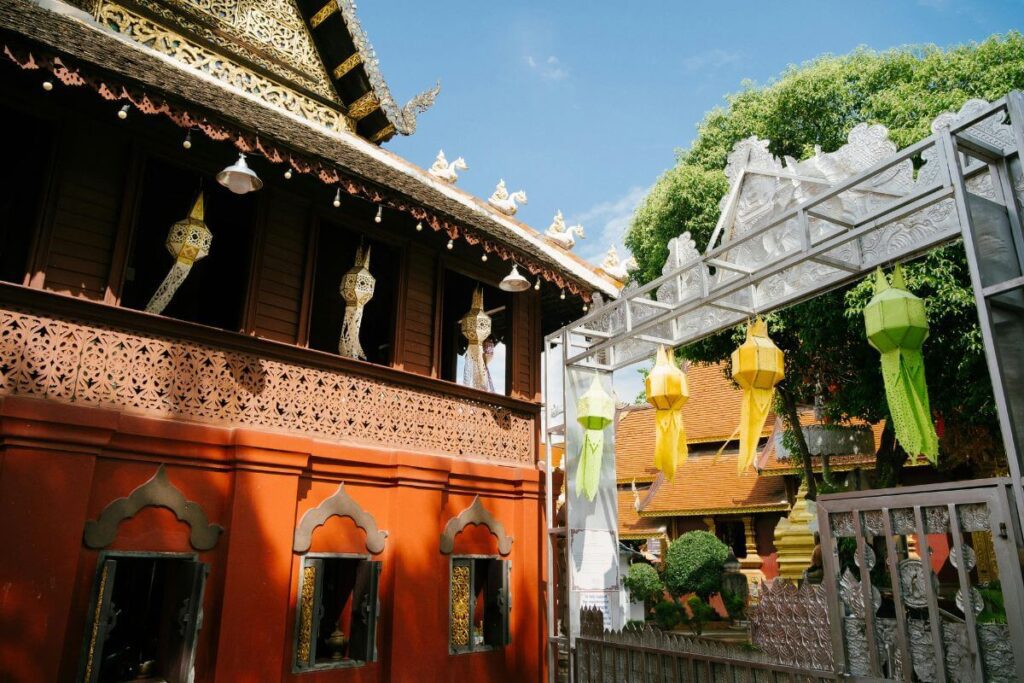
Wat Tham Pha Plong, the forest temple above the valley, is one of those places that travelers talk about in hushed voices. You climb a long staircase through the jungle and emerge at a small temple complex where monks live in simple kutis (cells) among the trees. It is not a tourist attraction. Dress modestly, speak quietly, and leave it as you found it.
The Chinese Yunnanese communities to the north of Chiang Dao proper are among the most fascinating I’ve encountered anywhere in Thailand. These are villages established by former soldiers and their families, a long story tied to the history of the region, and today they’re quiet, self-contained places where the older residents speak Mandarin as their first language and the cultural DNA is unmistakably Yunnanese.
It was the first time I, as a Thai person, had encountered a community like this within my own country. That sense of discovery is available to any traveler willing to ride a bit further north.
Food Experiences
Chiang Dao is not a massive food hub like Chiang Mai, but taking a Chiang Dao day trip still promises fantastic eating. The food is simple, Northern Thai, honest, and local. Look out for khao soi, flavorful sai oua pork sausage, and freshly grilled meats along the main road.
The weekly market (held on specific days depending on the season, so ask your host) is the best single food experience available. Local vendors, local produce, and the kind of interaction with the community that most tourist experiences are designed around but rarely actually achieve.
If you want a more intentional food experience, ask us to connect you with a local family for a home cooking session. This is not a formal cooking class with aprons and recipe cards. It is someone showing you how they actually cook, in their actual kitchen.
Hidden Gems of Chiang Dao
The Chinese village north of Chiang Dao town has already been mentioned, but it bears repeating: ride north, keep going past the point where the road feels like it’s ending, and you’ll find communities that most visitors to this area never reach.
Sunrise from the rice fields is not a guided experience, not a viewpoint with a car park, and not on any map. It’s waking up early, walking out of your guesthouse, and standing in the middle of a working rice paddy as the mist rolls off the mountain. Free. Unforgettable.
Ask your host. This is, in the end, the most important piece of advice I can give. A good local contact in Chiang Dao will give you information that no guide, no travel blog, and no algorithm has. That WhatsApp list of viewpoints I mentioned? Better than anything I could have found on my own.
For those who are interested in experiencing a culture through food, we offer a dedicated Culinary Exploration travel style. These custom journeys take you far beyond standard restaurant recommendations, immersing you in the region’s rich heritage through traditional cooking styles, vibrant local markets, and family-owned farm-to-table experiences that reveal the true flavor of Northern Thailand.
How to Get to Chiang Dao
From Chiang Mai
By bus: the cheapest option. Chang Phuak Bus Station (Terminal 1) in Chiang Mai runs regular buses and minivans to Chiang Dao throughout the morning. It handles local routes inside Chiang Mai Province, while the Arcade Bus Terminal is for long-distance routes to other provinces, so make sure you go to the right one. Journey time is roughly 1.5 to 2 hours depending on stops and traffic. Seats are basic and without air conditioning but the journey is scenic once you clear the city.
By minivan: slightly faster and more comfortable. Shared minivans also leave from Chang Phuak and can drop you closer to your guesthouse depending on where you’re staying.
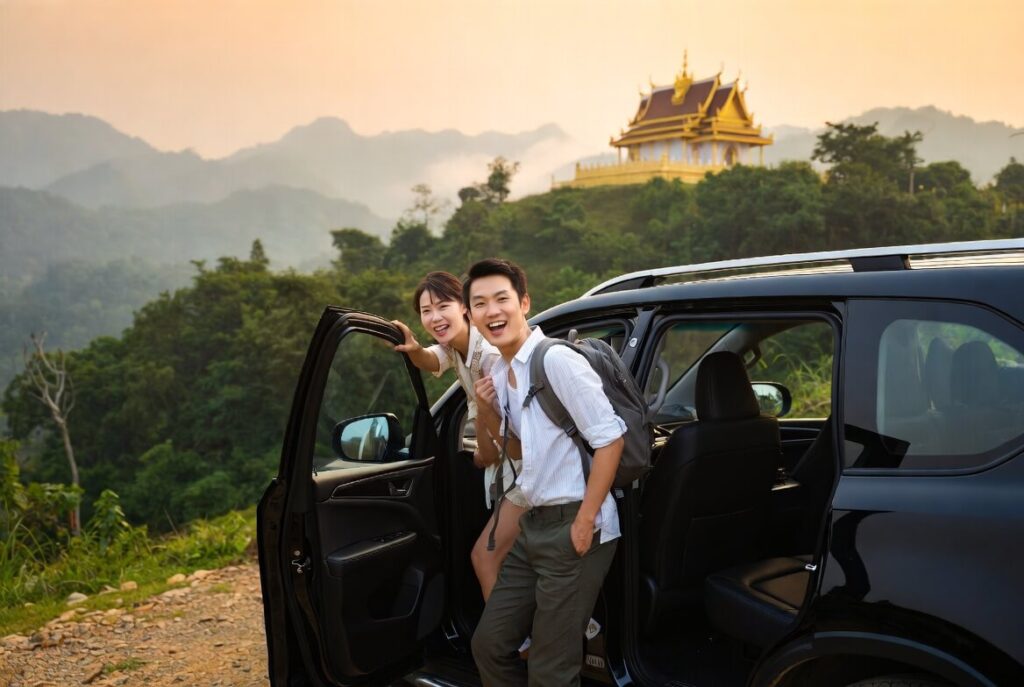
By private transfer: the most comfortable, safe, and flexible way to reach Chiang Dao. We pick you up directly from your hotel or the airport in Chiang Mai, anywhere else in Northern Thailand, or even from other cities across the country, with a comfortable private vehicle and an English-speaking driver.
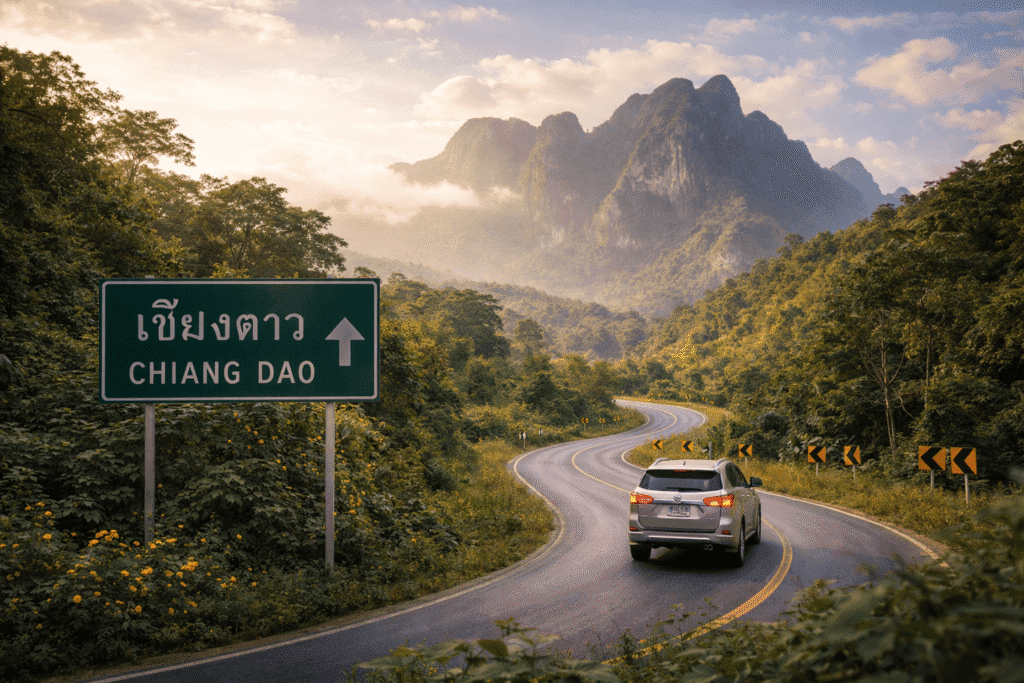
Our door-to-door private transfer is ideal for families, couples, or anyone traveling with more luggage than a motorbike can handle, and it lets you stop wherever you like along the scenic route. The drive from Chiang Mai to Chiang Dao usually takes about an hour to an hour and a half, and we’ll take care of everything so you can simply relax and enjoy the views.
If you’d rather not ride the mountain roads yourself, a Chiang Mai private tour guide and driver can handle the whole day, from hotel pickup to the caves, the forest temple and the hot springs, and back.
Practical Tips for Visiting Chiang Dao
Pack a layer. Cool season temperatures at night can be genuinely cold by Thai standards, especially at higher elevation. A light down jacket or warm layer is not optional if you’re visiting between November and February.
Download offline maps. Many of the best spots around Chiang Dao are not well-signposted and mobile signal is inconsistent. Download the Maps.me or Google Maps offline area before you leave Chiang Mai.
Cash is essential. There is an ATM in the town center, but many guesthouses, local restaurants, and market vendors are cash-only. Bring more than you think you’ll need.
Respect the smoke season. I’ve said this already, but it’s worth repeating: if you arrive during burning season and the air quality is poor, don’t pretend it’s fine for the sake of the trip. Your health matters more than the itinerary. Have a backup plan.
Is Chiang Dao Right For You?
Probably yes, if you’re reading this guide.
But let me be honest about who will love it most and who might struggle.
A Chiang Dao day trip is genuinely wonderful if you are drawn to natural landscapes over city culture. If a quiet coffee with a mountain view sounds better than a checklist of temples, or if you want an escape from Chiang Mai that does not feel staged for tourists, this trip is ideal.
It’s a harder sell if you need constant stimulation, if you’re traveling with people who define a good holiday by how many activities they complete, or if you’re visiting during burning season without a plan B. If you’re still choosing where to go in the north, our guide to Northern Thailand destinations compares the options.
The infrastructure is limited by design. The roads to the best spots are sometimes unpaved. The internet at some guesthouses is unreliable. The 7-Eleven is a short drive rather than a short walk.
None of that is a problem. All of it is the point.
Conclusion
I want to close with something honest.
There are places you visit and places that visit you back. Chiang Dao is the second kind. I have never returned from a trip there feeling anything other than grateful, grateful for the landscape, for the people, for the specific quality of silence that settles over the valley in the early morning when the mist hasn’t lifted yet and the mountain is just a dark shape behind the white.
I deliberately skipped it once, during a burning season visit to Chiang Mai, because I didn’t want smoke to be the thing I remembered. That is, I think, the most honest thing I can tell you about how much this place means to me. You protect things you love by choosing the right moment for them.
This is the pinnacle of northern Thailand for me. Not because it’s the most famous, or the most convenient, or the most Instagrammed. Because it’s real. Because the people are genuinely warm rather than professionally welcoming. Because the landscape rewards your attention rather than just your camera. Because slow travel here isn’t a concept, it’s just what happens when you stop rushing and let the place in.
My verdict: a Chiang Dao day trip is the best single day you can spend outside Chiang Mai. Leave early, go between November and February, and don’t skip the hot springs before the drive back. If you can spare a night, stay. The valley is at its best at sunrise.
If you want to experience Chiang Dao the way I’ve described it in this guide, with the right accommodation, the right timing, local connections, and an itinerary built around how you actually travel rather than a generic template, take a look at our custom private tours in Thailand.
We build custom northern Thailand itineraries for travelers who want to go deeper than the usual trail, and Chiang Dao is one of the places we love putting people in most.
Map of Chiang Dao
Prefer a quick chat?
Message us directly on WhatsApp
If you already have an idea of your trip, send us a message, and we’ll guide you through the best options for your travel style. You can also reach us by email at [email protected].
Chat on WhatsAppFAQ: Planning Your Chiang Dao Day Trip
Is a Chiang Dao day trip worth it from Chiang Mai?
Absolutely. Located just 70 kilometers north of Chiang Mai, a Chiang Dao day trip offers a dramatic change of scenery with majestic mountain views, limestone caves, and serene forest temples without requiring a long journey or overnight stay.
How do I get to Chiang Dao for a day trip?
You can easily take a Chiang Dao day trip by renting a motorbike or car, hiring a private driver, or taking a local bus or yellow songthaew from Chang Phuak Bus Station in Chiang Mai. The drive takes about 1.5 hours each way.
What should I include on a 1-day Chiang Dao day trip itinerary?
A well-paced Chiang Dao day trip usually includes exploring Chiang Dao Cave, taking in the views at Wat Tham Pha Plong, relaxing at the natural hot springs, and enjoying a quiet meal or coffee overlooking the mountains.
What is the best time of year for a Chiang Dao day trip?
The cool season between November and February is the ideal time for a Chiang Dao day trip, offering clear skies, misty morning views, and comfortable weather for outdoor activities.
Can I visit Chiang Dao on a day trip without renting a scooter?
Yes, you can easily arrange a private driver or take public transport to town and hire a local songthaew driver to take you between the main spots on your Chiang Dao day trip.
How long does the drive take for a Chiang Dao day trip?
The drive from central Chiang Mai takes approximately 80 to 90 minutes via Route 107, making a Chiang Dao day trip one of the most accessible scenic escapes in Northern Thailand.
How can I book a guided Chiang Dao day trip?
If you prefer a seamless experience with private transport and a local guide, message us on WhatsApp or through our contact form, and we’ll customize a private Chiang Dao day trip around your dates and interests.
About the author
Written by Dee, Thai-born founder of Off Path Thailand. Born and raised in Bangkok, I’ve spent over 30 years exploring Thailand, including months living in Chiang Mai in 2020, 2021, 2022 & 2024, with Chiang Dao as my favorite escape. About the founder
Tell us your dates and vibe. Our team replies within 24 hours to begin crafting your trip.
Leave everything to us and experience Thailand Off The Beaten Path
Every journey leaves a footprint; the difference is in how we choose to travel. At Off Path Thailand, we focus on keeping those footprints light. Discover how sustainable travel in Thailand connects comfort with care.