
Off Path Chiang Mai
Chiang Mai Hidden Gems Itinerary:
6 Slow Days in the Mountains
3 to 6 days of mountain roads, quiet temples, local hot springs, coffee villages and the Chiang Mai most visitors drive straight past.
The Itinerary
Chiang Mai, one direction at a time
This Chiang Mai hidden gems itinerary takes you out of the Old City and into the hills around it, one direction per day: Doi Suthep, the Samoeng Loop to the west, Doi Saket to the east, the coffee village of Mae Kampong and the quiet roads of Mae On.
Most of Chiang Mai’s best places aren’t on top-10 lists, and almost none of them are reachable on foot. I found most of the stops on this route by scooter, on rides into the hills, or because someone I met along the road pointed me toward them. The places themselves are all in our Chiang Mai hidden gems guide. This page puts them into an order that actually works, day by day.
The pace is slow on purpose. Each day covers one side of the city, starts early and leaves room for the detours that make Chiang Mai special: a roadside fruit stall, a hillside café, a temple with no sign in English. If it’s your first time and you want the classic sights too, start with the best things to do in Chiang Mai and use this Chiang Mai hidden gems itinerary for the quieter side.
This is a sample, not a package. Every trip we plan starts from a blank page, built around your dates, pace and interests. Use this route as a starting point: we can shorten it to three days, add a night in a mountain village, focus on temples or hot springs, or slow it right down. See how our services work.
Design Your Chiang Mai Trip
This itinerary is a starting point. Tell us your dates and travel style, and we’ll build something around you, with a driver who knows the mountain roads.
Start PlanningWe reply within 24 hours. No fixed tours, no group itineraries.
“I rented a scooter for four days. That rental turned into four months.”How Chiang Mai became my obsession
From Our Founder
I’m Dee, born and raised in Bangkok. I spent a few months in Chiang Mai in 2020, 2021, 2022 and 2024, working remotely and living in local neighborhoods rather than hotels: in Santitham, and on the quiet side of the river near Nawarat Bridge.
While working remotely, I got bored one day and rented a scooter for four days. It turned into four months. Every morning I’d wake up early, as excited as a kid on Christmas morning, and ride into the hills. Around 90% of the places that mattered to me weren’t things I searched for. I stumbled onto them, or someone I met on the road pointed me toward them.
When I worked out of a coworking space nearby, I’d ride up to the temple and back three times a week, sometimes more, just to clear my head. I’ve also lived through burning season, and the smoke gave me a rash in 2021, which is why I’m careful about when I send people north.
This Chiang Mai hidden gems itinerary follows the roads I keep going back to. I’d love to show it to you.
Dee
Who This Chiang Mai Hidden Gems Itinerary Suits
Good For
The Itinerary
Chiang Mai Hidden Gems Itinerary, Day by Day
A flexible 3 to 6 day framework, one direction per day. Every stop can be swapped, shortened or slowed down around your pace.
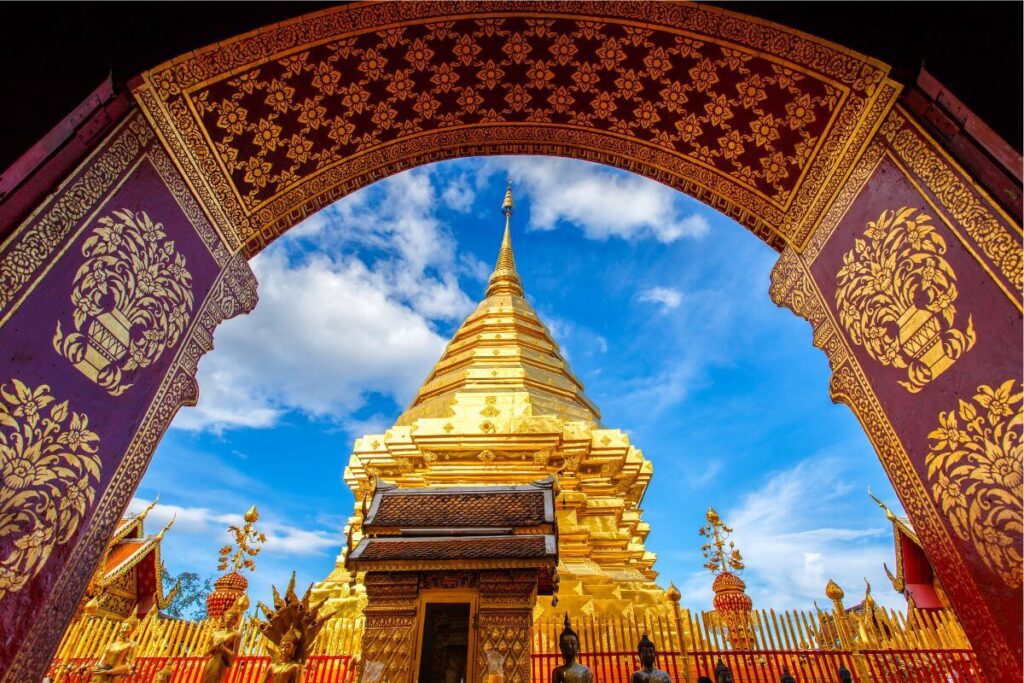
Arrival → A Local Neighborhood → Doi Suthep in the Late Afternoon
Arrive in Chiang Mai and settle somewhere that feels lived-in rather than built for visitors. Santitham, or the quiet side of the river near Nawarat Bridge, are the two areas I lived in, and both put you close to the city without the Old City crowds. If you’re still deciding how to split your time, Bangkok vs Chiang Mai compares the two cities.
Once you’ve dropped your bags, head straight up Doi Suthep. It’s right on the edge of town, and it’s my reset button: my default whenever I can’t think of anywhere else to go, and the last place I go before a flight. Most visitors treat it as one stop on a packed tour. Going up in the late afternoon, with no plan beyond the ride and the view, is a gentle introduction to the city.
For dinner, eat where locals do. Our Chiang Mai market guide covers the fresh markets and neighborhood food streets, and the Chiang Mai street food price guide tells you what to expect to pay.
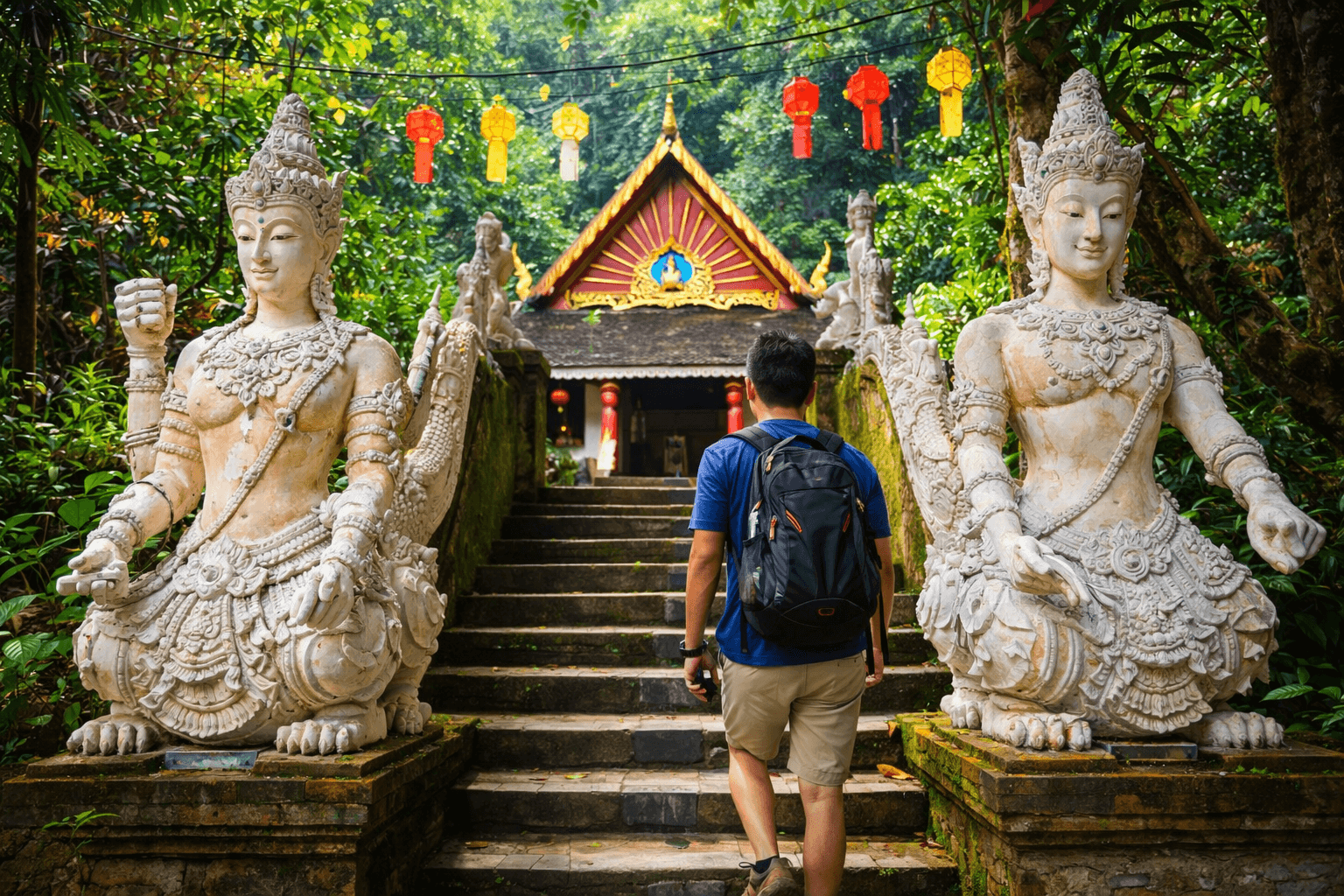
Monk’s Trail → Wat Pha Lat → Bhubing Palace → Doi Pui
Start early on the Monk’s Trail, which climbs through forest behind Chiang Mai Zoo to Wat Pha Lat. Arriving on foot changes the whole experience: moss-covered stone, small shrines and the sound of running water. It’s much busier than it used to be, with tour SUVs lining up out front later in the morning, so timing matters.
From there, continue up the mountain road past the main temple to Bhubing Palace, the royal winter residence, with its rose gardens and mountain views. A little further on is the Doi Pui Hmong village, then the road narrows toward Doi Pui peak, the highest point in the range. Past the palace, the crowds largely disappear and it starts to feel like a real mountain drive.
Dee’s tip: be on the Monk’s Trail before 8am. The trail has a 100 THB access fee, and Bhubing Palace needs shoulders and knees covered. Bring a light layer too, because it gets noticeably colder near the top.
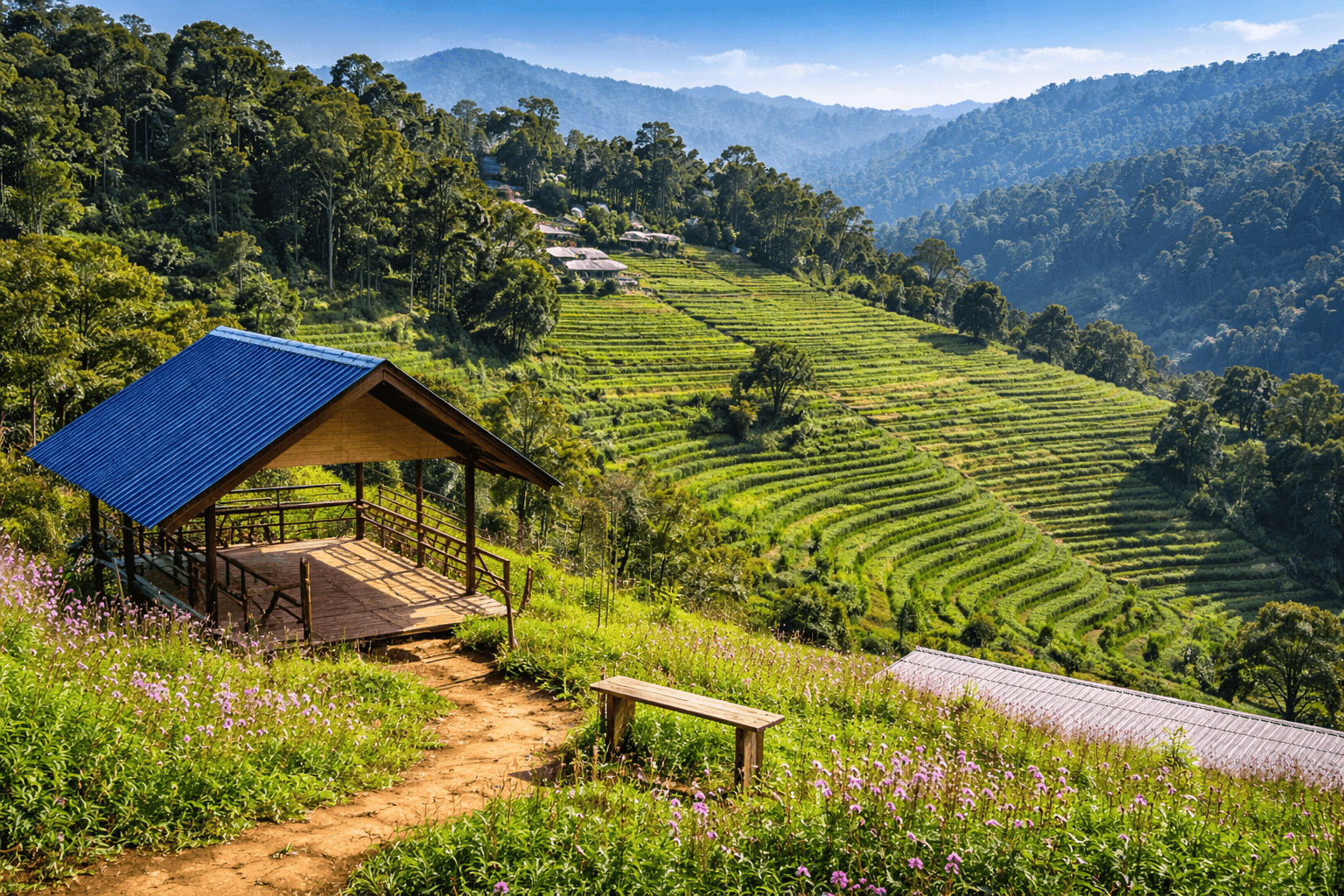
West: Mae Rim → Mon Jam → The Samoeng Loop & a Hidden Hot Spring
Leave by 8am and head north on Route 107 toward Mae Rim, the area where I’d build a home if I ever settled in Chiang Mai province. Turn off toward Mon Jam, where the road curves through forested hills, strawberry farms and roadside fruit stalls. I rarely pass one without stopping.
From Mon Jam, ride the Samoeng Loop, roughly 100km through the Mae Sa Valley and Samoeng before returning to the city. It takes 4 to 5 hours with stops. On one stormy afternoon, I ducked into a small Hmong souvenir shop to wait out the rain, and the man running it told me about a hot spring past Samoeng that most Chiang Mai locals have never heard of. No tour buses, no stalls, just steaming pools and cows grazing nearby. It’s still one of my favorite hot springs in Thailand.
Dee’s tip: fill up on fuel before you start climbing, because gas stations get scarce on the quieter roads. If you’re riding yourself, you’ll need a motorcycle license plus an International Driving Permit. Police checkpoints do enforce this.
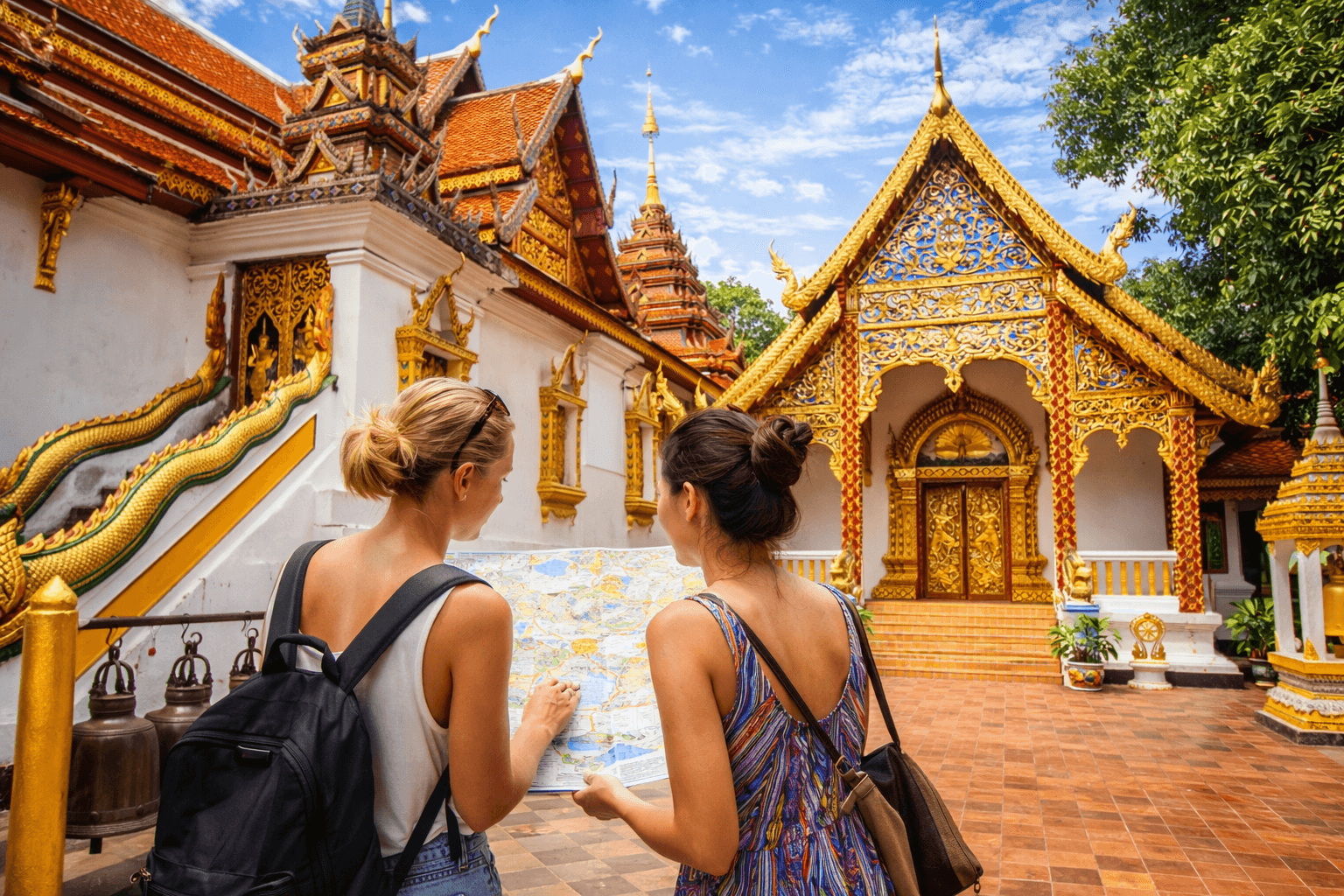
East: Wat Phra That Doi Saket → Doi Saket Hot Springs → Mae Kuang Dam
Today goes the other way, east on Route 118 toward Chiang Rai. Doi Saket has become my sanctuary in Chiang Mai province: slower, quieter and with hardly any tour groups. Start at Wat Phra That Doi Saket, a hilltop temple that rivals the famous ones in scale and artistry, with contemporary murals and wide valley views. Visitors here are mostly local families, not bus groups. The official tourism directory has more on its history.
Then soak at the Doi Saket hot springs, where you can choose between older and newer private bathing rooms overlooking the mountains, with a small massage area nearby. Finish the afternoon at Mae Kuang Udom Thara Dam, where the water reflects the hills and small lakeside restaurants serve simple meals (our street food price guide shows what to expect to pay). It’s the kind of place you can spend hours without needing a plan.
Dee’s tip: go to the hot springs on a weekday morning, and bring your own towel. Climb the steps up to the temple chedi, or drive straight up if your legs need a rest.
Mae Kampong Coffee Village → Mae On Cafés → Muang On Cave
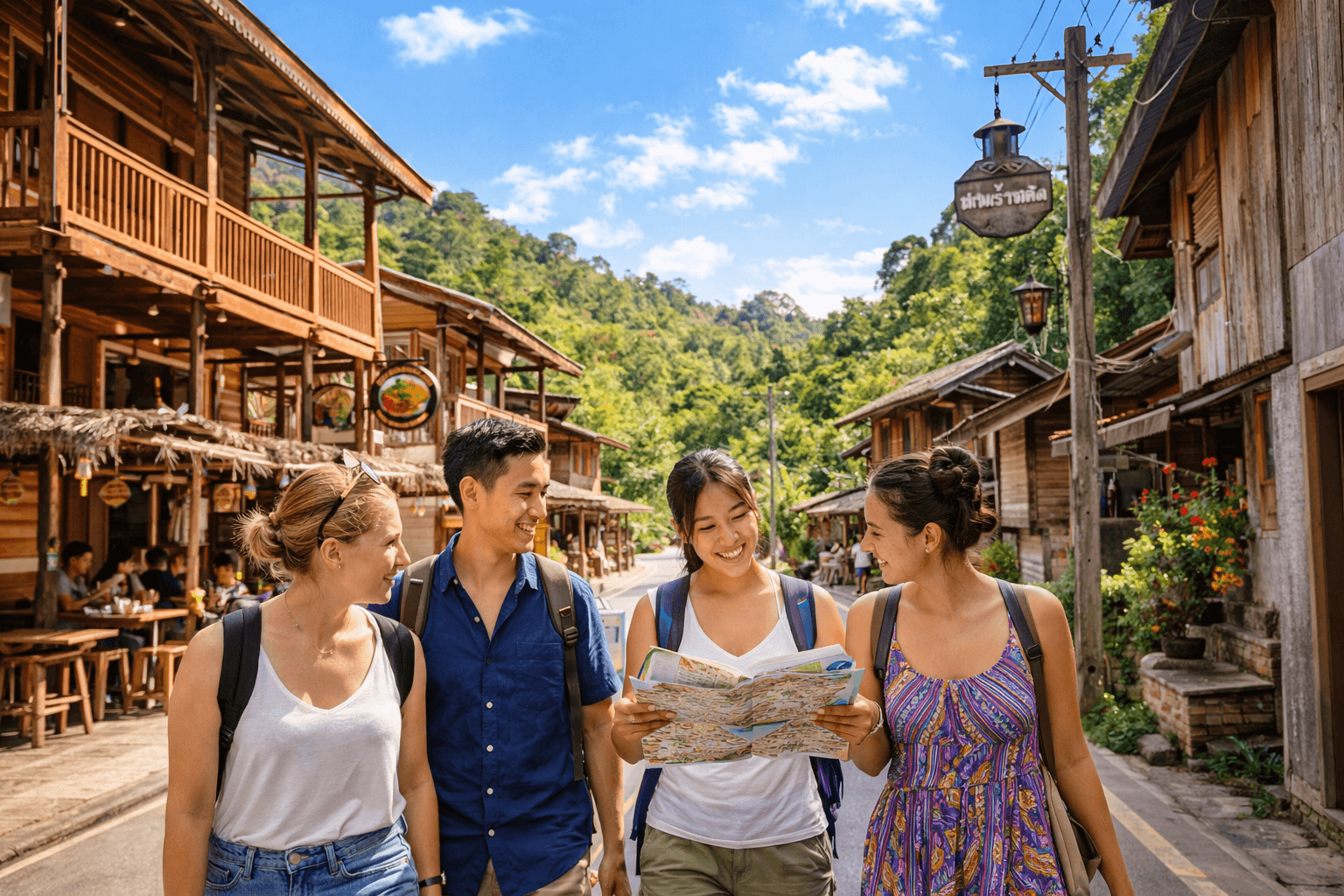
Go early to Mae Kampong, a century-old village built along a fast-running stream at about 1,300m, with wooden houses on stilts, mountain coffee and fermented tea. Before 9am on a weekday, mist drifts through the trees and the village is quiet. Don’t stop where the map pin drops you, because there’s more to see both before and after it. This video of Mae Kampong gives you a feel for the village.
Then ride down into Mae On, where the roads roll rather than climb. Small cafés appear at bends in the road and on slopes with valley views, and every time I’ve stopped, the tea has been genuinely good. Mae On is where I go simply to ride and let the road decide the day.
Finish at Muang On Cave. The first time I went, a songthaew full of monks pulled up just as I arrived, and following them up the naga staircase turned a sightseeing stop into something closer to a pilgrimage. Inside are large caverns, an enormous stalagmite and a reclining Buddha.
Dee’s tip: the air inside the cave is humid, so pace yourself if you have sinus issues. Wear proper shoes for the stairs up and down.
Baan Tawai Woodcarving Village → Departure
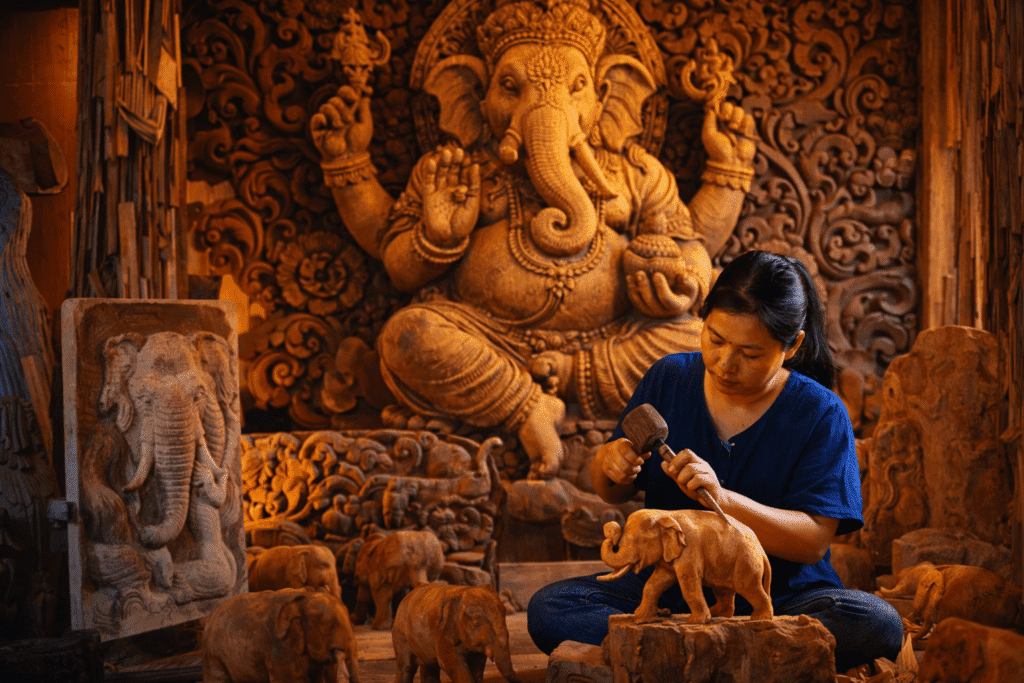
Keep your last morning light and head to Baan Tawai, a woodcarving village in Hang Dong, about 12km southwest of the city. What most visitors don’t realize is that much of the woodwork sold at the Saturday and Sunday Walking Streets and the Night Bazaar is made here, in small home workshops. Shop owners from Bangkok come to buy wholesale, and some of it is exported to Europe.
On a weekday morning you’ll see the artisans actually working, and prices are noticeably closer to wholesale than in town. The village’s Ban Tawai website lists its workshops and shops. It’s one of my favorite stops for couples, especially those who love interiors, and I include it in many of the trips I plan.
Got a few spare hours before your flight? Do what I do and ride up Doi Suthep one last time.
Make It Yours
How we can adapt this trip
This Chiang Mai hidden gems itinerary is just one way to see the north differently. Here are a few ways we often change it.
Short on time
With three days, we focus on Doi Suthep, the Samoeng Loop and Doi Saket. For a city-first version, see what to do in Chiang Mai in 3 days.
Add a lake day
Climb the Sticky Waterfalls in the morning, then slip away to the still water and floating restaurants of Mae Ngat Dam, about 1.5 hours north of the city.
Sleep in the hills
Spend a night or two in Mae Kampong or Mae On instead of driving back to the city, and have the village to yourself in the early morning.
Slower and easier
Fewer stops, more time at the hot springs, a massage most afternoons, and a private guide and driver on every mountain road.
More time in the city
Add a morning on foot with our Chiang Mai walking routes, or a day of cafés, markets and vegan restaurants.
Part of a bigger trip
Continue north to the limestone peaks of Chiang Dao or other Northern Thailand destinations, or join it to our Northern Thailand itinerary or the Bangkok hidden gems itinerary.
The Full Package
What’s Included
Everything on this Chiang Mai hidden gems itinerary is arranged so you can focus entirely on the experience.
Before You Go
Good to Know
Message Us Directly on WhatsApp
If you’d like to follow this Chiang Mai hidden gems itinerary, or already have an idea of your trip, send us a message and we’ll guide you through the best options for your travel style and dates.
Chat on WhatsAppOr email us at [email protected]
Wrapping Up
Conclusion
This Chiang Mai hidden gems itinerary is about getting out of the city and into the hills that surround it, one direction at a time: the forest temple and peaks of Doi Suthep, the Samoeng Loop to the west, Doi Saket’s temple, hot springs and dam to the east, the coffee village of Mae Kampong, the quiet roads of Mae On and the woodcarvers of Baan Tawai. Go early, leave room for detours, and let the road surprise you. For more quiet places further north, see our Northern Thailand hidden gems.
My verdict: if you only have three days, do Days 2 to 4: Doi Suthep, the Samoeng Loop and Doi Saket. With more time, add Mae Kampong and Mae On, and keep Baan Tawai for your way to the airport.
If you’d like us to plan this route around your dates, with a driver who knows the roads, have a look at our custom tours in Thailand.
Our map of Chiang Mai hidden gems and quiet spots, including every stop on this route.
Common Questions
Chiang Mai Hidden Gems Itinerary FAQ
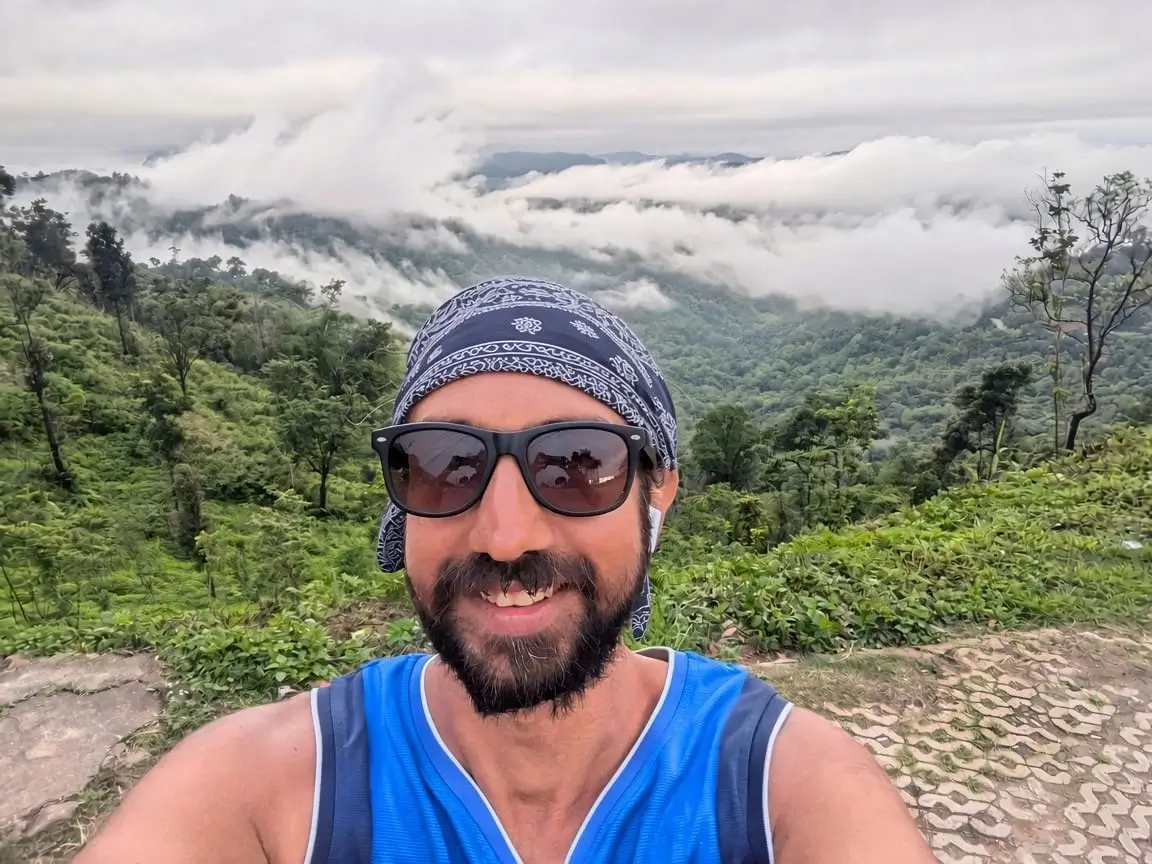
Written by Dee, founder of Off Path Thailand, born and raised in Bangkok. I spent months at a time in Chiang Mai in 2020, 2021, 2022 and 2024, and most of the places on this route I found by scooter, riding into the hills. About the founder
Your trip starts here