

Travel Story · Nan Thailand
The Free Ticket That Took Me to Nan Thailand
A post-lockdown scooter ride through Nan Thailand’s Sapan Valley, one hostel I’ll never repeat, and what happens when you land somewhere with absolutely no plan.
I hadn’t left my neighborhood in five months.
That’s not an exaggeration for effect, it’s just what the tail end of Covid looked like for a lot of us. Bangkok, then Chiang Mai, then four walls and a laptop screen for the better part of half a year. No income for nearly two years. No flights. No plans. Just the same short walk to the same 7-Eleven and back, over and over, until the days stopped feeling like days.
So when Thai Airways cancelled a flight I’d booked before all of this started and refunded it as flight credit, it didn’t feel like paperwork. It felt like a door creaking open. Somewhere in the world, air travel was starting to move again, and I had a ticket sitting there with my name on it and nowhere in particular it was tied to.
I think anyone who lived through that period remembers exactly how it felt when the world started to loosen back up. It wasn’t relief exactly, it was more like your body had forgotten how to want things, and then suddenly it remembered all at once. For months, my biggest decision of the day had been which side of the room to sit on while I worked. The idea of a scooter, an open road, and mountains I’d never seen before felt almost disproportionately exciting for what it actually was. I wasn’t chasing anything extraordinary. I just wanted to move.
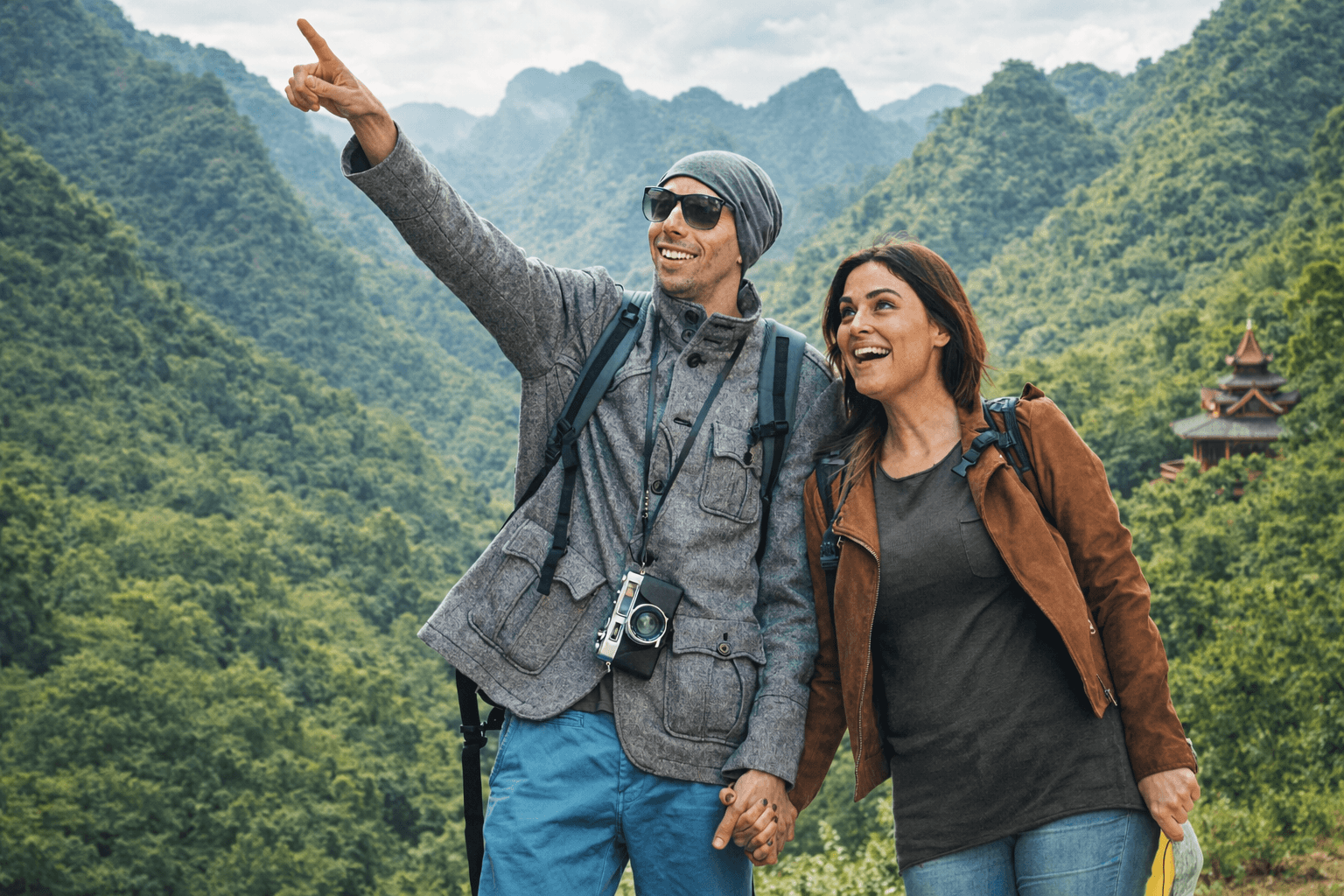
I already knew, before I even opened the airline app, that I didn’t want to go back to Chiang Mai. Not because I don’t love it (I do, deeply, and I keep returning to it), but because going back to Chiang Mai right then would have felt like watching the same movie again. I know every corner of it by now, which cafés I like, which temples I’ll wander into out of habit rather than curiosity. That’s a comfortable way to travel, but it wasn’t what I needed in that particular moment. I needed something new. Something I hadn’t already mapped out in my head before I’d even landed, a place where I couldn’t predict what the next street would look like.
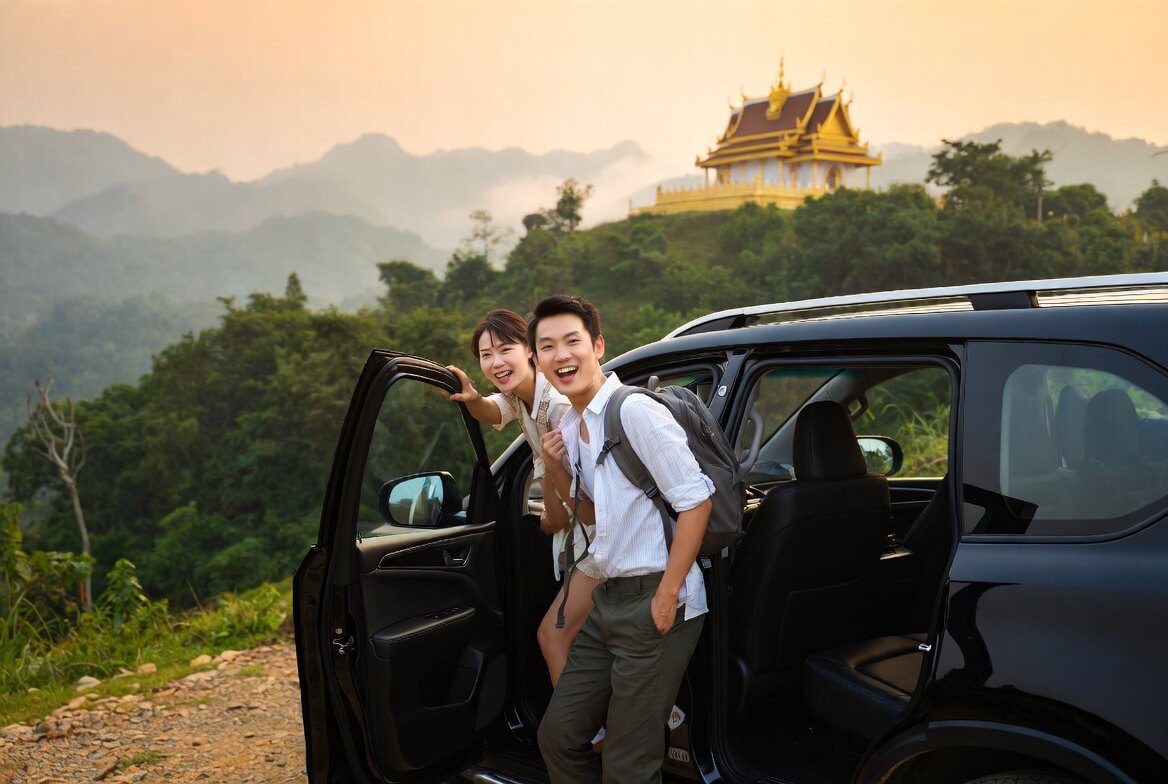
Where Even Is Nan Thailand?
Here’s the honest truth: I was born in Bangkok, I hadn’t even heard of Nan Thailand. It wasn’t on my radar at all. It was only once I’d relocated to Chiang Mai for a stretch that the name started coming up, not from travel blogs or Instagram, but from actual people. Other travelers, expats, Thai friends. “Have you been to Nan?” “You’d like Nan.” “It’s like Chiang Mai was twenty years ago.” I heard some version of that sentence enough times that it lodged itself in my head as somewhere I needed to see for myself, even though I couldn’t have told you a single specific thing to do there.
That’s usually how I travel, for what it’s worth. I don’t research heavily. I’ll glance at a map, maybe note one or two names that keep coming up (Sapan Valley was one of those, vaguely, before I ever got there), but I deliberately keep it thin. Overpreparing a destination in your head before you arrive has a way of flattening it. You show up chasing a photo you already saw instead of noticing what’s actually in front of you. I’d rather let a place introduce itself to me.
So with a free ticket and a name that a dozen people had mentioned to me in passing, I booked a flight to Nan Thailand with no hotel, no itinerary, and no real idea what I was walking into.
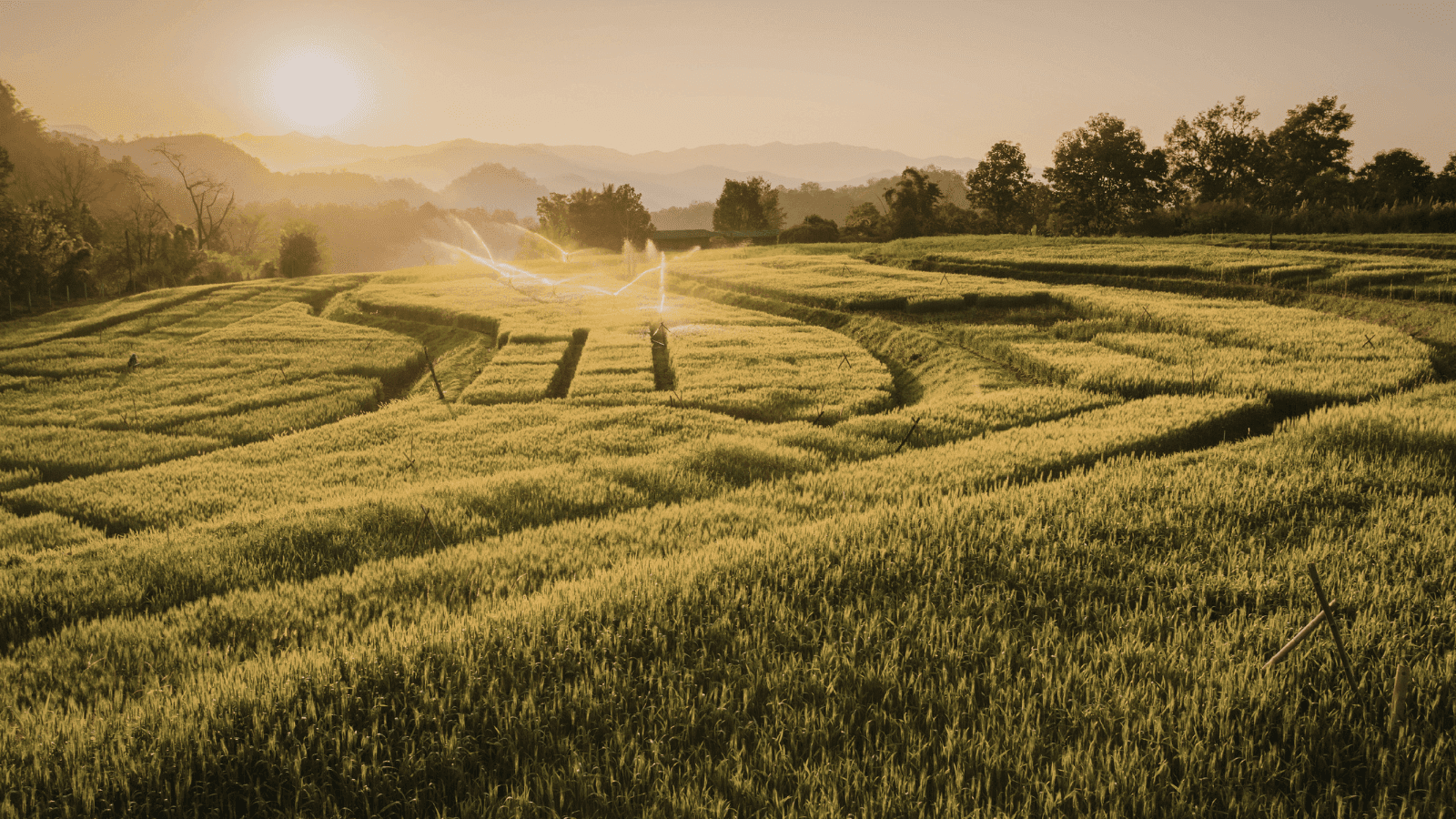
Landing in Nan Thailand With Nothing Planned
I walked out of Nan Nakhon Airport with a backpack and absolutely no plan. No hotel booked. No idea what part of town anything was in. Just the loose, slightly giddy feeling of being somewhere new after being nowhere for so long.
The first person I actually spoke to in Nan was a motorbike taxi driver waiting outside the terminal. I figured, why not kill two birds with one stone: I asked him, half on a whim, if he knew anywhere I could rent a scooter for a while, thinking maybe he’d point me toward a hotel first and I’d sort transport out later.
Instead, he just said he knew a guy.
It turned out he knew one of the only people in town renting scooters long-term, and within maybe twenty minutes of landing, I was standing with him negotiating a weekly rental rate. It’s the kind of small-town luck that just doesn’t happen in bigger tourist hubs: no rental shopfront, no queue, no fixed pricing board. Just a driver who happened to know a guy who happened to have a scooter free. I still think about how differently that first day could have gone if he’d said “no, sorry.”
With the scooter sorted, I didn’t even bother finding a hotel first. I rode straight to a hostel I’d have to now actually go find, since I hadn’t booked anything, and checked in on two wheels before I’d so much as showered off the flight.
It was, believe it or not, the first hostel I had ever stayed in in my life. I’d avoided them for years, mostly out of some vague idea that I was past that stage of travel. But this one was completely empty when I arrived, the beds were genuinely comfortable, first-class by hostel standards, and given that I hadn’t had a real income in close to two years, the price was more than welcome. Empty hostel, private-feeling room, budget rate. For those first few days, at least, it was close to perfect.
Slow Days in Nan Thailand’s Old Town
I didn’t rush into anything. The first couple of days were quiet, almost deliberately so. I got some work done on my laptop in the mornings, then spent the afternoons just wandering: no destination, no checklist, just riding the scooter in loose loops around town to get a feel for the place.
Nan’s riverside became a regular stop almost immediately. There’s a stillness to it that’s hard to describe to someone who’s only experienced the more built-up river fronts elsewhere in Thailand: no bars blasting music, no long stretch of restaurants competing for your attention, just the water moving slowly past old wooden buildings and the occasional local out for an evening walk.
I ate mostly street food, mostly without knowing exactly what I was ordering half the time, which is honestly one of my favorite ways to eat in a new place. There’s a particular stall culture in Nan Thailand’s morning market that I hadn’t experienced quite the same way anywhere else: plastic stools, folding tables, everyone eating shoulder to shoulder because there simply isn’t room to spread out. I sat down for noodles one morning and realized, looking around, that I hadn’t seen another foreign face all week. Nobody was performing hospitality for a camera or a review. It was just breakfast, the way it’s been every morning for years before I showed up and every morning after I left.
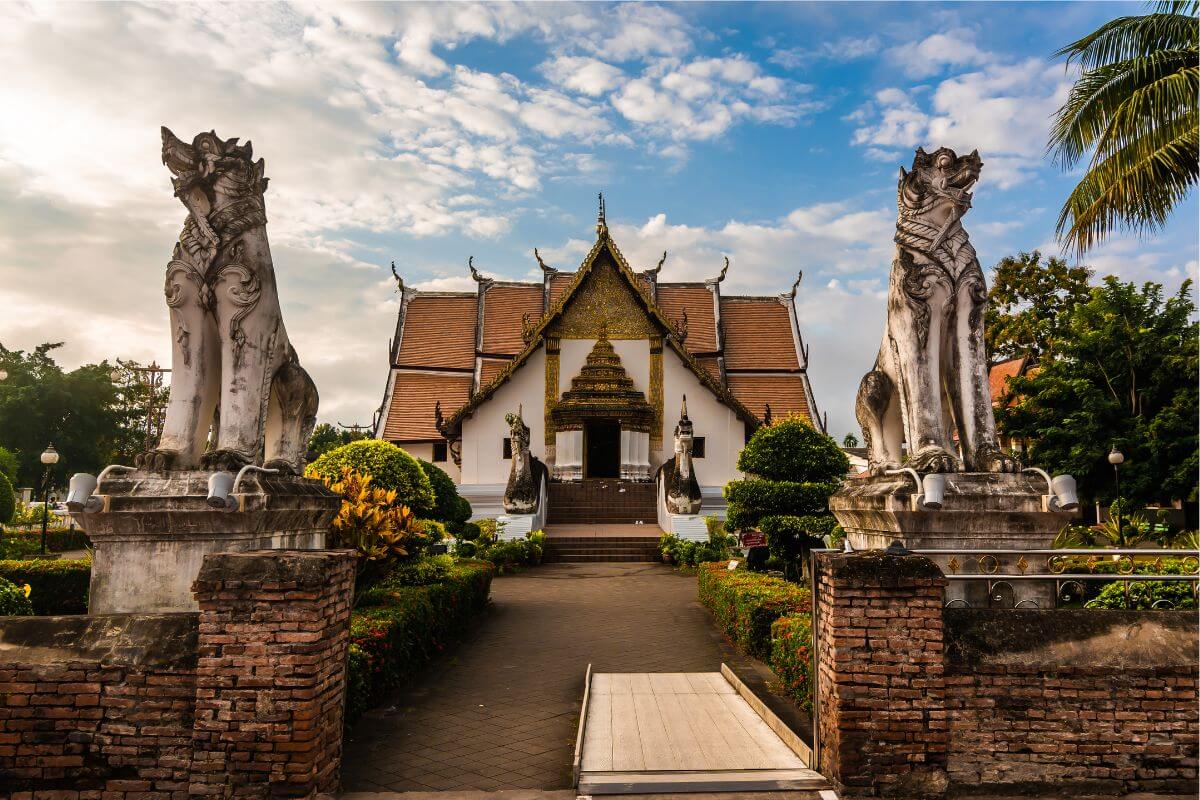
I made it to Wat Phumin during this stretch too, Nan Thailand’s most famous temple, and deservedly so. I won’t pretend I understood everything about the murals on my first walk-through; you really do need someone to point out what you’re looking at to appreciate the full weight of those paintings, the way they capture ordinary Tai Lue life (couples, gossiping neighbors, daily chores) rather than just religious iconography. But even without that context on the first visit, there was something about standing in a temple that wasn’t swarmed with tour groups, where the paint on the walls felt like it was actually telling you something rather than performing for a camera. I remember standing in front of one particular mural for a long time without really knowing why, just letting it hold my attention in a way temples don’t always manage to.
I also wandered the walking street one evening, which had that same unhurried energy: vendors setting up, locals browsing more than tourists, nothing designed to extract money from you as efficiently as possible. It felt less like a tourist attraction and more like I’d just stumbled into a town going about its normal week. I bought a couple of things I didn’t need, mostly as an excuse to talk to the vendors, and ended the night sitting by the river with a bag of grilled pork skewers, listening to the town wind down around me. Those first few days weren’t eventful in any way you could put in a highlight reel, but they were exactly what I’d been missing: the simple, unremarkable rhythm of being somewhere new and having nowhere urgent to be.
Meeting a Fellow Traveler
A few days in, I met a Thai-Chinese man at the hostel who, it turned out, was in Nan for almost the exact same reason I was. Same restlessness after being cooped up, same pull toward the mountains, same vague plan to “ride out and see what’s there.” He’d bought some kind of bundled AirAsia ticket deal (I don’t remember the specifics of the promotion now, something like a yearly pass that let him fly cheaply once a month), and he was using it to slowly work his way through parts of Thailand he hadn’t seen yet.
There’s a particular kind of connection you feel with another traveler when you’re both emerging from the same collective stretch of isolation. We ended up going out for beers that night, and it was, without exaggeration, one of the best nights out I’d had in nearly two years. Not because it was wild or eventful, it was just beers and conversation, but because it was the first time in a long time that “going out” was even a sentence I could say out loud and mean.
He talked about the windy roads and the landscapes waiting outside of town, the same kind of half-formed plan I had myself: ride out toward sunset, see what Nan actually looks like once you leave the town center. It cemented something I’d already been circling: that I needed to get out to Sapan Valley myself before I left.
I didn’t make it out the next day. The hangover took care of that decision for me.
The Ride to Sapan: Nearly Turning Back
Two days after that night out, I finally left early in the morning for Sapan.
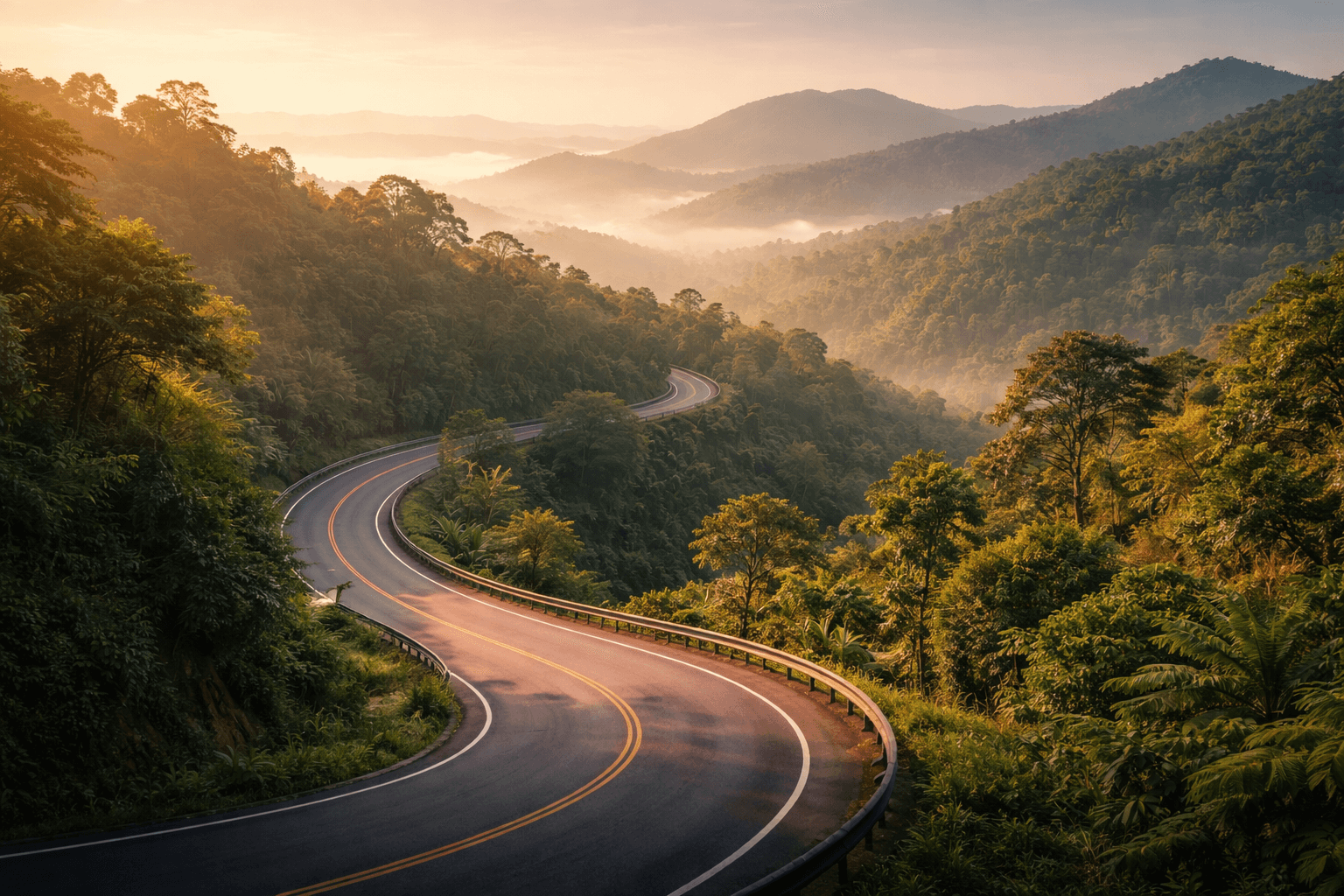
I want to be honest about how that ride actually felt, because most travel writing about routes like this skips the part where it’s genuinely uncomfortable. The first stretch out of Nan town was long, flat, and unglamorous. Village after village, then more empty road, then more villages. No dramatic scenery, no signal that anything was building toward something. At a certain point, maybe an hour, maybe more, distance and time blur together on a scooter, I seriously considered turning around. It felt endless. I remember thinking, is this it? Is this the big recommendation everyone gave me?
And then, without much warning, the landscape just opened up.
One stretch of road was ordinary countryside, and then a bend later I was surrounded by valleys that looked like they belonged in a completely different film.
I don’t have a more elegant way to describe it than that. Steep, layered, green in a way that felt almost unreal after months of staring at the same four walls. It’s the kind of scenery that makes you instinctively slow the scooter down, not because the road demands it, but because you don’t want to miss any of it by moving too fast.
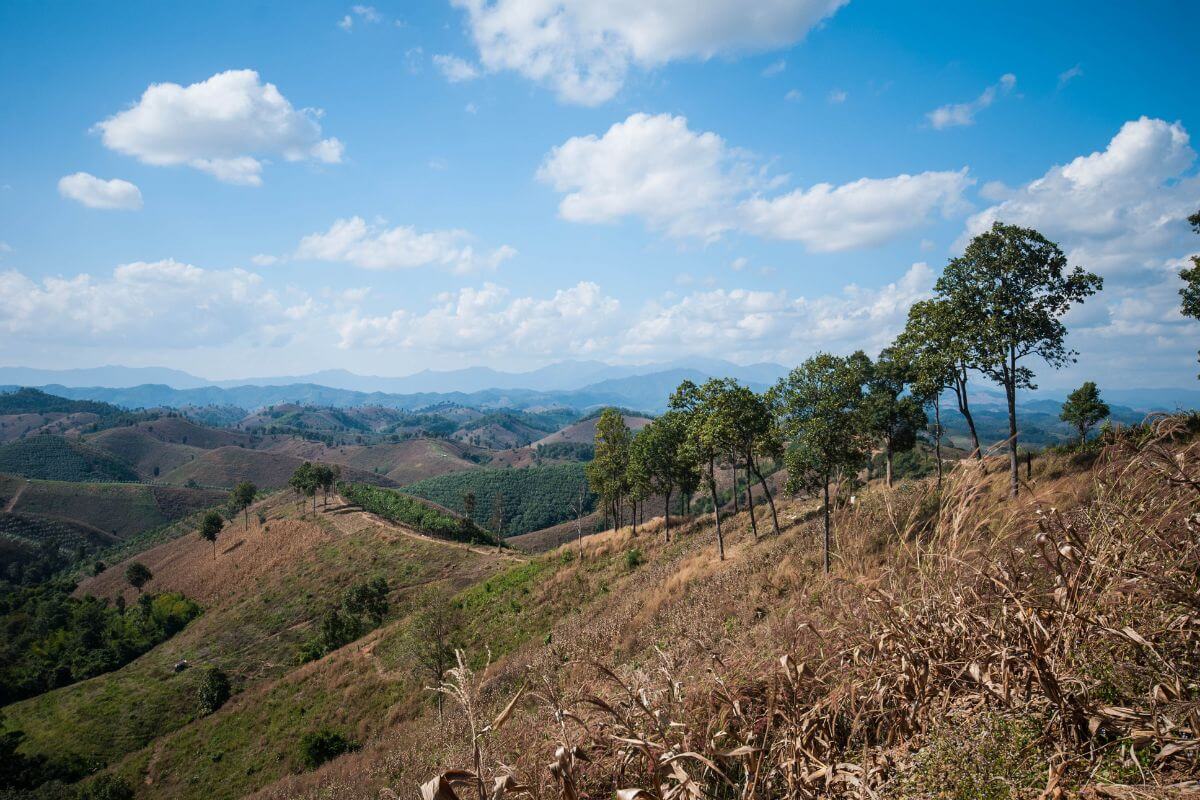
The air changed too, which is something photos never quite capture. It cooled noticeably as the elevation crept up, and I started catching the smell of wet earth and rice fields carried up from the valley floor, mixed with woodsmoke from somewhere I couldn’t see. Every so often I’d pass through a small village where the language on the signs and in the snatches of conversation I caught sounded different from the Thai I was used to hearing in Chiang Mai, a Lao-inflected dialect that made it clear I’d ridden somewhere genuinely on the edge of the country, not just further north on a map. Roosters somewhere in the distance, the occasional dog trotting along the road’s edge, and otherwise almost total quiet apart from the scooter engine. I hadn’t felt that specific kind of alone (the good kind, not the isolating kind) in a very long time.
Somewhere on that stretch, I passed a Mini Cooper rally heading the opposite direction, out of the valley as I was heading in. A whole convoy of them, distinctive and out of place on those mountain roads. I waved. They waved back. It was such a small, wordless moment, but it’s stuck with me, that brief overlap between my very solo, very budget scooter trip and this small parade of people doing the same drive in a completely different way. Different vehicles, same road, same reason for being out there.
Sapan Valley
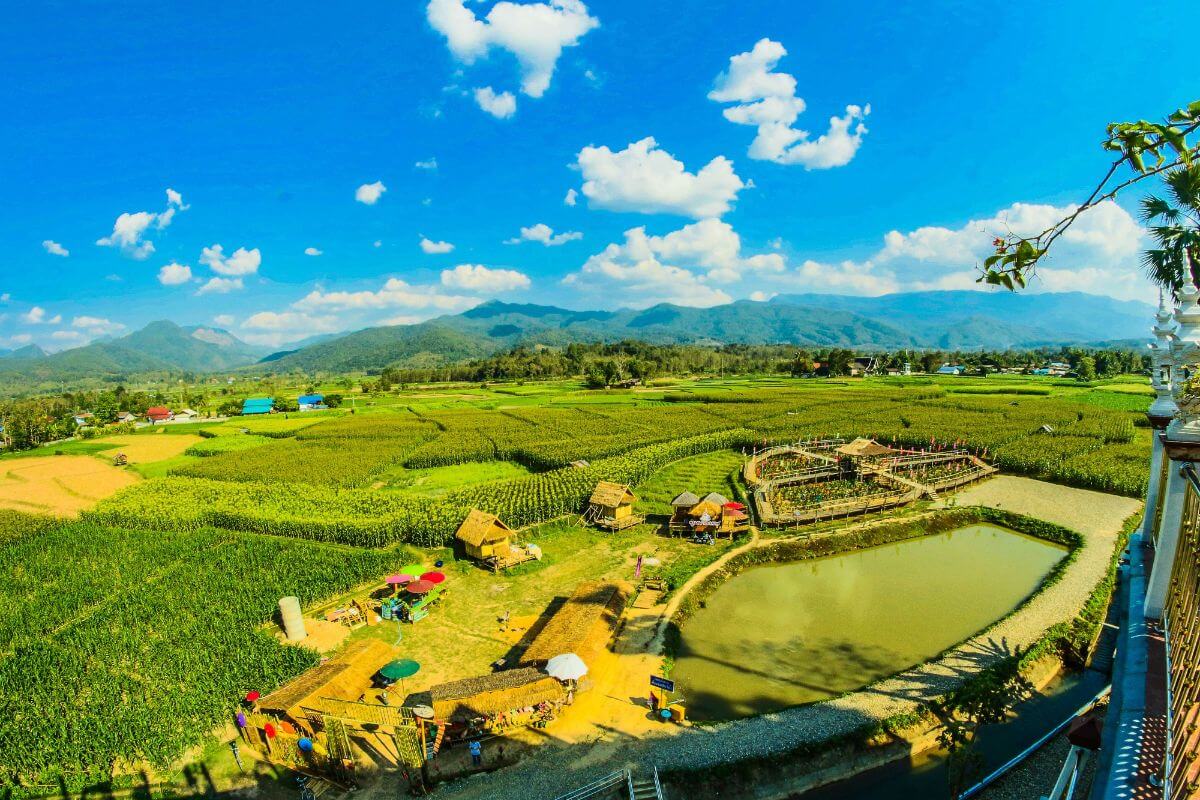
After a couple of wrong turns (the kind you make when you’re navigating loosely off memory and vibes rather than a saved route), I finally reached Sapan Valley.
It was quiet in a way that felt almost physical. A hill, a scattering of farmhouses, and views that stretched out further than felt possible after that long, flat approach. I remember thinking, very clearly, that I could stay right there and never leave. Not as a throwaway travel-blog line, but as an actual, specific thought that crossed my mind while sitting on the scooter taking it in.
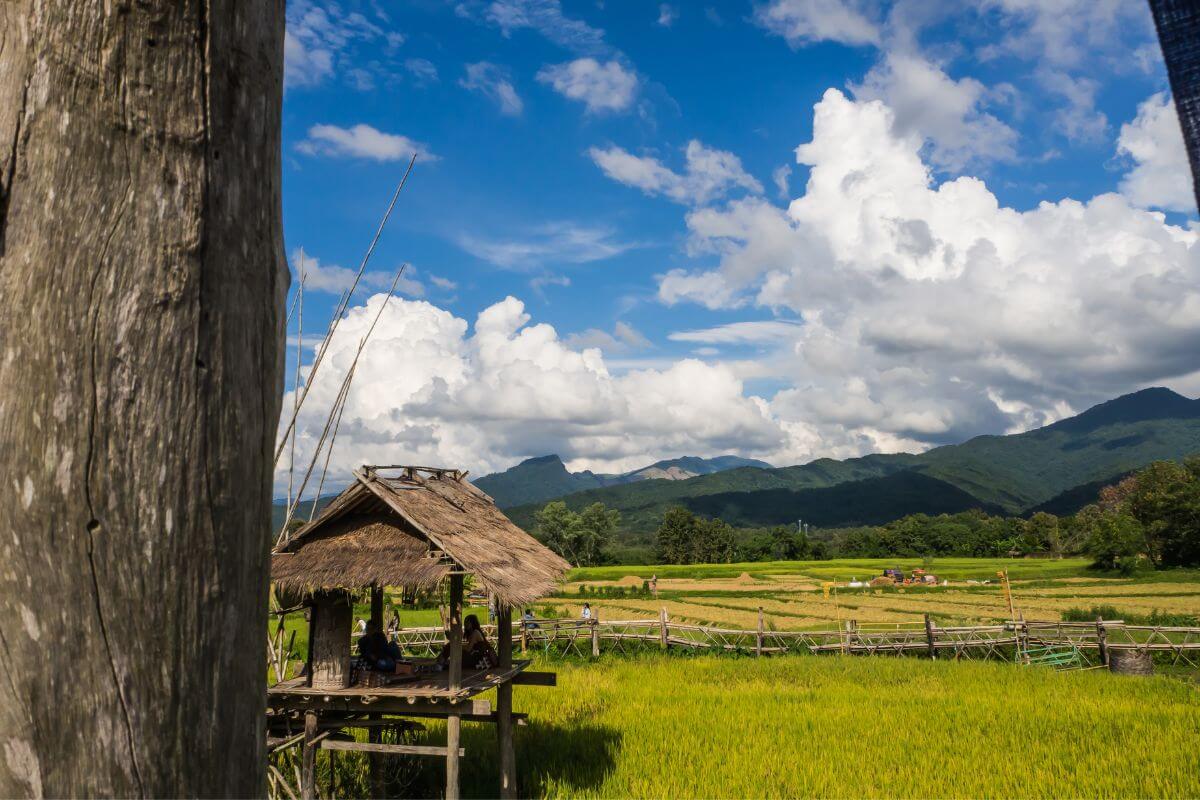
From there I rode on to Sapan Waterfall nearby. It was worth seeing, but if I’m being fully honest with you the way I’d want a friend to be honest with me, the valley itself is what stayed with me far more vividly than the waterfall did. I could have skipped the waterfall entirely and the trip still would have been worth every kilometer of that ride, just for the hour I spent sitting above that valley with the farmhouses below.
Prefer a quick chat?
Message us directly on WhatsApp
If you already have an idea of your trip, send us a message, we’ll guide you through the best options for your travel style.
Or drop us an email at [email protected], or use our contact page.
The Long Ride Back
Sapan Valley isn’t a quick there-and-back from Nan town. All told, the round trip that day came out to somewhere over 200 kilometers on a rented scooter, most of it on mountain roads.
I made it back into Nan town around 4pm, and I mean this literally: I did not go out for dinner, I did not do anything else that day. I got off the scooter, walked into the hostel, and collapsed onto the bed. That kind of exhaustion is its own kind of proof that you actually did something that day, not the curated, well-rested version of travel you see online, but the real, legs-aching, sun-worn version.
Nine Strangers and a Hostel Ceiling
The next development in this trip was less scenic and more of a lesson in why I generally avoid hostels.
A group of at least nine younger travelers checked in not long after my Sapan trip. They went out for a big night, came back late, and, as you’d expect from a group that size returning from a night out, were not particularly quiet about it. A few of them snored on top of that. Between the noise and the interrupted sleep, it more or less confirmed a stance I’d already been leaning toward: hostels and I don’t mix long-term, however comfortable that first empty room had felt.
Rather than push through it and stay the extra days I’d loosely planned, I decided to cut the trip a little short. I booked the direct bus out of Nan to Chiang Mai the next morning, spent a couple of quieter days back in familiar territory, and eventually took the overnight sleeper train from Chiang Mai back down to Bangkok, which, if you’ve never done it, is its own strange, rattling, oddly peaceful way to end a trip like this.
What Nan Actually Gave Me
Looking back on it now, what stays with me isn’t really any single stop. It’s the shape of the whole thing: landing with nothing planned, getting extraordinarily lucky with that first motorbike taxi driver, the empty hostel that felt like a private room, the near-turnaround on the road to Sapan, the valley that made me want to stop moving entirely, the exhausted collapse afterward, and even the noisy hostel night that pushed me back out the door early. None of it was curated. None of it was arranged in advance. It was just what happened when I let a place I barely knew anything about unfold on its own terms.
That’s ultimately the thing about Nan that’s hard to communicate to someone who hasn’t been: it rewards exactly the kind of loose, under-researched, slightly spontaneous approach I took to it. You don’t need a packed itinerary to have Nan give you something memorable. You mostly just need to leave enough room for the place to surprise you, and be willing to ride further down a flat, unremarkable road than feels reasonable, because the payoff on the other side of it might be one of the best views of your life. In 2025, Nan’s living craft traditions were formally recognised when the province was named a UNESCO Creative City of Crafts and Folk Art, which is really just an official way of confirming what that trip had already shown me: this is a place with something genuine still intact.
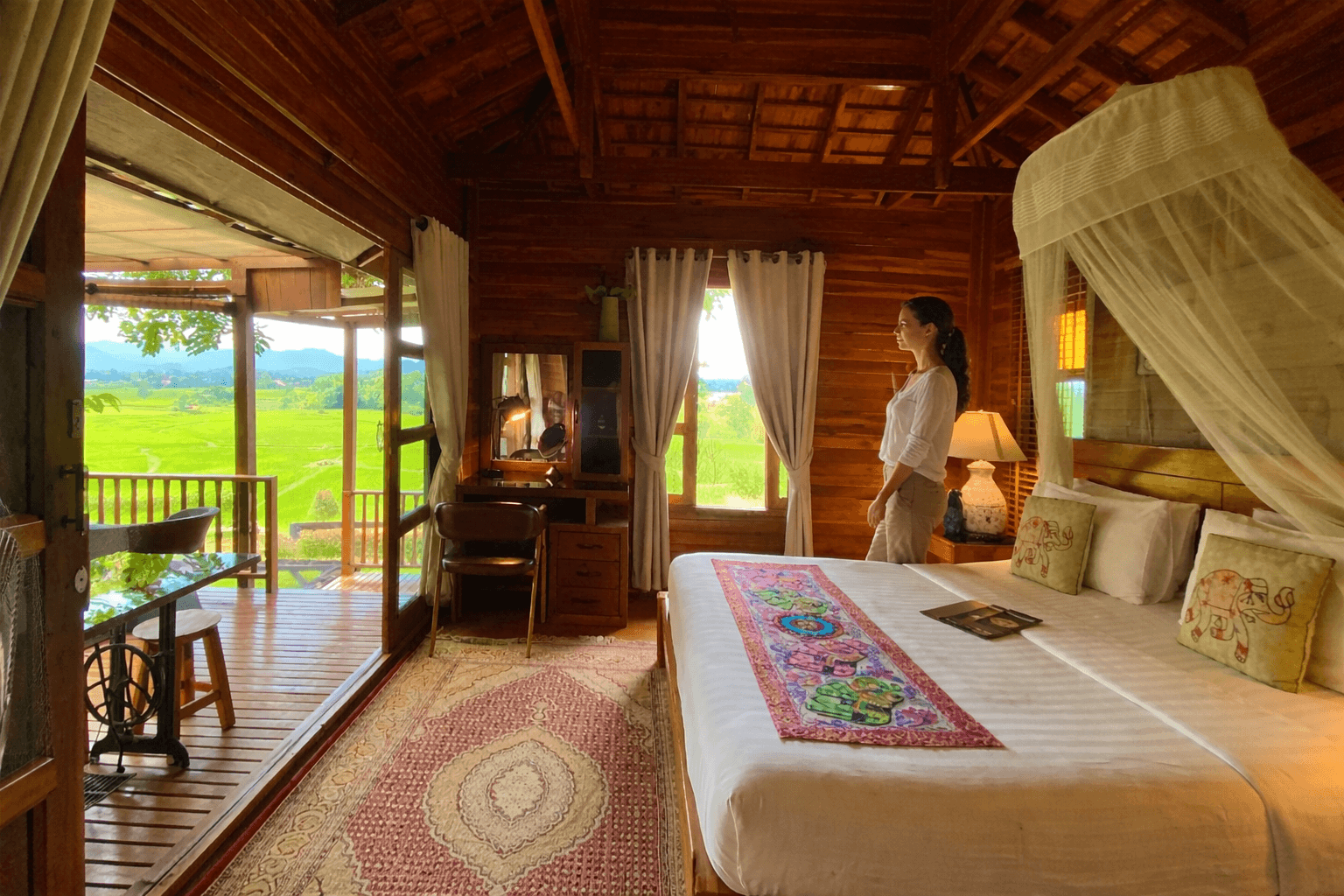
If you’re the kind of traveler who likes that same freedom but doesn’t necessarily want to gamble on finding a scooter guy outside the airport or navigating those mountain roads on wrong turns and instinct alone, that’s exactly the gap we try to close with our private Nan itinerary: the slow mornings by the river, the temple context that actually explains what you’re looking at, the road out to Sapan Valley done properly, without the 4pm collapse. We also build fully private Nan Thailand tours for travelers who want that same off-the-beaten-path feeling with a bit more structure underneath it, and we lean heavily on locally-run stays and guides as part of our broader sustainable tourism approach, because places like Nan stay special precisely because they haven’t been overrun, and that’s worth protecting.
But if you’re more like I was that year, flight credit in hand, no plan, just a name a few too many people had mentioned to you, Nan will still take care of you. It took care of me.
Frequently Asked Questions About Nan Thailand
How do you get to Nan Thailand? +
The easiest way is to fly directly into Nan Nakhon Airport (NNT) from Bangkok Don Mueang, a flight of around 1 hour 15 minutes. If you’re already in the north, it’s roughly a 5 to 6 hour drive from Chiang Mai through mountain scenery. See our full Nan Thailand itinerary for transport options.
Is it worth renting a scooter in Nan Thailand? +
Yes, if you’re comfortable riding on mountain roads. Nan town itself is walkable, but the province’s best scenery, including Sapan Valley and Bo Kluea, is well outside the old town and really only makes sense with your own transport or a private driver.
How far is Sapan Valley from Nan town? +
Around 100km each way, mostly on winding mountain roads. Plan for a full day round trip, closer to 200km total, and start early if you’re doing it on a scooter.
Is Nan Thailand safe to travel to solo? +
Nan Thailand is one of the lowest-crime, lowest-hassle provinces in the country, largely because it sees so few foreign tourists relative to Chiang Mai or Chiang Rai. The main practical risk is the mountain roads themselves, so go slow, especially on unfamiliar bends and during the rainy season.
How many days do you need in Nan Thailand? +
4 to 6 days is enough to cover Nan town, Wat Phumin, the riverside, and at least one full-day trip out to Sapan Valley or Bo Kluea without rushing. Fewer days is possible, but you’ll likely have to choose between the old town and the highlands.
When is the best time to visit Nan Thailand? +
November through February is the cool, dry season and generally the most comfortable time to ride the mountain roads, with the clearest views. March and April can bring highland haze from seasonal burning, while June through October is green, lush, and very quiet, though some highland roads get harder to navigate after heavy rain. See our Northern Thailand itinerary for how Nan Thailand fits into a wider seasonal route.
Prefer a quick chat?
Message us directly on WhatsApp
If you already have an idea of your trip, send us a message, we’ll guide you through the best options for your travel style.
Or drop us an email at [email protected], or use our contact page.
About the author
Written by Dee, Thai-born founder of Off Path Thailand. I’ve spent close to a decade exploring quieter, more local corners of Thailand and designing low-crowd itineraries that feel grounded and unhurried. Our approach prioritizes timing, comfort, and local texture, the small choices that make travel feel calmer and more meaningful. About the founder Get in touch