
Last Updated: September 13, 2026
Chiang Mai vs Pai: Which Is Better?

TL;DR: If you are choosing between Chiang Mai and Pai for a Northern Thailand journey, the answer depends on what you want the trip to feel like. Chiang Mai is the stronger choice for Lanna culture, exceptional Northern Thai food, boutique luxury hotels, wellness, artisan experiences, and easy access to mountains and countryside. It gives you more depth with less logistical effort.
Pai is different. Its appeal is the landscape: a dramatic mountain valley, rice fields, winding roads, waterfalls, hot springs, and quiet rural stays away from the center. For couples or private clients, I would choose Chiang Mai for cultural and culinary depth, and Pai for a secluded mountain retreat. The two also work exceptionally well together rather than being treated as competing destinations.
Northern Thailand has a lot of great options to weigh. If you’re still comparing cities, our Chiang Mai vs Chiang Rai guide is a good place to continue.
Introduction: Chiang Mai vs. Pai
Pai vs Chiang Mai: My Honest Experience Living in Both
I get asked versions of this question regularly: Should I spend more time in Chiang Mai, or should I go to Pai?
I’ve actually lived in both Pai and Chiang Mai, not just visited, and I think that’s an important distinction to make before diving into this comparison. Both places are genuinely good. But which one is “better” really depends on what you’re looking for, and more importantly, what you personally need to feel settled.
I moved to Pai first. At the time, I was craving that classic, serene Northern Thailand beauty: mountains, mist, silence, no traffic, no city noise, just space to be. And for a while, it delivered exactly that. I lasted around four weeks. It was genuinely one of the most peaceful stretches of time I’ve had in Thailand, but by the end of it, I was restless. I got bored in a way I didn’t expect, and I found myself craving stimulation, variety, and a bit of chaos again.
I want to be clear though, this isn’t a universal experience. I’ve met people who’ve lived in Pai for months, even years, and thrived there. Some people settle into that slower rhythm effortlessly. Others, like me, start to feel the walls close in after a few weeks. It really comes down to your own wants and needs, and honestly, how comfortable you are with solitude and a smaller, tighter-knit community.
This isn’t even an old pattern for me. Long after Pai and Chiang Mai, I’m cycling through this same push and pull between Cha-am and Bangkok. When Cha-am gets too quiet or isolating, I head back to Bangkok for stimulation and energy. When Bangkok eventually wears me down, I go back to Cha-am for calm. I’ve come to accept that for me, at least, balance isn’t a nice idea, it’s a necessity. I don’t think I’m built to fully commit to either extreme for too long.
The Practical Differences
Beyond the emotional side of things, there are real, practical differences worth knowing before you choose between the two.
Chiang Mai functions like a modern, fully-equipped city. You’ll find well-established hospitals, shopping malls, gyms, sports facilities, and an enormous range of classes and activities, from Muay Thai and cooking classes to music lessons and fitness studios. If something goes wrong, medically or otherwise, Chiang Mai has the infrastructure to handle it quickly.
Pai, on the other hand, is far more limited. You’ll find a handful of yoga studios, maybe a cooking class or two, but that’s largely it. There’s no real substitute for a hospital, a proper gym, or the kind of variety Chiang Mai offers.
So the real question becomes: how much of that lack are you willing to tolerate, and for how long?
So, Which One Should You Choose?
If I had to summarize it simply: Chiang Mai offers more, in almost every practical sense, more amenities, more activities, more safety nets, and more room to build a full life. Pai offers less in terms of infrastructure, but what it does offer, peace, quiet, and a tightly-knit community, it offers in a much purer, more concentrated form.
If you thrive in stillness and don’t mind a slower, smaller-town rhythm, Pai might suit you perfectly, especially for a short stay. But if you need access to city conveniences, variety, and a bit of stimulation to feel balanced, Chiang Mai is almost certainly the better long-term fit.
And ultimately, it also comes down to time. If you only have a few days, Pai can be a refreshing detour. If you’re planning to stay for weeks or months, Chiang Mai gives you far more room to adapt, adjust, and build a life that actually works for you.
If you’re already exploring the north and Nan is also on your radar, I’ve broken down every way to get there, flights, buses, and the scenic drive, in my guide to getting to Nan, Thailand.
- Chiang Mai vs Pai: Which Is Better?
- Introduction: Chiang Mai vs. Pai
- A Personal Chiang Mai vs Pai Story:
- At a Glance: The Personality of Each Place
- Chiang Mai: Culture, Food, Mountains and Effortless Variety
- Pai: The Mountain Sanctuary
- Nature & Landscapes
- Things to Do & Custom Experiences
- Food & Culinary Scene
- Accommodation & Boutique Stays
- Pace of Travel & Atmosphere
- Getting There & Logistics: The Private Advantage
- Chiang Mai to Pai (Highway 1095 Transfer)
- Best Time to Travel: Seasonality & Air Quality
- Who Should Choose Which?
- Conclusion
- Map of Chiang Mai Hidden Gems
- Message us directly on WhatsApp
- FAQ: Chiang Mai vs Pai (2026)
- Which is better, Chiang Mai or Pai?
- Is Pai more expensive than Chiang Mai?
- How many days do you need in Pai vs Chiang Mai?
- Is it worth it to go to Pai?
- What is the prettiest city in Thailand?
- What to be careful of in Chiang Mai?
- Can you work remotely from Pai, or is Chiang Mai better for digital nomads?
- Is the drive from Chiang Mai to Pai difficult?
- Leave everything to us and experience Thailand Off The Beaten Path
I am frequently out on my motorcycle exploring roads and regions I have not visited before, often taking routes that never make it onto a typical tourist itinerary. That ongoing exploration has given me a much more practical understanding of how the area changes from one neighborhood or mountain road to the next.
I have also spent substantial time in Pai, and I think Pai is often misunderstood because visitors tend to judge it almost entirely by the small area around the town center. Yes, there is the well-known “hippy town” and plenty of businesses catering primarily to backpackers, but that represents only a fraction of what Pai and the surrounding valley have to offer.
Once you get beyond the obvious tourist circuit and especially when you have your own vehicle or a private driver the character of the region changes considerably. There are quiet rural roads, mountain viewpoints, hot springs, caves, agricultural areas, small communities, scenic valleys, and peaceful places where you can experience Pai without the crowds.
That quieter, more rural side of Pai is the version I recommend to travelers looking for an authentic, slower and more private Northern Thailand experience.
They are geographically connected, but they serve very different purposes. Chiang Mai is a cultural and regional gateway: Lanna temples, old neighborhoods, food, crafts, markets, mountains, wellness, and some excellent boutique properties.
You can have a sophisticated city experience one morning and be drinking coffee overlooking a mountain valley that afternoon.
For travelers looking to tailor their itinerary beyond the standard routes, exploring options for Chiang mai custom tours allows you to adjust the pace, transportation, and activities to fit your personal travel style.
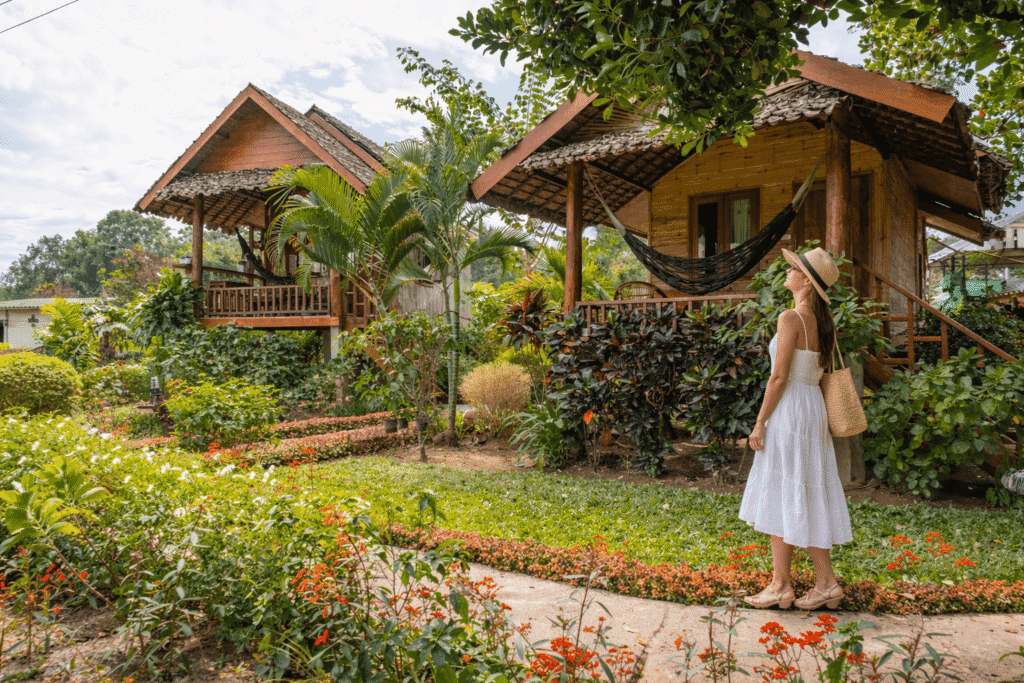
A Personal Chiang Mai vs Pai Story:
The Day I Realized I Missed Chiang Mai
One of my favorite personal memories from my time living in Pai actually helped me understand the difference between Pai and Chiang Mai better than any guidebook ever could.
As mentioned, I was living in Pai for a short while when I made a friend unexpectedly in town. Almost comically, my motorbike had just needed a new battery around the same time we met.
He happened to be heading toward Chiang Mai and invited me to go along, and since I needed to make the trip anyway, the timing worked out perfectly.
Somehow, I managed to get the bike running, and we made our way down to Chiang Mai together. My first stop was the motorbike rental shop to finally have the battery replaced. From there, rather than simply treating Chiang Mai as a stopover, I spent the day showing him some of the city I actually know and enjoy.
We explored Woraros Market, visited my temple, and wandered around without trying to cram every famous attraction into a single afternoon.
Later that evening, I dropped him at Arcade Bus Station so he could catch his bus to Bangkok. He was genuinely grateful that I had taken the time to show him around and make sure he got to the station, and what makes the story even nicer is that we still exchange emails from time to time.
I stayed in Chiang Mai that night, but something unexpected happened: I realized how much I had missed the city.
After spending time in Pai, I had begun to feel like I was running out of things that interested me there. I missed Chiang Mai’s variety, its neighborhoods, temples, food, mountain roads, markets, and simply having more places to explore.
So I made a slightly ridiculous decision.
The next day, I rode back to Pai, collected my bags, and then rode all the way back to Chiang Mai again. Roughly eight hours of travel in the same day.
By the time I arrived, I was completely exhausted. “Feeling rough” is probably putting it politely. But the experience stuck with me because it made something very clear: Pai and Chiang Mai satisfy very different travel instincts.
Pai can be wonderful when you want to slow down, disappear into the mountains and let the days become less structured.
But for me personally, Chiang Mai eventually pulled me back because I wanted more variety, more roads to explore, more cultural depth, and simply more reasons to get on my motorbike and see what was around the next corner.
That is also why I am careful when comparing the two destinations. I have not experienced them only as a visitor passing through for a few nights. I have actually lived in both, explored them by road, and experienced what it feels like when the initial novelty wears off. For a traveler planning a longer or private Northern Thailand journey, that distinction matters.
Pai is more elemental. You go there for the road, the mountains, the valley, the calmer atmosphere, and the feeling of being surrounded by Northern Thailand rather than moving through another city.
For a bespoke trip, I would not ask which destination is objectively better.
I would ask: Which experience are you trying to create?
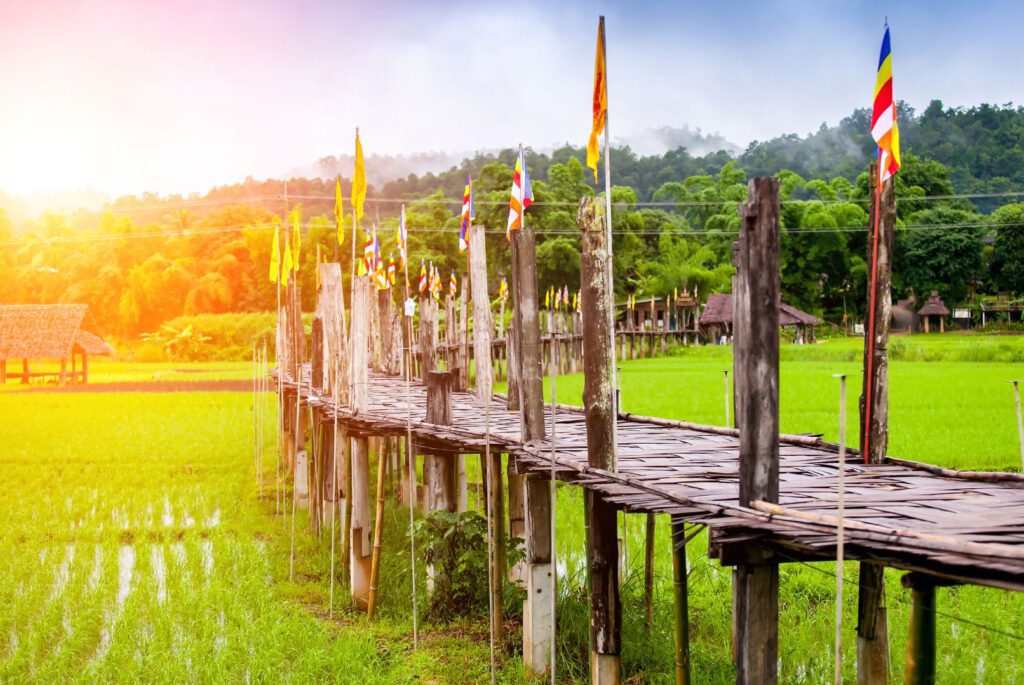
At a Glance: The Personality of Each Place
Chiang Mai: Culture, Food, Mountains and Effortless Variety
Chiang Mai is Northern Thailand’s cultural anchor.
The historic center remains defined by its Old City and walls, while centuries-old Lanna temples sit among quiet lanes, cafes, restaurants, galleries, homes, and small businesses. Beyond the old city, the character changes constantly.
One day can involve a private temple visit and a conversation about Lanna architecture. Another might take you into the foothills of Doi Suthep, through artisan communities, or toward a coffee plantation in the mountains.
This variety is Chiang Mai’s greatest advantage.
For private travel, logistics are also comparatively easy. You can stay in a beautiful boutique hotel, have a private driver collect you in the morning, spend several hours outside the city, and return for a massage or excellent dinner without spending half the day simply getting somewhere.
Chiang Mai also has considerably more culinary depth. Northern Thai food is one of the major reasons I recommend slowing down here. Khao soi is only the beginning. There are local markets, old family-run restaurants, contemporary interpretations of Lanna cuisine, vegetarian and vegan options, and places that make far more sense when someone local explains what to order.
Pai: The Mountain Sanctuary
Pai is almost the opposite.
The town itself is small, but personally, the landscape around Pai is what makes the journey worthwhile. The valley opens beneath surrounding mountains, with rice fields, forested hills, streams, hot springs, waterfalls, caves, and winding rural roads that are often more interesting than the main attractions themselves.
One of the things I particularly enjoy about exploring around Pai is looking for the smaller, overlooked communities beyond the obvious tourist route.
Places such as Muang Paeng are a good example. You can come across little communities where the experience feels genuinely local, including community-hosted hot springs and simple rural places that you are unlikely to find on a standard Pai itinerary.
This is the side of Pai that I think many visitors miss. You do not necessarily need another famous viewpoint or attraction; sometimes the most rewarding experiences come from following a smaller road, stopping in a village, talking with locals, or finding a natural hot spring that is managed by the surrounding community rather than packaged as a major tourist attraction.
When I am exploring Pai myself, I am often more interested in these kinds of discoveries than in ticking off the attractions everyone already knows about.
The further you venture from the center and the more willing you are to explore without a rigid checklist, the more Pai starts to reveal itself as a rural mountain region rather than simply a tourist town.
Pai’s reputation means many travelers arrive with a very specific image of it. I prefer to ignore that image.
For a private journey, I would not build a Pai itinerary around the busiest part of town. I would use the valleys as the destination.
Stay somewhere peaceful outside the center. Take a private vehicle into the countryside. Stop when the landscape is beautiful rather than because a tour operator has included a particular attraction. Visit a hot spring when it is quiet. Find a viewpoint away from the obvious crowd. Eat somewhere because the food is good, not because it appears on every Pai Instagram reel.
That is when Pai becomes interesting for the type of traveler I work with.
Chiang Mai gives you more layers. Pai gives you more breathing room.
| Custom Travel Metric | Chiang Mai | Pai |
|---|---|---|
| Overall Vibe | Cultural, sophisticated, relaxed but energetic | Rural, scenic, intimate and slow |
| Crowd Isolation | Easy to escape the busiest areas with a private driver | Best experienced outside the central town |
| Nature & Views | Mountains, rainforest, waterfalls and national parks | Dramatic valley scenery, rice fields and mountain roads |
| Tailored Experiences | Exceptional variety and cultural depth | Strongest for scenic and rural experiences |
| Food & Culinary Scene | Much deeper and more diverse | Smaller, relaxed, increasingly creative |
| Boutique Accommodation | Greater luxury and heritage selection | Smaller selection but excellent nature-immersed retreats |
| Private Accessibility | Very easy | Requires more driving and planning |
| Best For | Culture, food, wellness, luxury and variety | Romance, solitude, mountain scenery and slow travel |
There is another important distinction.
Chiang Mai is a destination you can keep adding to. Pai is a destination you can keep slowing down in.
That difference becomes increasingly important the more customized your trip becomes.
Nature & Landscapes
Northern Thailand is mountainous, but comparing Chiang Mai vs Pai shows how differently each destination presents those peaks, with Chiang Mai offering grand mountain backdrops against a historic city and Pai placing you directly in a cozy, scenic valley.
From Chiang Mai, you have access to an enormous range of landscapes. Doi Suthep rises immediately as part of the city, while further afield you can reach areas of rainforest, waterfalls, agricultural valleys, coffee-growing communities and higher mountain environments.
Doi Inthanon National Park is particularly valuable for travelers who want nature to be a meaningful part of their itinerary. The landscape changes dramatically as you climb, with dense forest, waterfalls and cooler mountain conditions.
For travelers deciding on Chiang Mai vs Pai, visiting smaller agricultural areas around Chiang Mai offers a wonderfully intimate experience. A private trip to a local coffee or tea plantation can be far more rewarding than simply ticking a national park off a list, as slowing down lets you meet the locals, discover how things are grown, and truly connect with the surrounding landscape.
Pai’s scenery is more immediate.
The valley gives you broad mountain views, winding roads, agricultural fields and changing light throughout the day. The surrounding terrain creates a natural feeling of enclosure that Chiang Mai does not always provide.
This is especially beautiful in the cooler months, when mornings can begin with mist hanging over the valley.
The key with Pai is not to over-program it. The landscape is the experience.
Visiting during the rainy season can be surprisingly rewarding, offering lower prices on flights and accommodations, significantly smaller crowds at popular spots, and clearer, fresher air after daily showers, so be sure to consult our Chiang mai custom tours (2026) when planning your trip.
Edge / Verdict: Pai for raw valley aesthetics; Chiang Mai for variety, scale and access to major natural areas.
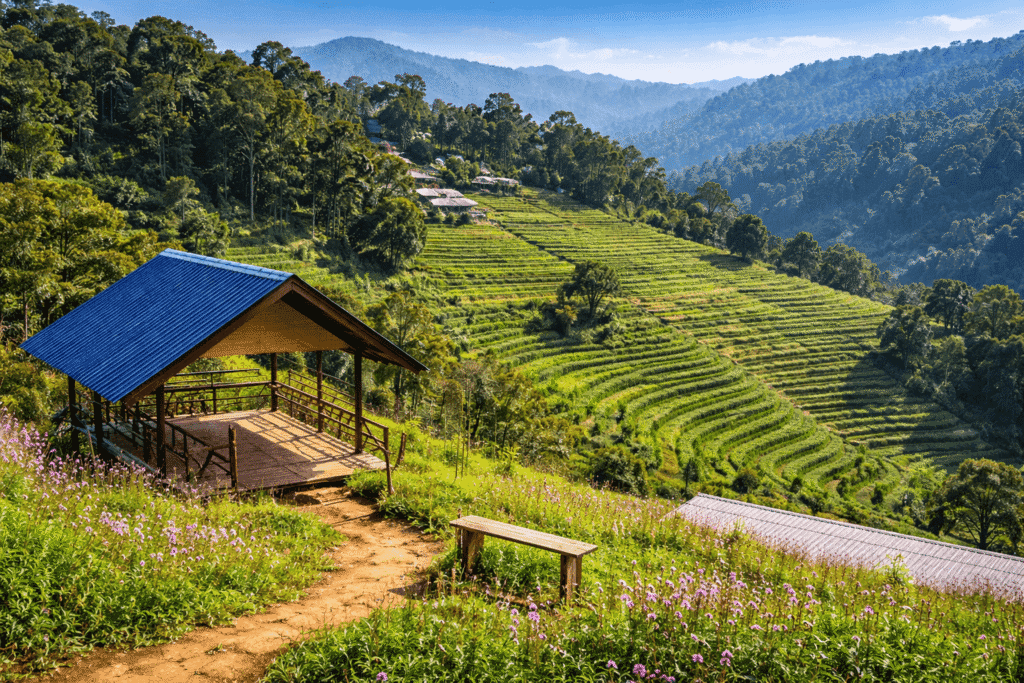
Things to Do & Custom Experiences
This is where I would give Chiang Mai the strongest advantage for most first-time visitors.
A well-designed private day in Chiang Mai can go far beyond the standard temple circuit.
Instead of simply visiting temples and taking photographs, you can explore Lanna history with someone who understands the architecture and local traditions. You can combine that with an artisan workshop, a quiet neighborhood, a local market or a carefully chosen meal.
Ethical elephant experiences can also be incorporated into a Northern Thailand itinerary, provided the operator is selected carefully and the experience prioritizes observation and animal welfare rather than performances or direct-contact activities.
Then there are the mountains.
Chiang Mai makes an excellent base for combining cultural experiences with nature without constantly changing hotels.
Pai is better when the experience itself is the journey.
The road from Chiang Mai toward Pai follows the famous mountain route through hundreds of bends. With a private SUV and driver, that journey becomes dramatically different from simply being transported from one town to another.
You can stop for coffee, viewpoints, villages and quiet stretches of countryside. You can spend more time around Lod Cave with a knowledgeable local guide, explore rural areas, cycle through quieter parts of the valley, or simply spend an afternoon doing very little.
Pai also opens the door toward the wider Mae Hong Son region. If you have enough time, I prefer treating Pai as one piece of a larger private route rather than flying in, staying one night and rushing back.
The further you go, the more interesting Northern Thailand becomes.
Edge / Verdict: Chiang Mai for cultural depth and variety; Pai for slow scenic exploration and road-trip freedom.
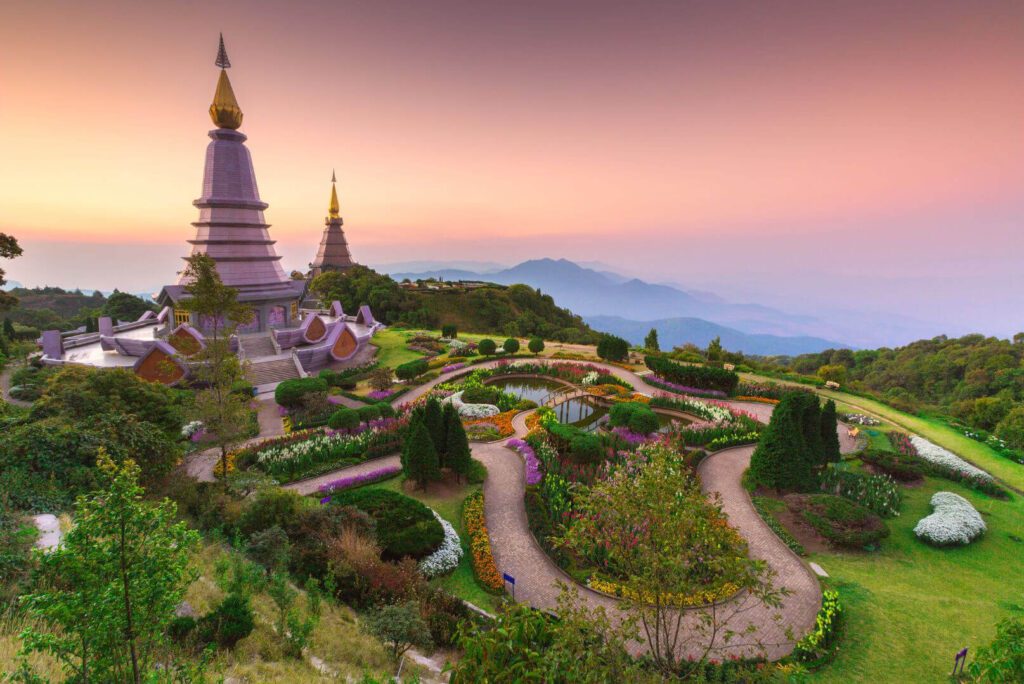
Food & Culinary Scene
If food is one of the main reasons you travel, Chiang Mai wins this comparison comfortably.
Northern Thai cuisine deserves much more attention than simply putting a bowl of khao soi on a checklist.
The food culture here is layered. There are old local eateries, markets, family recipes, regional specialties, contemporary restaurants and increasingly sophisticated interpretations of Northern Thai cuisine.
Chiang Mai has also developed a strong contemporary dining scene, including restaurants recognized by the Michelin Guide, while retaining plenty of places where the food is still wonderfully ordinary in the best possible sense.
That distinction matters to me.
For travelers who prefer to experience a city through its food, we can also design your private itinerary around culinary exploration from traditional Northern Thai dishes and long-standing local eateries to lesser-known restaurants and food experiences that most visitors simply pass by. After years of living in and returning to Chiang Mai, I have built up my own list of authentic Chiang Mai restaurants that I return to and recommend based on the food, local character, and consistency rather than tourist popularity.
If food is an important part of how you travel, take a look at my guide to the street food prices in Chiang Mai.
Some of my favorite meals in Thailand have not happened in restaurants designed to impress visitors. They have happened in small kitchens where the menu makes sense because you already understand what the locals eat.
For private clients, I can also tailor culinary days around dietary requirements, interests and comfort level. That can mean a Northern Thai food tour, market exploration, a private cooking class, or simply building meals into an itinerary around places worth the detour.
Pai’s food scene is smaller but has its own charm.
You will find organic cafes, farm-to-table concepts, relaxed restaurants, boutique resort dining and Northern Thai dishes. The surrounding agricultural landscape also lends itself naturally to fresh produce and slow meals.
But Pai is not where I would send someone specifically for culinary depth.
I would send them there because they want the food to complement the landscape and pace.
Edge / Verdict: Chiang Mai by a wide margin for culinary depth, authenticity, variety and high-end dining.
Accommodation & Boutique Stays
Both destinations can work beautifully for luxury travel, but the meaning of luxury is different.
Chiang Mai has the advantage of choice.
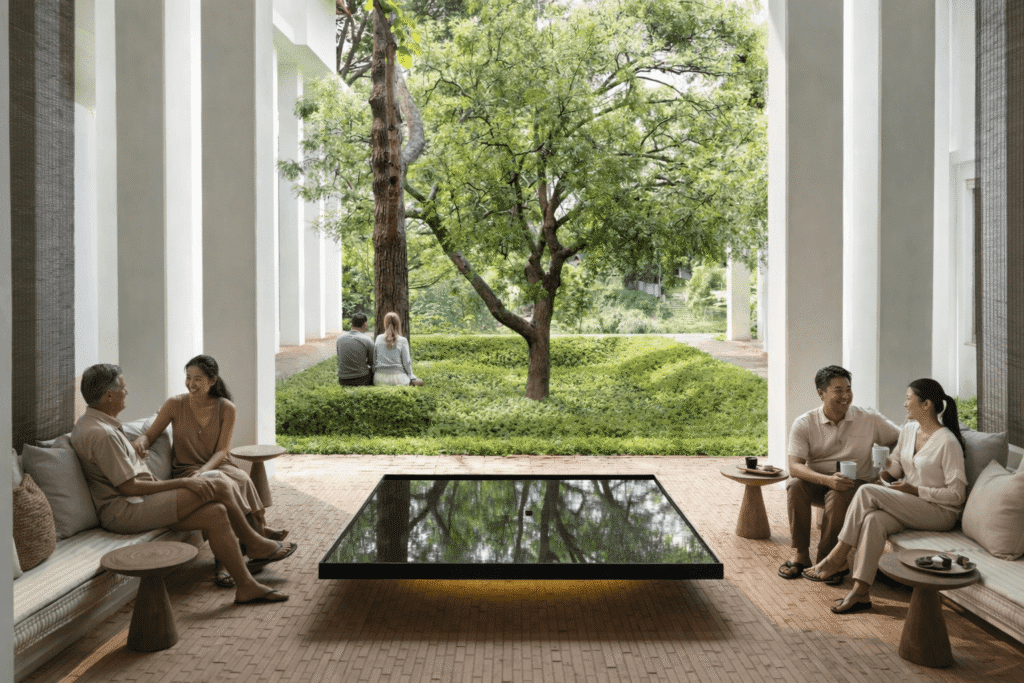
You can stay in a restored heritage property in or around the historic center, choose a refined riverside resort, book a contemporary boutique hotel or select a high-end wellness property outside the center.
The best hotels also make the city easier to enjoy. After a long day exploring, you can return to a beautiful pool, excellent spa or quiet room without feeling that you have sacrificed location.
For a custom itinerary, I often prefer boutique properties that feel connected to their surroundings rather than enormous international resorts.
Pai has fewer options, but that can actually work in its favor.
The best private stays are often outside the center, where you can wake up surrounded by fields, trees or mountains. A private villa or small eco-resort can feel less like a hotel and more like a personal retreat.
That is the type of accommodation I would prioritize for a couple spending several nights in Pai.
The trade-off is simple: Chiang Mai gives you more luxury choices, while Pai offers a more intimate connection with nature, making the Chiang Mai vs Pai decision a choice between urban comfort and rural charm.
Edge / Verdict: Chiang Mai for luxury selection and service; Pai for intimate, nature-immersed stays.
Pace of Travel & Atmosphere
This may be the deciding factor.
Chiang Mai is relaxed, but it is still a functioning city.
There are traffic flows, local neighborhoods, markets, restaurants, cafes, universities, businesses and plenty happening around you. That energy is part of its charm.
You can have a quiet morning at a temple, spend the afternoon in the mountains, enjoy a spa treatment and then go out for dinner.
For me, Chiang Mai works particularly well for travelers who want comfort without isolation.
Pai operates at a different frequency.
Once you leave the center and settle into the valley, the day becomes less about accomplishing things.
Breakfast can take longer. A scenic drive can turn into an unplanned stop. You might spend an hour beside a river or at a viewpoint because there is no reason to leave immediately.
This is why I often recommend Pai for couples who are already comfortable with slow travel.
The mistake is trying to turn Pai into a checklist.
If you arrive with ten attractions to visit in two days, you have misunderstood the destination.
If you arrive with a beautiful place to stay, a private vehicle, a few carefully chosen experiences and enough empty space in the schedule, Pai makes much more sense.
Edge / Verdict: Chiang Mai for sophisticated city energy and variety; Pai for absolute quiet and a slower mountain rhythm.
Getting There & Logistics: The Private Advantage
Getting There: Chiang Mai to Pai via Highway 1095
Route at a glance
Chiang Mai to Pai (Highway 1095 Transfer)
- Route: Chiang Mai → Route 1095 → Pai
- Distance & Duration: ~135 km (84 miles) | 3 to 4 hours
- Road Highlights: Renowned for its famous 762 sharp mountain curves
- Best Option: Private SUV transfer (for pace, comfort, and zero motion sickness stress)
- Shared Minivan vs. Private SUV: Minivans run on strict, fast schedules; private transfers allow custom photography, coffee, and waterfall stops along the way.
- Recommended Stops: Roadside coffee plantations, scenic mountain viewpoints, Mok Fa Waterfall, or continuing past Pai toward Mae Hong Son
- Best For: Travelers prone to motion sickness, families, photography lovers, or anyone wanting a relaxed mountain road trip
The journey from Chiang Mai to Pai is an essential part of the Northern Thailand experience. Taking you along the famous Highway 1095, the route winds through dense jungle and lush mountain passes, renowned for its 762 curves.
Shared Minivan vs. Private SUV Transfer
While shared minivans are available, they operate on rigid schedules aimed purely at getting from point A to point B.
For travelers prone to motion sickness, or those who prefer to travel at their own pace, navigating the constant turns and fast speed on a Chiang Mai vs Pai trip can feel uncomfortable.
Opting for a private SUV transfer completely transforms the road trip:
Best Time to Travel: Seasonality & Air Quality
Choosing the right season for your trip from Chiang Mai to Pai is crucial for the best mountain views and road conditions:
| Season & Months | Key Highlights & Travel Considerations |
|---|---|
|
Cool Season (November – February) |
The best time to visit. Expect comfortable temperatures, clear blue skies, and ideal driving conditions. |
|
Green / Rainy Season (June – October) |
Perfect for avoiding crowds. The landscapes are brilliantly lush and vibrant, though outdoor activities require flexible planning around daily rain showers. |
|
Burning / Smoke Season (March – May) |
Requires careful consideration. Agricultural burning across Northern Thailand can cause air pollution, reduced mountain visibility, and poor air quality. Check real-time air quality index (AQI) forecasts before locking in travel dates. |
For a true off-the-beaten-path experience, the best route is rarely the fastest. It is the one tailored around comfort, local discovery, and memorable moments along the way. Ready to plan your personalized Northern Thailand journey?
Reach out to us at Off Path Thailand to start crafting your custom itinerary.

Who Should Choose Which?
Choose Chiang Mai if…
You want Northern Thailand to feel culturally rich rather than purely scenic.
Choose Chiang Mai if your ideal trip includes beautiful accommodation, excellent food, private temple experiences, wellness, markets, artisans, mountain excursions and the ability to change the pace from one day to the next.
It is particularly strong for first-time visitors to Northern Thailand because you can experience a surprisingly broad range of the region without constantly moving hotels.
It also works well for travelers with different interests.
One person can be interested in architecture, another in food, another in wellness and another in photography. A private itinerary can accommodate all four.
For a five-day trip, I would usually find it easier to create depth around Chiang Mai than Pai alone.
Choose Pai if…
You have already seen enough cities.
You want to wake up looking at mountains rather than traffic. You want long lunches, quiet roads, private hot springs, countryside drives and evenings with very little planned.
Pai is particularly attractive for couples and travelers who value privacy over variety.
The trick is choosing the right base.
I would avoid making the busiest central strip the focus of a high-end Pai experience. Instead, look for accommodation where the surrounding landscape becomes part of the stay.
Then use a private driver to move into the valley and surrounding countryside when you want to explore.
Choose Both (Recommended)
This is actually my favorite answer for the right traveler.
Chiang Mai and Pai complement each other.
Start in Chiang Mai with culture, food, temples, wellness and a few carefully selected private experiences. Then leave the city behind and take the mountain road to Pai.
The contrast makes both places more interesting.
You experience the cultural depth of Chiang Mai before arriving somewhere where the itinerary can become almost deliberately empty.
For travelers continuing farther into Mae Hong Son, Pai can also function as a natural transition between Chiang Mai and the deeper mountain regions of the northwest.
That is when Northern Thailand starts to feel less like a collection of destinations and more like one continuous journey.
Conclusion
If you forced me to choose one destination for a first private trip to Northern Thailand, I would generally choose Chiang Mai.
There is simply more depth.
You have Lanna history, exceptional food, boutique hotels, wellness, mountains, artisans, markets and countryside within relatively easy reach. It is easier to create a sophisticated itinerary with multiple layers.
But that does not make Pai inferior.
Pai is better when what you really want is space.
For a couple celebrating something special, a private valley villa, slow mornings, mountain drives and an afternoon at a quiet hot spring can be far more memorable than another perfectly executed sightseeing day.
For a five-day luxury itinerary, I would consider something like:
Chiang Mai for three nights + Pai for two nights if you want culture and scenery.
For a nature and wellness-focused journey, I would reverse the emphasis and give Pai more time.
For romance, I would choose based on personality: Chiang Mai for couples who want restaurants, spas and cultural experiences; Pai for couples who want privacy, scenery and unhurried days.
And if you are planning a longer Northern Thailand journey, I would not treat the Chiang Mai-versus-Pai decision as an either/or question at all.
The most interesting journeys often connect the two.
At Off Path Thailand, that is how I prefer to design private trips: not by stacking famous attractions into a schedule, but by understanding how you want the journey to feel and then building the route around that.
If you want to combine Chiang Mai, Pai and the mountains beyond, message me on WhatsApp or request a custom itinerary and I can help shape a route around your preferred pace, accommodation style, interests and travel dates.
Map of Chiang Mai Hidden Gems
Prefer a quick chat?
Message us directly on WhatsApp
If you already have an idea of your trip, send us a message — we’ll guide you through the best options for your travel style.
Chat on WhatsAppOr email us directly at [email protected]
FAQ: Chiang Mai vs Pai (2026)
Which is better, Chiang Mai or Pai?
It depends on what you’re looking for. Chiang Mai offers more amenities, better healthcare, and a wider range of activities, making it a stronger choice for longer stays or digital nomads. Pai offers a slower pace, mountain scenery, and a tighter-knit community, which suits shorter, more restful trips. Neither is objectively better, it comes down to your personal needs and how long you plan to stay.
Is Pai more expensive than Chiang Mai?
Generally, no. Pai tends to be cheaper for accommodation and food due to its smaller scale and simpler amenities, though prices can spike during high season due to limited supply. Chiang Mai offers more range, from budget guesthouses to higher-end options, so your daily costs depend heavily on your lifestyle and choices in either city.
How many days do you need in Pai vs Chiang Mai?
Most travelers spend 2–4 days in Pai, since its main attractions and relaxed pace don’t require much more time. Chiang Mai, on the other hand, benefits from a longer stay of 4–7 days or more, especially if you want to explore the Old City on foot, visit surrounding temples, and take advantage of the wider range of activities available.
Is it worth it to go to Pai?
Yes, especially if you’re looking for a slower pace, mountain scenery, and a break from city life. Pai is best suited for shorter stays of a few days to a week, since its limited amenities can start to feel restrictive for longer stints. If serene, small-town living appeals to you, it’s absolutely worth the trip.
What is the prettiest city in Thailand?
Beauty is subjective, but Chiang Mai, Pai, and Nan are frequently mentioned for their scenery, mountains, and old-world charm. Pai is often praised for its dramatic mountain views and laid-back valley setting, while Chiang Mai combines natural surroundings with historic temple architecture. Your ideal pick likely depends on whether you’re drawn to city charm or untouched natural beauty.
What to be careful of in Chiang Mai?
In Chiang Mai, common things to watch for include heavy scooter traffic, uneven pavements in the Old City, and typical tourist-area scams like inflated tuk-tuk fares or gem shop detours. If you’re visiting during burning season (Feb–April), air quality can also be a concern, so it’s worth checking the AQI before spending long hours outdoors.
Can you work remotely from Pai, or is Chiang Mai better for digital nomads?
Chiang Mai is significantly better suited for remote work, thanks to reliable internet, a large network of cafes, and a well-established digital nomad community. Pai has a handful of cafes with decent Wi-Fi, but internet reliability can be inconsistent, and the overall infrastructure is much more limited, making it better suited for short work stints rather than long-term remote work.
Is the drive from Chiang Mai to Pai difficult?
The drive takes around 3 hours and is known for its winding mountain road, often cited as having over 700 curves. It’s manageable for most drivers but can cause motion sickness for passengers unaccustomed to winding roads. Taking it slow, or opting for a minivan service instead of self-driving, can make the journey more comfortable.

About the author
Written by Dee, Thai-born founder of Off Path Thailand. I grew up in Bangkok and return to these quieter corners whenever the city feels too fast. Off Path Thailand is built around calm, local travel — the kind that feels grounded, sustainable, and genuinely enjoyable. About the founder
Want a calm Bangkok route built around your pace? We reply within 24 hours to begin shaping your itinerary.
Leave everything to us and experience Thailand Off The Beaten Path
Every journey leaves a footprint — the difference is in how we choose to travel. At Off Path Thailand, we focus on keeping those footprints light. Discover how sustainable travel in Thailand connects comfort with care.