
TL;DR:
This 2026 guide explores hidden local markets in Bangkok—everyday spots where Thais shop for food, clothes, and household goods, not tourist night markets. It’s based on personal picks like Khlong Toei, Sampheng, and Pratunam for authentic street food and quiet browsing.
Bangkok has famous markets everyone visits. They’re unique in their own way, but they’re not how most locals in the city actually shop, eat, or run errands. The everyday Bangkok market experience is more practical, more purpose-driven, and usually doesn’t make it into travel guides.
If you’re deciding when to explore these markets, the Thailand Best Time Planner 2026 helps you pick months with fewer crowds and more comfortable conditions for slow, everyday Bangkok wandering.
This post is about that kind of Bangkok. This guide to hidden local markets Bangkok 2026 focuses on working markets locals actually use, not places designed for visitors.
This is not about Chatuchak, Asiatique, JODD Fairs, or night markets designed for tourists. It’s not a list of “best” markets for photos. It’s legit for the people by the people.
If you’re looking for a Bangkok experience beyond temples and mega malls, markets are a shortcut into the city’s real heartbeat. You’ll see restaurant buyers negotiating early in the morning, resellers moving stock, workers grabbing food between tasks, and locals shopping with real purpose.
I’m keeping this guide tight on purpose. Instead of a directory, it’s a small set of markets I actually visit, chosen because each one shows a different side of everyday Bangkok: fresh food distribution, wholesale goods, electronics and gadgets, clothes trading, antiques, and local weekend hangouts.
When people look up Bangkok markets, they usually end up in places built for visitors—neatly packaged, crowded, and a bit staged. That’s not where most locals shop or eat. This guide is about those everyday markets, the ones that feel lived-in and real, not dressed up to impress tourists.
If you want to plan the bigger day around this, start with my main guide here: Bangkok Hidden Gems 2026. If you want to build the “beyond temples” version of Bangkok properly, this pillar guide is the backbone: Off the Beaten Path Bangkok 2026.
How Bangkok’s Everyday Markets Actually Work
Bangkok’s market ecosystem has many levels to it. Some markets are wholesale focused that supply restaurants and smaller neighbourhood stalls. Some are utilitarian wholesale streets where resellers buy bags, textiles, and everyday goods at volume pricing. Some are specific-purpose markets for electronics, tools, and hard-to-find parts. And some are weekend markets locals treat like a casual outing: eat, browse, buy a few things, go home.
The biggest difference compared to tourist markets is intent. People aren’t browsing to be entertained. They’re buying what they need, at the price they expect, in the timeframe they have. That changes the atmosphere: fewer souvenir stalls, fewer staged “experiences,” less English, and a lot more routine. It can feel chaotic if you’re not used to it, but it’s functional chaos.
Street food fits into that system. In working markets, food exists because the market needs feeding. Vendors, drivers, resellers, and shoppers can’t stop for a sit-down meal. So you’ll see quick, reliable stalls: simple soups, grilled items, rice dishes, iced drinks, snacks. It’s not “market food” as a destination, it’s food as fuel.
For visitors, these markets are one of the easiest ways to build a Bangkok itinerary beyond temples without forcing anything. You don’t need to plan a full day around them. You can do one market early, one market later, and use the time between to explore a museum or park. Most are reachable by MRT or BTS plus a short walk or taxi. A couple are further out, but they show an authentic side of Bangkok you won’t see near tourist zones.
If you want transport options kept simple, use this: Quiet Bangkok Neighbourhoods 2026 (for pacing) and the MRT authority site for planning routes: MRTA (MRT).
Khlong Toei Fresh Market
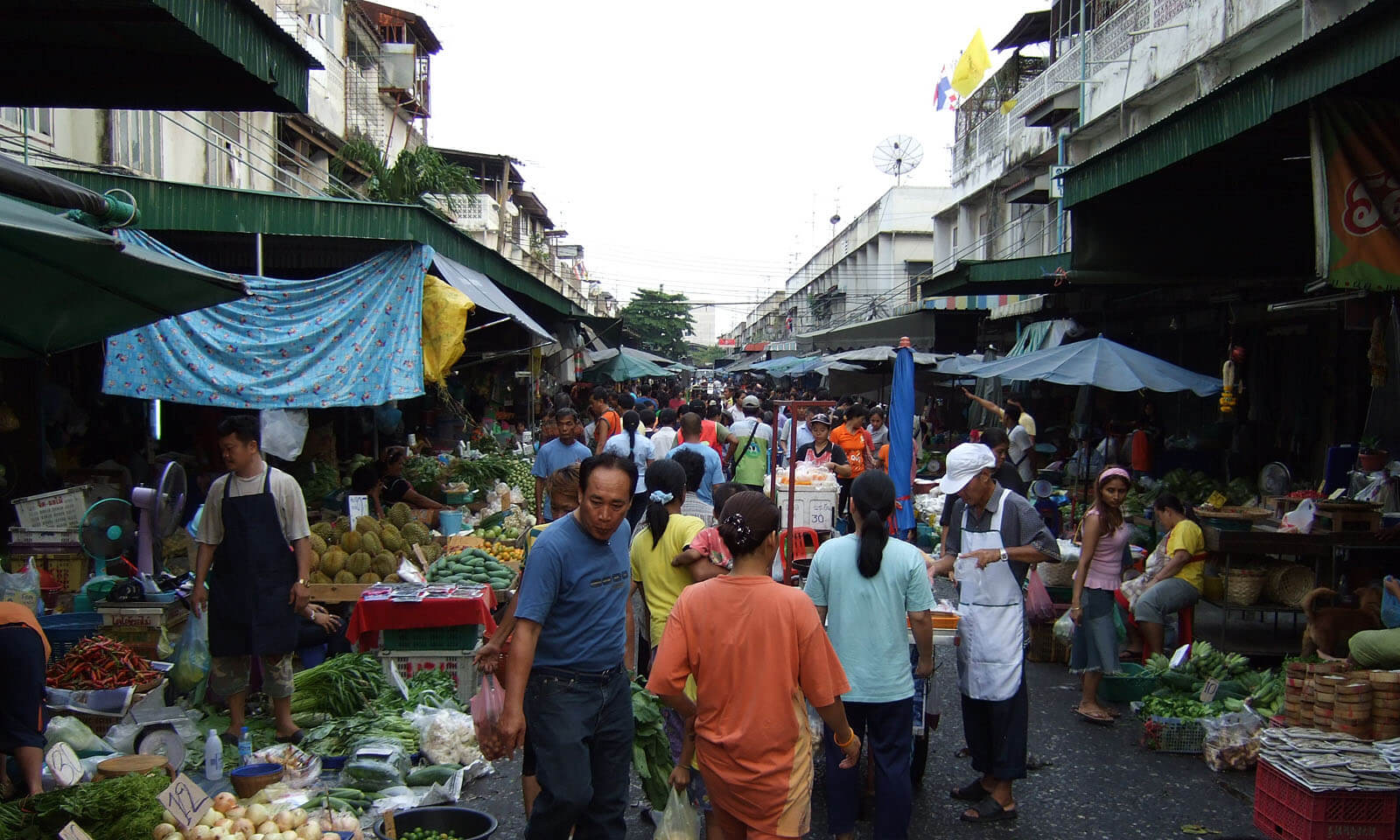
Khlong Toei Fresh Market is one of those places that reflects Bangkok better than any guidebook ever could. This is where families shop, where restaurants source ingredients, and where smaller neighborhood markets come to buy stock before reselling it elsewhere. In the Sukhumvit area especially, it’s a family favorite for people who want the best deals, and it’s normal for restaurant buyers to come here because the pricing is hard to beat.
It’s also surprisingly accessible. From central Sukhumvit, it’s not far from Asoke, and you can reach it via Queen Sirikit National Convention Centre MRT. But once you step inside, it feels nothing like a tourist market. The first thing you notice is the intensity: wet sections, fresh produce, seafood, meat, herbs, and flowers moving at scale. It can smell of fish, so it helps to go in with that expectation. This is real. It’s functional.
The market starts at very early hours. That’s when you understand what it really is: a distribution point. Smaller markets buy here to resell in their own neighbourhoods. You’ll see people moving goods fast, and one detail stands out immediately: this is where tuk-tuks are used legitimately to this day, not as a tourist ride, but as working transport. Vendors and resellers load up produce and supplies and move them across the city during the wee hours of the morning before sunrise. Seeing tuk-tuks used for logistics, not sightseeing, tells you everything about the market’s legitimacy.
Prices here are the lowest you’ll find for many categories, including flowers. Even if you’re not planning to buy, it’s worth visiting just to see how one of the biggest markets in town functions. It’s messy, loud, efficient, and very real. You don’t have to “do” anything here. Just watching the flow is an experience on its own.
How to get to Khlong Toei Fresh Market
Take the MRT to Queen Sirikit National Convention Centre and walk about 10 minutes. From Sukhumvit or Asoke, a short taxi also works if you want the simplest route.
Best time to go
Early morning, roughly 4:30–8:00 am, when wholesale buying, loading, and transport are most visible.
Sampheng Market (Phahurat to Chinatown wholesale street)
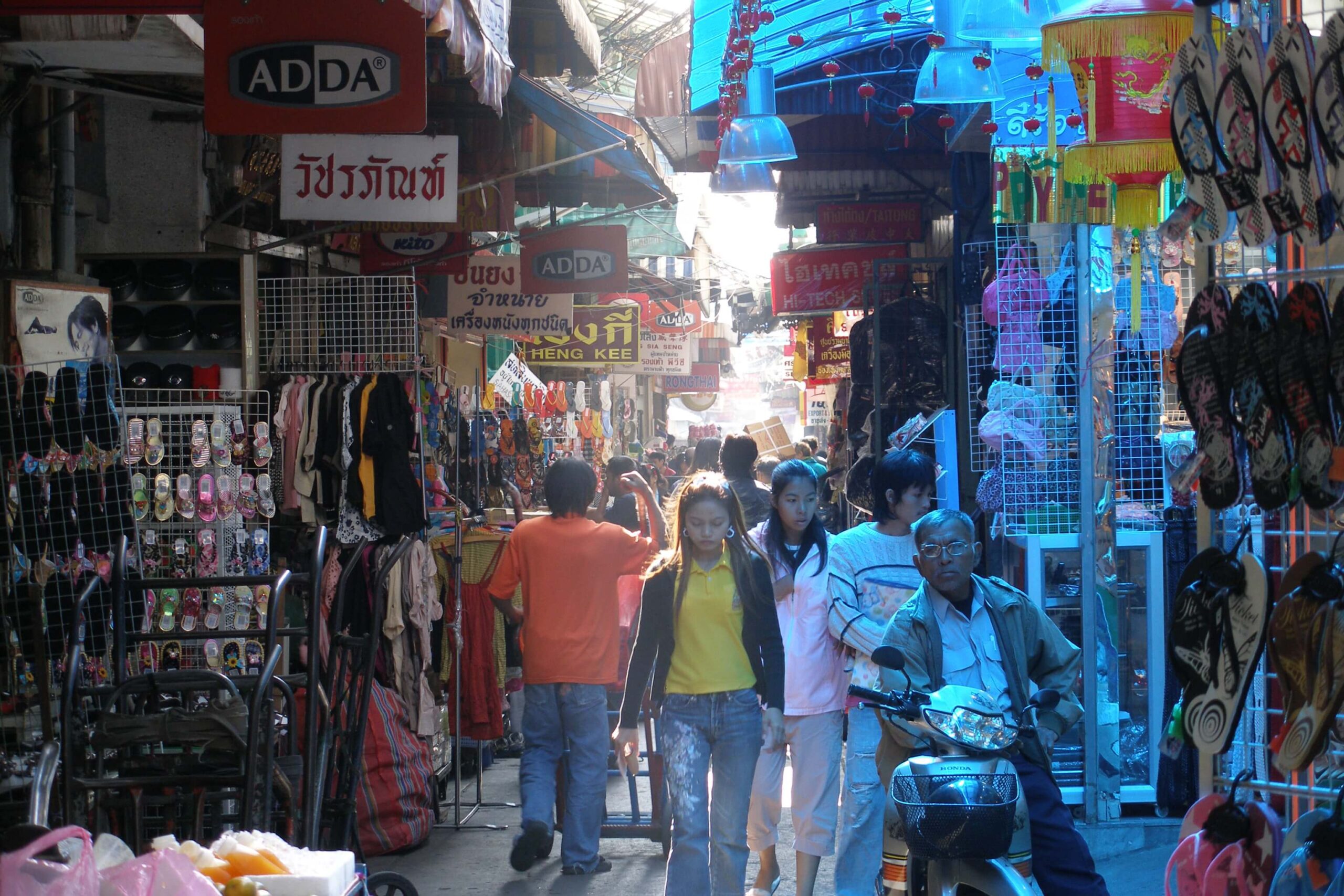
Sampheng isn’t one single “market” in the way tourists are typically accustomed to. The Sampheng Market I mean is the long, thin, busy streets connecting the Phahurat (Little India) side to Chinatown, packed with wholesale goods in narrow lanes. It’s one of the most utilitarian shopping experiences in Bangkok, and it’s a perfect example of why locals don’t shop where tourists shop.
While you’ll still find some tourists here this is wholesale logic: volume, speed, tight margins. You’ll see bags, flip-flops, backpacks, suitcases, textiles in rolls, small accessories, snacks, and sometimes electronics. The deals are real, and you won’t find better pricing in more “comfortable” shopping environments or anywhere else for that matter. Places like MBK sell essentially the same kinds of goods, but you’re paying a premium because of rent and presentation.
Walking this stretch feels genuine because it’s built for work. Shopkeepers measure cloth by hand. Scooters and delivery (annoyingly) runs weave through narrow alleys. There’s an intensity to it, but it’s not tourist-performative. It’s the old Bangkok that still runs on small margins and fast movement.
Food and shopping balance here leans shopping, but can eat well anyway because you’re right between food-heavy stalls. The trick is to treat food as part of the experience. Browse, snack, buy, move. If you go in the morning, it’s cooler and you’ll catch the street operating at peak energy before it gets exhausting. If you want to pair this with a calmer reset after, use: Quiet Bangkok Neighbourhoods 2026.
How to get to Sampheng Market
Take the MRT to Wat Mangkon or Sam Yot, then walk into the Phahurat–Chinatown lanes. Once you’re off the main road and the streets narrow into stacked stalls, you’re there.
Best time to go
9:00 am–2:00 pm. Morning is cooler and less tiring.
Khlong Thom Market
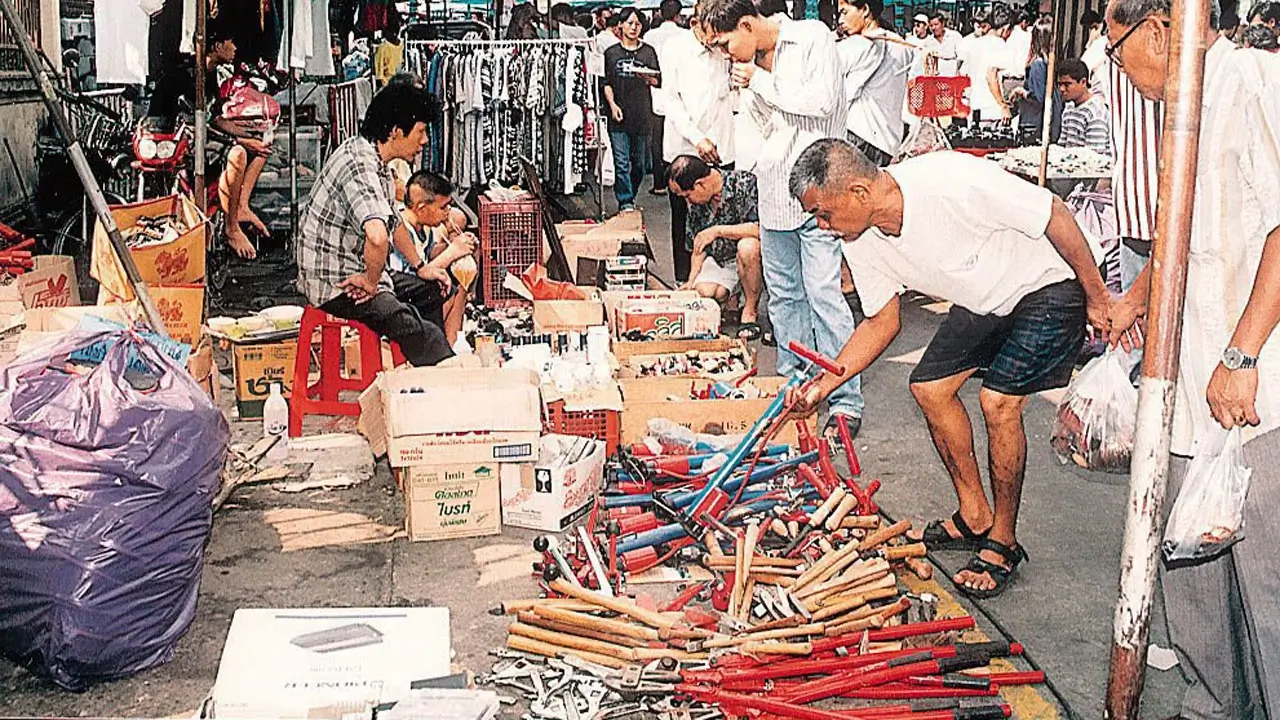
Khlong Thom has always felt like a different Bangkok: more gritty, more bargain-hunter energy, and very much buyer beware. If you’re into electronics, gadgets, tools, and random practical items you didn’t know you needed, this market can be a few hours.
This is where you’ll find electronics and small devices such as beard trimmers and hair dryers, power tools, belts, car accessories, and plenty of questionable items floating around the edges. It has a black-market feel in parts, and the market itself teaches a practical lesson: you can find value here, but you have to keep your brain on. I’ve been coming here since I was young, and I’ve also been ripped off once, by someone claiming to sell legit Ray-Bans for cheap because he “knew someone in the industry.” That kind of story is part of the ecosystem here, which is exactly why locals shop carefully and ask the right questions.
This isn’t a fresh-food market. It’s a problem-solving market. People come to find a part, replace a charger, buy a cheap tool, or pick up something functional without paying mall prices. Food exists around the edges because shoppers and vendors get hungry, not because food is the focus. It’s also the kind of market where you snack while you browse, then leave when you’ve found what you came for.
Official site if you want to sanity-check details or hours: Khlong Thom.
How to get to Khlong Thom Market
Take the MRT to Wat Mangkon, then walk a couple of minutes or take a taxi to the Khlong Thom area. Don’t expect a single entrance; you’ll gradually move into it as electronics and tool stalls appear.
Best time to go
Late morning to early afternoon, especially on weekends when more stalls are open and the variety is better.
Pratunam Wholesale Market
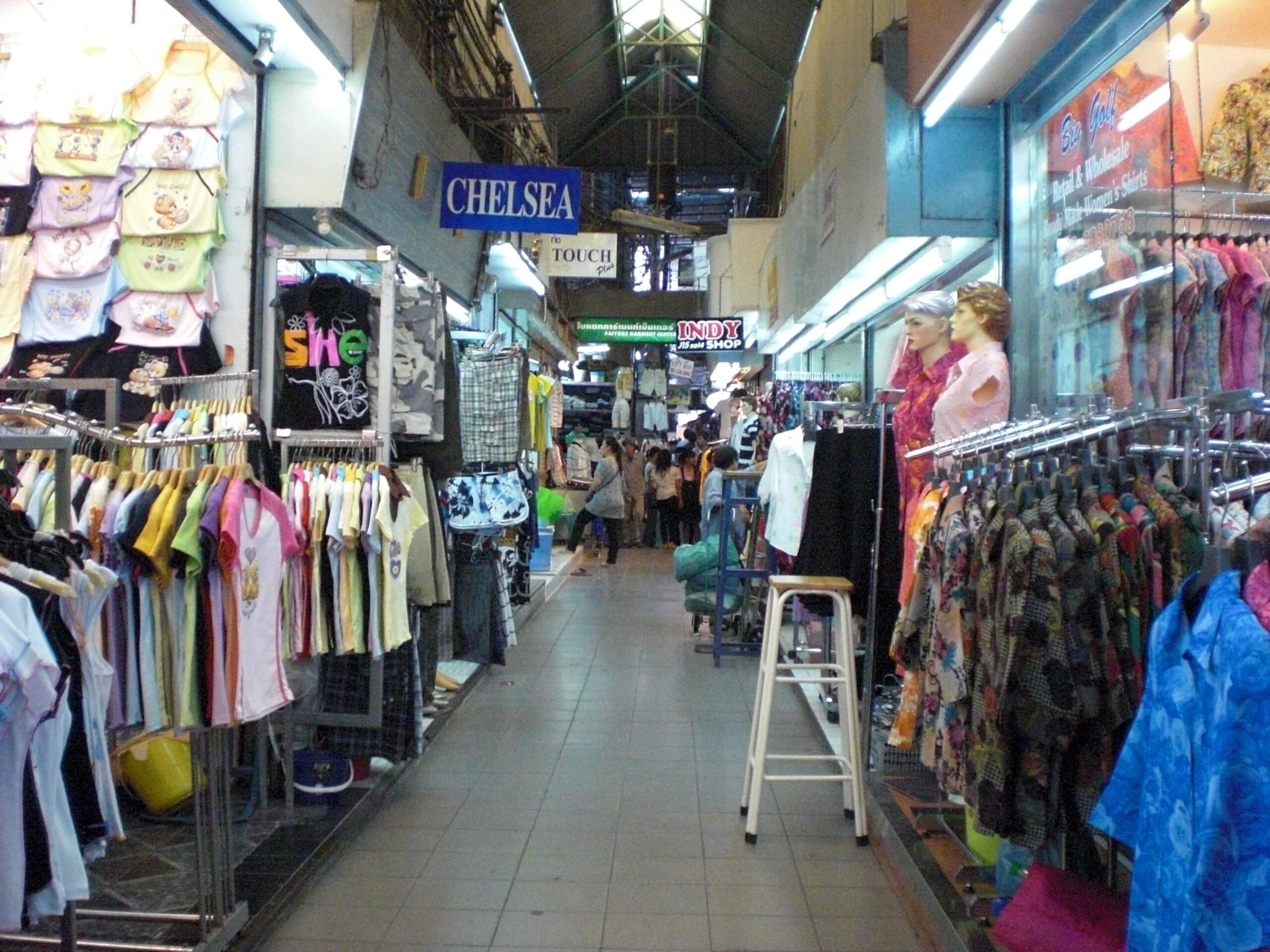
Pratunam is the clothing mecca of Bangkok. While malls like Platinum are the most visible landmarks, the real heart of Pratunam is the surrounding wholesale streets where clothing actually moves. This is where trends get produced, priced, and redistributed.
You’ll see every tier of clothing quality here. Basic tees, oversized shirts, unbranded “luxury-style” items, bags, and accessories all move through these lanes. The same product can exist in multiple grades, and knowing how to spot the difference matters. This is why Pratunam attracts not just businesspeople, but locals, traders, and people selling on e-commerce platforms.
I know people who’ve genuinely made their fortune buying here and selling elsewhere. That alone tells you what kind of market this is.
The balance between food and shopping here works effortlessly. Shopping is intense and transactional, so locals move in short, focused bursts—you shop for a while, stop to eat, then jump back in if needed. That’s why the area is packed with places to refuel: legit Indian restaurants, classic Thai food spots, and massage shops are all close by, built into the everyday flow rather than added on for show.
How to get to Pratunam
A taxi is the simplest option from most parts of Bangkok. You can also take the Saen Saep canal boat and get off at Pratunam Pier—this is one of the main stops and drops you right into the area. If you’re using the BTS, get off at Chit Lom or Ratchathewi and walk toward the dense wholesale streets behind the malls.
Best time to go
10:00 am–3:00 pm. Weekdays are calmer than weekends and easier to manage.
Antique & Second-Hand Market near Saphan Khwai
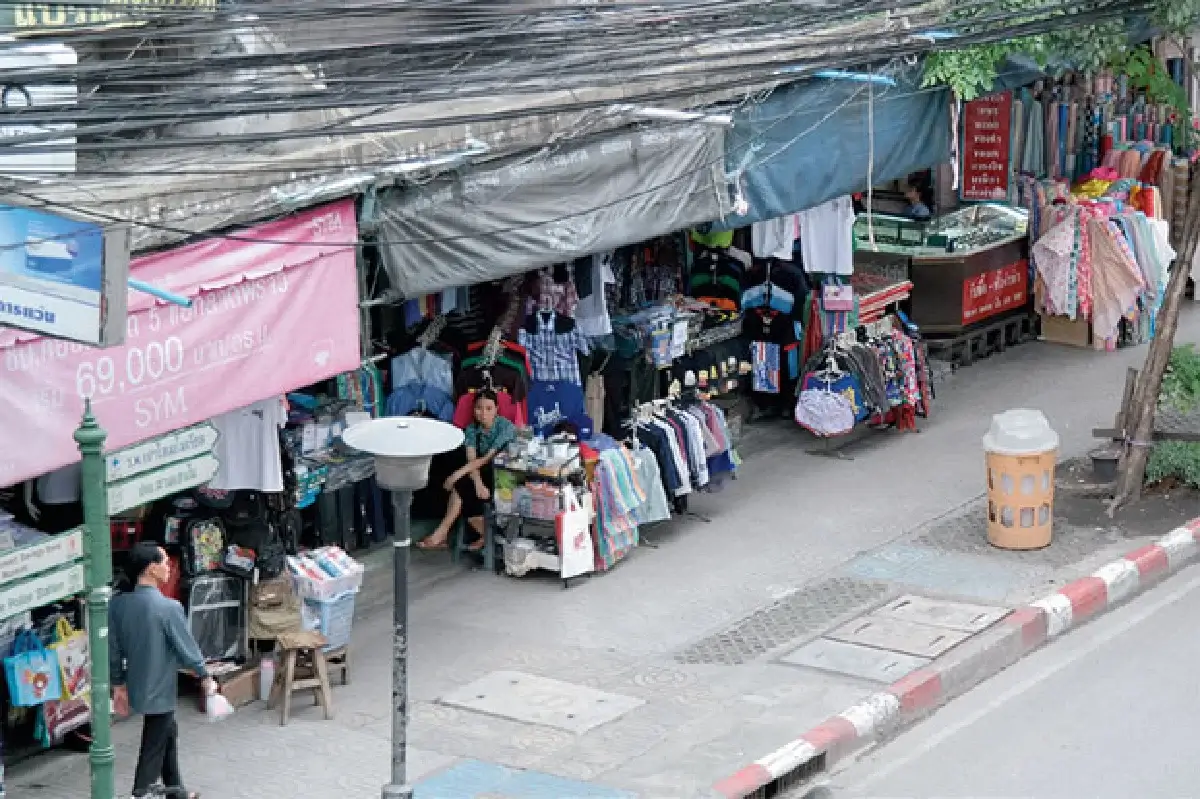
Near the edges of Chatuchak, closer to Saphan Khwai BTS, there’s a spillover market where second-hand and antique goods quietly change hands. It feels more like an extension of everyday Bangkok than a destination in itself—mostly locals selling used, repaired, and long-kept items. This is where old objects keep circulating not because they’re trendy, but because they’re still useful or carry real meaning.
Here you can find working radios from the 70s, cassette players, analog cameras, old glasses, Buddhist statues, amulets, and ornaments meant to be worn or kept for spiritual reasons. Many vendors specialise in niche categories, and they know their stock well. This isn’t fast shopping. It’s a slower paced experience.
What I like about this market is that it doesn’t try to be nostalgic for visitors. It exists because there’s still demand. Collectors, repair-minded buyers, and locals browse carefully, asking questions and checking details. You can easily lose an hour looking at things you didn’t expect to care about.
How to get there
Take BTS to Saphan Khwai, then walk toward the smaller streets near the outer edges of Chatuchak. You’ll recognise the area when antique and second-hand stalls start clustering together.
Best time to go
Late morning to early afternoon, mainly on weekends when most vendors are present.
Srinakarin Train Night Market
Srinakarin Train Market isn’t as hidden, but it still belongs in a local-focused guide. It sits slightly outside the main tourist zone and city area and functions more as a neighbourhood hangout than a sightseeing stop.
I used to come here with my girlfriend, and it always felt vibrant. People don’t rush. They eat, wander, browse, sit, and spend time. You’ll find epic food stalls, casual shopping, t-shirts, nail salons, small electronics, and odd stalls selling things that don’t fit neatly into categories.
Food is a big part of the experience here, not an afterthought. People come to eat, wander, drink, then eat again—often staying for hours. Alongside the stalls, you’ll find beer gardens and small bars woven into the market, giving it a relaxed, social feeling. Unlike central night markets built mainly for visitors, Srinakarin Train Market feels like a place locals come back to again and again.
How to get to Srinakarin Train Night Market
The easiest option is a taxi or rideshare from central Bangkok. You can also take the MRT Yellow Line monorail to Suan Luang Rama IX (near Seacon Square), then walk or take a short taxi to the market.
Best time to go
Friday to Sunday evenings, after 5:00 pm, when the market feels social rather than rushed.
Muang Thong Thani Weekend Market
Muang Thong Thani’s market stuck with me because I stumbled onto it by accident. It didn’t feel curated or famous. It felt like a genuine local weekend space.
Shopping here is unpredictable in a good way. One of the standout things I remember is second-hand sneakers: legit Nike and Adidas pairs in great condition, the kind collectors actually look for. You’ll also see toys, collectibles, and stalls that feel closer to a flea market than a shopping centre.
Food plays a big role here. This is a market people come to spend time at, not just pass through. That makes the food-shopping balance feel equal and unforced. You eat, you browse, you hang out, and you leave when you’re ready.
It’s further from central Bangkok, and that distance keeps it local. Muang Thong Thani itself is known for concerts, conventions, sport outlets, and residential life, and the market fits naturally into that environment.
How to get to Muang Thong Thani
Take a train from Krung Thep Aphiwat (Bang Sue Grand Station), change a couple of lines toward Muang Thong Thani, then take a short walk to the market area.
Best time to go
Weekends, late morning into early evening.
Practical Notes for Visiting Local Markets in Bangkok
Thai markets work best when you treat them as real places, not attractions.
- Go early for fresh markets. Khlong Toei shows its true role in the early morning, when buying and distribution happen fast.
- Use both the MRT and BTS as your anchor. Most markets here are reachable by MRT or BTS plus a short walk or taxi, which keeps logistics simple.
- Expect wet-market realities. Fish smells, slippery floors, messy edges — these are normal. Comfortable shoes matter.
- Carry cash. Some vendors accept transfers, cash keeps things smooth.
- Don’t over-bargain. In working markets, prices are already tight. Light bargaining is fine; aggressive haggling isn’t necessary.
- Be cautious with electronics. At Khlong Thom, test items if possible and don’t rush into deals driven by stories.
- Eat simply and locally. Market food is about speed and reliability. Busy stalls are usually the safest choice.
- Respect workflow. Step aside when goods are being loaded. Don’t block lanes for photos.
- Balance intensity with relaxation. Markets can be overwhelming. Pair them with quiet walks in parks: Peaceful Parks in Bangkok 2026.
If food is a core part of your Bangkok plan, this pairs well with: Local Vegan and Vegetarian Food in Bangkok 2026.
If you’re planning bigger “getting out of the city” days after markets, keep this hub saved: Day Trips from Bangkok.
Closing: The Bangkok Most Visitors Miss
Markets are one of the fastest ways to understand Bangkok, but they’re also where the city can feel overwhelming if you don’t know how things work. Heat, crowds, language barriers, and logistics add up quickly — especially when you’re moving between neighbourhoods or visiting multiple markets in one day.
This is where having local support changes the experience entirely.
At Off Path Thailand, we design private market walks that let you experience these everyday places comfortably and at your own pace. With a local guide, you don’t have to guess what you’re looking at, worry about communication, or negotiate on the spot. With a private driver, you can step into air conditioning whenever you need it, move efficiently between markets, and avoid the friction that often turns a great idea into a tiring day.
The goal isn’t to rush through markets or turn them into a checklist. It’s to experience them calmly — understanding what you’re seeing, eating well, shopping with confidence, and leaving when you’ve had enough.
If you want to explore Bangkok’s local markets with insight, comfort, and flexibility, you can get in touch with us here: Contact Off Path Thailand.
FAQ
What are hidden local markets in Bangkok?
They’re everyday working markets and wholesale areas used by residents and businesses — fresh food hubs, wholesale streets, and practical shopping zones that exist for routine life, not tourism.
Where do locals go for street food in Bangkok?
Many locals eat in and around working markets because stalls feed vendors, drivers, and shoppers. The food is usually simple, fast, and consistent — breakfast and lunch built around regular customers.
What are good Bangkok markets for clothes and shopping?
Pratunam is the main clothes wholesale ecosystem, and Sampheng is a dense wholesale corridor for bags, textiles, and everyday goods. These areas often supply resellers across Bangkok and beyond.
Is Khlong Thom Market safe to visit?
Yes, if you visit with normal city awareness. The bigger risk is not safety — it’s quality and authenticity. Test items when possible, don’t buy based on stories, and treat deals with healthy skepticism.
What is the best time of day to visit Bangkok’s working markets?
Fresh markets like Khlong Toei are best very early in the morning for wholesale flow. Wholesale streets like Sampheng and Pratunam are easier late morning to mid-afternoon. Night markets (like Srinakarin) are best after 5 pm.

About the author
Thai-born founder of Off Path Thailand. I grew up around Bangkok’s everyday rhythms — the markets, the backstreets, the practical places most visitors skip — and I build trips for travelers who want Bangkok to feel calm, real, and comfortable. About the founder
Tell us your dates and vibe — our team replies within 24 hours to begin crafting your trip.
Leave everything to us and experience Thailand off the beaten path
If you want official inspiration for Thailand trip planning, start here: Tourism Authority of Thailand.