
Bangkok Hidden Gems: Canals, Parks and Neighborhoods Born-and-Raised Locals Love
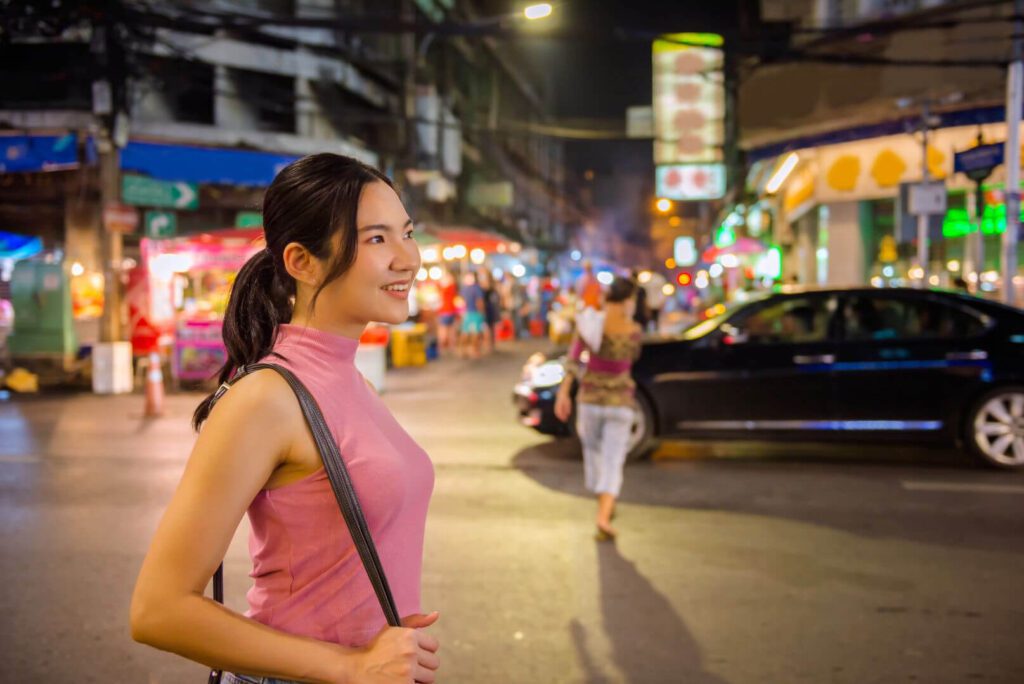
Bangkok Hidden Gems, Straight From a Local
TL;DR: The best Bangkok hidden gems are Bang Krachao (the city’s “green lung”), the Muslim canal communities along Khlong Saen Saep, the old riverside neighborhoods around Wat Arun and Kudi Chin, the Saen Saep canal boat, quieter parks like Benjakitti, Nawamin and Chatuchak Park, and local markets like Sampheng. These are real places Thais actually use, not tourist traps, picked by someone born and raised in Bangkok.
Written by Dee · Founder of Off Path Thailand
Born and raised in Bangkok, I grew up in Phrom Phong and lived in the city for over three decades. These are the canals, parks and neighborhoods I actually use, not the ones on every other list. About Dee →
Most “hidden gems” lists recycle the same rooftop bars and Instagram cafés. This one doesn’t.
If you want a broader overview of how these places fit together, see how we customize trips in Thailand.
This isn’t your typical guide; here we investigate a side of Bangkok that sits outside popular nightlife districts, beer gardens, and other cliché highlights.
We attempt to focus on a very authentic and cultural side of Bangkok that is rarely explored by tourists: off-the-beaten-path Bangkok neighborhoods and local markets where daily life still defines the energy.
Diverse canal-side neighborhoods, various types of local markets where people still flip second-hand radios, overlooked but still spectacular green parks, and everyday, unique places where the city’s real character shines, for those who value genuine depth, context, and slower exploration.
For a slower way to explore these areas, see our Bangkok walking routes 2026 guide for calm, neighborhood-focused paths.
If you’re ready to experience Bangkok beyond the typical two-week itinerary, this guide is how I would approach the city.
For a structured way to experience these areas without the guesswork, see how I’d map it out in a sample private Bangkok hidden gems itinerary.
I was born here, second-generation Thai, and the Bangkok I know is profoundly simpler, more layered, and often more revealing than what most visitors would encounter.
Its authenticity lives in back alleys and waterways, neighborhood amenities, and local markets shaped by daily living rather than tourism, and everyday places like quiet cafes in Bangkok where locals work, read, and slow down away from crowds.
If food is a big part of how you explore cultures, this Culinary Exploration travel style and Bangkok food-focused itinerary follows a similar approach through markets, backstreets, and everyday local spots.
This is where Bangkok’s blueprint shows itself: lived-in, unpolished, and still moving to its own tempo.
In other words, these aren’t places put on display, but what attracted visitors to Thailand in the first place, decades ago.
If you’re heading north after Bangkok, explore our Northern Thailand Hidden Gems guide for slower mountain towns and overlooked valleys beyond Chiang Mai.
Also explore Thailand’s Hidden Gems Guide, a complete look at Off Path destinations across the country.
Quick Comparison: Off Path vs Popular Bangkok
| Place | Crowd Level (1–10) | Best Time to Visit | Vibe |
|---|---|---|---|
| Sampheng Market | 3–4 | Morning (9–11am) | Gritty, local |
| Chinatown Main Road (Yaowarat) | 8–9 | Evening | Loud, chaotic |
Off-the-Beaten-Path Attractions in Bangkok (Local Favorites)
These off-the-beaten-path attractions in Bangkok are not difficult to reach; they are simply outside the usual tourist routes. Many are a short walk from BTS or MRT stations, located along canals, in residential neighborhoods, or just off main roads.
While this guide and our off the beaten path Bangkok post cover similar ground, that one’s been kept more current and includes a few spots, like Bang Pu, the Erawan Statue, and the Ancient City, that never made it onto this list. And for actually getting between all of these places, our Bangkok transportation guide breaks down the BTS, MRT, canal boats, and more, so you’re not stuck relying on taxis for every stop.
They are considered “hidden” because they serve local daily life rather than visitors. This includes small markets, neighborhood parks, canal communities, and areas that function as working parts of the city instead of attractions.
Visiting these Bangkok hidden gems usually involves small practical choices, such as using canal boats, walking side streets, or navigating residential areas. These choices are what allow visitors to see a side of Bangkok that is not designed for mass tourism.
These off-the-beaten-path attractions in Bangkok are easy to miss unless you know where to look, but they’re where the city still feels alive and local.
If you’re trying to keep costs controlled while exploring these areas, see our Bangkok on a Budget 2026 guide.
This guide shares the Bangkok hidden gems I keep coming back to whenever I’m home. It skips the TikTok and Instagram spots in favor of the places I’d take a friend who wants a real feel for the city. That includes the hidden gem restaurants in Bangkok my family has been eating at for generations.
We’ll bike through the city’s green lung, hop on canal boats like locals, and explore the overlooked neighborhoods around Wat Arun. We’ll also wander lesser-known markets and relax in parks that would be world-class anywhere, yet most travelers never notice them.
If you’re planning to string a few of these together in one day, it helps to know what that realistically costs in transport, food, and small spends. Here’s a clear breakdown of daily expenses in Bangkok.
While the capital offers an endless supply of high-energy night markets and historic temples, travelers seeking a slower, beach-oriented pace often find themselves comparing Bangkok versus Phuket to escape the metropolis.
- Bangkok Hidden Gems: Canals, Parks and Neighborhoods Born-and-Raised Locals Love
- Bangkok Hidden Gems, Straight From a Local
- Quick Comparison: Off Path vs Popular Bangkok
- Off-the-Beaten-Path Attractions in Bangkok (Local Favorites)
- 1. Bangkok Hidden Gems 2026: The Green Lung of Bang Krachao
- Bang Krachao: Quick Information
- 2. Canal Communities & Neighborhoods: Living Culture and The Authentic Bangkok Experience
- 3. Chao Phraya River: Layers of Faith and Community
- Wat Arun & the Old Riverside: Quick Information
- 4. Experience Saen Saep Canal: Cruise through the Heart of the City
- Saen Saep Canal Boat: Quick Information
- Best Parks in Bangkok: Lumpini, Benjakitti, and My Off-Path Park Picks
- Planning Your Off Path Bangkok Adventure (and Day Trips)
- Sustainable Travel Tips
- Conclusion
- FAQ: Bangkok Hidden Gems
- Leave everything to us and experience Thailand Off The Beaten Path
1. Bangkok Hidden Gems 2026: The Green Lung of Bang Krachao
Whenever the city feels too heavy, I take the 5-minute ferry across the river to Bang Krachao. It’s called Bangkok’s “Green Lung,” and the nickname makes sense the moment you arrive. Skyscrapers vanish into the distance, and suddenly you’re pedaling along mangroves, banana plantations, and ponds alive with dragonflies and monitor lizards. Cycling here is one of my favorite authentic experiences in Thailand.
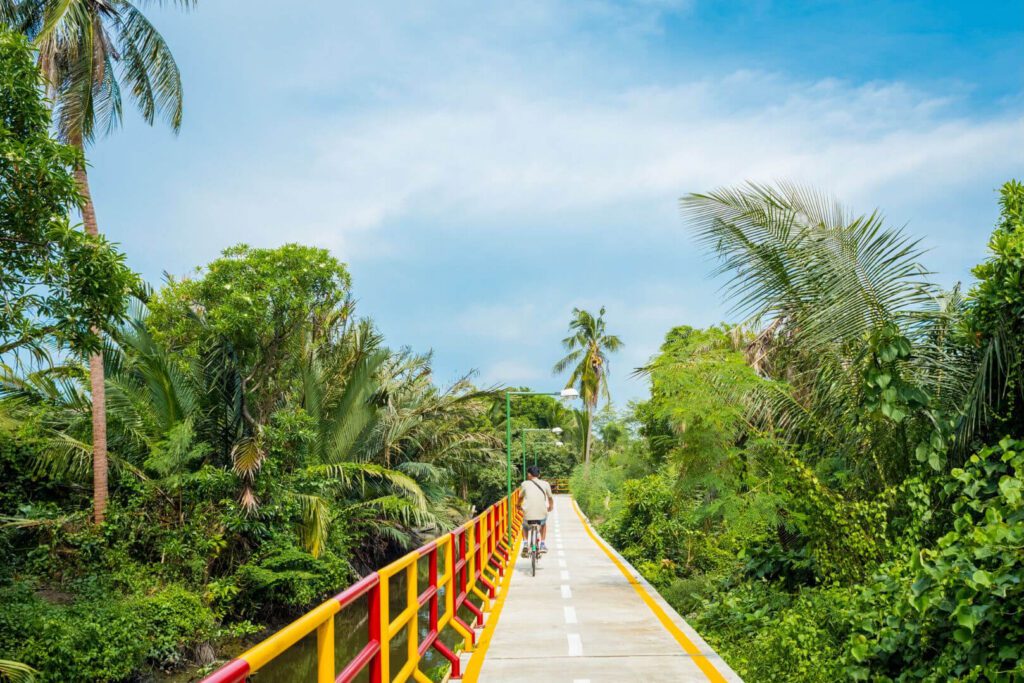
I usually rent a bicycle right at the pier to make things easier. The paths narrow, sometimes only wide enough for one bicycle at a time; talk about sustainable travel Bangkok has to offer. There’s this calm that you feel when you’ve just left Sukhumvit behind. I always say, “nature is a part of us as we are a part of nature,” there’s a familiarity when we go into nature, in any country! Every so often, you pass a mom and pop shop or a home café, places serving Thai style iced tea with veggies grown nearby, or lemongrass drinks made from plants I’ve literally just cycled past.
2026 Reality Check:
As of Feb 2026, bicycle rentals at the main pier accept PromptPay/QR, but you’ll need to leave an ID if you don’t want to pay a cash deposit; smaller food stalls around the island still require small cash (around 100 THB).
On weekends, there’s a floating market where locals sell fruit straight from their gardens, one of those Bangkok hidden gems that still feels genuinely local. Foot massages go for 150 baht, people tend to be more smiley, and it does truly feel like you’ve gone off the grid even though you’re literally just a few kilometers from Bangkok City. For me, it’s not just an escape, it’s a reset, bringing positivity back to the city, and exactly why places like this still define Bangkok hidden gems 2026.
I’ve always thought the best way to spend a day here is to mix cycling with short breaks. Stop at a pavilion shaded by giant trees, sip some coconut water, let the minerals hydrate you. If I were designing a bike tour of Bangkok, this would be definitely included: boat crossing, bikes, a family-style feast in someone’s backyard, and maybe a foot massage to end the day. I especially enjoy and recommend cycling inside Sri Nakhon Khuean Khan Park, where there are nice little trails, serene lakes, and clean air that feels like a world away from the city. You come back feeling positive in a way the city could never give you.
If you’re drawn to this slower, more intentional way of experiencing a place, Chiang Mai offers something very similar, just on foot instead of by bike. The Old City is compact, easy to navigate, and filled with quiet streets, local cafés, and small everyday moments that reveal themselves when you take your time. These Chiang Mai walking routes are designed in that same spirit, unstructured, flexible, and focused on how the city actually feels rather than just what you see.
We organize day-trip cycling tours around the island and park. For more information, itineraries, and booking inquiries, please contact us directly on WhatsApp.
Bang Krachao: Quick Information
Location: Phra Pradaeng, Samut Prakan, a green peninsula in a loop of the Chao Phraya River, just across from Bangkok’s Khlong Toei district
Getting There: Taxi or Grab to Wat Khlong Toei Nok pier, then a short boat ride across the river (about 10 to 20 THB each way). Boats run from around 6:00 AM to 8:00 PM
Opening Hours: The peninsula is open all day; Sri Nakhon Khuean Khan Park is open from about 5:00 AM to 7:00 PM, and the Bang Nam Phueng Floating Market runs on weekends only
Known For: “Bangkok’s green lung,” with mangroves, palm groves, raised cycling paths over the canals and quiet village life just minutes from the city
Must-Try: Cycling the raised paths through the jungle, Sri Nakhon Khuean Khan Park and its lake and lookout tower, herbal teas from local stalls, and the Bang Nam Phueng Floating Market on a weekend morning
Price: The park is free; bike rental costs about 40 to 100 THB a day near the pier or the park
Good to Know: Go early to beat the heat, keep your return boat ticket, and ride slowly, as the narrow raised paths have no railings and get slippery after rain
Map of Bangkrajao island (Bangkok’s Green Lung)
2. Canal Communities & Neighborhoods: Living Culture and The Authentic Bangkok Experience
Another side of Bangkok I love showing people is the Bangkok Muslim community tucked along the Saen Saep Canals. These aren’t tourist attractions. They’re working communities, but they’re some of the most welcoming corners of the city with their own unique food and culture.
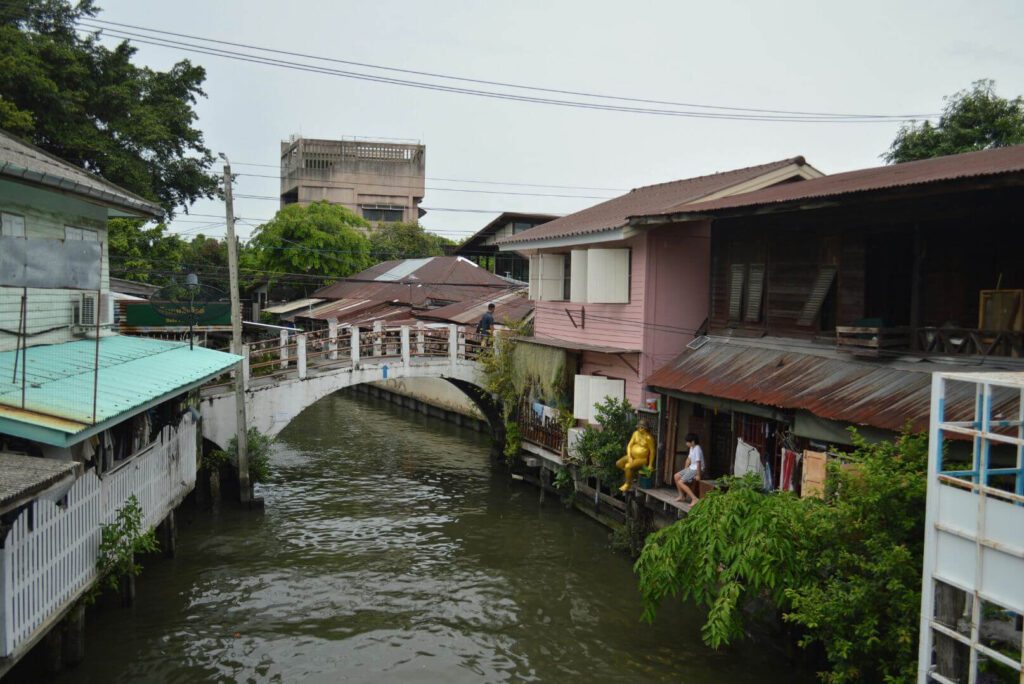
The canal itself stretches from Pratunam, right through downtown Asoke, and keeps flowing east until it reaches the more predominantly Thai Muslim neighborhoods around Ramkhamhaeng. Riding the boat here connects you to a part of the city most travelers never see or even hear of, the fastest and most cost-efficient way to get to where you need to go!
The food is a massive part of it, fragrant biryanis, smoky beef satay, fresh roti flipped on hot pans. Makes it challenging for me to remain vegan! But what really sticks with me is the routine of life here. The calmness of the canal (khlong) water a few moments after the longtail boat has dropped off passengers, mixing with the sound of mosque prayers. Friendly smiles wave as you pass, locals shout greetings. It is authentic, but never on TripAdvisor.
I usually explore by boat, bicycle, or on foot, weaving through narrow sois where mosques sit next to noodle shops and fruit stalls. You start to see how diverse Bangkok’s identity really is: Muslim, Buddhist, Thai, Malay, Indian, Chinese, all living harmoniously side by side.
These neighborhoods never advertise themselves, which is why I think of them as true Bangkok hidden gems. Spend a morning here, sip on hot milk tea, chat with a shop owner, let yourself wander without worrying about a map application. It’s one of the most authentic Bangkok hidden gems experiences you can have in my humble opinion.
See Bangkok by canalboat! 🌊 Custom guided tours designed to show you the heart of the city from the water. Start customizing your trip now!
Map of local communities by the Saen Saep canal near Ramkhamhaeng Road
3. Chao Phraya River: Layers of Faith and Community
Most visitors come to the west bank of the Chao Phraya River just to take a picture of Wat Arun and say that they have been there. And of course, it’s very special. But what I go for is the neighborhood around it. Stay a little longer and explore, treasures start to emerge.
In the vicinity you’ll find real history, centuries-old Buddhist temples where you might be the only outsider, a 16th-century Catholic church built by Portuguese traders, Holy Rosary Church (Kalawar Church), and authentic Chinese shrines hidden in the alleyways. None of them are world-famous, but together they tell a story about how culturally rich and diverse Bangkok has always been.
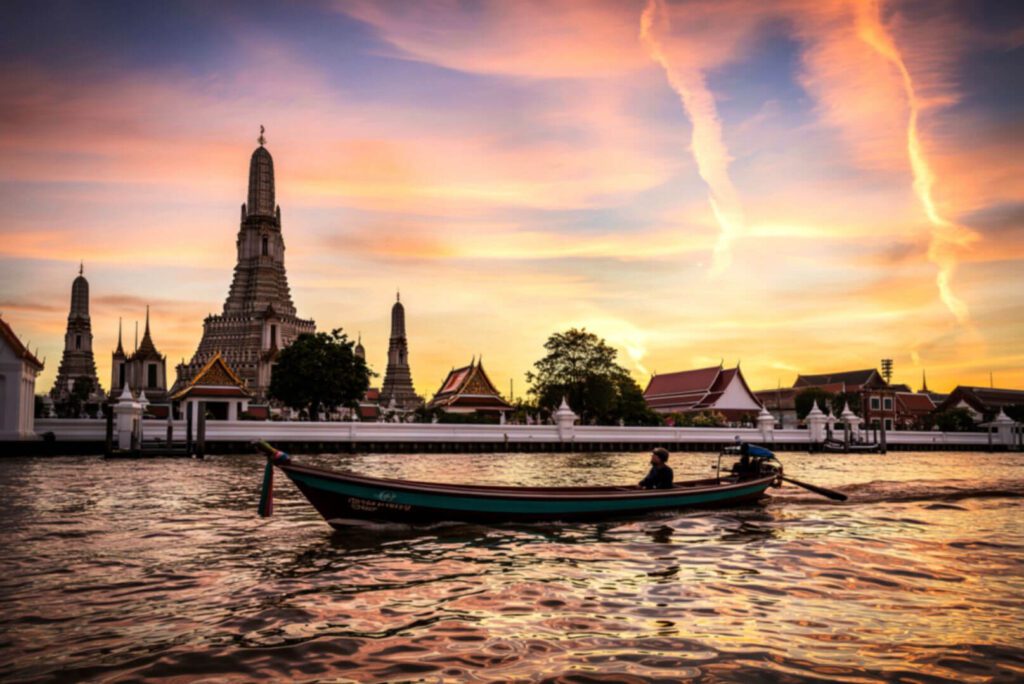
I usually take my time. Pick up an iced lemon tea from a local stall, stroll along the river. The air feels different. People actually seem to know their neighbors, kids and dogs play by the water, monks move gracefully between temples as they always have. It’s this kind of atmosphere that still defines Bangkok hidden gems, where daily life feels untouched by the pace of the city.
Historically, this area was home to waves of migrants as Chao Phraya River connects to the sea, Portuguese traders, Chinese settlers, Mon families, Muslim communities. You still get their influence in the food, and the architecture.
If you want to see the real cultural layering of Bangkok, don’t stop at Wat Arun’s gates. Take your time with the back streets. Step into the smaller temples or peek inside a riverside Portuguese church. It’s all still here!
Wat Arun & the Old Riverside: Quick Information
Location: The Thonburi (west) bank of the Chao Phraya River, from Wat Arun down to the old Kudi Chin neighborhood
Getting There: Chao Phraya Express Boat to Tha Tien pier, then the cross-river ferry (a few baht) to Wat Arun; Kudi Chin is a short walk or ride south along the river
Opening Hours: Wat Arun is open daily from 8:00 AM to 6:00 PM; the neighborhood lanes and riverside promenade can be explored all day
Known For: Wat Arun’s riverside spires and one of Bangkok’s most culturally layered neighborhoods, where Portuguese, Chinese, Mon and Muslim communities have lived side by side for centuries
Must-Try: Wat Arun, then the quieter Wat Kalayanamit and its giant seated Buddha, Santa Cruz Church at the heart of the old Portuguese community, the Kuan An Keng Chinese shrine, and khanom farang kudi chin, a Portuguese-influenced cake still baked by local families
Price: Wat Arun costs 200 THB for foreigners; the rest of the neighborhood, including the Baan Kudichin Museum, is free
Good to Know: Cover your shoulders and knees for the temples and church, bring cash for the ferry, and take your time in the back lanes, as this is a quiet, lived-in neighborhood
Map of the Chao Phraya River in Bangkok
4. Experience Saen Saep Canal: Cruise through the Heart of the City
The Chao Phraya gets all the attention, but I recommend discovering the canal that goes right through the city center, assisting thousands in commuting daily. As mentioned earlier when discussing Canal Communities, I recommend Saen Saep Canal.
It’s chaotic, noisy, sometimes smelly, but it also has a life of its own.
For just twenty baht, you can hop a riverboat and cross half the city faster than any taxi could take you. Office workers in pressed shirts, students with backpacks, aunties hauling bags of vegetables, everyone piles in. It’s not glamorous, but it’s efficient and it screams out Bangkok!
2026 Reality Check:
In early 2026, electric boats are being introduced on some sections, but the classic 20-THB boats are still the fastest option during the 5 PM Sukhumvit rush.
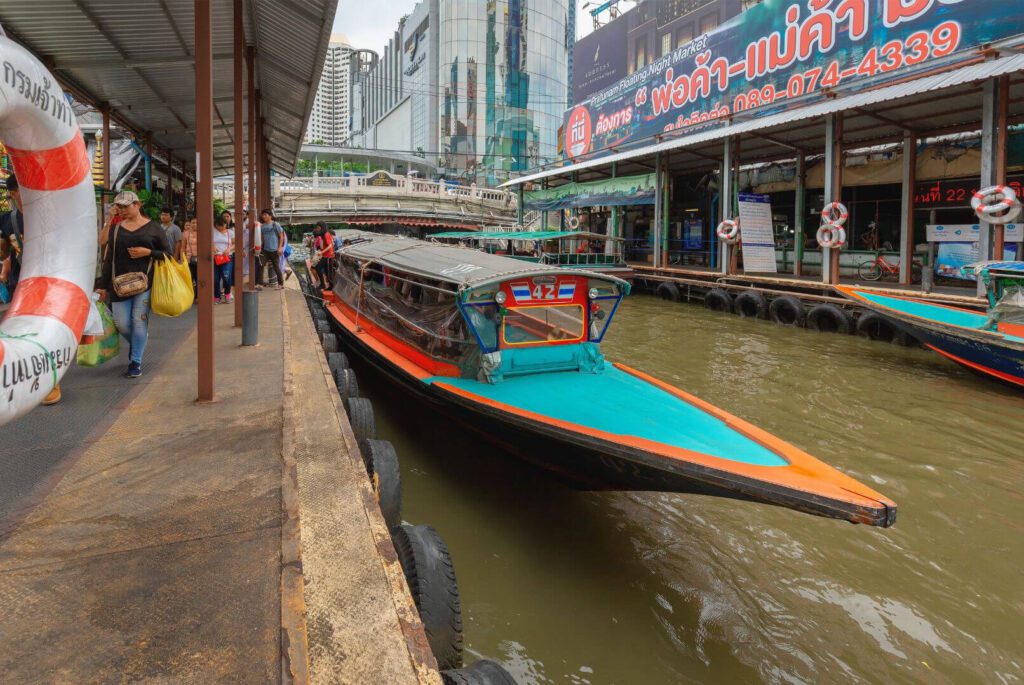
I love the small rituals: hopping on quickly, watching the spray of water hit the tarp as we speed past tilted wooden houses and shrines under bridges. This is what mass transit can also look like when a city grows around its waterways.
What I like most is the sense of history. Saen Saep has been a transport artery since the 1800s, carrying soldiers, goods, and now commuters. Unlike the polished tourist boats, this one has been upgraded but hasn’t been reinvented for show. It’s just part of Bangkok’s everyday livelihood. This is the real culture Bangkok has to offer, the kind that still defines Bangkok hidden gems.
If you want an authentic Bangkok, take this ride. It’s not glamorous in the conventional sense, but it’s legit, and that’s why I keep recommending it. Of course, for a more pleasant journey do avoid rush hour!
Saen Saep Canal Boat: Quick Information
Location: Khlong Saen Saep, an 18 km canal running east from the Old Town through downtown Bangkok toward Ramkhamhaeng and beyond
Routes: Two main lines meet at Pratunam pier, where you change boats. The Golden Mount line runs west to Panfa Leelard pier near Wat Saket; the NIDA line runs east to Wat Si Bun Rueang, with electric boats continuing further east toward Min Buri
Operating Hours: Roughly 5:30 AM to 8:30 PM on weekdays, with shorter hours on weekends and public holidays, until about 7:00 PM
Price: About 10 to 22 THB depending on distance, paid in cash to the conductor on board, so keep small change ready
Useful Piers: Panfa Leelard (Golden Mount and Wat Saket), Saphan Hua Chang (Jim Thompson House), Pratunam (change boats), Chit Lom (malls and the Erawan Shrine) and Asok (Sukhumvit and Terminal 21)
Known For: Bangkok’s fastest local shortcut, used by commuters since 1990, with a rare, close-up view of canal-side homes and neighborhoods most visitors never see
Good to Know: Stops last only seconds, so board and get off quickly. Raise the side covers to avoid splashes, keep your bag in front of you, and avoid rush hour when boats are packed
Map of the pier next to the famous Pratunam area where you can hop on and off Canal Boats
Best Parks in Bangkok: Lumpini, Benjakitti, and My Off-Path Park Picks
For a quiet park in Bangkok, go early: Lumpini for classic city mornings, Benjakitti for space and greenery, and Nawamin if you want to feel like you’ve left the city behind.
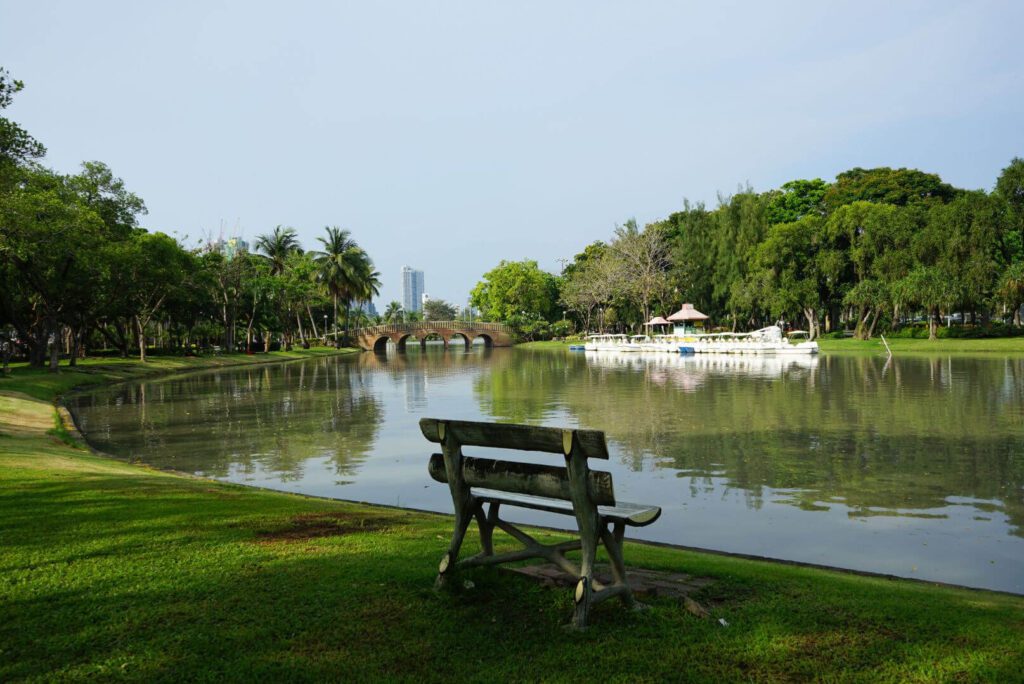
5. Lumpini Park
Lumphini is an old favorite. In the mornings, I’ve seen retirees practicing tai chi, joggers looping around the lake, and vendors setting up with steaming bowls of rice porridge at the gates. I’ve had mornings here where I just meditated and sometimes sat watching giant monitor lizards laze by the water, they look intimidating, but trust me, they’re more harmless than people.
Lumphini Park: Quick Information
Location: Rama IV Road, Pathum Wan, between Silom and Sathorn in central Bangkok
Getting There: MRT to Lumphini or Si Lom station, or BTS to Sala Daeng or Ratchadamri, all a short walk from the park gates
Opening Hours: Open daily from around 4:30 AM to 10:00 PM
Known For: Bangkok’s oldest and best-known public park, with a large lake, shady paths and wild monitor lizards wandering the lawns, surrounded by skyscrapers
Must-Try: An early-morning walk while locals do tai chi and jog the loop, a paddle boat on the lake, and the evening outdoor aerobics session
Price: Free; paddle boats cost a small rental fee
Good to Know: The monitor lizards are harmless if left alone, so keep your distance and don’t feed them
6. Benjakitti Park
Benjakitti is new, modern, and feels designed for workouts. There are basketball, pickleball, and badminton courts. The cycling and jogging track loops around wetlands where birds gather and lotus flowers grow. I like going at sunset, when the Sukhumvit skyline glows behind you.
Benjakitti Forest Park: Quick Information
Location: Ratchadaphisek Road, Khlong Toei, right in the middle of Bangkok between Sukhumvit and the Queen Sirikit National Convention Center
Getting There: MRT to Queen Sirikit National Convention Centre station, or BTS to Asok and a 10 to 15 minute walk
Opening Hours: Open daily from around 5:00 AM to 9:00 PM
Known For: A forest park built on old industrial land, with wetlands, a lake and an elevated skywalk winding above the trees, with the city skyline all around
Must-Try: Walking the skywalk through the wetland forest, cycling the paved track, and sunset by the lake as the skyline lights up
Price: Free
Good to Know: There’s little shade on the skywalk, so go early in the morning or late in the afternoon, and bring water
7. Nawamin Park
Nawamin Park has this long, open stretch where you really feel like you’ve left the city behind. The lake is long, the air is calmer, and it’s one of the few places I actually slow down enough to just sit by the water without a phone.
Nawamin Park: Quick Information
Location: Nawamin Phirom Park (สวนนวมินทร์ภิรมย์), Bueng Kum District, in Bangkok’s quieter eastern suburbs
Getting There: Easiest by Grab or taxi, as it’s well away from the central BTS and MRT lines
Opening Hours: Open daily from around 5:00 AM to 9:00 PM
Known For: One of Bangkok’s larger parks, at about 30 acres, with a long lake, wide-open green space and an atmosphere that feels far from the city
Must-Try: A slow walk or bike ride along the lake, then sitting by the water and unplugging for a while
Price: Free
Good to Know: It’s mostly used by locals, so you’ll rarely see other tourists. Come early morning or late afternoon to avoid the midday heat
8. Chatuchak Park Bangkok
Then there’s Chatuchak Park Bangkok. Most people only know the market next door, but the park itself is overlooked on weekdays. Walk inside and it feels surprisingly natural: shaded, green, almost wild in parts. It’s not fashioned the way Benjakitti is, which makes it feel closer to nature.
For me, this mix is perfect. Lumpini and Benjakitti are where I go when I want activity and people-watching. Nawamin and Chatuchak Park Bangkok are where I go when I want quiet and a dose of green that feels more authentic. Together, they show a side of Bangkok most visitors don’t expect.
Locals use these parks every day, and many of them come to run. If you’d like to join them, my guide to the best parks to run in Bangkok covers where to go and the best times to run.
Chatuchak Park: Quick Information
Location: Kamphaeng Phet 3 Road, Chatuchak, northern Bangkok, right next to the Chatuchak Weekend Market
Getting There: MRT to Chatuchak Park station, which exits right by the park, or BTS to Mo Chit and a short walk
Opening Hours: Open daily from early morning (around 4:30 AM) until late evening
Known For: A big, green city park with a central lake and footbridges, linked by walkways to Queen Sirikit Park and Rot Fai Park next door
Must-Try: An early-morning walk around the lake with the local joggers, cycling the paved loop, and crossing over to Rot Fai Park for more green space
Price: Free
Good to Know: Come early on a weekend for a quiet walk before the market crowds arrive, then head into Chatuchak Weekend Market once it opens
Map of our four favorite parks in Bangkok (two hidden gems)
9. Hidden Markets: Beyond Chatuchak and Chinatown
Bangkok is a city teeming with markets, but my favorites aren’t the ones everyone talks about. Sure, Chatuchak Weekend Market and Yaowarat Road in Chinatown are iconic, and they definitely have their charm, but if you step off the beaten path, you’ll uncover even more unique spots. These hidden gems are the kind of places that still define the true spirit of Bangkok in 2026. And while you’re at it, don’t forget to check out our Bangkok Hidden and Authentic Market Guide for even more insider tips!
Near Saphan Khwai BTS, just a ten-minute walk from Chatuchak, there’s an antique second-hand market. It’s gritty, messy, and fascinating. I’ve seen everything from vintage cassette players and vinyl records to spare motorcycle parts and analog cameras from the 80s. It’s the kind of place where you can lose hours bargaining over things you never even planned to buy. Places like this are especially rewarding for solo travelers who enjoy exploring without a fixed agenda.
In Chinatown, step away from the main strip and head into Sampheng Market Bangkok. It’s a wholesale hub, full of bags, jewelry, snacks, and textiles crammed into narrow alleys. Walking here feels authentic, like the Bangkok I grew up in, shopkeepers measure cloth by hand, scooters run errands between stalls, and the air is thick with food smells. Pro tip: Head there around 9am, it’s still cool, and you’ll catch the market buzzing at its peak.
If you’re curious how market culture changes outside the capital, our Chiang Mai Market Guide 2026 explores the northern version of this ecosystem, from student markets and neighborhood food streets to the wholesale hubs where many vendors actually source their goods.
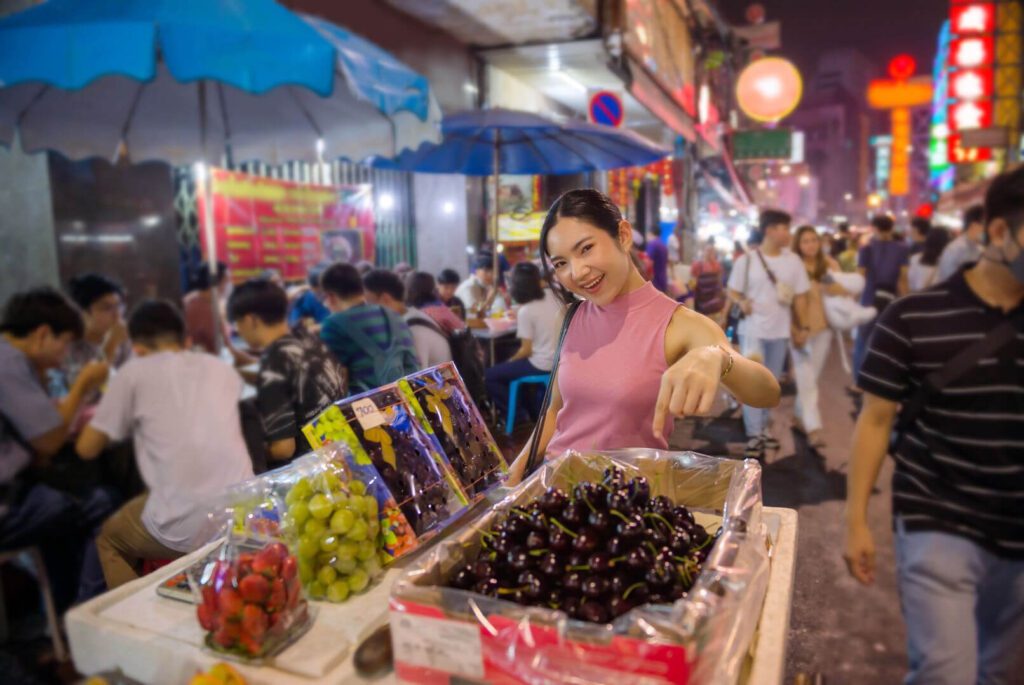
What I love about both markets is that they’re still built for locals, not tourists. That means the prices are legit, the energy is real, and the interactions are genuine. They’re the kind of hidden markets Bangkok keeps alive, showing the city’s market culture in its true form.
Map of Hidden Markets in Bangkok: Sampheng Market & Saphan Kwai Market (next to Chatuchak)
Planning Your Off Path Bangkok Adventure (and Day Trips)
If you’re inspired to go a little off-grid in Bangkok, a few tips will help. Or if you’d rather not figure it out yourself, you can always book private tours with us in Bangkok. I design them around these hidden gems so you don’t waste time.
If you’re planning your route and pace, you can also use our Thailand trip budget calculator to estimate realistic costs before you go.
Local tips
How to explore Bangkok like a local
Transport: Use the BTS, MRT and riverboats as much as you can. They’re faster than taxis, cost less, and you’ll actually see the city move.
Timing: Start early. Parks, markets and canals all feel most alive before noon, when it gets hot and sticky.
Food: Don’t stick to what you know. Try the biryani in the Muslim neighborhoods, herbal teas in Bang Krachao, or bao buns in Sampheng.
Respect: In smaller temples and Muslim areas, dress modestly and ask before taking photos. A little courtesy goes a long way.
Flexibility: Don’t plan every detail. The best finds are often what you stumble into while wandering.
The Bangkok I know isn’t about ticking sights off a list. It’s about how you move through it. Go slower, look away from crowds, but still take time to talk to people. That’s when the real local culture of Bangkok comes to life. This is why many travelers ask me to create a custom Bangkok itinerary or join as their private guide in Bangkok, so they can see this side of the city without missing a beat.
Whether you’re visiting for the first time or returning in 2026, Bangkok’s hidden gems still have countless surprises waiting to be explored.
When you’re ready to go beyond the city, explore Northern Thailand’s Hidden Gems or discover Thailand’s hidden gems islands, perfect next chapters to your Bangkok journey.
This is the city I know and love. Whenever you’re ready, let’s go off the beaten path and explore Bangkok’s hidden gems together, or even take one of our private day trips from Bangkok to see more.
Sustainable Travel Tips
Sustainable travel in Bangkok is about slowing down in a city that rarely does. Explore on foot or by boat instead of taxis, visit floating markets that still serve local communities, and support heritage cafés and craft studios tucked away in the old quarters, many of which still define Bangkok hidden gems 2026. Choose small, Thai-run guesthouses or eco-certified hotels that invest back into the neighborhoods you explore. Every mindful choice helps preserve the authentic rhythm of Bangkok beyond the malls and high-rises, and keeps Bangkok hidden gems 2026 intact for the future.
Learn more about our philosophy on responsible travel on our Sustainable Tourism page.
Conclusion
Bangkok has a reputation for being loud, crowded and overwhelming, and parts of it are. But I grew up here, and the Bangkok I know is also quiet canal communities, green escapes like Bang Krachao, slow boat rides on the Chao Phraya, and parks where locals start their day long before the heat sets in. The best Bangkok hidden gems aren’t hidden at all. Most visitors just never slow down long enough to find them.
You don’t need to see everything on this list. Pick a neighborhood or two, go early, take the boat instead of a taxi, and give yourself time to wander. Some of my favorite memories of this city came from turning down a soi I’d never noticed before.
If you’d like help planning a slower, more local side of Bangkok, or a trip that goes beyond the city altogether, take a look at our services or message me on WhatsApp. I’d love to show you the city I call home.
My verdict: if you only have one day, rent a bicycle in Bang Krachao in the morning and ride the Saen Saep canal boat in the afternoon. You’ll see more of everyday Bangkok than most visitors do in a week.
Prefer a quick chat?
Message us directly on WhatsApp
If you already have an idea of your trip, send us a message and we’ll guide you through the best options for your travel style. Or drop us an email at [email protected].
Chat on WhatsAppFAQ: Bangkok Hidden Gems
What are the best hidden gems in Bangkok?
Some of the best Bangkok hidden gems are Bang Krachao, the green peninsula known as Bangkok’s “green lung”; the Muslim canal communities along Khlong Saen Saep; the old riverside neighborhoods around Wat Arun and Kudi Chin; the Saen Saep canal boat; quieter parks like Benjakitti, Nawamin and Chatuchak Park; and local markets like Sampheng. They are places locals use every day, not tourist attractions.
Where do locals go in Bangkok?
Locals spend their time in neighborhood parks like Lumphini, Benjakitti and Nawamin, ride the canal boats along Khlong Saen Saep, cycle and eat in Bang Krachao on weekends, and shop at working markets like Sampheng. Many of these places are a short walk from a BTS or MRT station.
What are some Bangkok hidden gems for food lovers?
Look for long-running Thai-Chinese noodle shops, old-school family restaurants and late-night stalls that specialize in one dish, plus the biryani, beef satay and roti in the Muslim neighborhoods along the Saen Saep canal. Our guide to Bangkok hidden gems restaurants covers the places my family has eaten at for generations.
Where can I find peaceful Bangkok hidden gems away from malls?
Bang Krachao is the easiest escape: a short boat ride from Khlong Toei takes you to raised cycling paths, mangroves and a weekend floating market. In the city, Nawamin Park in the eastern suburbs and Chatuchak Park on weekdays feel calm and green, and Benjakitti Park is beautiful early in the morning or at sunset.
Are there Bangkok hidden gems for art and history?
Yes. The riverside neighborhood around Wat Arun and Kudi Chin has centuries of layered history: Wat Kalayanamit, Santa Cruz Church at the heart of the old Portuguese community, the Kuan An Keng Chinese shrine, and the free Baan Kudichin Museum. Go on a weekday morning and you will often have the lanes almost to yourself.
How do I explore Bangkok hidden gems sustainably?
Use the BTS, MRT, river ferries and the Saen Saep canal boat instead of taxis, cycle around Bang Krachao, and spend your money at family-run stalls, shops and homestays. Going early, staying longer in one neighborhood and walking the side streets also keeps your visit low-impact and much more rewarding.
About the author
Written by Dee, founder of Off Path Thailand, born and raised in Bangkok. Renting a scooter in Chiang Mai nearly a decade ago changed my life, and I’ve spent the years since exploring Thailand’s quiet, hidden corners and helping others find them too. About the founder
Tell us your dates and vibe. Our team replies within 24 hours to begin crafting your trip.
Leave everything to us and experience Thailand Off The Beaten Path
Every journey leaves a footprint; the difference is in how we choose to travel. At Off Path Thailand, we focus on keeping those footprints light. Discover how sustainable travel in Thailand connects comfort with care.