
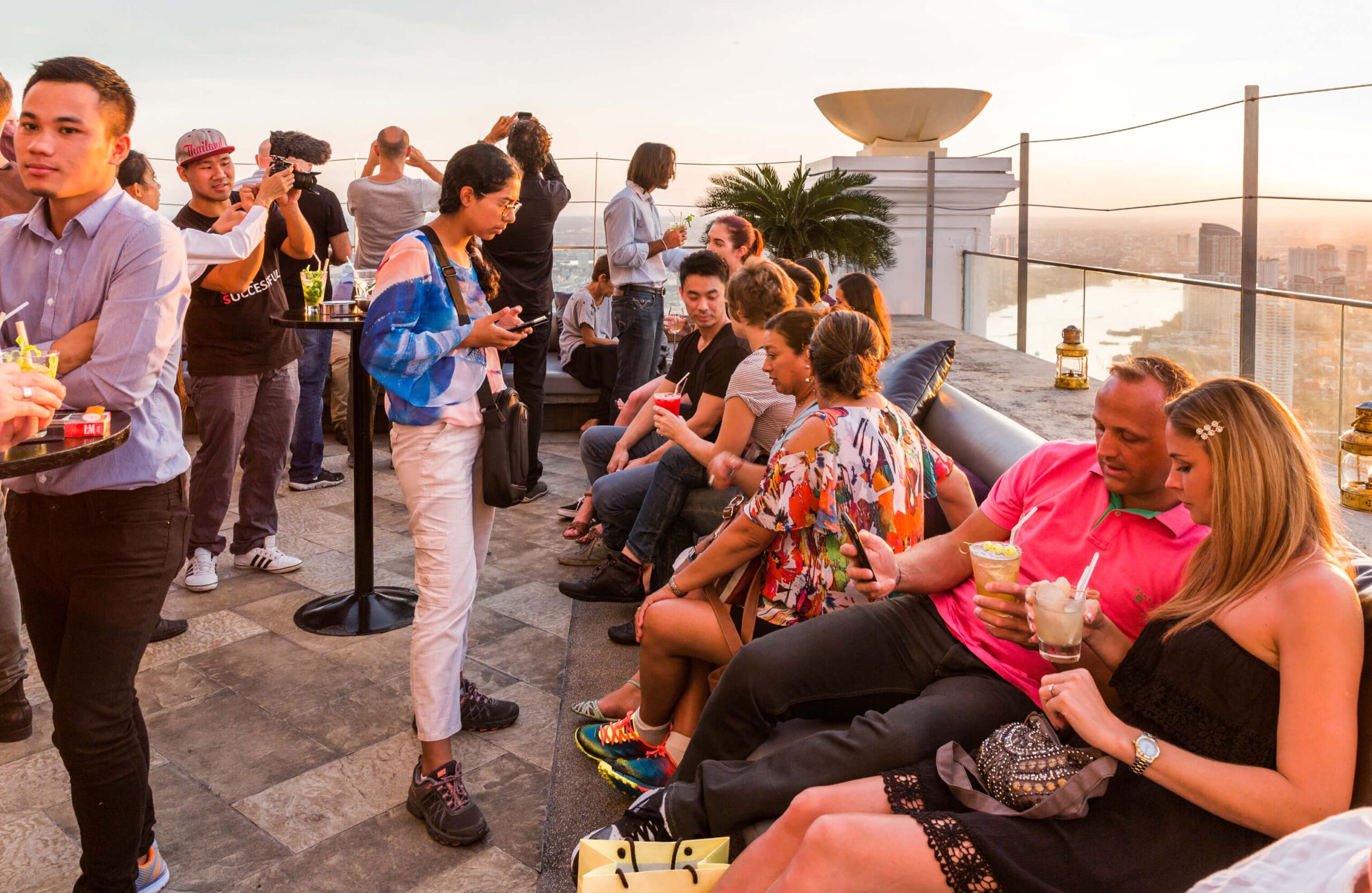
TL;DR: If you’re searching for quiet rooftops Bangkok or beautiful elevated hidden bars in Bangkok, this guide focuses on rooftop spaces I genuinely spent years visiting — not chaotic club rooftops, not influencer-heavy terraces, but places that offered a different pace above the city.
Before the pandemic, I was out regularly. Sometimes it was clubs. Sometimes pubs. I wasn’t the type to only chase refined venues or trained mixologists — I just enjoyed being out in Bangkok at night. But every now and then, it felt good to swap packed dance floors and loud bars for somewhere higher up, with a skyline view and room to actually talk.
When COVID restricted alcohol access, I stopped drinking almost by accident. Over time, I noticed I felt clearer, lighter, more focused. That shift slowly pulled me away from nightlife and toward off-path travel, outdoor exploration, and calmer experiences. But the rooftops below? They’re still the ones I recommend if you want elevation without chaos — especially if you time them right.
Why Quiet Rooftops Beat Street-Level Chaos
Bangkok at street level can overwhelm you fast — heat trapped between buildings, traffic that never fully stops, and sidewalks that feel like a moving current. Even as someone born and raised here, I still feel the compression of ground-level Bangkok on certain days.
Rooftops change the feeling instantly. The sound drops first. Then the heat feels different. Bangkok becomes lines and light instead of noise. You notice how neighborhoods connect. You can see the rhythm of the city — the BTS line cutting across Sukhumvit, the glow of towers switching on one by one, and the river reflecting whatever color the sky decides to be that day.
In 2026, there are more rooftops than ever, but the experience depends on timing and intent. Some places are built for peak-hour crowds. Some are designed for mood. What I’m listing here are spots that still feel legit if your goal is: skyline + atmosphere + conversation — not a chaotic night out, especially if your day already included exploring quieter neighborhoods and Bangkok hidden gem restaurants away from tourist strips.
If you’re building a calmer Bangkok trip beyond nightlife, pair rooftops with grounded daytime wandering: start with the Bangkok hidden gems guide, then explore deeper using the off-the-beaten-path Bangkok neighborhoods guide. For slower, lower-impact travel, our approach to sustainable tourism in Thailand explains the “why” behind it.
How I Chose These Spots
I’m not trying to list every rooftop in Bangkok. I’m recommending the ones I actually went to and would still point friends toward today — especially travelers who want “Bangkok nightlife” without the full intensity of Bangkok nightlife.
My criteria was simple: real views, a setting that doesn’t feel like a club, decent pacing early in the evening, and a vibe that feels intentional rather than random. If you want more context on the way we approach the city — calm, local, off-path — you can read how we’re different.
The Rooftops & Hidden Views
Smalls Jazz Club (Sathorn)
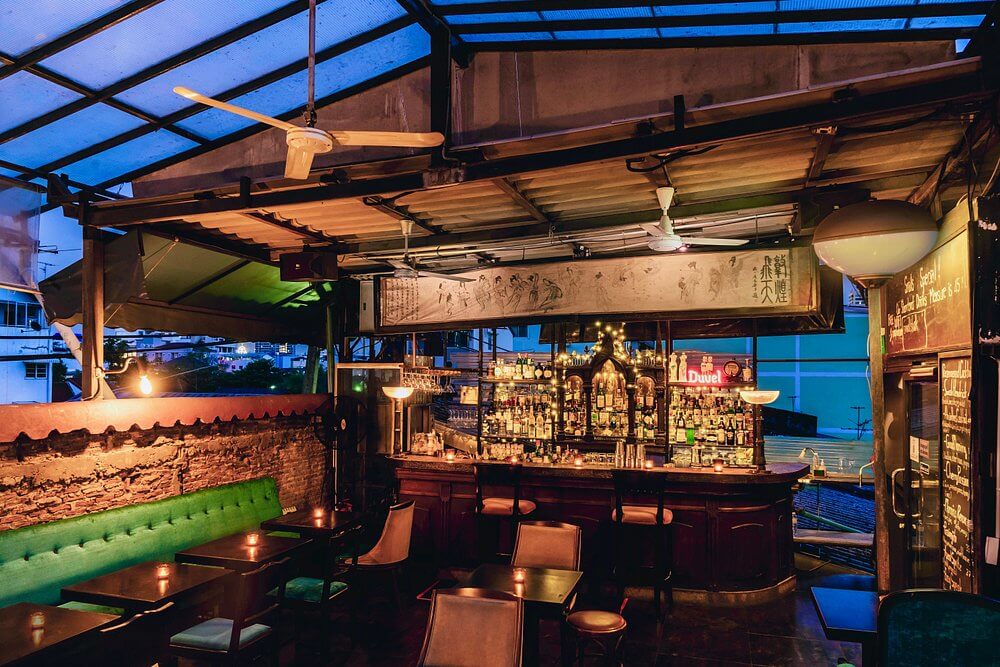
Smalls is one of those places that doesn’t feel built for “tourists,” even though anyone can walk in. I went here with a friend who was a regular, and it immediately felt like an insider spot — more affluent business people, owners of hotels and restaurants, high-position individuals. Not loud club energy. Not typical pub crowds. More like a secret hideout designed by someone who understands what kind of mood they enjoy.
Downstairs is the heart of it — jazz, dim light, that intimate “you’re meant to talk” feeling. But the rooftop is the underrated part. After a couple of drinks, heading upstairs gives you space. You step out of the room, get air, and the city feels quieter. It’s not about being the highest rooftop; it’s about the atmosphere being intentional.
If you want official details, start here: Smalls Bangkok (Instagram). If you’re pairing this with a calmer day, use the neighborhoods guide to build a slower itinerary around it.
Wallflowers Café (Chinatown – Soi Nana near Hua Lamphong)
Important: this Soi Nana is near Hua Lamphong Railway Station, not Sukhumvit’s Nana.
Wallflowers sits in a creative Chinatown pocket that feels slightly removed from Bangkok’s mainstream nightlife grid. Soi Nana (Chinatown) has quietly evolved over the past decade into one of the more interesting micro-neighborhoods in the city. Old shophouses have been restored rather than replaced. Independent bars, small galleries, and experimental cafés have moved in, but the street still retains its original bones — cracked tiles, wooden shutters, faded signage. It feels lived-in rather than manufactured.
Unlike Sukhumvit’s Nana, which is loud and neon-heavy, this Nana feels slower. You’ll see locals sitting on plastic stools, young creatives hopping between small bars, and photographers wandering with film cameras. It’s touristic in the sense that people know about it, but it hasn’t tipped into chaos.
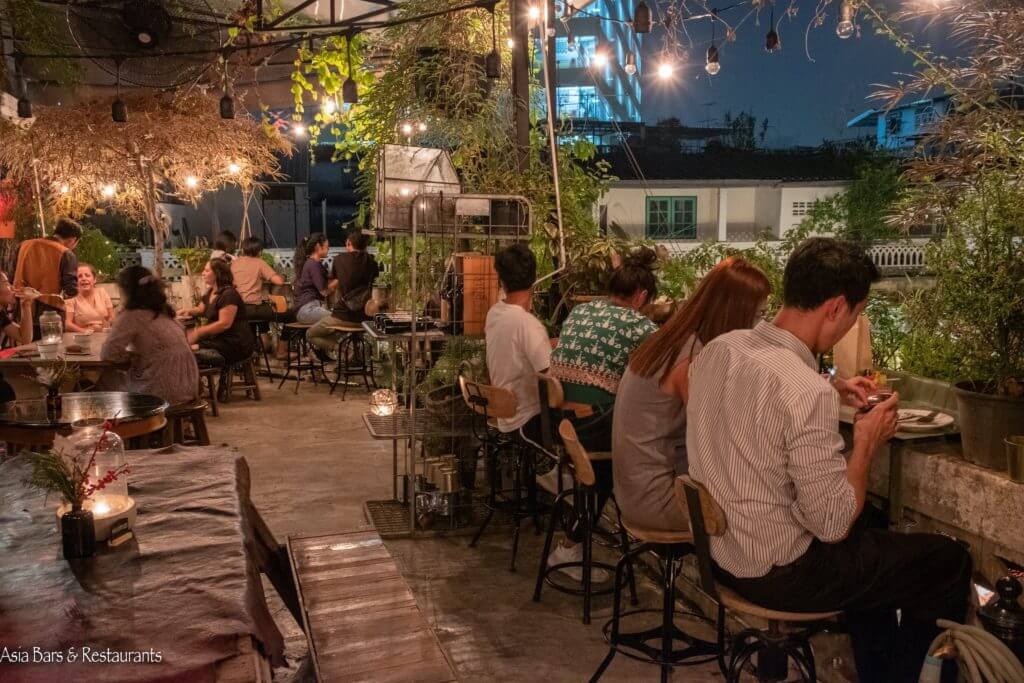
The rooftop at Wallflowers reflects that same energy. It’s intimate — plants, soft lighting, floral details. It feels more like a secret terrace than a skyline platform. You’re not looking out over dramatic high-rises; you’re sitting above an older part of Bangkok, where low-rise buildings stretch quietly outward. The crowd leans creative. Designers. Photographers. People who want an atmosphere without it being too wild. You won’t get a sweeping 360-degree skyline view here. Instead, you get mood — and sometimes mood is more valuable than altitude.
Best time: Golden hour before Chinatown dinner crowds intensify.
Access: MRT Hua Lamphong + short walk.
Vibe: Creative, layered, calm.
Official: Wallflowers Café (Instagram). For food ideas that fit this calmer style, pair it with our Bangkok vegan & vegetarian guide.
Above Eleven (Sukhumvit Soi 11)
Above Eleven was one of my regular social spots when I wanted something more social but controlled.
It sits on Sukhumvit Soi 11 — which, if you know Bangkok, has long been one of the city’s nightlife arteries. Soi 11 is energetic, dense, and sometimes messy in the best and worst ways. You’ll find backpackers, club promoters, rooftop hotel bars, EDM venues, after-work crowds, and people spilling from one place to another well past midnight. It’s one of those streets where the energy builds as the night progresses.
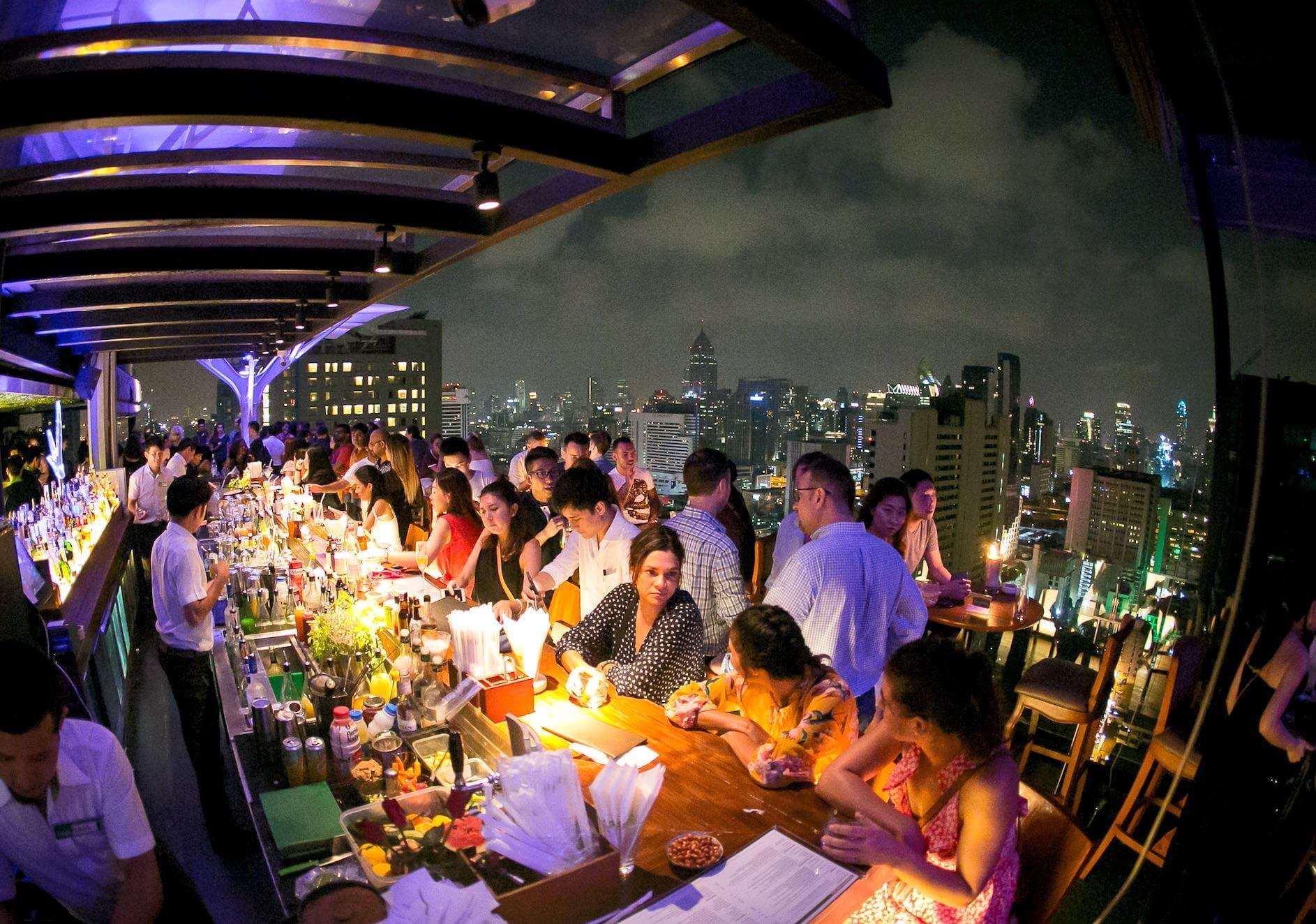
Above Eleven rises above that. Located near BTS Nana, it’s central and easy. You step off the train, walk through the pulse of Soi 11, then take the elevator up — and suddenly the chaos drops away. That contrast is part of its appeal. Street-level noise becomes distant hum.
The Peruvian-Japanese fusion theme adds personality without feeling gimmicky. It’s not just decor — the menu reflects it. Bartenders are well-trained. Cocktails are consistent and creative. This isn’t a random party bar trying to cash in on rooftop views. This isn’t silent — it’s social. But it rarely tips into chaotic territory unless you stay late.
The skyline view captures dense Sukhumvit high-rises stretching into the distance. At sunset, the city glows amber before turning electric as office lights flicker on one by one. If you spend enough time in Bangkok’s nightlife scene, you’ll bump into familiar faces here. That’s part of its identity.
Best time: Arrive before sunset. Leave before 9pm.
Crowd: Social, structured.
Why it works: Strong skyline + controlled energy.
Official: Above Eleven Bangkok. If you want daytime contrast, the hidden gems guide pairs well with a rooftop evening like this.
Octave Rooftop Lounge (Thonglor – Bangkok Marriott Hotel Sukhumvit)
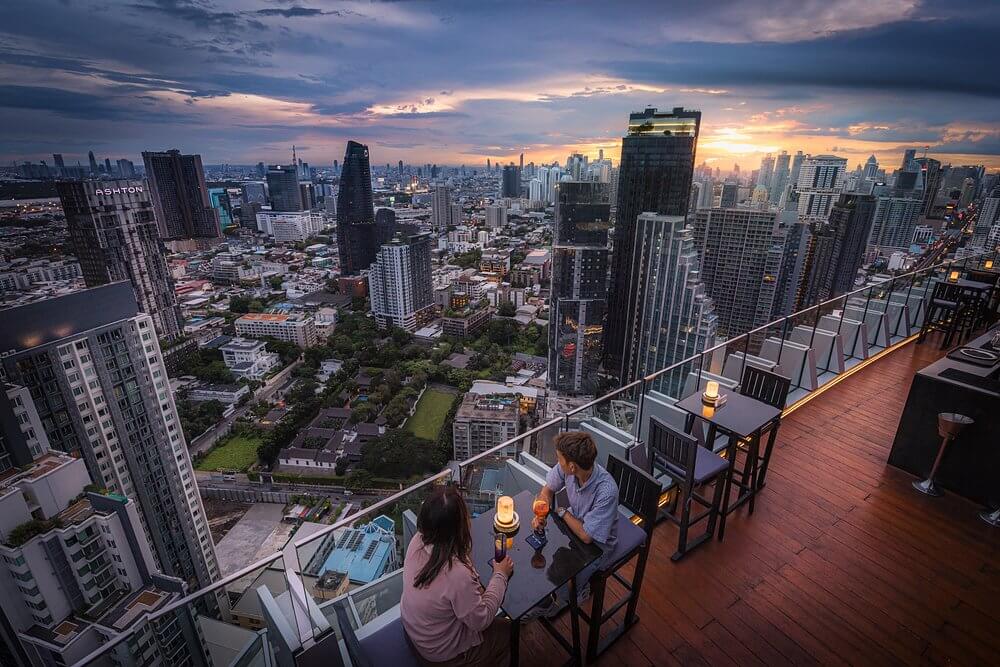
Octave sits in Thonglor, an area that today feels polished and upscale — but it wasn’t always like this.
Thonglor used to be far quieter. Low-rise buildings. Older houses. Small family-run restaurants tucked into narrow sois. It had a neighborhood feel, not a skyline identity. Over the years, though, the area transformed dramatically. High-rise condominiums replaced older homes. Boutique cafés appeared. Japanese restaurants multiplied. Creative professionals and entrepreneurs moved in. What was once residential slowly became one of Bangkok’s most refined lifestyle districts.
If that transformation hadn’t happened, the Bangkok Marriott Hotel Sukhumvit — where Octave is located — likely wouldn’t exist here at all. The area’s vertical growth made a multi-level rooftop like Octave possible. Without the condos, the density, and the rising land value, Thonglor would still feel low and horizontal. Instead, it became one of the few Sukhumvit pockets where skyline views open outward rather than feeling boxed in.
I used to live not far from here, which made Octave an easy default when friends wanted skyline views without going full spectacle mode. The structure itself is layered across multiple levels, meaning you can choose your exposure. Lower floors feel more contained; the upper deck opens into wide, unobstructed skyline views.
What makes Octave stand out among calm rooftops Bangkok 2026 still offers is its visual orientation. You’re not boxed in by adjacent towers the way some central Sukhumvit rooftops feel. The skyline stretches outward instead of upward. That said, timing defines the experience. Arrive at 5:30–6:30pm on a weekday and you’ll catch warm light washing over Thonglor’s glass towers. Stay past 9pm on a Friday and the energy shifts — louder, more crowded, less intimate.
The decor is modern but not aggressive. Clean lines. Structured seating. You can position yourself along the edge for photos or retreat toward interior seating for conversation.
Official: Octave Rooftop Lounge & Bar (Marriott). For a calmer itinerary structure, the neighborhoods guide helps you plan days that don’t burn you out before sunset.
Lebua Sky Bar (Silom – State Tower)
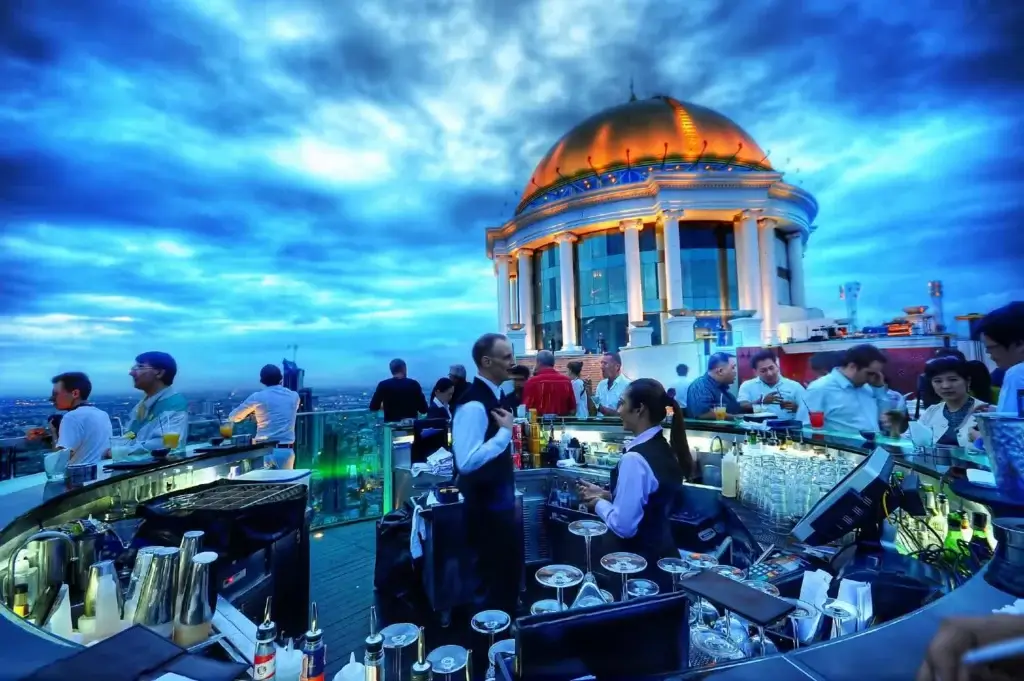
Lebua’s Sky Bar is the dramatic one.
This is the rooftop people picture when they search for hidden viewpoints Bangkok or cinematic skyline views. At 820 feet high, it’s one of the highest open-air bars in the world — perched on top of State Tower in Silom, overlooking the Chao Phraya River.
Lebua was already operating as a luxury rooftop before it became globally famous, but its identity changed permanently after The Hangover Part II was filmed here in 2011. That single movie scene turned it into a bucket-list skyline experience almost overnight. Suddenly, it wasn’t just a Bangkok rooftop — it was that rooftop from the movie. International travelers started arriving specifically for it, and the golden dome and curved terrace became instantly recognizable.
I’ve only been once — and I’ll be honest about that. At the time, cocktails were over $30 USD. I remember calculating how far that money would stretch in northern Thailand. You could almost book a short domestic flight for the price of a couple drinks. For a Bangkok local, that price feels significant.
But then you step onto that platform. The Chao Phraya curves below like a glowing artery. The river traffic moves in silence from that height. The street noise fades into a distant hum. The city stretches endlessly in all directions, and you feel physically separated from its density. You’re above the smog layer. Above the noise. Above the compression that defines street-level Bangkok.
Lebua doesn’t try to be subtle. It was built for scale — gold lighting, sweeping terraces, dramatic curvature. It leans into its global reputation. You’ll see couples dressed sharply, travelers recreating movie scenes, and photographers angling for that signature skyline shot.
Is it expensive? Yes.
Is it crowded? Often.
Is it worth experiencing once? Absolutely.
Best time: Arrive just before sunset and leave once it fills.
Crowd: International, polished, photo-heavy.
Dress code: Enforced.
Official: Lebua Sky Bar. If you want to balance this “big-ticket” moment with slower, simpler travel, consider a calmer daytime plan from our day trips from Bangkok guide.
Cielo Sky Bar (Phra Khanong – near W District)
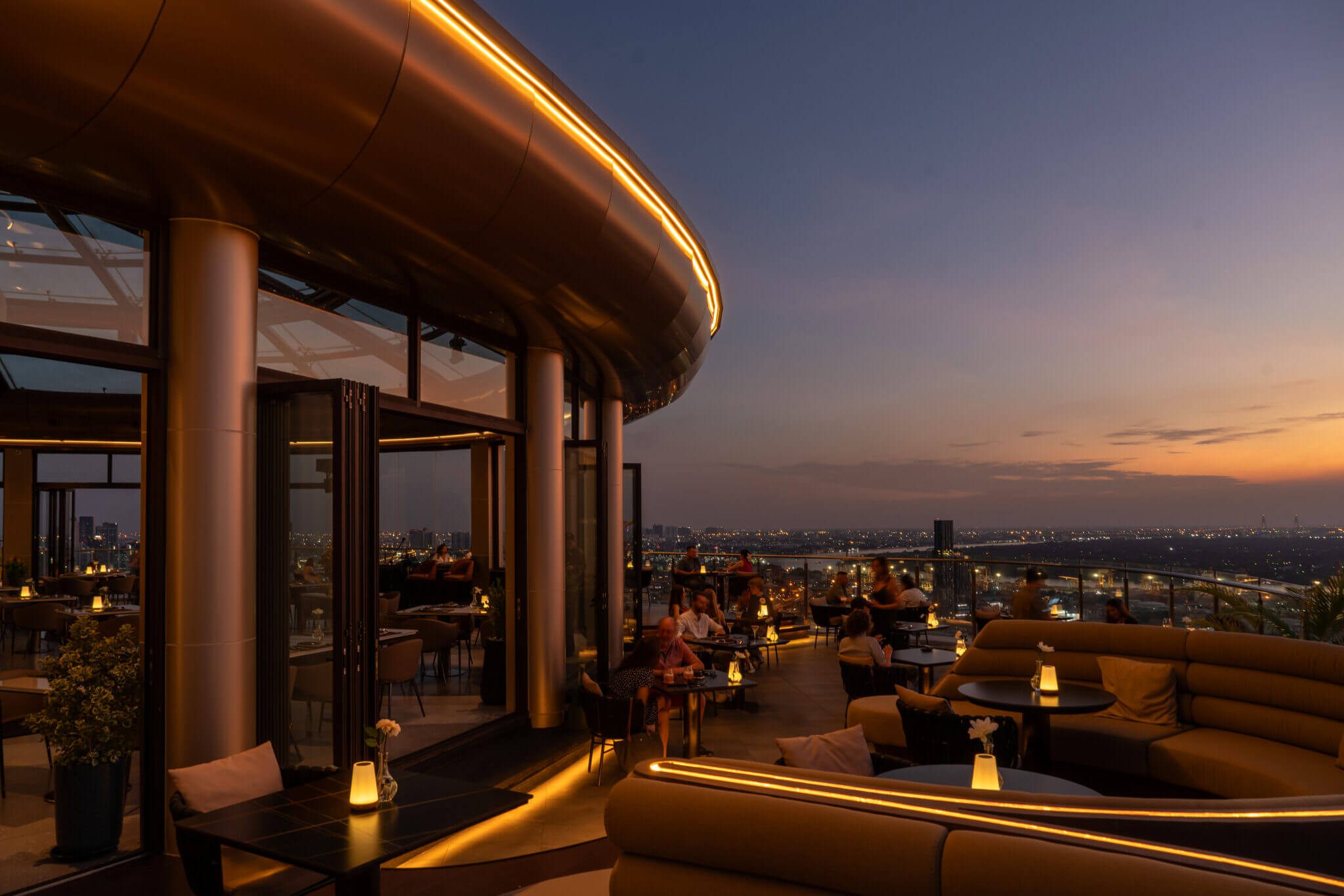
Cielo sits near W District in Phra Khanong, slightly removed from the Nana–Asoke intensity.
Phra Khanong wasn’t always this way. Years ago, it felt more like “old Bangkok” — low-rise buildings, traditional markets, modest shopfronts, and quieter residential streets. It wasn’t on anyone’s nightlife radar. It was functional, local, and largely overlooked by visitors.
Then the BTS expansion changed everything. Because you can reach Asoke or Nana in under 15–20 minutes by train, Phra Khanong quickly became one of the most practical neighborhoods for a new generation of expats — especially millennials. Rents were lower than Thonglor or Asoke. Condos were newer. The commute into the business district was easy. Developers moved fast. High-rises began replacing older low buildings. Coffee shops opened. Bars followed. What used to feel peripheral suddenly became connected.
That transformation is part of why rooftops like Cielo exist here now. Years ago, I shared a bottle of red here with close friends. It never felt chaotic. The crowd was lighter. The view felt more open — less boxed in by central towers. Cielo doesn’t scream for attention. It doesn’t rely on extreme height or heavy branding. It feels comfortable — like a neighborhood rooftop rather than a spectacle platform.
The skyline view from here shows Bangkok from a slightly different angle — less central business district, more layered residential and mixed-use sprawl. It feels like looking at the city from the inside rather than the edge. For travelers searching specifically for quiet rooftops Bangkok without heavy tourist density, this is often the safer choice compared to more central venues.
Best time: Early evening before 8pm.
Access: BTS Phra Khanong + short taxi or ride-share.
Atmosphere: Relaxed, intimate, date-friendly.
Official: Cielo Sky Bar. If you prefer nights that feel lighter, pair this with calmer daytime exploration using the hidden gems guide and the neighborhoods guide.
Practical Tips for Quiet Rooftops in Bangkok 2026
If your goal is truly quiet rooftops Bangkok — not “quiet in theory” — the strategy is simple: arrive early, stay for golden hour, and leave before peak nightlife momentum.
- Arrive 30–45 minutes before sunset to catch the best light and the calmest crowd window.
- Weekdays feel completely different from Friday and Saturday nights.
- Stay 60–90 minutes. Rooftops are best as a “chapter,” not the whole night.
- Dress smart casual. A lot of rooftops enforce it in practice, not just on paper.
- Balance with calm daytime plans so your trip doesn’t become only nightlife and taxis.
If you’re building a calmer Bangkok itinerary beyond rooftop nights, start with the off-the-beaten-path neighborhoods guide, layer in the hidden gems guide, and keep your travel style grounded with sustainable tourism in Thailand. If you’re planning days outside the city to reset your nervous system a bit, use our day trips from Bangkok guide.
Conclusion – Bangkok From Above, Without the Chaos
Bangkok rooftops can be loud and overwhelming — but they don’t have to be. The best rooftop nights are often the simplest: a skyline view at the right time, a space with enough breathing room, and a neighborhood plan that doesn’t burn you out before sunset.
If you want to explore Bangkok the Off Path way — calmer, more local, and built around how the city actually feels day-to-day — start with our Bangkok hidden gems guide, then expand outward using the neighborhoods guide. For the bigger picture, how we’re different explains the lens behind it all.
FAQ (Bangkok Rooftop Bars 2026)
How much do drinks cost at Bangkok rooftop bars in 2026?
Expect cocktails to range from 350–500 THB, sometimes higher at luxury hotel rooftops. Beer is usually cheaper, but still priced above neighborhood bars. Rooftop venues operate at international pricing rather than local street-level pricing.
Is there a dress code for Bangkok rooftop bars?
Most rooftop bars enforce a smart-casual dress code. Avoid flip-flops, sleeveless shirts (for men), beachwear, and athletic shorts. Closed shoes and neat clothing are generally expected, especially in hotel rooftop venues.
Do Bangkok rooftop bars have entrance fees?
Most rooftop bars do not charge an entrance fee, but you’re expected to order at least one drink. Some high-demand venues may require reservations during peak hours or special events.
What time is best to visit a rooftop bar in Bangkok?
Sunset (around 5:45–6:45 PM depending on season) is the most popular time for skyline views. Arriving early helps secure a better table and avoids long queues. Later evenings are more relaxed but darker for photography.
Are Bangkok rooftop bars worth it?
Yes — if you go in with the right expectations. You’re paying for the view, atmosphere, and skyline experience. For value, consider having one drink for the view and then heading to a local bar afterward.
Which areas have the best rooftop bars in Bangkok?
Sukhumvit and Silom host many of the well-known hotel rooftops. However, there are also quieter options outside the busiest nightlife strips if you prefer a calmer atmosphere.
Can you visit Bangkok rooftop bars during rainy season?
Yes, but weather matters. Many rooftops close temporarily during heavy rain or thunderstorms for safety reasons. Check forecasts in advance and have a backup indoor plan.

About the author
Written by Thaewan, Thai-born founder of Off Path Thailand. I’ve spent close to a decade exploring quieter, more local corners of Thailand and designing low-crowd itineraries that feel grounded and unhurried. Our approach prioritizes timing, comfort, and local texture — the small choices that make travel feel calmer and more meaningful. About the founder
Want this beach day trip to feel smooth and low-stress? Use our Thailand Trip Budget Calculator to estimate realistic costs, or explore our itineraries. If you want a private, low-crowd day designed end-to-end (drivers, timing, and logistics), contact us here: Off Path Thailand private planning.