
Thailand Hidden Gems Guide 2026: Off Path Thailand Guide
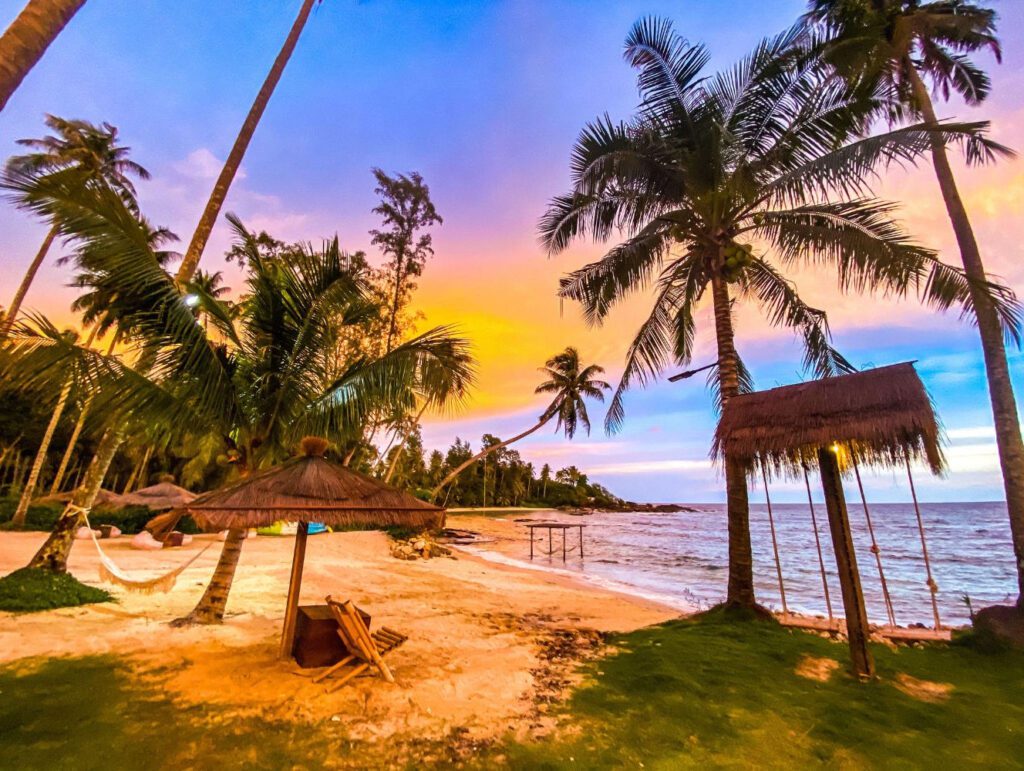
Discover Thailand Hidden Gems Best Off Path Destinations
TL;DR: The best Thailand hidden gems aren’t on the usual tourist route. They’re the misty mountain valleys, quiet riverside towns, local beach towns and unspoiled islands that most travelers pass straight by, where you’ll find real local life, untouched nature and almost no crowds.
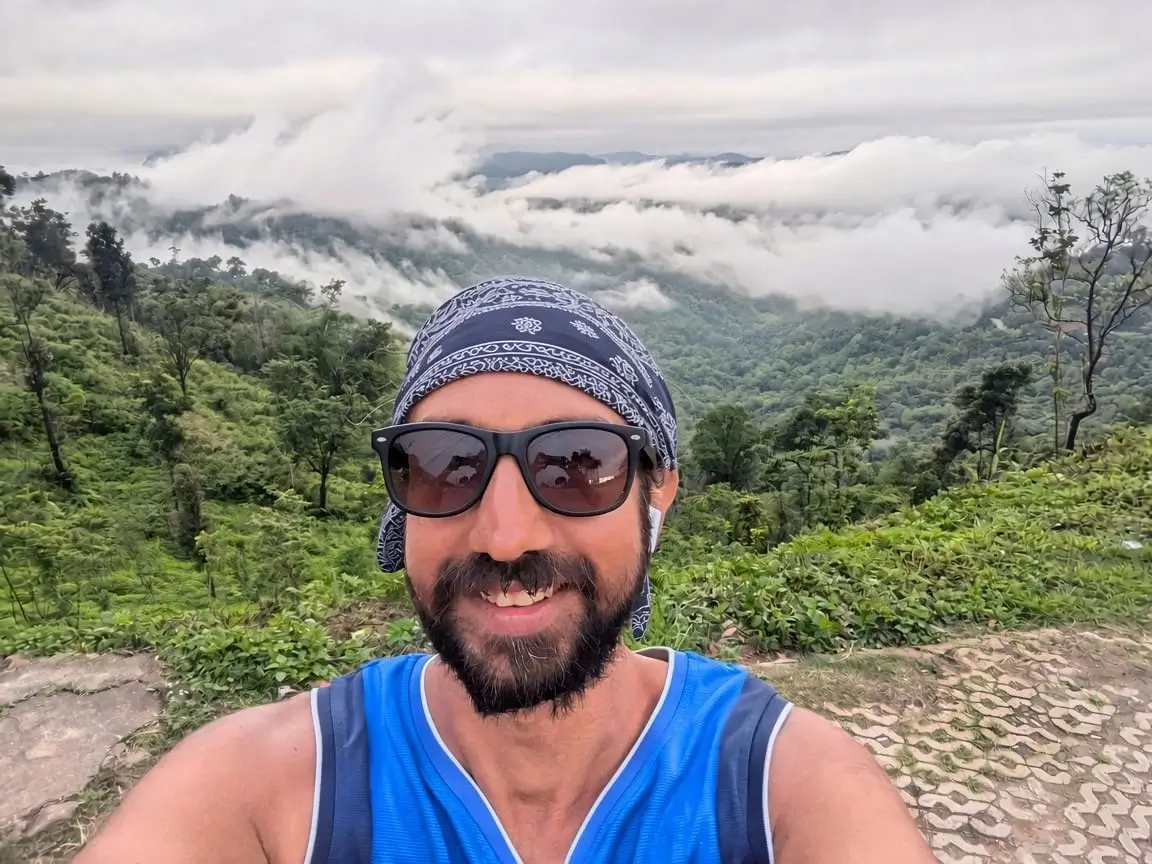
Written by Dee · Founder of Off Path Thailand
I was born and raised in Bangkok, now live in Cha-am, and spent a few months in Chiang Mai in 2020, 2021, 2022 and 2024. Most of the places in this guide I found through chats in Thai at gas stations and coffee shops, not guidebooks. About Dee →
When people ask me about visiting Thailand, most expect me to name the big cities: Bangkok, Chiang Mai or Phuket. But the real Thailand hidden gems travelers should see lie far beyond those tourist routes. As special as those places are, they’re just the cover of a much bigger book. The real story is found in lush valleys out of a storybook, quiet fishing towns that welcome you with open arms, and hidden beaches that never make it into social media reels (thankfully).
I was born and raised in Bangkok, so for most of my life, the Thailand I knew was the city. That changed after a trip to Chiang Mai for a coworking conference. I enjoyed it so much that I went back to work there remotely. One day, mostly out of boredom, I rented a scooter for four days. I ended up extending it for four months.
One of those first ventures was renting a scooter in Chiang Mai. I still remember riding out of the city with mountains rising on both sides, and feeling more alive than I had in years. That ride changed everything. I kept going: down back roads, into small towns, along rivers I’d never heard of, often on my own. These days I live in Cha-am, outside the city, and I still spend most of my time exploring the places most travelers drive straight past.
Along the way, I stopped caring about staged photo spots and mass-tourism checkpoints. They started to feel less like travel and more like standing in a queue with a camera. What I go looking for now is the version of Thailand that exists whether or not anyone’s watching. That’s where I actually learn something, about a place and usually about myself too. Exploring those places eventually turned into Off Path Thailand.
What surprises people most once they get off the main circuit is how different Thailand is from region to region. In the north, you’ll hear Kham Mueang, a Lanna dialect that sounds nothing like Bangkok Thai, and eat mild, herb-heavy dishes built around sticky rice. In the deep south, Malay influence shapes the language, and the food is fiery and rich with coconut milk.
Say “Thai” and people picture one culture. Spend enough time in both places and you realize you’re looking at many.
That’s why this list exists: not the ten places everyone already knows, but the ones that reward you for showing up.
To make sure you can fully immerse yourself in these hidden spots without being overcharged, I’ve put together a guide on Thailand street food prices 2026 so you can eat like a local and know exactly what to pay.
We offer trips for every travel style, whether you’re traveling with your romantic partner, a group of friends or family, seeking adventure, or exploring culinary experiences. If you’d like help planning your own custom Off Path Thailand adventure, drop us a line on WhatsApp or check out our trip customization page.
- Thailand Hidden Gems Guide 2026: Off Path Thailand Guide
- Discover Thailand Hidden Gems Best Off Path Destinations
- How a Local Finds Thailand’s Real Hidden Gems
- 1. Nan, Thailand: Cultural Haven in the Northern Valleys
- 2. Pranburi & Sam Roi Yot: Phraya Nakhon, Thailand Hidden Gems Adventures Beyond Hua Hin
- 3. Koh Kood: Island Serenity Frozen in Time
- 4. Uthai Thani: Hot Spring Hidden Gems Thailand Escape Near Bangkok
- 5. Chiang Dao: Northern Thailand at Its Purest
- 6. Cha-am: Relaxed Coastal Escape in Phetchaburi Province
- 7. Ratchaburi: An Overlooked Hidden Gem Near the Myanmar Border
- 8. Kanchanaburi: Beyond the River Kwai Bridge
- 9. Nakhon Nayok: A World Away, an Hour and a Half From Home
- 10. Chiang Rai: The North's Quiet Second Act
- 11. Koh Lanta: A Laid-Back Andaman Island With Real Local Life
- 12. Koh Mak: A Tiny Island Made for Doing Nothing
- Sustainable Travel Tips
- Conclusion
- Thailand Hidden Gems: All 12 Destinations Mapped
- Thailand Hidden Gems Guide: Frequently Asked Questions
- What are the absolute best Thailand hidden gems to visit in 2026?
- Why should I choose a private tour to explore Thailand hidden gems?
- How do I plan a sustainable trip to see Thailand hidden gems?
- Are there any Thailand hidden gems near popular destinations?
- What makes Thailand hidden gems more authentic than main tourist spots?
- Leave everything to us and experience Thailand Off The Beaten Path
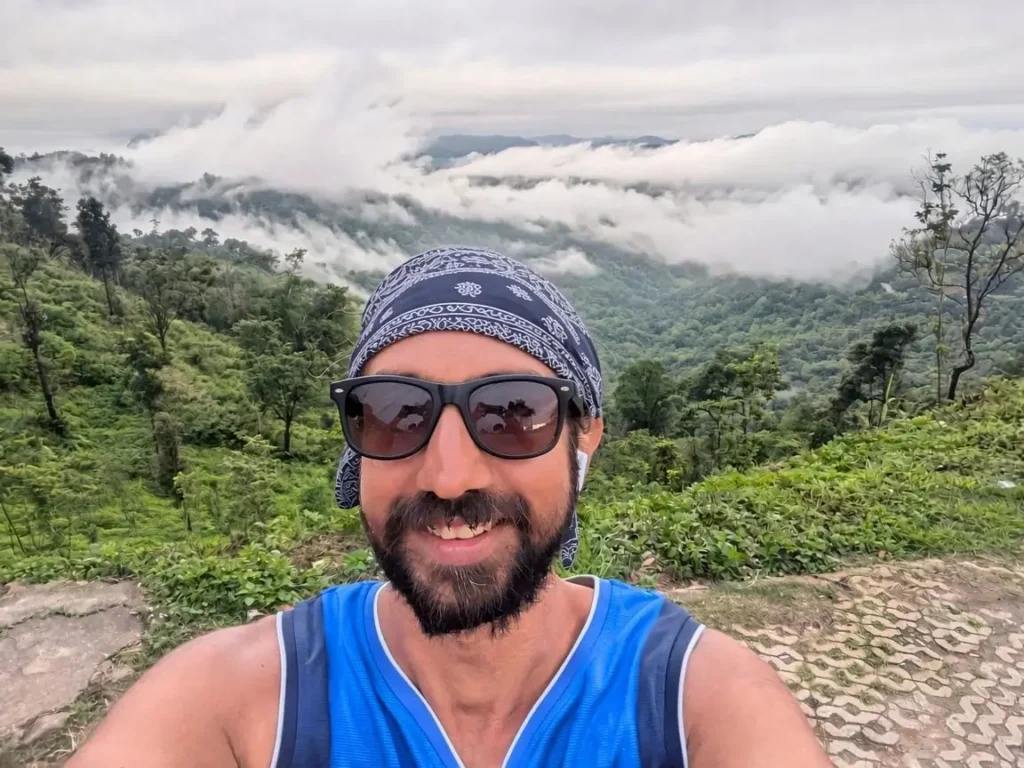
How a Local Finds Thailand’s Real Hidden Gems
As a second-generation Thai who doesn’t look like it, I can slip into local conversations, pick up dialects and get directions to waterfalls or hot springs that never make it onto Google Maps. That’s how I end up in places like Nan, Pranburi, Koh Kood, Uthai Thani and Chiang Dao: not through guidebooks, but through gas station chats, coffee shop banter and the kind of word-of-mouth that only works if you speak Thai.
One stormy day, I pulled into a Hmong strawberry shop on Mon Jam, and a five-minute chat turned into a lead on a hidden hot spring, down what might be the most scenic road I’ve ever ridden in Chiang Mai. By sharing stories like this, I know I risk making these spots a little less hidden. But if that helps sustainable tourism grow and supports families in provinces that are often overlooked, I’d say it’s worth it.
Off Path Thailand is my way of bringing you along. These are my favorite Thailand hidden gems, places so far off the usual routes that even many Thais from other provinces have yet to explore them. Think of this guide less as a list and more as an invitation.
1. Nan, Thailand: Cultural Haven in the Northern Valleys
Known for: a peaceful old town with centuries-old temples, rice-terrace valleys, the Doi Phu Kha mountains and traditional villages that feel untouched by mass tourism.
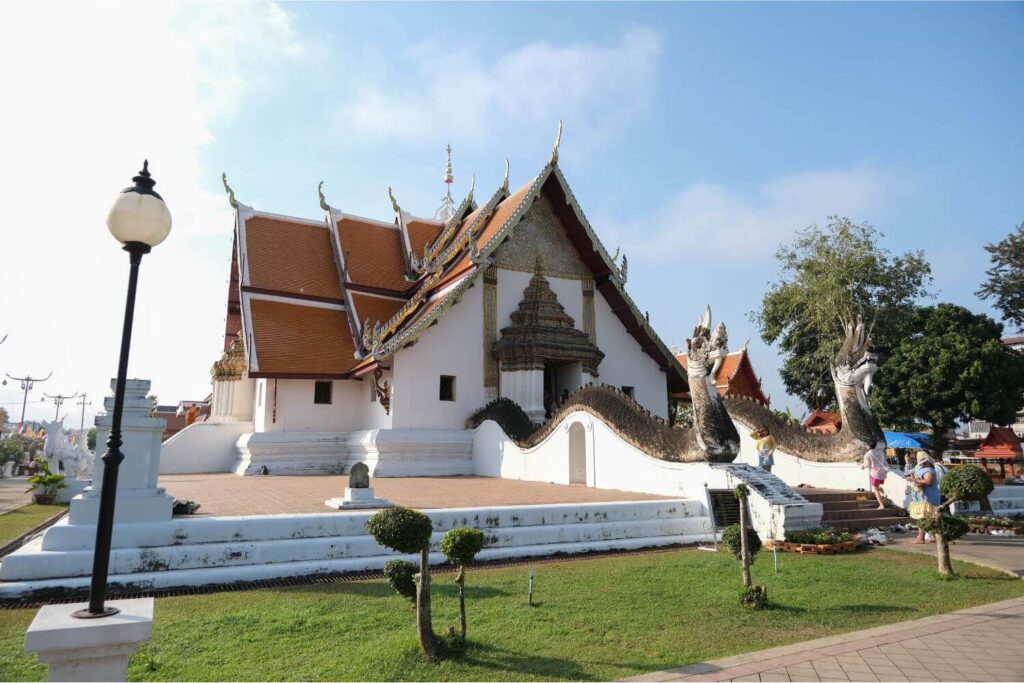
Nan, Thailand, is a slow-paced and chilled-out province, shaped by its history as a once-independent kingdom, which is rare to say about provinces in Thailand. Unlike bustling Chiang Mai, Nan, with authentic Thai culture only four hours away, moves at a much slower pace, carrying centuries of Lanna traditions evident by their language and mannerisms. The slow vibe makes Nan, Thailand, a must for off the beaten path travelers.
You can read more about my personal experience traveling through the province in my Nan travel story.
Wat Phumin, the most famous temple in Nan, is not grand because of its size but because of its intimacy and strong cultural ties to the history of Siam: paintings on its walls show daily life, Lanna couples, and people in traditional dress. Talk about Thai Cultural Experiences!
Wat Phumin is just the start, from Sapan Valley’s back roads to the salt wells of Bo Kluea, there’s a full list of what makes Nan worth the detour in our guide to the best things to do in Nan Thailand.
Why on Earth would people want to visit a temple swarmed with tourists when you could visit an authentic and peaceful temple like Wat Phumin? This is Thailand hidden gems travel at its core.
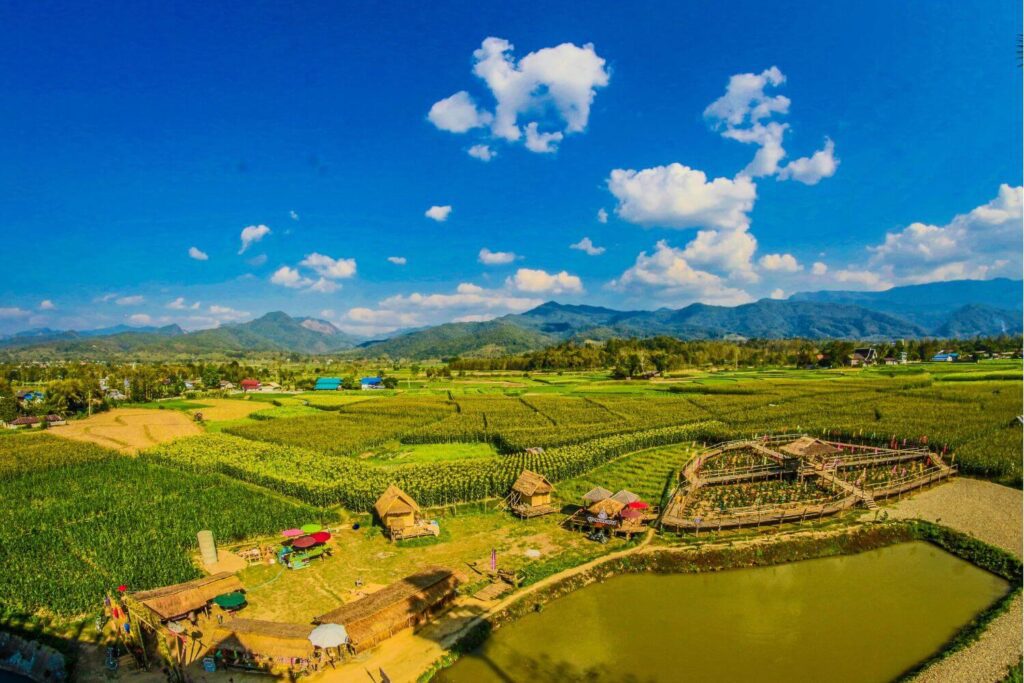
In Nan, sustainable travel is easy as there are plenty of ways to keep your footprint small. Choosing homestays or eco-lodges means your money goes directly to families who preserve the Lanna culture you came to see, encouraging them to keep up with their warm hospitality, and also provide for their families. At Off Path Thailand we are big advocates for sustainable tourism.
If you’d like to go beyond the usual tourist routes, I also organize private tours in Thailand focused on Thailand hidden gems, so you can travel deeper without the stress of planning.
Nan is the perfect place for a Cultural Discovery travel style, offering deep immersion into local traditions, temples, and laid-back northern Thai life.
For anyone extending their time in the north as far as Nan, my guide to getting to Nan, Thailand walks through the flights, buses, and the scenic drive so you can pick what fits your trip.
If you’re planning to explore this region in more depth, our Nan itinerary maps out a slow, scenic route through the province’s quiet roads, mountain viewpoints, and local villages.
But it wasn’t just the temples that drew me to Nan, Thailand: it was the promise of adventure. A local juice-bar owner in Chiang Mai had shared a tip about a scooter journey that would lead me to the hidden Sapan Waterfall.
The first 50 km absolutely tested me: narrow roads leaving town, flat stretches, and scattered villages. I nearly turned back; it felt endless at first. But then, out of nowhere, the scenery opened into valleys that felt like they were out of a Jurassic Park film. I passed a rally of Mini Coopers; they waved like we were sharing a secret. Scootering to Sapan Waterfall is epic for serene and stunning views. Think Mae Hong Son Loop, but more picturesque.
The smell of wet earth and rice fields filled the air, and you could hear leaves moving in the breeze and roosters in the distant villages. At the valley before the waterfall, people spoke Lao-infused Thai, rice fields buzzed with life, and the air cooled down, and I felt that I was indeed off the beaten path. Happiness.
To be very honest, that valley was more than the waterfall itself. I ended up remembering it much more vividly than the actual waterfall.
I could build a house here and never leave.
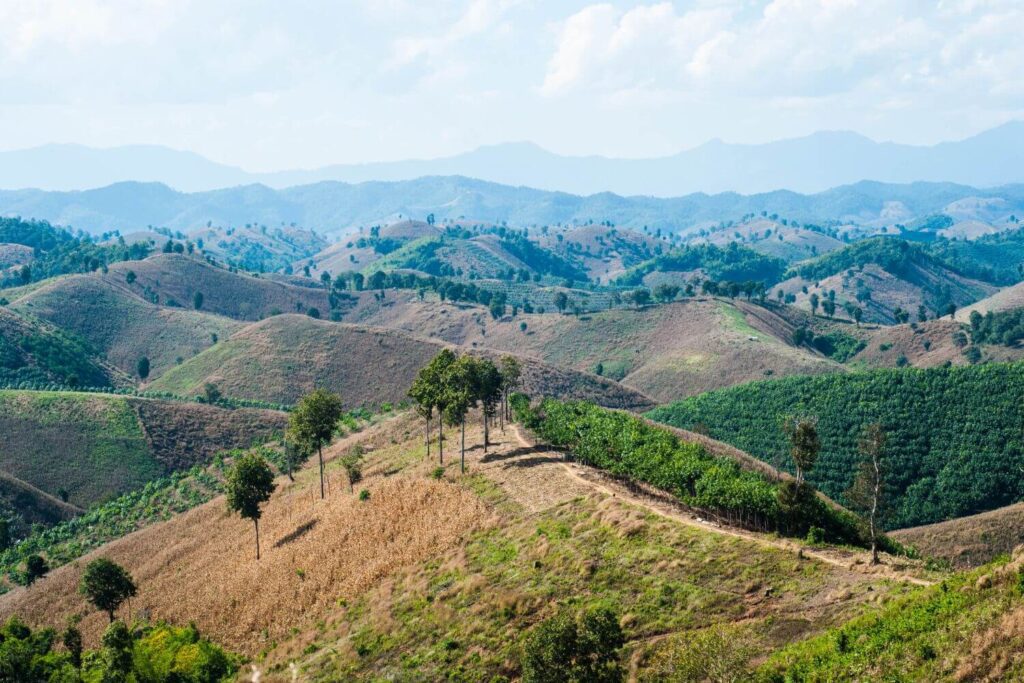
Nan’s valleys make it one of those Thailand hidden gems you can’t miss. I could have easily forgotten the waterfall, and that valley still would have made my trip!
Back in Nan town early in the evening, I literally collapsed on my bed, too tired even for dinner. That is the beauty of Thailand hidden gems like Nan: they require a bit more effort to reach, but they reward you with moments that are eternal.
Nan: Quick Information
Location: Nan Province, in the far east of northern Thailand along the border with Laos
Getting There: A direct flight from Bangkok’s Don Mueang Airport to Nan Nakhon Airport (a little over an hour), or a long drive or bus ride from Chiang Mai or Bangkok; a car is best for reaching the mountains
Opening Hours: Temples in town are generally open during the day; the mountain areas can be explored all day
Known For: A peaceful old town with centuries-old temples, rice-terrace valleys, the Doi Phu Kha mountains and traditional villages that feel untouched by mass tourism
Must-Try: The famous “whispering lovers” mural at Wat Phumin, the golden chedi of Wat Phra That Chae Haeng, the mountain salt wells of Bo Kluea, and the green rice fields of Sapan village
Price: Temples in town are free to visit (donations welcome); national park entry fees apply in the mountains
Good to Know: The most scenic areas are a long, winding drive from town, so give yourself a few days and avoid rushing. The cool season (November to February) is the best time, with misty mornings in the hills
Map of Nan’s hidden gems & scenic routes to Sapan Waterfall.
2. Pranburi & Sam Roi Yot: Phraya Nakhon, Thailand Hidden Gems Adventures Beyond Hua Hin
Known for: quiet beaches, mangroves and limestone hills, and a royal pavilion inside a vast cave, lit by beams of sunlight through a collapsed roof.
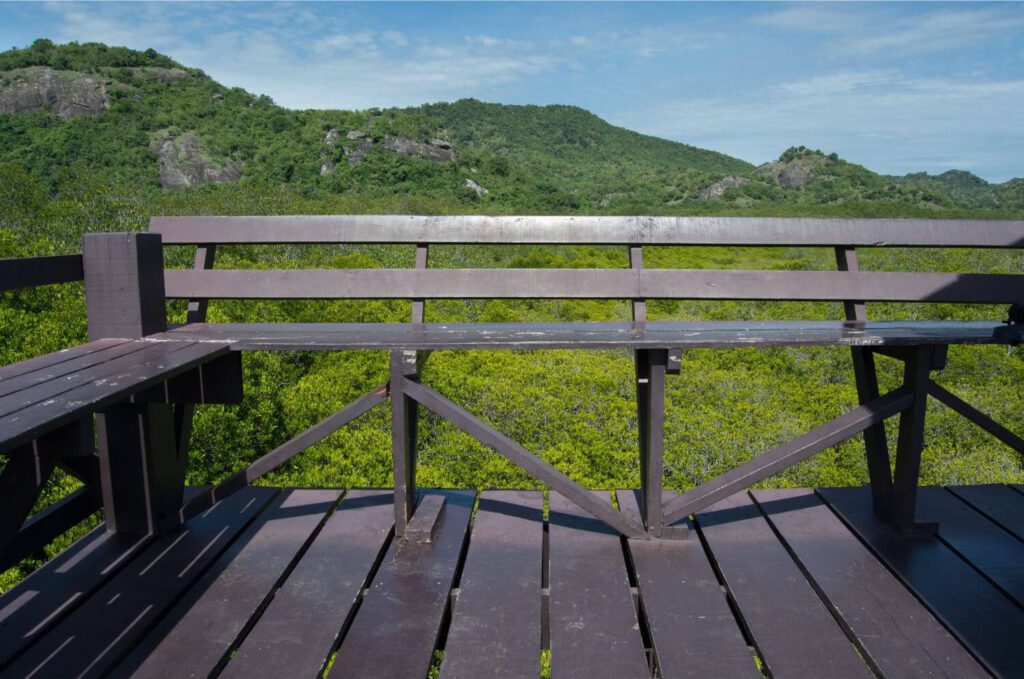
For years, I thought I knew Hua Hin. When I was younger, my family vacationed there regularly: we stayed in the same old place, ate at the same restaurants, and walked the same beach. It was relaxing, and routine.
But during COVID, some years later, in my early thirties on a solo trip, I decided to keep driving south, and that small decision changed everything.
A lakeside neighborhood encircled by mountains, Khao Tao (not to be confused with Koh Tao) popped out like a hidden painting masterpiece: the neighborhood surrounded by mountains, beaches stretching quietly, and locals who seemed relaxed and charming.
After a walk around the large serene lake, I visited the seaside cave temple on the hill, Wat Tham Khao Tao, followed by a 20-minute trek down to the beach. From there, I casually drove along the coastal scenic road, which led me to Khao Sam Roi Yot National Park, Thailand’s first coastal park.
If you want to explore this coastline in more depth, our Pranburi itinerary maps out a relaxed route through Khao Tao, Sam Roi Yot, and the quieter stretches beyond Hua Hin.
This stretch of coast is one of those Thailand hidden gems that still stays just under the radar, even with its proximity to Bangkok.
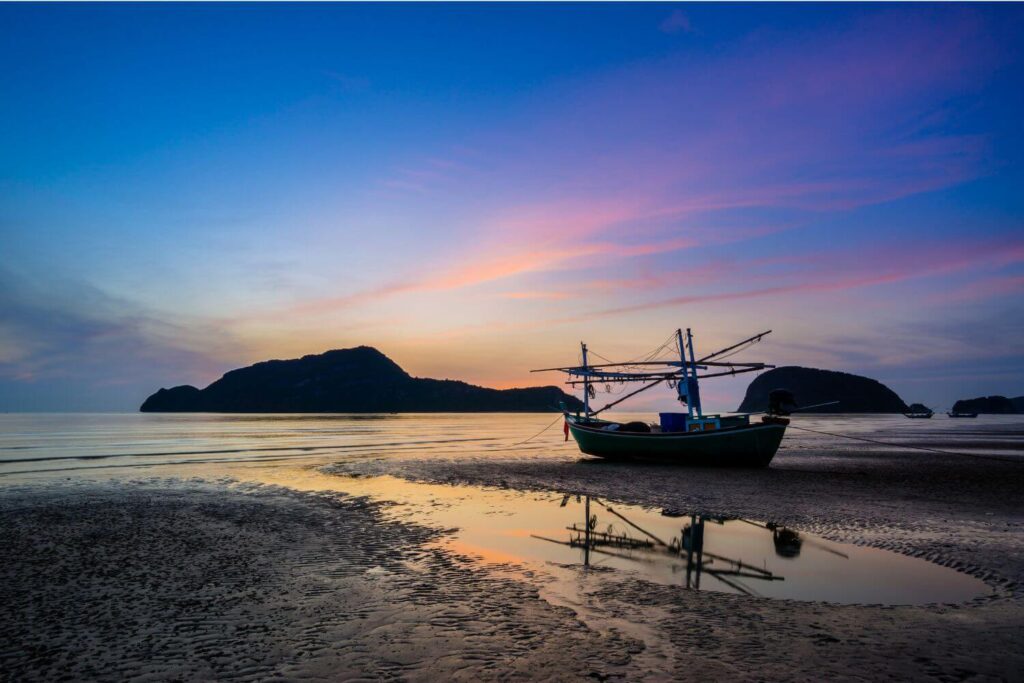
In Pranburi, one of the most sustainable Thailand hidden gems, travel starts with local food and lodging. Many boutique eco-lodges run on solar energy and partner with local fishermen for fresh seafood. This area is also perfect for group travel styles, whether you are traveling with friends or family and want to stay in community-focused villas. For those seeking our adventure travel style, Pranburi is a dream: you can spend your days hiking the national park, exploring hidden caves, or diving into various water sports.
Inside the park, I hiked to two of its remarkable caves in flip-flops because I had no idea that this would be my day, including Phraya Nakhon Cave, a place I’d only ever seen in postcards and had completely forgotten existed. You can check out our Pranburi itinerary page for similar Off Path coastal experiences. Phraya Nakhon Cave was more of a proper workout than anything else: the climb was steep, but the temple and the light streaming in made it worthwhile. A cherished memory for life, especially as it was completely unplanned, proof that some of the most fun activities in Thailand happen when you least expect them.
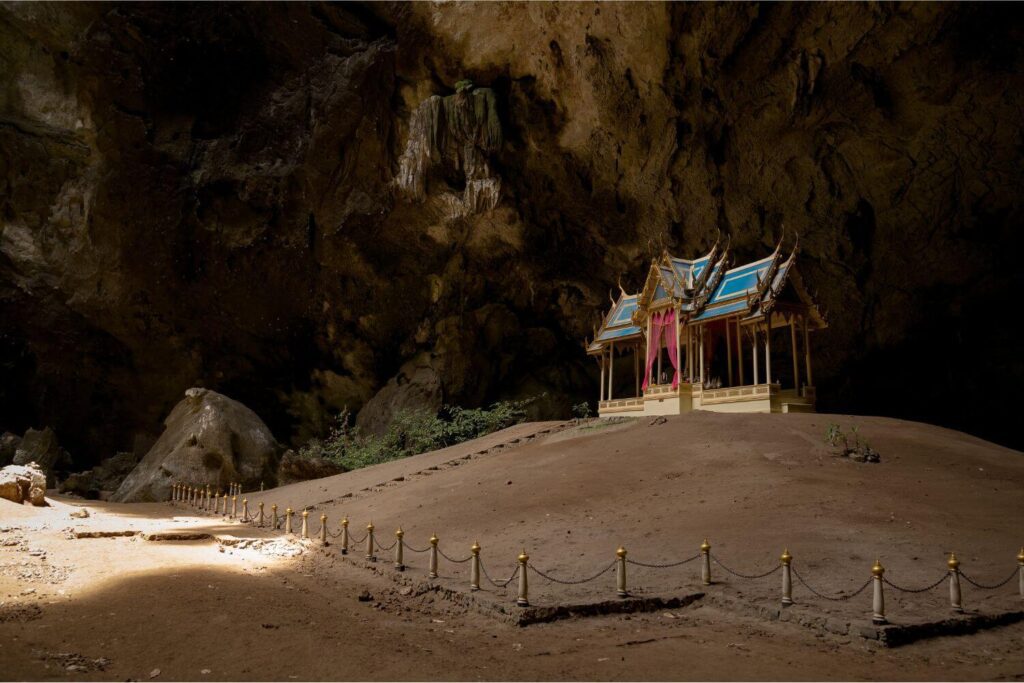
Inside Phraya Nakhon Cave, a tiny royal temple pavilion built by King Chulalongkorn the Great (Rama IV) sits right under a natural opening, where sunlight streams down dramatically during the first few months of the year. Luckily, I visited in January, and standing there felt almost mind-blowing: nature and human creativity coming together to build the most beautiful Thai temple pavilion I’ve ever laid eyes on. I later rode to and climbed Khao Daeng Viewpoint for sunset. What a view! Check out my video of my hike!
Earlier that day, I hiked and passed through Kaew Cave, a much smaller cave where the hike was trickier and felt dangerous at times (remember I was in flip-flops), but I honestly have never felt more alive climbing the narrow passages and uneven rocks. The Sam Roi Yot National Park Thailand ticket you get is valid and gives you access to all of the points I visited and more!
Pranburi’s caves are truly Thailand hidden gems most tourists don’t even hear about. Most holidayers never go past Hua Hin, which allows Pranburi, Thailand to maintain its hidden gem status. Here, the waters are much clearer, the air fresher, and the people calm. It’s also absolutely an ideal spot for cycling, jogging, or just cruising along the coastal roads with no destination planned.
Pranburi & Phraya Nakhon Cave: Quick Information
Location: Prachuap Khiri Khan Province, south of Hua Hin; Phraya Nakhon Cave is in Khao Sam Roi Yot National Park, a short drive further south
Getting There: Drive to Bang Pu village, then either walk the trail over the headland (about 30 minutes) or take a longtail boat to Laem Sala Beach. From the beach, a 430-meter trail climbs up to the cave
Opening Hours: The national park is open daily from 8:00 AM to 4:00 PM
Known For: Quiet beaches, mangroves and limestone hills, and a royal pavilion inside a vast cave, lit by beams of sunlight through a collapsed roof
Must-Try: Phraya Nakhon Cave in the late-morning light, a swim at Laem Sala Beach, the mangrove boardwalk at Pranburi Forest Park, and a seafood dinner in a quiet beach town away from the Hua Hin crowds
Price: National park entry is 200 THB for foreign adults (one ticket covers the whole park for the day); the longtail boat is about 150 THB per person return
Good to Know: The cave climb is steep, uneven and humid, with little shade, so wear proper shoes, bring water and start early. On clear days, the light beams usually reach the pavilion around 10:00 to 11:00 AM
Map of Pranburi’s Sam Roi Yot National Park & Phraya Nakhon Cave.
3. Koh Kood: Island Serenity Frozen in Time
Known for: clear water, empty beaches, jungle waterfalls and old fishing villages on stilts, with no big resorts, no nightlife and a pace that feels frozen in time.
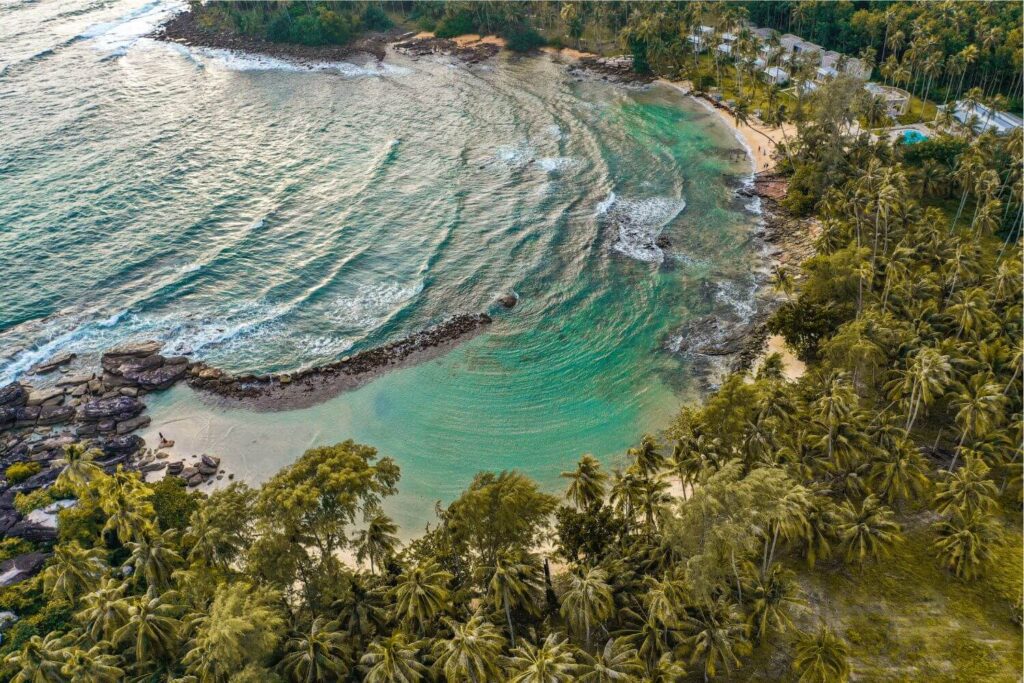
I first heard of Koh Kood, Thailand while on my routine getaway trip to Koh Samet. I used to go to Koh Samet three or four times a year with my mates, as it is only a short drive from Bangkok and the waters are nearly as blue and clear as the southern part of the country.
On one of my solo trips, a bartender, half-joking, told me: “If you are bored of Koh Samet, go to Koh Kood, Thailand for really paradisaical ocean and sunset views.” You guessed it: the next morning, I was on a bus to Trat.
Arriving on the island in the rain, I expected disappointment. Instead, it felt like a warm welcome. The family-owned resort was cozy, and the owners greeted me like a guest rather than a customer. It’s this strong sense of community that truly defines Thailand hidden gems, and it is something I’ve only ever found on Koh Kood. One night, I was invited to a rotating gathering where locals and expats shared food and music, the kind of experience that makes Koh Kood one of the most authentic Thailand hidden gems you can visit in 2026.
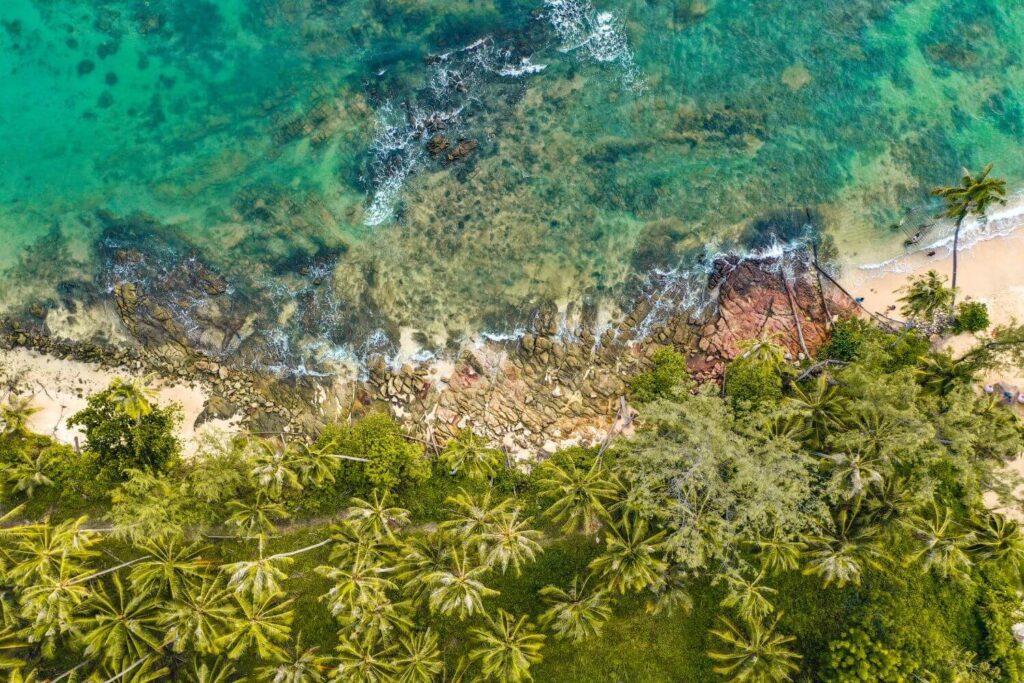
When the rain cleared a day or two later, I rented a scooter from my resort and explored. The sea was a startling blue, calmer and more tranquil than Koh Samet for sure. Koh Kood remains one of the best lesser known islands in Thailand. I trekked to the Klong Chao Waterfall, dipped in the lagoon, observed a giant Macca tree in the jungle that is estimated to be around 500 years old, and visited Ao Salat floating village, where families fish, trade, and paddle between houses as they’ve done for generations.
If you want to explore this island properly, our Koh Kood itinerary maps out a slow route through beaches, waterfalls, and local villages without rushing the experience, and my full Koh Kood travel guide covers where to stay, the best beaches and how to get there.
Koh Kood remains one of the purest Thailand hidden gems still offers, where the pace, people, and landscape all feel untouched compared to more developed islands.
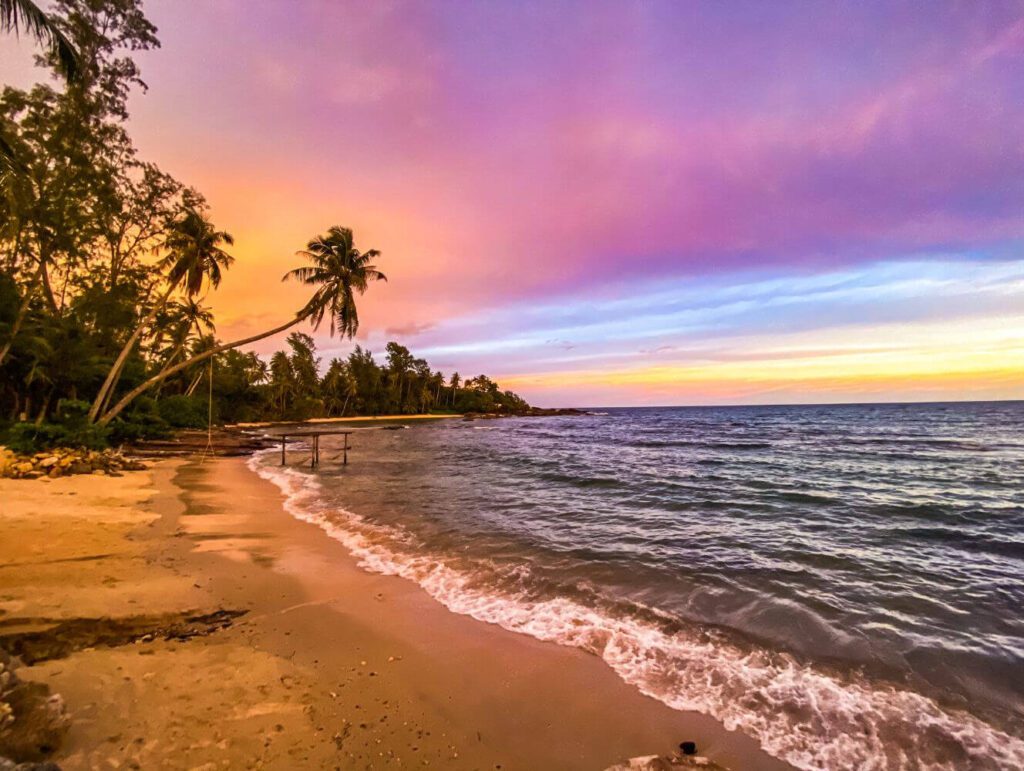
Sustainable travel in Thailand feels natural on Koh Kood because it has resisted heavy development. Luxury here doesn’t only mean resorts, it means quiet eco-lodges in Thailand built with natural materials, and fresh seafood bought directly from Ao Salat village. That’s how sustainability feels authentic while supporting island livelihood.
If you are looking for Thailand hidden gems that feel genuinely timeless, Koh Kood is the answer. It’s an island with no McDonald’s and no commercial rush, just relaxed, pristine beauty. Because of its quiet charm and slow pace, this destination is perfect for the romantic travel style that we offer, allowing partners to reconnect in one of the most peaceful corners of the country.
Koh Kood: Quick Information
Location: Trat Province, in the eastern Gulf of Thailand, close to the Cambodian border
Getting There: Travel from Bangkok to Trat by car, bus or a short flight, then take a speedboat from the mainland piers, about 1 to 1.5 hours across
Opening Hours: The beaches and waterfalls can be enjoyed all day; boat schedules are reduced in the rainy season
Known For: Clear water, empty beaches, jungle waterfalls and old fishing villages on stilts, with no big resorts, no nightlife and a pace that feels frozen in time
Must-Try: Swimming at Khlong Chao Waterfall, a slow walk through Ao Yai fishing village, kayaking up a mangrove river, and a quiet sunset at Ao Tapao
Price: Most beaches and waterfalls are free; scooter rental is the easiest way to get around
Good to Know: The best time to visit is November to May. Koh Kood is within 50 km of the Cambodian border, where some governments currently advise caution, so check your country’s travel advice and your travel insurance before booking
Map of Koh Kood
4. Uthai Thani: Hot Spring Hidden Gems Thailand Escape Near Bangkok
Known for: families still living in raft houses on the Sakae Krang River, centuries-old temples, and the wild forests of Huai Kha Khaeng, a UNESCO World Heritage wildlife sanctuary.
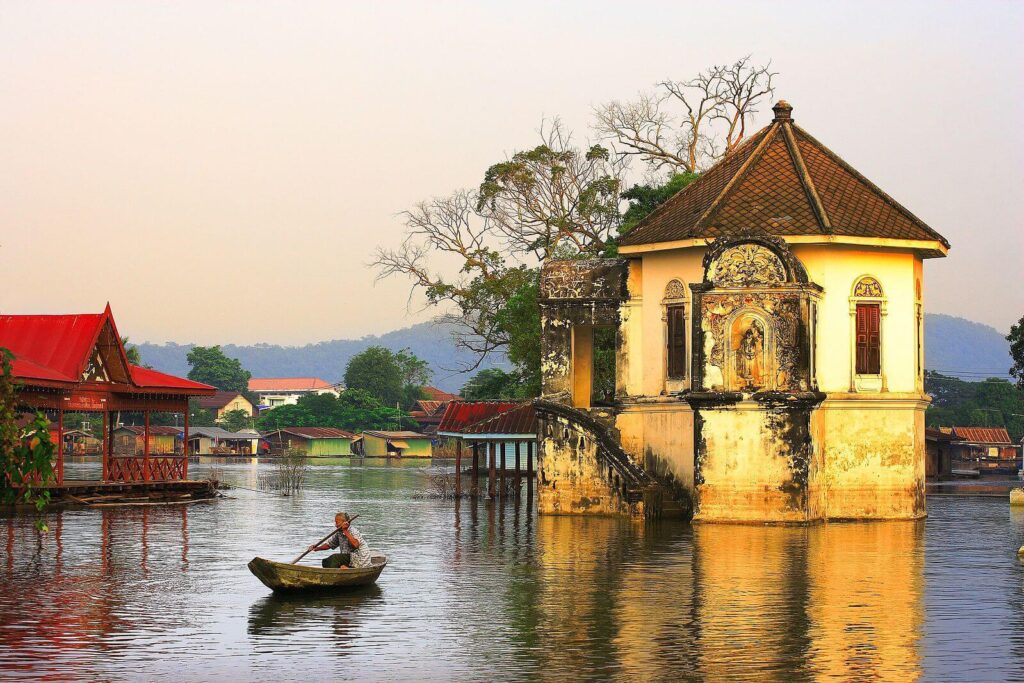
For months, back living in the dusty and noisy Bangkok, I’d been badly craving a trip to Chiang Dao just to soak in hot springs and ride a scooter in nature. But the long travel, arranging flights, extra time off, and the additional expenses made it feel more like a luxury than a spontaneous escape. I badly craved a hot spring experience, yet all the logistics kept holding me back, until I stumbled upon Uthai Thani, Thailand.
Arriving in the town, it looked ordinary, simple, and unassuming, reminiscent of my visit to Nan, but with virtually zero tourism. But the moment I hopped on my rented scooter and started the ride to the hot springs, everything changed. Rolling hills, quiet country roads, fields of lush greenery, and mountains rising in the distance unfolded before me. Each turn revealed another scenic surprise, and the freedom of riding through this peaceful landscape captured exactly what Thailand hidden gems are all about: a quiet reset from Bangkok that feels completely different from the usual routes.
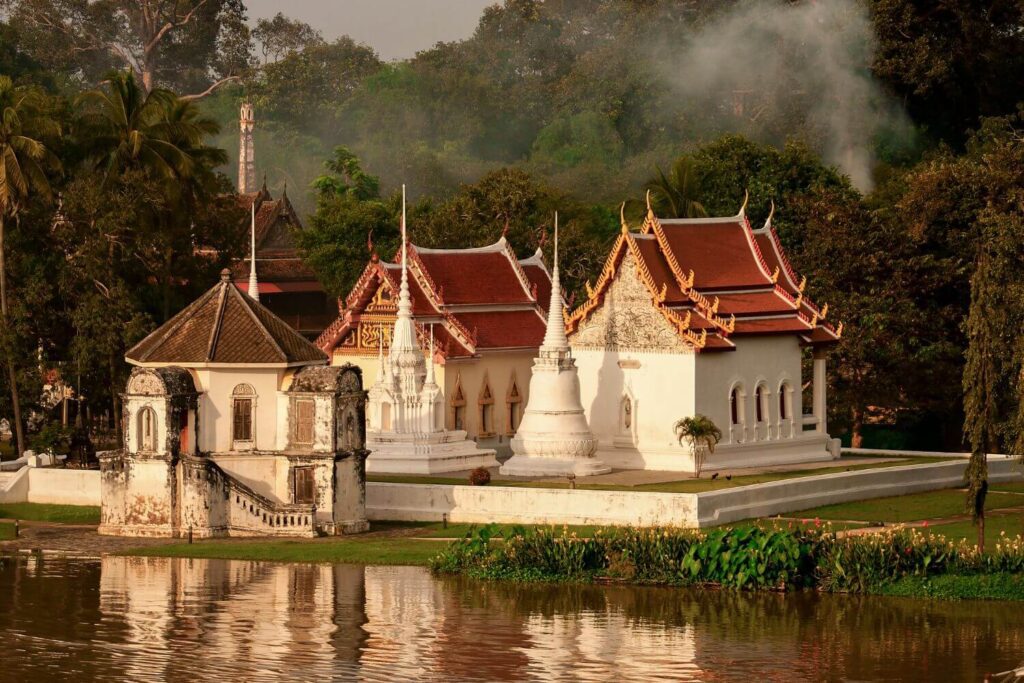
What makes Uthai Thani, Thailand one of the true hidden gems near Bangkok is how easily you can travel sustainably here. Family-run hot springs and guesthouses replace commercial and government chains, and even buying a meal at the tiny restaurant overlooking a lake on the property supports locals directly. This is what sustainable travel in Thailand looks like.
By the time I reached the hot springs, the property’s magic was immediately clear. The caretakers at the springs were charming, chatting casually as they tended the garden. They were nevertheless surprised to see a non-Thai-looking face in the vicinity.
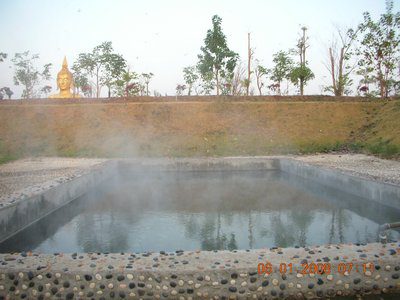
I soaked in the warm, mineral-rich waters, and all my city stress melted away, leaving me completely rejuvenated.
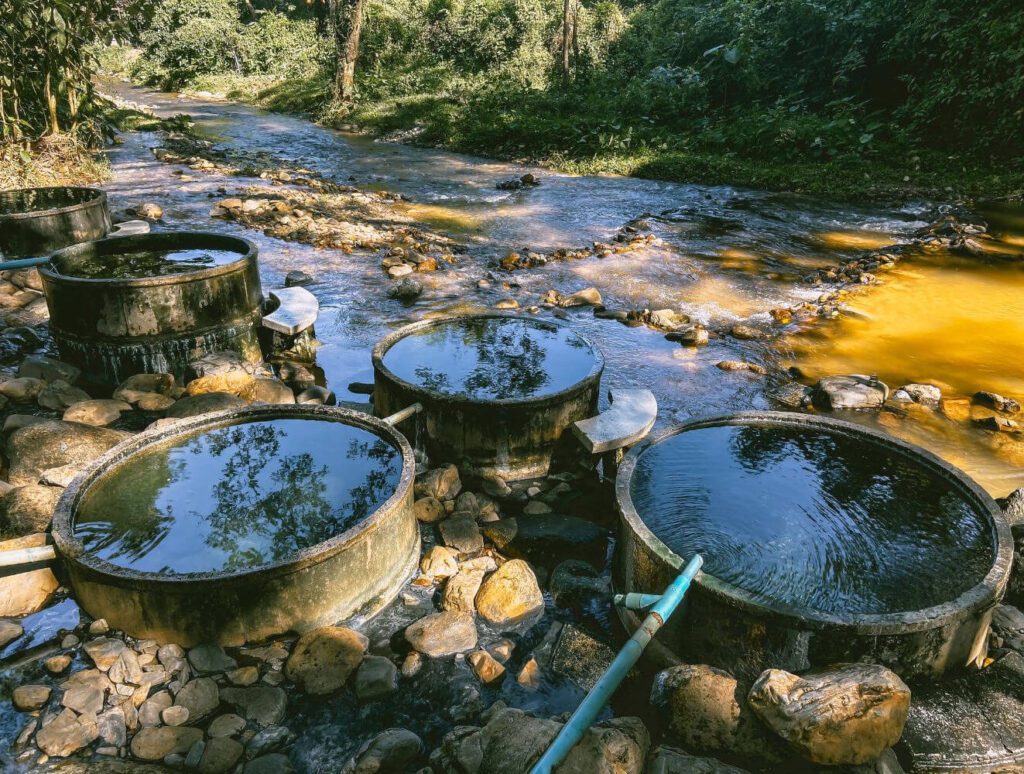
At Samor Thong Hot Spring, you can choose from various bathing options starting at just 30 baht, or book a larger private room if you’re visiting with a group. Like most natural springs in Thailand, the water has a distinct sulfur scent, similar to rotten eggs, but it’s packed with essential minerals that are great for the skin. Just be sure to take a proper shower once you’re done with your soak. I brought my smartphone along to play some relaxing classical tunes, making for a perfect 20-minute escape.
For me, that’s what makes Uthai Thani one of the best Thailand hidden gems: it is quiet, authentic, and genuinely memorable. Most travelers skip it for Ayutthaya or Kanchanaburi when searching for Thailand hidden gems near Bangkok, but its overlooked status is exactly why it remains a perfect escape. Just three hours from the city, it is convenient yet far enough from the crowds to feel like a true discovery. This destination is particularly perfect for the solo travel style that we offer, giving you the space and safety to connect deeply with the local culture at your own pace.
Uthai Thani & Samo Thong Hot Springs: Quick Information
Location: Uthai Thani Province in central Thailand, north of Bangkok; Samo Thong Hot Springs is in Huai Khot District, in the province’s forested west
Getting There: About 3 hours from Bangkok by car, or by bus from Mo Chit Bus Terminal; a car is the easiest way to reach the hot springs, as public transport is sparse
Opening Hours: Samo Thong Hot Springs is open daily from 8:00 AM to 5:00 PM; the town and river can be explored all day
Known For: Families still living in raft houses on the Sakae Krang River, centuries-old temples, and the wild forests of Huai Kha Khaeng, a UNESCO World Heritage wildlife sanctuary
Must-Try: A soak and a mineral foot bath at Samo Thong, the raft houses and floating temple on the Sakae Krang River, the view from Khao Sakae Krang, and fresh river fish in town
Price: Samo Thong Hot Springs is free to enter
Good to Know: Visit the hot springs on a weekday morning, as weekends fill up with local families. Bring a towel and older swimwear, since the mineral water can stain light fabrics. Around the end of Buddhist Lent, monks walk down the steps of Khao Sakae Krang to receive alms in the famous Tak Bat Thewo festival
Map of Uthai Thani & Samo Thong Hot Springs
5. Chiang Dao: Northern Thailand at Its Purest
Known for: misty mountain views, a vast Buddhist cave system, forest temples, natural hot springs and nearby hill tribe and Yunnanese Chinese villages.
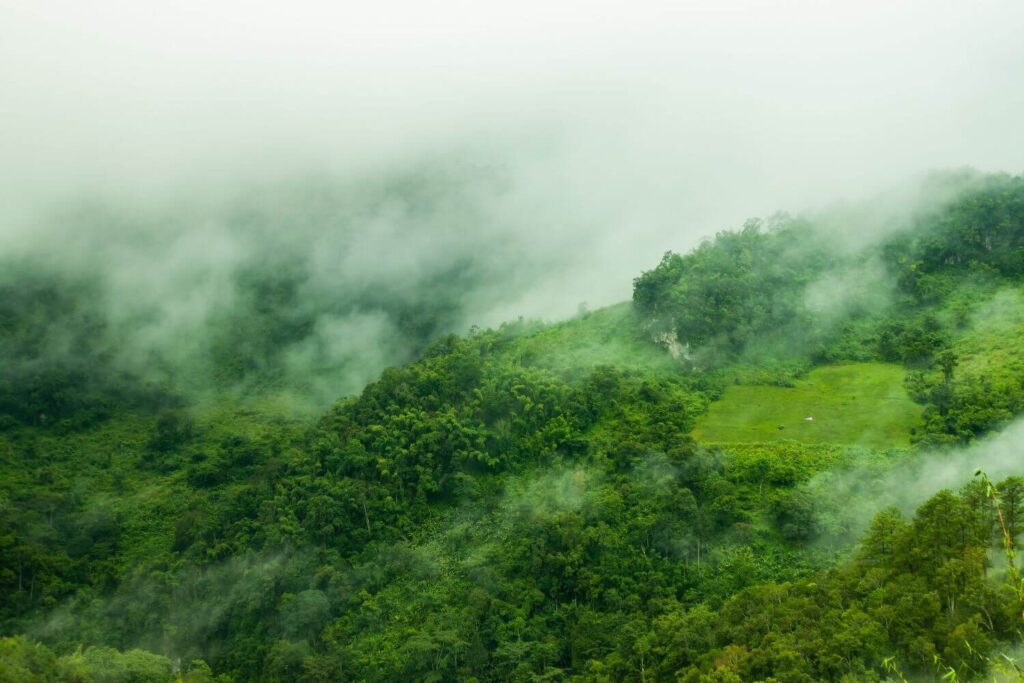
If there’s one place in Thailand that I can safely call my favorite, it’s Chiang Dao, Thailand. Just an hour north of Mae Rim, Chiang Mai, this humble town sits at the bottom of Doi Luang, a stunning mountain that has been declared a UNESCO Biosphere Reserve.
Chiang Dao literally translates into the “City of Stars”, and the night sky here truly doesn’t disappoint. If you’re wondering what to do in this beautiful mountain town, I’ve put together a helpful list of the top things to do in Chiang Dao that go beyond the usual tourist spots.
Mornings are misty and freezing. Limestone cliffs rise quietly in the background. Exploring the 300-million-year-old Chiang Dao Caves was another highlight, offering a deep sense of history and spiritual significance that makes this area one of Thailand hidden gems! Exploring the huge limestone chambers, you get a real sense of the history and local importance for Buddhism and these natural wonders Thailand is so fortunate to possess. Chiang Dao’s caves are an amazing Thailand hidden gems for a reason, probably the nicest cave I’ve seen in all of Thailand, including the many caves I’ve visited in the coastal provinces.
We’ve curated our Chiang Dao experiences to highlight the best Thailand hidden gems for every traveler; choose a cultural travel style to explore ancient Lanna temples, or opt for a wellness travel style to rejuvenate with authentic massages and mineral-rich hot springs.
If your northern Thailand trip includes a stop in the mountains and you’re weighing Chiang Dao against Pai, this guide will help you decide.
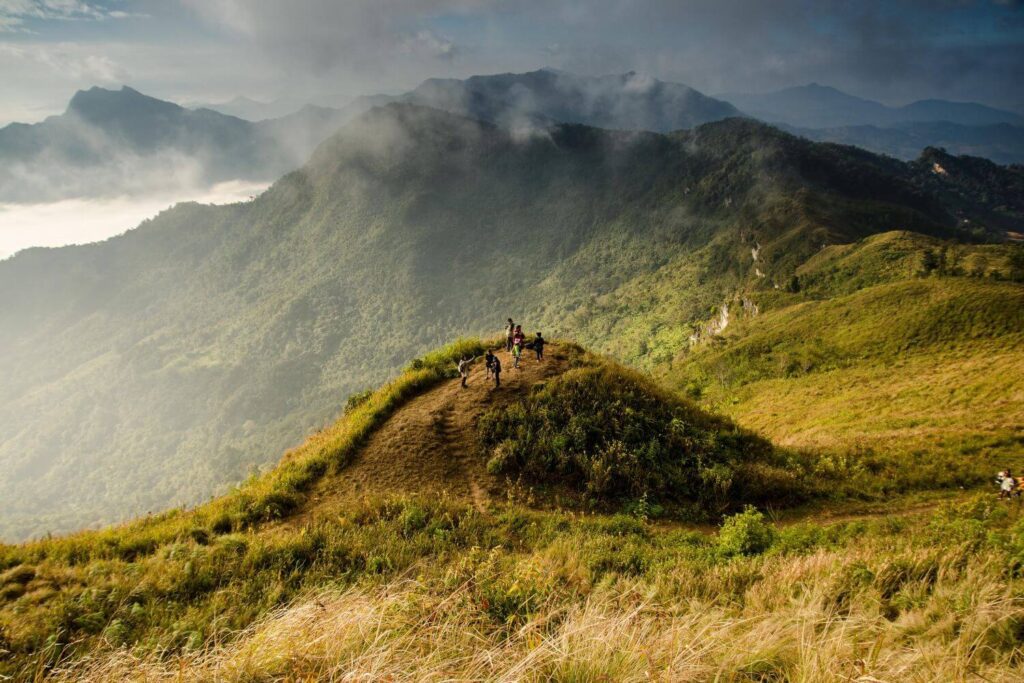
For sustainable tourism in Thailand, look for eco-lodges Thailand that use bamboo architecture and source meals from nearby farms practicing permaculture. Local markets can thrive when travelers choose local produce over 7-11, and that kind of support helps ensure these Thailand hidden stay inspired for the next generation.
I’ve spent many evenings soaking in Pong Arng Hot Spring at sunset, letting the warm water replenish the minerals from daily life. Scootering around the area, winding through lush valleys and peaceful roads, was the kind of reset that the islands just can’t give me.
Most travelers skip Chiang Dao, Thailand, heading straight for Chiang Mai or Pai instead. But that’s exactly what makes it special. Roads wind endlessly, valleys stay untouched and stunning year-round, and Thailand wildlife is protected by places such as Chiang Dao Wild Life Sanctuary.
If you’re there in November or December, Chiang Dao coincides with Yi Peng (lantern festival) like Chiang Mai, featuring sky lanterns and krathongs, making it a notable off path spot for Thailand festivals.
For me, Chiang Dao is the first place that comes to mind when I think of northern Thailand. The mist, the mountains, and the valleys here are the image I’ll always carry of the town.
Update: I have also recently published a guide on Chiang Dao, one of my favorite Thailand hidden gems, which you can read here.
Planning Your Off Path Thailand Adventure
Reading about these Thailand hidden gems might make you think, “I can just book a flight and figure it out myself.” But the experiences I offer go far beyond standard travel planning.
Every custom journey offers a once-in-a-lifetime adventure through Thailand’s most off-the-beaten-path corners: remote valleys like Nan, secret hot springs in Uthai Thani, mystical caves in Sam Roi Yot, tranquil beaches on Koh Kood, and authentic Thai encounters that most travelers never even experience but should.
Local tips like unheard of hot springs come naturally from my Thai-born perspective, giving you access to moments that most tours will miss.
Every detail is arranged for you from hotel pick-ups, coffee shop tips, and restaurant meals to private drivers and expert guides, so you can relax entirely and enjoy the journey.
With us, you’ll experience misty mountains at sunrise and dip in secret waterfalls while uncovering the best Thailand hidden gems. You’ll join local festivals and stay in resorts where your presence directly supports families preserving their traditions, an essential part of exploring Thailand hidden gems through sustainable travel.
These tours are for travelers who value experiences over possessions, those who crave the stories and connections found only within Thailand hidden gems. This isn’t just a vacation; it’s an immersion into the authentic Thailand hidden gems that define the soul of the country. If planning feels overwhelming, a custom itinerary or a private guide can make these Thailand hidden gems easier to reach while ensuring your journey remains deeply personal and sustainable.
So if you’d like help planning your own trip to any of the hidden gems, drop us a line on WhatsApp or check out our trip customization page.
For a deep dive into the region’s cultural capital, see my complete guide on things to do in Chiang Mai.
If you want to experience this area more fully, our Chiang Dao itinerary maps out a slow, scenic route through mountain roads, viewpoints, and local villages.
If you’re still deciding which region to explore first, I’ve put together a comparison guide on Bangkok vs Chiang Mai to help you choose the perfect starting point for your Thailand hidden gems adventure.
When you’re ready to sit by quiet shores instead of misty valleys, explore my guide to the lesser known islands in Thailand.
Chiang Dao: Quick Information
Location: Chiang Dao District, Chiang Mai Province, a quiet valley beneath Doi Luang Chiang Dao, one of Thailand’s highest limestone peaks
Getting There: About 1.5 hours north of Chiang Mai by car, scooter or local bus; a scooter or car is the best way to get around once you’re there
Opening Hours: The valley can be explored all day; Chiang Dao Cave and the national park sights are open during daytime hours
Known For: Misty mountain views, a vast Buddhist cave system, forest temples, natural hot springs and nearby hill tribe and Yunnanese Chinese villages
Must-Try: Chiang Dao Cave, the forest temple Wat Tham Pha Plong, Pong Arng Hot Spring and Sri Sangwan Waterfall, an evening soak at the local Chiang Dao Hot Springs, and a road trip to Ban Arunothai
Price: Chiang Dao Hot Springs is free; one 100 THB ticket covers Pong Arng and Sri Sangwan, and the cave has a small entry fee
Good to Know: Wat Tham Pha Plong is about 500 steps up, so take it slowly. The cool season (November to February) brings misty mornings and chilly nights, so pack a light jacket
Map of Chiang Dao & the world famous Chiang Dao Caves.
6. Cha-am: Relaxed Coastal Escape in Phetchaburi Province
Known for: a laid-back Thai seaside town with a long beach, fresh seafood and a local, family feel, quieter and slower than its famous neighbor Hua Hin.
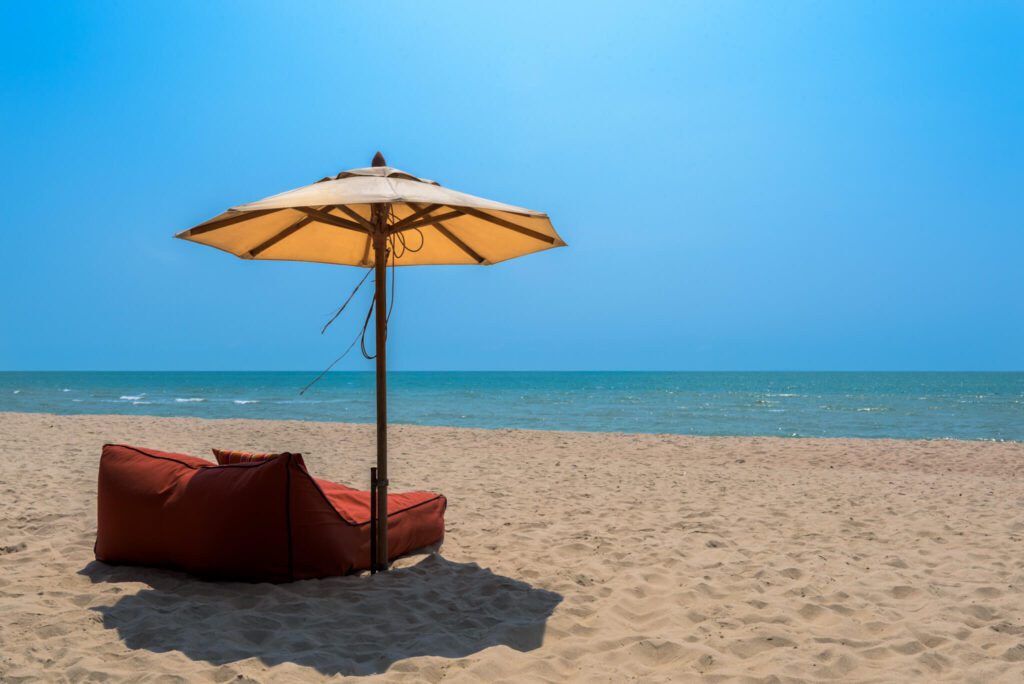
I’ve been coming to Cha-am since I was a kid, probably around 10 years old. My dad, a first-generation Thai, used to bring the family here, and it quickly became one of our favorite spots. Even today, I stay here most of the year when I’m not in Bangkok. We’ve always preferred it over Pattaya’s louder nightlife vibe. Cha-am has a much calmer, more authentic atmosphere and is mostly visited by locals.
Located in Phetchaburi province, right before Hua Hin, Cha-am offers clean beaches (the water isn’t the turquoise of the southern islands, but that’s not why you come). It’s a quiet town with humble, friendly people. You’ll find nice zoos, peaceful mornings by the sea, and a genuinely relaxed local rhythm. The night markets here feel more authentic than touristy ones, great for street food without the crowds.
One of the best parts? It’s only a 30-minute drive to Hua Hin if you want a mall, a bigger night market, or a change of scenery. And it’s just a 2.5-hour drive south from Bangkok, making it an easy coastal getaway.
This stretch of coast is perfect for sustainable travel, supporting local businesses and enjoying a low-key vibe that hasn’t been overrun.
Cha-am is also featured in our Day Trips to the Beach in Thailand guide.
My experience
Cha-am is where I live now, and honestly, I’m glad I chose it. I get the perks of living next to Hua Hin for about half the price, and whenever I need something, I just hop over to Hua Hin. The beach is nice almost all year round, there’s hardly anyone on it, and I can literally see the ocean from my bed. There are a couple of small markets near my place, but the main market in Cha-am town is the one to visit: it’s big, with loads of options to eat.
Cha-am: Quick Information
Location: Phetchaburi Province on the Gulf of Thailand, just north of Hua Hin and about 170 km southwest of Bangkok
Getting There: About 2.5 to 3 hours from Bangkok by car, train or bus; Hua Hin is around 30 minutes further south
Opening Hours: The beachfront is open all day, with the calmest hours at sunrise and in the early evening
Known For: A laid-back Thai seaside town with a long beach, fresh seafood and a local, family feel, quieter and slower than its famous neighbor Hua Hin
Must-Try: Seafood by the water, a sunset walk along the beach, the seaside Mrigadayavan Palace, and a side trip to the temples and markets of Phetchaburi town
Price: The beach is free; beach chairs and umbrellas can be rented for a small fee
Good to Know: It’s busiest on weekends and Thai holidays, when Bangkok families arrive; on weekdays you’ll have long stretches of beach almost to yourself
Map of Cha-am Beach
7. Ratchaburi: An Overlooked Hidden Gem Near the Myanmar Border
Known for: rolling green hills, cooler air, mineral hot springs, waterfalls and a quirky “Swiss Valley” vibe, with Karen villages and farm stays dotted through the countryside.
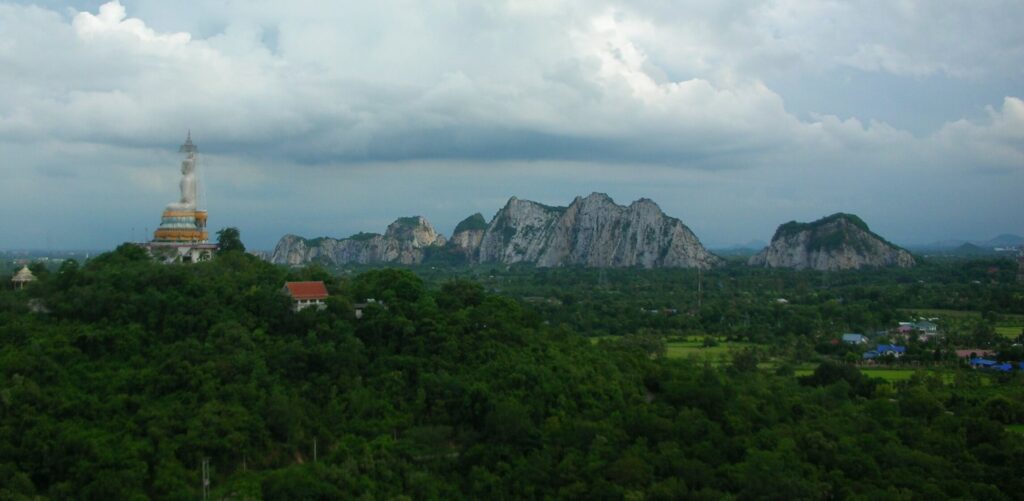
Ratchaburi is a true Thailand hidden gem, relatively unknown and often just passed through on the way south. Most people don’t even notice it. The provincial town itself is sleepy with a small mountain and lake area called Khao Ngoo (Snake Mountain) that stays quiet most of the time. There’s not a ton to do right in town, but head toward Suan Phueng near the Myanmar border, and the magic appears: hot springs, waterfalls, and mountainous landscapes that easily rival northern Thailand. It’s only a couple of hours from Bangkok.
Ratchaburi is also known for its excellent golf courses if that’s your thing.
I first came here while staying and working out of Cha-am. It’s not too far, and I went specifically for one of the hot springs. I was pleasantly surprised by how nice the area is, with virtually zero tourists. The drive itself is rewarding, and the natural beauty feels undiscovered.
For sustainable travel, this area shines: family-run hot springs and local spots where your visit directly supports the community rather than big chains.
Ratchaburi is also included in our Day Trips from Bangkok guide, which features more similar off-the-beaten-path adventures.
If you’re based in Hua-Hin or looking for a day trip from Bangkok, Ratchaburi makes an excellent Off Path adventure.
My experience
I got here the slow way: the local train from Cha-am, which cost me 20 THB and took about two hours. From the station, I took a minivan to Suan Phueng and hired a motorbike taxi driver for the day, who waited for me while I soaked in the hot springs. The landscape is beautiful, and I’m surprised more people don’t talk about Ratchaburi. Ask any golfer, though, and they’ll tell you how nice it is.
Suan Phueng: Quick Information
Location: Suan Phueng District, western Ratchaburi Province, in the hills along the Myanmar border, about 150 km west of Bangkok
Getting There: About 2.5 to 3 hours by car from Bangkok; a car is essential, as the sights are spread out across the hills
Opening Hours: The area can be explored all day; farms, cafes and hot springs keep their own daytime hours
Known For: Rolling green hills, cooler air, mineral hot springs, waterfalls and a quirky “Swiss Valley” vibe, with Karen villages and farm stays dotted through the countryside
Must-Try: Bo Khlueng Hot Stream, Khao Chan (Nine-Level) Waterfall, The Scenery Vintage Farm, and a long lunch at a hillside cafe
Price: Most natural sights are free or charge a small entry fee; farms and hot spring resorts charge their own fees
Good to Know: Weekends get busy with visitors from Bangkok, so come on a weekday or stay overnight to enjoy the quiet mornings in the hills
Map of Ratchaburi & the Suan Phueng District.
8. Kanchanaburi: Beyond the River Kwai Bridge
Known for: a local hot spring reportedly discovered by Japanese soldiers during World War II, with natural mineral water at around 45 to 55°C flowing into simple soaking pools beside a cold forest stream.
Kanchanaburi is a little less “hidden” than the others because of its fame from the River Kwai Bridge and WWII history, but the province is big enough that plenty of spots remain unknown to most tourists. The town itself has a nice atmosphere with the river and night market, but there’s so much more to explore.
I recently trekked the Erawan Falls all the way to the 7th level, in flip-flops, no less. It was spectacular and very rewarding. The main reason I went, though, was to check out Hin Dad Hot Springs, about 120km north of Kanchanaburi town.
I travel all over the country hunting for the best hot springs, and this one is up there with the absolute best. It sits in the middle of a nature reserve with several thermal pools and a river nearby to cool off. The setting doesn’t get better in terms of nature immersion.
The river and bridge give the town a pleasant vibe, but the real treasures are the waterfalls, hot springs, and trekking opportunities in the wider province.
Sustainable travel here is straightforward: choose local guesthouses, eat at family-run spots, and support conservation in the national parks and reserves.
Our Kanchanaburi Off Path experiences can help you go beyond the standard bridge visit.
My experience
On a random weekend while I was living in Bangkok, I decided to hop on my bike and ride out to Kanchanaburi, without Google Maps. It was the best decision I made, because I badly needed a break from the city. My main goal was Hin Dat Hot Springs, but I also did some of the classic sights, like the World War II museums, and found a surprisingly good vegan restaurant on a street near the Bridge over the River Kwai. It was a wonderful trip.
Hin Dat Hot Spring: Quick Information
Location: Thong Pha Phum District, Kanchanaburi, about 130 km northwest of Kanchanaburi town
Getting There: About 2 to 2.5 hours by car from Kanchanaburi town along Highway 323, passing Sai Yok National Park on the way
Opening Hours: Open daily from early morning until the evening, roughly 6:00 AM to 8:00 PM
Known For: A local hot spring reportedly discovered by Japanese soldiers during World War II, with natural mineral water at around 45 to 55°C flowing into simple soaking pools beside a cold forest stream
Must-Try: Alternating between the hot pools and the cold stream right next to them, and stopping at Sai Yok Yai Waterfall on the drive back
Price: A small entry fee; lockers cost a little extra
Good to Know: It’s a working local hot spring, not a resort spa, so expect shared concrete pools. Start in the coolest pool, bring your own towel, and visit on a weekday morning to avoid the crowds
Map of Kanchanburi & the Hin Dad Hot Springs.
9. Nakhon Nayok: A World Away, an Hour and a Half From Home
Known for: waterfalls, rivers, green mountain views and the huge Khun Dan Prakan Chon Dam, with a slow, rural feel just beyond the city.
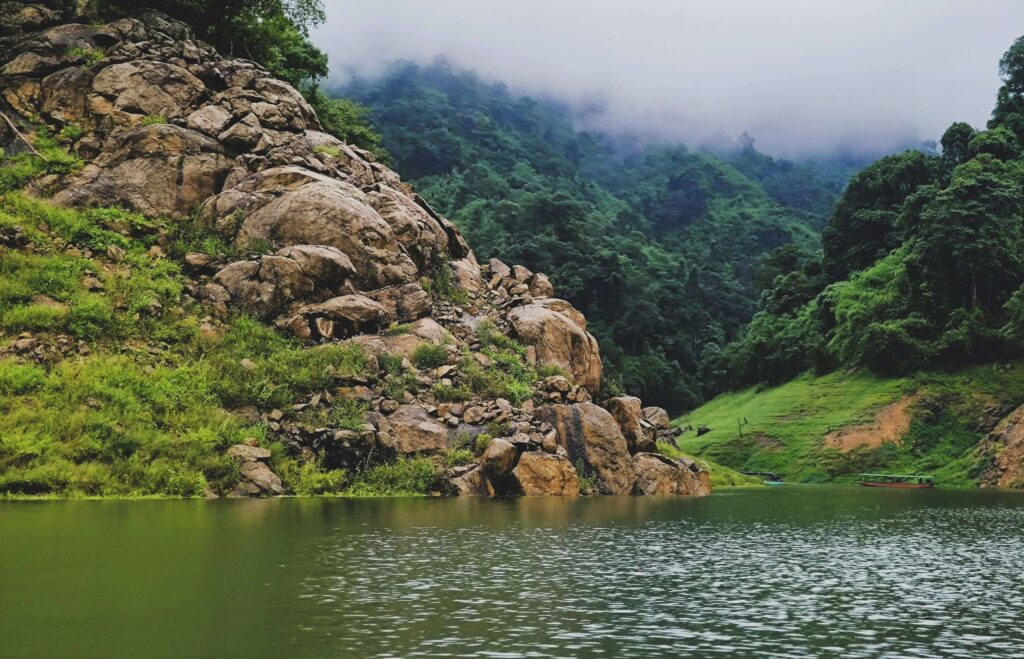
Nakhon Nayok is one of those Thailand hidden gems that’s almost hiding in plain sight, close enough to Bangkok that it barely counts as a road trip, yet it feels like an entirely different province the moment the traffic thins out and the Khao Yai foothills start rising on the horizon.
I’ve been coming here since I was a kid. My family used to pack up with a few other families and drive out for the weekend, and Nakhon Nayok was always the answer when someone wanted something more active than a normal day trip. We cycled the roads out toward Khun Dan Prakan Chon Dam, went white water rafting on the river below it, and came home sun-burnt and exhausted in the best way. It was the kind of trip that didn’t need much planning, just a car, a cooler, and a group of families who all wanted the same thing: to get out of the city for a day without going very far to do it.
If you’re wondering what to actually do once you’re there, I’ve put together a full list of the top things to do in Nakhon Nayok that goes beyond just the dam.
Khun Dan Prakan Chon Dam is still the centerpiece of any trip out here, and for good reason. It’s a King Rama IX royal project, one of the longest compressed concrete dams in the world, and the reservoir behind it opens up into exactly the kind of still, mountain-ringed water you don’t expect to find this close to Bangkok. The road up and over the dam is popular with cyclists for a reason, it’s a proper climb, and the view from the top over the water and the hills beyond makes the effort worth it. Below the dam, controlled water releases keep the Nakhon Nayok River runnable for rafting and kayaking nearly year-round, which is exactly what made it such a reliable weekend trip when I was growing up.
Beyond the dam, the province holds onto real wilderness. Nakhon Nayok sits right against the Khao Yai mountain range, and waterfalls like Sarika and Nang Rong sit tucked into forest that feels a lot wilder than its distance from the capital would suggest. Wang Takrai Park, with its shaded trails and smaller cascades, is the kind of easy half-day stop that rounds out a longer visit without needing a full itinerary of its own.
For sustainable tourism in Thailand, a place like Nakhon Nayok matters precisely because it’s so accessible. Choosing a local homestay over a resort, hiring a local rafting guide instead of booking through a faceless tour operator, or picking up food from the roadside stalls near the dam instead of a chain restaurant all keep the money in the hands of the families who’ve built their livelihoods around this river and this reservoir, rather than letting a day trip this close to Bangkok turn into something extracted rather than shared.
These days I don’t need the full weekend group trip to justify coming back. As an adult, I’ll drive down on my own, spend a few hours by the lake doing nothing in particular, and be back in Bangkok before the evening traffic really sets in. That’s the real value of Nakhon Nayok, it doesn’t ask much of you. No flights, no multi-day itinerary, just an hour and a half of driving and suddenly the city doesn’t feel like it exists anymore.
For me, Nakhon Nayok is proof that you don’t have to go far to genuinely get away, that one of Thailand’s most underrated hidden gems has been sitting less than two hours from Bangkok the entire time.
Nakhon Nayok: Quick Information
Location: Nakhon Nayok Province, about 100 km northeast of Bangkok, at the southern foot of the Khao Yai mountains
Getting There: About 1.5 hours by car from Bangkok; a car makes it much easier to reach the waterfalls, dam and countryside
Opening Hours: Most waterfalls and parks are open during daylight hours; the countryside can be explored all day
Known For: Waterfalls, rivers, green mountain views and the huge Khun Dan Prakan Chon Dam, with a slow, rural feel just beyond the city
Must-Try: Nang Rong and Sarika waterfalls, the views at Khun Dan Prakan Chon Dam, a riverside lunch, and a stop at one of the countryside cafes with mountain views
Price: Most sights are free or charge a small entry fee
Good to Know: Weekends fill up with visitors from Bangkok, so come on a weekday. The waterfalls are at their best during and just after the rainy season, but stay out of the water after heavy rain
Map of Nakhon Nayok & Khun Dan Prakan Chon Dam.
10. Chiang Rai: The North’s Quiet Second Act
Known for: striking modern temples, misty tea plantations, hill tribe villages and the Golden Triangle, with a slower, quieter pace than Chiang Mai.
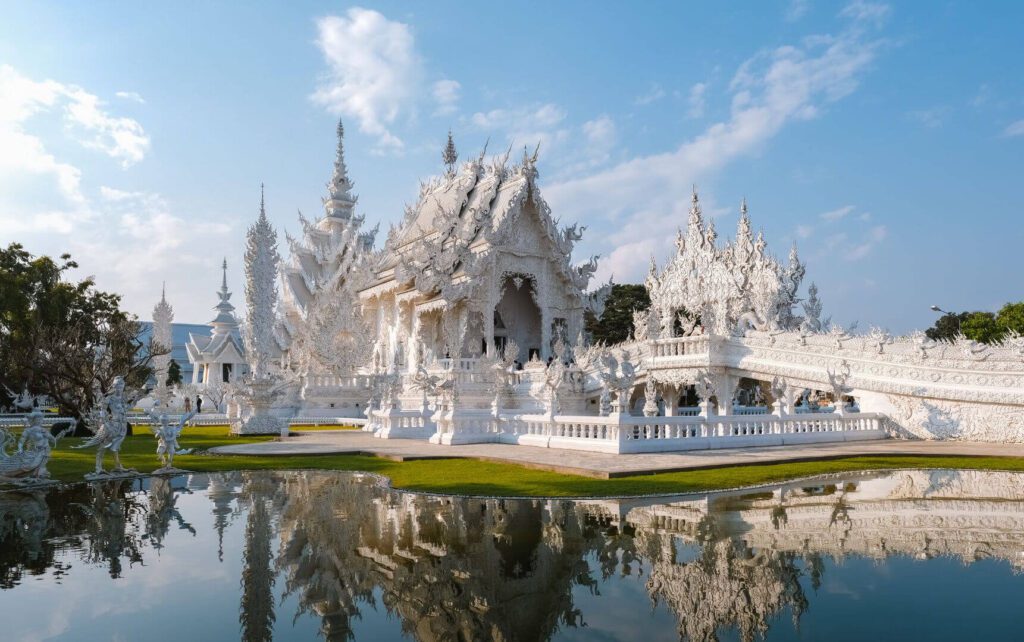
Most people who’ve never been to Thailand still know the name Chiang Rai, usually because of one building: Wat Rong Khun, the White Temple, all bone-white plaster and glass that catches the light like broken ice. It deserves the reputation. But spend more than an afternoon here and you realize the temple is really just the introduction, not the whole story.
Chiang Rai sits at Thailand’s northernmost edge, close enough to Myanmar and Laos that the three countries meet at a single bend in the Mekong, a spot known as the Golden Triangle. I’ve stood at that riverbank more than once just watching longtail boats cross between three nations in the space of a few minutes, which is not something you get to say about many places in the world.
If you’re wondering what to actually build a trip around here, I’ve put together a full list of the top things to do in Chiang Rai that go beyond the White Temple photo stop.
Beyond Wat Rong Khun, Chiang Rai’s temple scene has real range. Wat Rong Suea Ten, the Blue Temple, is smaller and stranger, all cobalt and gold, built by a student of the same artist behind the White Temple. Baan Dam, the Black House, is something else again, a scattered compound of dark teak halls filled with animal bone and horn, more art installation than temple, and one of those Thailand hidden gems that photos genuinely undersell.
Further out, the hills around Doi Mae Salong carry a different history altogether. The town was settled by Chinese Nationalist soldiers who crossed the border after 1949, and it still runs on Yunnan tea culture: terraced tea plantations climbing the ridgelines, tea houses serving oolong grown a few hundred meters from where it’s poured, noodle shops that taste more like Yunnan than northern Thailand. It’s one of the clearest examples of how many layers of history this region is actually holding onto.
For sustainable tourism in Thailand, Chiang Rai’s tea farms and hill tribe villages offer exactly the kind of travel that puts money directly into local hands rather than a hotel chain’s head office. Choosing a homestay over a resort here, or buying tea straight from the farm that grew it, is a small decision that keeps these Thailand hidden gems worth protecting for the next traveler who finds them.
I’ve spent more than one early morning driving out toward Phu Chi Fa in the dark, headlamp on, climbing the last stretch on foot to reach the ridge before sunrise. What you’re waiting for is a sea of mist rolling across the valley toward Laos, the whole thing lit gold as the sun clears the hills. It’s a two to three hour drive from Chiang Rai town, mostly Thai travelers make the trip rather than foreigners, and it’s the kind of view that makes the 4am alarm feel like nothing.
Most travelers treat Chiang Rai as a day trip from Chiang Mai, in and out for the White Temple, back on the bus by evening. That’s a mistake. The province rewards travelers who actually stay: the tea hills of Mae Salong, the sea of mist at Phu Chi Fa, riverside evenings looking across into Myanmar, all of it sits well outside the loop most people follow.
If you’re there around Loi Krathong and Yi Peng, Chiang Rai holds its own lantern and krathong releases along the Kok River, quieter than Chiang Mai’s and, in my opinion, better for it.
For me, Chiang Rai is the place that proves northern Thailand still has second acts, that a province can be famous for one building and still have most of what makes it worth visiting completely undiscovered by the people who come to see it.
Chiang Rai: Quick Information
Location: Thailand’s northernmost province, bordering Myanmar and Laos, about 3 hours’ drive north of Chiang Mai
Getting There: A direct flight from Bangkok to Chiang Rai airport (about 1 hour 15 minutes), or by car or bus from Chiang Mai in about 3 hours
Opening Hours: Most temples open from around 8:00 AM to 5:00 PM; the hills and tea villages can be explored all day
Known For: Striking modern temples, misty tea plantations, hill tribe villages and the Golden Triangle, with a slower, quieter pace than Chiang Mai
Must-Try: The White Temple early in the morning, the Blue Temple, Baan Dam (the Black House), and a drive up to the tea plantations of Doi Mae Salong
Price: The White Temple costs 200 THB for foreigners as of 2026; the Blue Temple is free, and Baan Dam has a small entry fee
Good to Know: Tour buses from Chiang Mai reach the White Temple by late morning, so arrive early or late in the afternoon. The cool season (November to February) is the best time for the hills
Map of Chiang Rai & the White Temple.
11. Koh Lanta: A Laid-Back Andaman Island With Real Local Life
Known for: a relaxed pace, Old Town, local village life and diving trips to Koh Haa and Hin Daeng.
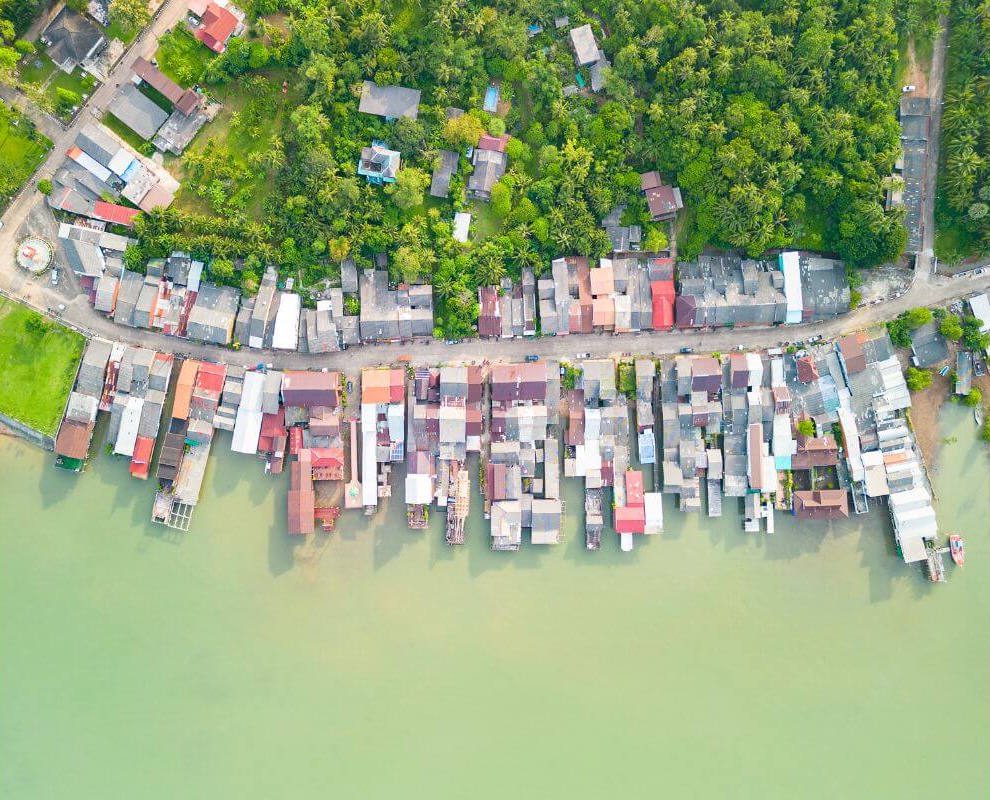
I only ended up on Koh Lanta because someone at a co-working conference in Chiang Mai mentioned a co-working space there. I went out of curiosity and it became one of my favorite places in the south: a long, easygoing island where Muslim, Buddhist and sea gypsy communities live side by side, and the beaches never feel packed.
The best moments were the small ones: riding a scooter through the villages, watching Thai-Malay farmers tending their goats, and sharing a roti at a local market. Add a few yoga studios, vegan cafés and some excellent dive sites offshore, and it’s an island that suits long, slow stays. If you want to see it as part of a bigger trip south, our Southern Thailand itinerary includes it.
Koh Lanta: Quick Information
Location: Krabi Province, on the Andaman Sea in southern Thailand
Getting There: Fly into Krabi, then take a road transfer with the short car ferry, or a passenger boat from Krabi Town or Ao Nang
Known For: A relaxed pace, Old Town, local village life and diving trips to Koh Haa and Hin Daeng
Best Time to Visit: November to April, the dry season
How Long to Stay: 4 to 5 nights
Map of Koh Lanta
12. Koh Mak: A Tiny Island Made for Doing Nothing
Known for: very clear water, quiet beaches, snorkeling and small family-run resorts.
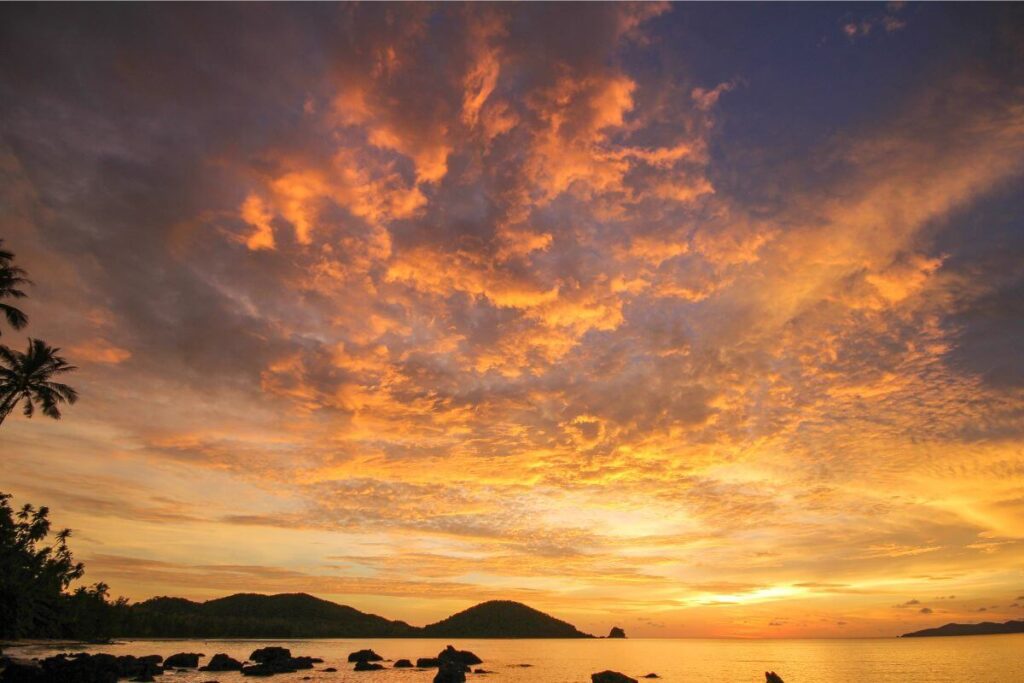
Koh Mak is only about 16 square kilometers, a short boat ride from its much bigger neighbor, Koh Chang. Many of the resorts are run by the children of the island’s original fishing families, and it has stayed low-key and remarkably clean, with no high-rise hotels.
I went on a whim one December and found the clearest water I’ve swum in anywhere in Thailand. There isn’t a long list of things to do, and that’s the point: I snorkeled straight off the beach, read for hours and let the days blend together. It pairs perfectly with Koh Kood, so if you’re heading that way, our Koh Kood itinerary is a good place to start.
Koh Mak: Quick Information
Location: Trat Province, in the eastern Gulf of Thailand
Getting There: Speedboat from Laem Ngop Pier in Trat, about 45 to 60 minutes
Known For: Very clear water, quiet beaches, snorkeling and small family-run resorts
Best Time to Visit: November to April, the dry season
How Long to Stay: 2 to 3 nights, ideally paired with Koh Kood or Koh Chang
Map of Koh Mak
Sustainable Travel Tips
Sustainable travel in Thailand doesn’t need to be complicated. Start by choosing small Eco-lodges and local home stays in places like Nan, Pranburi, and Koh Kood, where your stay directly supports families preserving Thai culture. Whenever possible, use shared transfers or community-run tours to keep your footprint light. Many of these experiences naturally overlap with hidden gems Thailand is known for: places where tourism still feels local, balanced, and community-driven.
This kind of tourism keeps money in local hands rather than routing it back to large resort chains with no real connection to the place, gives families an economic reason to keep traditions like weaving, farming, and craft alive instead of letting them fade out, and takes real pressure off the land, since a homestay or small eco-lodge that depends on clean rivers and healthy forests has every incentive to protect them, while it’s exactly this kind of balance that keeps places like Nan, Pranburi, and Koh Kood from following the same path as destinations that opened too fast and lost what made them worth visiting in the first place.
Learn more about our values and approach to responsible travel on our Sustainable Tourism page.
Conclusion
Thailand is so much more than its famous cities and crowded islands. From the valleys of Nan and Chiang Dao to the quiet coast of Pranburi and Cha-am, the hot springs of Uthai Thani and the slow island life on Koh Kood, Koh Mak and Koh Lanta, the places in this guide show a side of the country most travelers never get to see. These Thailand hidden gems aren’t about ticking off sights. They’re about slowing down, talking to people and letting a place surprise you.
You don’t need to visit all twelve. Pick one or two that match how you like to travel, give yourself more time than you think you need, and leave room for the unplanned detours. Some of my best days in Thailand started with a wrong turn or a five-minute chat with a stranger.
And when you do go, travel lightly: stay in family-run places, eat at local stalls, and leave each place as you found it. That’s how these spots stay special for the next person who finds them.
My verdict: for mountains and culture, start with Nan. For an easy break from Bangkok, go to Cha-am or Pranburi. And for an island that still feels untouched, choose Koh Kood.
Thailand Hidden Gems: All 12 Destinations Mapped
Prefer a quick chat?
Message us directly on WhatsApp
If you already have an idea of your trip, send us a message, and we’ll guide you through the best options for your travel style.
Chat on WhatsAppOr email us at [email protected]
Thailand Hidden Gems Guide: Frequently Asked Questions
What are the absolute best Thailand hidden gems to visit in 2026?
The top Thailand hidden gems for 2026 include the misty peaks of Nan, the serene river life in Uthai Thani, the calm local beaches of Cha-am, the mountainous landscapes of Ratchaburi, and the spectacular waterfalls and hot springs of Kanchanaburi. These Thailand hidden gems offer authentic experiences, pristine nature, and fewer crowds.
Why should I choose a private tour to explore Thailand hidden gems?
A private tour is the best way to navigate Thailand hidden gems because it provides the flexibility to explore off-path locations like Chiang Dao, Hin Dad Hot Springs in Kanchanaburi, or the hot springs of Suan Phueng in Ratchaburi at your own pace. Discovering Thailand hidden gems with a local guide ensures insider access and a more personal experience.
How do I plan a sustainable trip to see Thailand hidden gems?
Traveling sustainably to Thailand hidden gems involves supporting local businesses in places like Cha-am, staying at family-run guesthouses in Ratchaburi, and choosing responsible operators in Kanchanaburi’s nature reserves. Many Thailand hidden gems rely on conscious travelers to help preserve their culture and natural beauty.
Are there any Thailand hidden gems near popular destinations?
Yes, excellent options exist near popular areas. Cha-am is just 30 minutes from Hua Hin, Kanchanaburi is an easy drive from Bangkok, and Ratchaburi lies conveniently on the way south. These Thailand hidden gems serve as perfect alternatives or side trips for travelers seeking authentic experiences without venturing too far.
What makes Thailand hidden gems more authentic than main tourist spots?
What defines Thailand hidden gems is their strong local character and slower pace of life. In places like Cha-am (favored by locals), the quiet mountain areas of Ratchaburi, and the nature-rich province of Kanchanaburi, you’ll experience genuine Thai hospitality, community heritage, and meaningful interactions that mainstream destinations often lack.
About the author
Written by Dee, founder of Off Path Thailand, born and raised in Bangkok. Renting a scooter in Chiang Mai nearly a decade ago changed my life, and I’ve spent the years since exploring Thailand’s quiet, hidden corners and helping others find them too. About the founder
Tell us your dates and vibe. Our team replies within 24 hours to begin crafting your trip.
Leave everything to us and experience Thailand Off The Beaten Path
Every journey leaves a footprint. The difference is in how we choose to travel. At Off Path Thailand, we focus on keeping those footprints light. Discover how sustainable travel in Thailand connects comfort with care.