
The Bangkok vs Chiang Mai comparison is one of the most common decisions travellers face when planning a Thailand trip. This guide settles it.
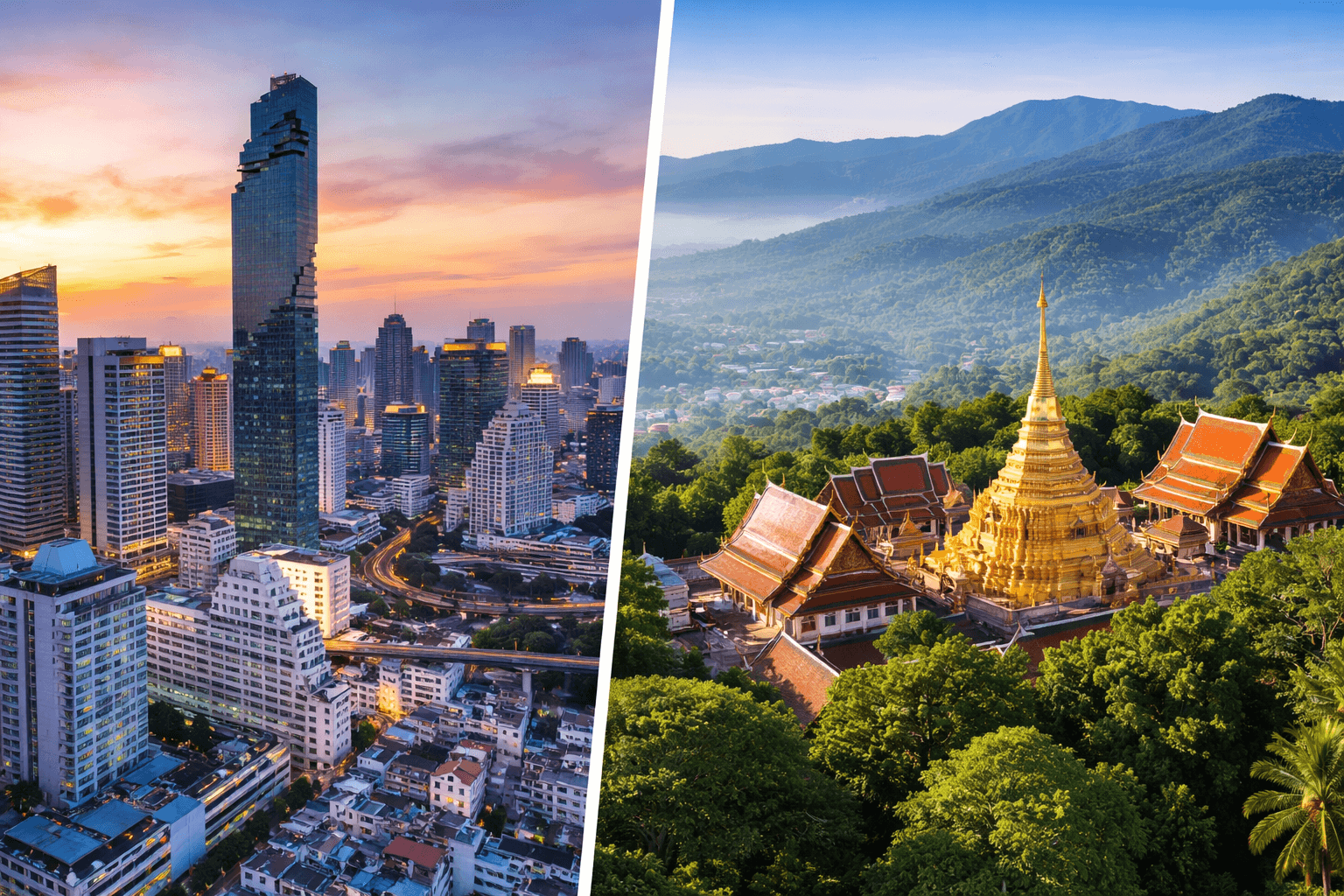
Decision Guide · Updated for 2026
Bangkok vs. Chiang Mai
Two cities, two completely different trips. This Bangkok vs Chiang Mai 2026 guide is built to settle the decision fast — real daily costs, month-by-month air quality, neighbourhood feel, and the exact split most travellers should book in 2026.
Want us to just plan it?
We build complete Thailand trips — Bangkok, Chiang Mai, or a tailored split of both — including private transfers, handpicked stays, and local guidance.
Why Listen to Me?
My Personal Take on Both Cities
Bangkok is my hometown. Even though I don’t live there anymore, it will always be home to me. Every time I plan a trip back to visit my family, I still get that genuine spark of excitement about going home. There is an unmistakable energy to the city, but after spending extended time away, I’ve realized I can only take it in limited doses. As much as I love its food scene and nostalgic corners, the non-stop pace, heavy traffic, and concrete heat get hectic fast.
Over the years, my lifestyle shifted. I fell completely in love with nature, outdoor landscapes, and a more grounded, open environment. This is exactly what drew me to Chiang Mai and northern Thailand.
Chiang Mai offers a completely different rhythm. You get a thriving community centered around holistic wellness, creative entrepreneurship, and digital freedom, all surrounded by mountains, lush greenery, and fresh air. It gives me the peaceful outdoor connection I need every day, while Bangkok remains my favorite place for family reunions, intense city energy, and quick trips down memory lane.
Having grown up in the capital and now calling the north my home, I’ve experienced both cities from the inside out, not just as a tourist passing through.
The Chiang Mai Experience: Slow Living, Mountains, and Mindset
Chiang Mai operates on a completely different frequency than the high-octane pulse of Bangkok or the coastal energy of Phuket. It’s a city where nature isn’t an afterthought. Instead, it’s the seamless backdrop of your daily life. You can be sitting at a café in Nimman or the historic Old City, look up, and see the misty peak of Doi Suthep towering over the trees.
Chiang Mai captured my heart for entirely different reasons. Its community leans heavily into holistic wellness, digital entrepreneurship, and a grounded, creative pace of life set against northern mountain landscapes.
In fact, my entire love for travel and the origin of Off Path Thailand basically started with one pivotal trip to Chiang Mai. I originally went there just to work remotely and, feeling bored one day, decided to rent a scooter for four days. I had no grand plan to venture far beyond the city limits, but the moment I left the main streets behind, I couldn’t stop. Exploring the surrounding valleys, talking with locals along the way, and stumbling upon unexpected waterfalls and hidden hot springs brought me more alive than I had ever felt. What was meant to be a short break turned into four months. When I finally returned to Bangkok, my life had shifted completely. I sold my PS4 and chose to live closer to nature and the quieter corners of Thailand. That single scooter ride is the reason Off Path Thailand exists today.
For anyone seeking a grounded, nature-connected rhythm, Chiang Mai offers something truly rare. Instead of navigating concrete highways, your routine here revolves around scenic mountain rides, bamboo rafting, and forest-bound coffee shops. What really sets it apart is the collaborative, open-minded spirit of the people it attracts, including creatives, digital nomads, and wellness enthusiasts building businesses and focusing on holistic health.
If you thrive in green spaces, value personal wellbeing, and prefer a relaxed community vibe over mega-malls and wild nightlife, Chiang Mai is hard to beat.
The Snapshot
Bangkok vs Chiang Mai, head to head — Bangkok vs Chiang Mai at a glance
Six factors, side by side, to make the Bangkok vs Chiang Mai decision easier. This is the fastest way to compare the two cities. Where one city has a clear edge for most travellers, we’ve marked the win — but “wins” here means typical traveller value, not a universal rule.
The Quick Answer
Bangkok vs Chiang Mai: Bangkok vs Chiang Mai: the quick answer
You want the easiest first landing in Thailand
You’re new to the country, want the widest possible food range, prefer strong public transit, and like a city that genuinely runs all night. Bangkok also suits travellers combining Thailand with other countries — the international connections are unmatched.
You want a slower trip that costs less per day
You’d rather walk everywhere, spend afternoons in cafés instead of traffic, and want mountains, waterfalls, and temples within a 30-minute ride. Chiang Mai suits wellness-focused travel, solo travelers, and anyone who wants genuine cultural depth.
“Most travellers don’t actually face a hard Bangkok vs Chiang Mai decision — they choose the order to see them in.”
The Numbers
Bangkok vs Chiang Mai cost: Bangkok vs Chiang Mai cost: daily spend by category (2026)
These Bangkok vs Chiang Mai cost figures reflect moderate travellers — comfortable guesthouses or 3-star hotels, regular street food and some sit-down meals, and normal local transport. Not backpacker-minimum, not five-star.
Daily spend by category (THB)
Chiang Mai comes in under Bangkok in every category. The biggest gap is accommodation.
| Category | Bangkok (฿/day) | Chiang Mai (฿/day) | Notes |
|---|---|---|---|
| Accommodation | 1,200–2,500 | 700–1,800 | Guesthouses and boutique stays are typically cheaper in Chiang Mai |
| Street Food | 150–300 | 120–250 | Similar overall; see Bangkok street food prices 2026 and Chiang Mai street food prices |
| Transport | 150–300 | 80–200 | See our Bangkok transportation guide for BTS/MRT vs songthaews and Grab in Chiang Mai |
| Activities | 300–800 | 200–600 | Workshops and tours can be cheaper in Chiang Mai |
| Coffee / Casual | 150–300 | 120–250 | Strong café culture in both cities — see also quiet cafés in Bangkok |
| Moderate Daily Total | 2,000–3,500 | 1,300–2,800 | Approx. $70–120 vs. $45–85 |
For a detailed Bangkok-only breakdown: Off the Beaten Path Bangkok Guide and day trips from Bangkok.
The Risk Factor
Bangkok vs Chiang Mai air quality, month by month
This is the single biggest seasonal variable between the two cities. Bangkok’s air quality is fairly steady — occasionally poor, rarely severe. Chiang Mai swings from some of the cleanest air in the country to genuinely hazardous within a matter of weeks.
Typical monthly AQI (US AQI scale)
Above 150 is “unhealthy” for general groups. Chiang Mai’s burning season (Feb–Apr) regularly crosses into the red and even purple zones.
Burning season reality (February–April)
Slash-and-burn agriculture across the region, combined with Chiang Mai’s mountain-valley geography, traps smoke close to the ground. Bangkok experiences pollution too, but it’s more diluted — Chiang Mai’s numbers swing far higher and far faster. If you’re sensitive to smoke, asthmatic, travelling with small children, or simply want clear mountain views, this is the window to avoid for Chiang Mai specifically. Check IQAir Chiang Mai before confirming dates.
For more on the wetter half of the calendar: Chiang Mai Rainy Season Guide.
Getting Between Them
Bangkok to Chiang Mai: Bangkok to Chiang Mai: travel time and options
| Option | Typical Time | Why choose it |
|---|---|---|
| Flight | ~1 hour (plus airport time) | Fastest and easiest for a split itinerary — often the best value when booked ahead |
| Overnight train | ~10–12 hours | Efficient “travel while sleeping” option — scenic and comfortable in 1st class |
| Bus | ~9–11 hours | Cheaper, but less comfortable for most travellers |
Flights between the two run frequently and rarely cost more than a nice dinner. For most 10–14 day trips, flying is the better trade than spending half a day each way on the bus.
Timing It Right
Bangkok vs Chiang Mai weather: Bangkok vs Chiang Mai weather: seasonal comparison
| Factor | Bangkok | Chiang Mai |
|---|---|---|
| Cool Season | Nov–Feb (best overall) | Nov–Feb (best overall) |
| Hot Season | Mar–May (humid heat) | Mar–May (very hot + smoke risk) |
| Rainy Season | Jun–Oct (short heavy storms) | Jun–Oct (lush landscapes) |
| Crowds | More consistent year-round | More concentrated in cool season |
| Air Quality | Urban pollution, fluctuates | Can spike heavily during burning season |
For the full seasonal picture across all of Thailand: Best Time to Visit Thailand 2026 and best time to visit Thailand’s hidden gems.
Where To Actually Stay
Bangkok vs Chiang Mai neighbourhoods: where to actually stay
When weighing Bangkok vs Chiang Mai, neighbourhood matters — “Bangkok” and “Chiang Mai” are not single experiences — where you base yourself changes the trip more than the city choice itself.

Sukhumvit
The default for first-timers, easy BTS access, malls, condos, dense restaurant scene. Convenient but can feel corporate and characterless after a few days.
Old Town / Rattanakosin
Where the temples and the Grand Palace are. Atmospheric and walkable, but touristy and short on great food options after dark.
Thonburi (west bank)
Across the river, fewer tourists, real neighbourhood feel, canal life still visible. The trade-off is more travel time to the main sights. For quieter Bangkok corners like this one, see our off the beaten path Bangkok guide.
Old City
Inside the moat walls — temples on every block, easiest to walk, but the most touristy and noisiest at night during high season.
Nimmanhaemin
The café-and-design district. Best coffee scene in the country, popular with long-stay digital nomads, a 10-minute ride from the Old City.
Riverside / Charoenrat
Quieter, slower, restaurants along the Ping River. Less walkable to the Old City but the calmest base if you want distance from crowds. Our Chiang Mai hidden gems guide covers this area well.
Explore on the map
Use these maps to get a feel for the neighbourhoods mentioned above.
Bangkok neighbourhoods map
Chiang Mai neighbourhoods map
By Traveller Type
Bangkok vs Chiang Mai Bangkok vs Chiang Mai by traveller type
A Bangkok vs Chiang Mai relative fit score for common traveller profiles — longer bar means the better fit, not an absolute ranking of the city itself.
For deeper guidance by travel style: cultural · wellness · romantic · adventure · solo · group
The Case For Bangkok
When Bangkok wins
- Food diversity (regional Thai + international) — see Bangkok’s best vegan restaurants and quiet cafés in Bangkok
- Public transit is genuinely excellent, see our full Bangkok transportation guide for how to combine BTS, MRT, canal boats, and buses like a local
- Neighbourhood range and day trip options — see our Bangkok walking routes and off the beaten path Bangkok guide
- Rooftops, late-night city energy, and genuine 24/7 convenience
- Better international flight connectivity if Thailand is one stop on a longer trip
- More healthcare infrastructure and English-speaking medical options
Official sources: TAT Bangkok · Visit Bangkok
The Case For Chiang Mai
When Chiang Mai wins
- Slower pace and smaller, more human scale
- Lower accommodation costs — typically 30–40% cheaper than equivalent Bangkok stays
- Easy access to nature, viewpoints, and mountains within 20–40 minutes
- Café culture and slow days — see best cafés in Chiang Mai 2026
- Established digital nomad infrastructure — coworking spaces, fast Wi-Fi, long-stay apartments
- Stronger sense of place — Lanna culture, temples, and traditions are part of daily life, not a backdrop
- Gateway to northern Thailand destinations like Chiang Dao and Nan Province
For a full northern Thailand plan: Northern Thailand Itinerary.
The Practical Plan
The ideal Bangkok vs Chiang Mai: the ideal 10–14 day split
- Days 1–5: Bangkok — temples, markets, food neighbourhoods, one rooftop night, one day trip
- Days 6–10: Chiang Mai — Old City, viewpoints, cafés, one nature day, one overnight to Chiang Dao
- Optional Days 11–14: Extend north to Nan Province or head south for beaches
This order works better than the reverse for most travellers — Bangkok’s energy is a strong opener, and Chiang Mai’s slower pace makes a natural wind-down before flying home.
Bottom Line
Bangkok vs Chiang Mai: bottom-line summary
However you’ve been approaching the Bangkok vs Chiang Mai question so far, this table is the fastest way to land the decision.
| If you care most about… | Choose | Why |
|---|---|---|
| First-time ease + transit + variety | Bangkok | Infrastructure and density reduce planning friction |
| Lower daily costs + slower pace | Chiang Mai | Cheaper stays, shorter distances, calmer days |
| Best conditions for both | Nov–Feb | Cooler, clearer, less seasonal risk in both cities |
| Avoiding smoke risk | Avoid Chiang Mai Feb–Apr | Burning season can push AQI to unhealthy or hazardous levels |
| Nature, mountains, slow travel | Chiang Mai | Mountains within 30 min; gateway to Nan, Chiang Dao, and beyond |
Also worth reading: Chiang Mai vs Phuket 2026 · Bangkok vs Phuket · How Off Path Thailand works

I have lived in both cities — here is what the comparison actually feels like
I was born in Thailand and spent my twenties moving between Bangkok and the islands. In my early thirties I moved to Chiang Mai to work remotely, rented a motorbike, and started exploring places I had no map for. That shift — from Bangkok’s density to Chiang Mai’s mountains and quiet roads — is one I’ve now watched hundreds of travellers experience. The ones who go straight to Chiang Mai without Bangkok often feel they’ve missed something foundational. The ones who never leave Bangkok often don’t realise what the north offers.
I’m second generation Thai and I genuinely cannot stand a place if it isn’t authentic. Everything I write about on this site is somewhere I have personally spent time — both Bangkok and Chiang Mai many times over, across different seasons, different moods, and different versions of what I was looking for from each city.
Dee Founder, Off Path Thailand · Read the full story →Ready to plan your Thailand trip?
Whether your Bangkok vs Chiang Mai decision is already made or still open, tell us which city you’re leaning toward — or both — and we’ll build a private itinerary around your pace, your interests, and your travel dates.
Responsible travel matters. See our guide: Sustainable Tourism in Thailand.
Common Questions
FAQ: Bangkok vs Chiang Mai 2026
Discovering
Northern Thailand
Prefer a quick chat?
Message us directly on WhatsApp
If you already have an idea of your trip, send us a message — we’ll guide you through the best options for your travel style.
Chat on WhatsApp
About the author
Written by Dee, Thai-born founder of Off Path Thailand. This article is based on places I return to routinely across Bangkok, shaped by daily life rather than one-off sightseeing. About the founder
Tell us your dates and travel style. We reply within 24 hours to begin shaping your trip.
Experience Thailand off the beaten path with a calm, private plan
Every journey leaves a footprint. The difference is in how we choose to travel. At Off Path Thailand, we focus on keeping those footprints light. Discover how sustainable travel in Thailand connects comfort with care.