
Last Updated: September 13, 2026
Chiang Mai Walking Routes: A Self-Guided Tour Through the Old City
TL;DR: Six years, hundreds of walks, every season. These four self-guided Chiang Mai walking routes are the ones I personally use — built for people who want to experience the Old City properly, not tick off a highlights list.
They’re designed for independent travelers who enjoy going at their own pace. You’ll find unique residential streets, lesser-known temples, local cafés, and corners most group tours never touch.
However, if you’d prefer a more personal experience, we can also arrange a knowledgeable English-speaking guide to accompany you on any of these routes.
Each route includes a Google Maps reference, timing suggestions, and honest practical notes from myself who actually lives here for a few months every year.
While planning your days, consider hiring a Chiang Mai private tour guide and driver to make the most of your time and discover hidden gems off the usual tourist route.
For first-timers heading to Northern Thailand for a custom trip, understanding private guide pricing is important. Our Private Guide Cost Guide for Northern Thailand gives you clear, honest numbers.
- Chiang Mai Walking Routes: A Self-Guided Tour Through the Old City
- Why I wrote this guide
- Why Self-Guided Chiang Mai Walking Routes Are the Best Way to Experience the Old City
- Essential Tips Before You Walk the Old City
- Route 1:
- Route 2:
- Route 3:
- Route 4:
- Best Places to Rest, Eat & Drink Along the Routes
- Practical Information & Safety
- Final Thoughts
- FAQ (Chiang Mai Walking Routes 2026)
- What are the best Chiang Mai walking routes in the Old City?
- Can you explore Chiang Mai walking routes without a guide?
- How long do Chiang Mai walking routes usually take?
- When is the best time to do Chiang Mai walking routes?
- Are Chiang Mai walking routes safe for solo travelers?
- What should I bring for Chiang Mai walking routes?
- What to be careful of in Chiang Mai?
- What are some hidden gems to explore in Chiang Mai that are off the beaten path?
- How long does it take to walk the Monks Trail in Chiang Mai?
- Can you walk around Chiang Mai?
- Leave everything to us and experience Thailand Off The Beaten Path
Why I wrote this guide
I’ve been coming back to Chiang Mai for years now. A couple of times for conferences, a stretch working remotely out of its cafes, and one longer chapter where I actually lived and worked here as a marketing executive for an import furniture company. Across all of those visits, one habit has stayed constant: I walk. Everywhere.
Even back where I was born, in Bangkok, walking was always my go-to way to get around, whether at home or traveling abroad. There’s something about being on foot that public transport and driving simply can’t replicate, you can stop the moment something catches your eye, turn down a random alley on a whim, and follow your curiosity and intuition in real time.
It also clears your head in a way that scrolling through a map or sitting in traffic never does. And on a purely practical level, walking after a big Northern Thai meal is basically a requirement to avoid bloating.
So naturally, during my many stints living in or visiting Chiang Mai, I ended up spending most of my time on foot — and a lot of what I found during those walks has stuck with me. There are places I discovered years ago that I still make a point of visiting every single time I’m back.
The old city, in particular, is built for this kind of exploration. It’s compact, walkable, and layered with detail if you’re paying attention. You’ll stumble across smoothie shops tucked into corners you’d never find on a map, rooftop bars with unmarked back entrances, and quiet, mostly-empty temples with dedicated meditation areas that I’ve genuinely used, not photographed.
Walking also opens the door to small human moments: I tend to smile and nod at people as I pass, and more often than not, that little bit of openness leads to a conversation or a recommendation I wouldn’t have gotten otherwise.
That’s really the heart of why walking is, in my opinion, one of the best ways to experience Chiang Mai especially the old city. You’ll still come across the famous, well-photographed spots eventually, but stumbling onto them yourself, without having read about them first, hits differently. It feels less like ticking a box and more like the city let you in on a secret.
This guide is built from that mindset. It’s not meant to be followed step-by-step like a rigid itinerary — think of it more as a loose framework. Use it as a starting point, feel free to wander off it whenever something catches your attention, and trust that it’s safe to do so. Everything in here comes from routes I’ve actually walked, more than once, over several years of coming back to this city.
Why Self-Guided Chiang Mai Walking Routes Are the Best Way to Experience the Old City
Most visitors join group walking tours that move quickly from one famous temple to another. While convenient, these tours often miss the authenticity of Chiang Mai in the Old City.
I’ve lived in Chiang Mai long enough to know that the city reveals itself differently when you walk at your own pace. You stop for a coffee when you feel like it, sit on a bench by the moat and watch monks pass by, wander down a quiet soi lined with old wooden traditional houses, or simply stand still and absorb the atmosphere. You dictate the pace. You create the moments that matter.
In 2026, as visitor numbers continuing to rise, self-guided walking has become my preferred way to experience the Old City. Instead of following crowds, you can visit places at golden hour, avoid the midday heat, and discover small details that make Chiang Mai feel personal rather than performative.
If you’re planning your time more broadly, this also ties in well with a 3 day Chiang Mai itinerary, where walking routes like this naturally fit into a slower, well-paced itinerary.
If you’re planning around the rainy season, be sure to check out our Chiang Mai Rainy Season Guide — you might be surprised to discover why this is actually one of the best times to visit Chiang Mai, even though many travelers worry it might ruin their trip.
That said, if you want a deeper understanding of what you’re seeing — the history behind the temples, the meaning of small details you might otherwise pass by, or simply a more effortless experience — we offer private guided walks. It’s a slower, more thoughtful alternative to group tours, where you still move at your own pace but gain context along the way, and you get to choose where to go if you like.
This guide shares four routes I’ve enjoyed refining over time — from relaxed loops to quieter paths — with maps and honest insights so you can walk Chiang Mai like a curious new local, not a tourist.
For days when you want to go further than the routes in this guide can take you, our Chiang Mai private guide and driver guide is a natural next step for exploring the wider region. Also check out our page to better understand why a Luxury Tour in Chiang Mai beats that of larger tour groups or even deciding to explore the region by yourself.
Chiang Mai old town walking tour map
Essential Tips Before You Walk the Old City
I’ve made almost every wrong turn possible while walking the Old City over the past 10 years, so here are the practical things I wish I knew earlier:
Practical tips at a glance
Best time to go: Early morning (7–10am) and late afternoon into sunset (4:30–7pm) are by far the best times. The light is beautiful, it’s cooler, and the atmosphere feels more local. Midday heat can be draining, especially if you’re coming from a cooler country and not used to it.
Dress simply and respectfully: Shoulders and knees should be covered when entering temples. I usually wear lightweight trousers and a t-shirt. Comfortable shoes that slip on and off easily are essential. You’ll be removing them frequently.
Don’t over-rely on Google Maps: The Old City is a neat grid. Use the map as a loose guide. My favorite moments have happened when I stepped slightly off route and followed my curiosity.
Stay hydrated: Even in the cooler months, walking here adds up. I always carry a small bottle and refill it at small cafes along the way. You’ll often come across great spots without planning, but if you prefer curated ones, see best cafes in Chiang Mai.
Walk slowly on purpose: This isn’t about covering ground or winning a race. If something catches your eye, a small shrine, a quiet bookstore, or an interesting house, stop and take it in. The Old City rewards presence more than speed.
Respect residential areas: Most streets are still lived in. Keep your voice low, especially in the morning, and be mindful when taking photos of people’s homes.
Traveling with family or a small group? Opting for Northern Thailand private tours gives you full flexibility over your daily schedule.
Route 1:
Classic Old City Loop (2.5–3 hours)
This is the route I usually recommend first to people visiting Chiang Mai. It gives a good balance of well-known landmarks and quieter local streets, without feeling too rushed or touristy.
Route at a glance
Route 1: Classic Old City Loop (2.5–3 hours)
- Start: Wat Phra Singh
- Via: Smaller sois east of Wat Phra Singh → Wat Chedi Luang
- Duration: 2.5–3 hours with stops
- Difficulty: Easy
- Best time: Early morning (start before 8:30am) or late afternoon
- Type: Classic loop balancing landmarks and quieter local streets
- Feel: Well-known temples mixed with genuine neighborhood stretches
- Best for: First-time visitors who want a balanced introduction to the Old City
- How it works: Begin at Wat Phra Singh, explore the quieter outer grounds, then head east through smaller sois toward Wat Chedi Luang instead of staying only on the main roads
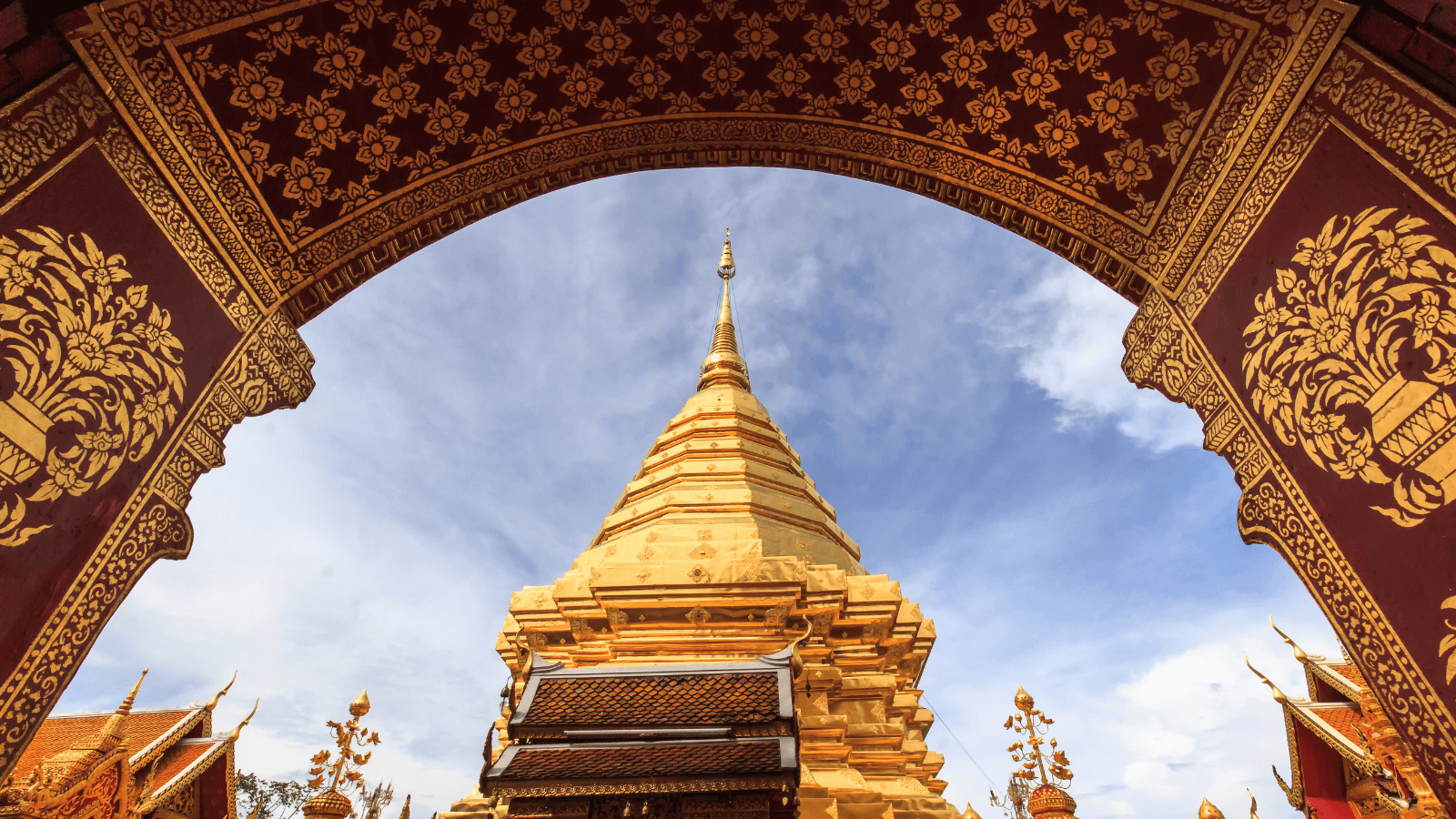
Begin at Wat Phra Singh, one of the most important temples in the Old City. I prefer arriving early when the morning light is soft and there are fewer visitors. Take your time walking around the back areas and smaller shrines — the main hall gets busy, but the outer grounds often stay peaceful and interesting. This is also one of the temples where members of the royal family are known to visit when in Chiang Mai.
From Wat Phra Singh, head east through the smaller sois (lanes) instead of staying on the main roads. This stretch is where the Old City starts to feel more genuine. You’ll pass some old shops, small family townhouses, and tiny local eateries where residents actually grab food from. If you want a broader food overview later, see authentic Chiang Mai restaurants.
Continue toward Wat Chedi Luang. This is a larger and more visited temple, but still worth experiencing. Instead of rushing through the main chedi, I like walking around the perimeter and meditating for a while in one of the quieter shaded corners. The scale of the temple is impressive, but the real feeling comes from observing the energy around it.
After leaving Wat Chedi Luang, try avoiding the main street and weave through the sub-lanes again. This is often where small surprises happen — a beautiful courtyard, a street vendor selling fresh coconut water, or just a quiet area under a big tree.
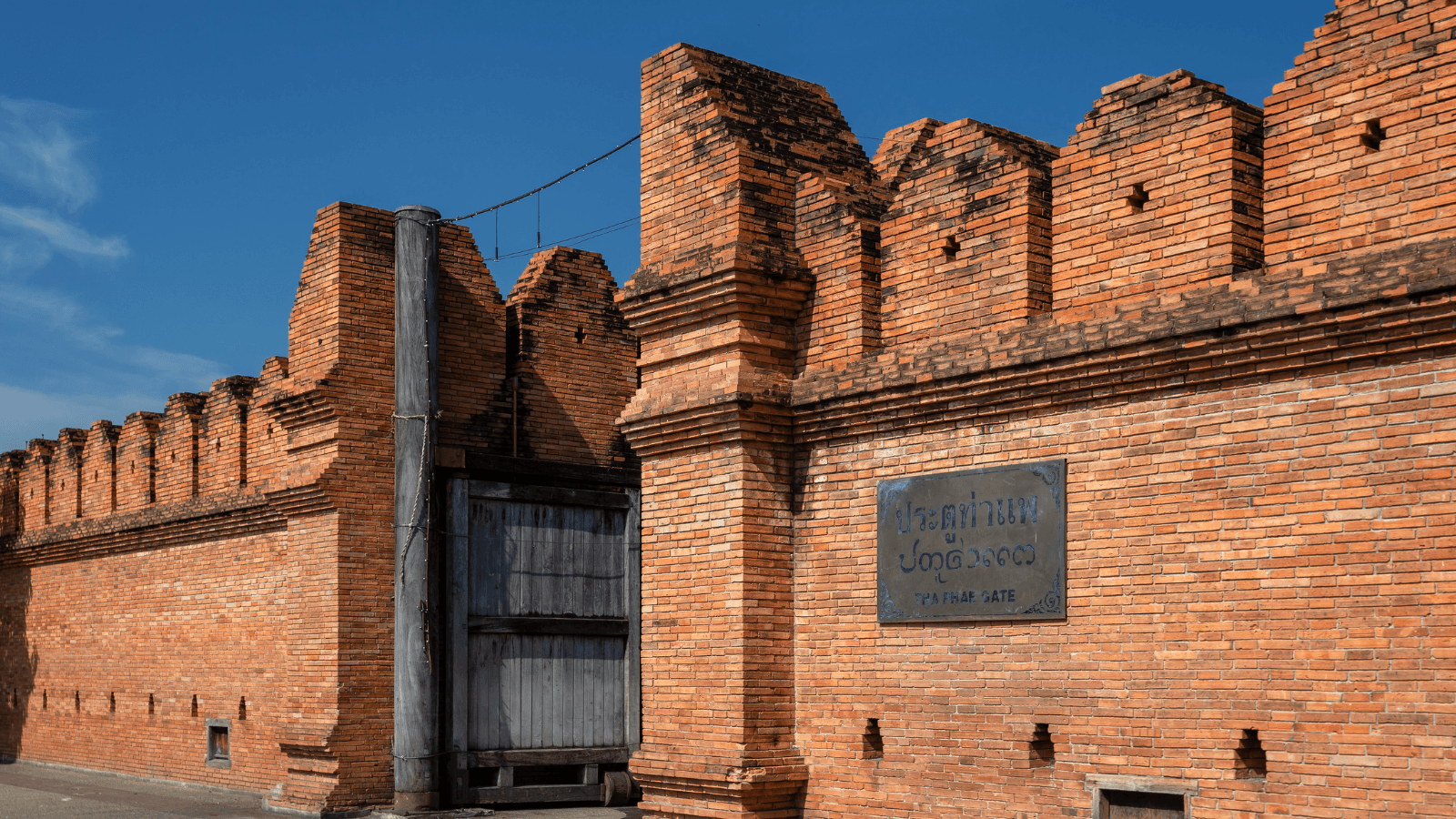
The route naturally leads you toward Tha Phae Gate. This area naturally is more open and energetic, so I usually treat it as the end point. If you want to keep the walk calmer, you can turn back into the smaller streets before reaching the gate and loop back toward the center.
Optional Extension:
Instead of finishing at Tha Phae Gate, continue north through quieter narrow lanes and make your way back. This keeps the experience more peaceful and authentic until the end.
Route 2:
Chiang Mai Walking Routes – Eastern (Old City – Local Life 2–2.5 hours)
While many visitors focus on the central and western parts of the Old City, I’ve grown to really enjoy the eastern side. It feels more residential and lived-in, with a slower, more authentic rhythm that most tourists rarely experience.
If you’re trying to get your bearings, the Old City is essentially a square on the map. The eastern side is simply the right-hand side of that square, while the western side sits on the left, closer to the mountains.
This route is my go-to when I want to step away from the famous temples and experience how locals actually live in the Old City.
Route at a glance
Route 2: Eastern Old City – Local Life Walk (2–2.5 hours)
- Start: Near Wat Phan Tao
- Area: Eastern side of the Old City (the right-hand side of the square on the map)
- Duration: 2–2.5 hours
- Difficulty: Easy
- Best time: Morning (before 10:30am) or late afternoon
- Type: Residential side-street wander
- Feel: More local, lived-in, and slower than the central temple circuit
- Best for: Everyday Chiang Mai life, quiet lanes, families, traditional houses
- How it works: Start near Wat Phan Tao, then move one or two blocks off the busier roads into the narrower parallel lanes on the eastern side
Instead of heading toward the main landmarks, this route deliberately draws you into a more local, lived-in side of the eastern Old City. From the start, move one or two blocks away from the busier roads into the narrow parallel lanes.
This part of the Old City feels noticeably more welcoming. You’ll walk past:
Families sitting outside their homes
Laundry hanging between traditional houses
Small playgrounds where local children play
Tiny temples that serve the surrounding neighborhood rather than tourists
The atmosphere here is different from the central tourist zone. There’s less pressure to “see” things and more opportunity to simply observe daily life. You might see a grandmother cooking outside, monks walking quietly for alms, or someone fixing a bicycle in a narrow alley.
This route has fewer big-name temples. Instead, you’ll pass many modest, local temples that feel like true community spaces. These are often empty or have just one or two people inside — perfect for sitting quietly for a few minutes without crowds.
My personal tip for this route:
Walk slowly and stay curious. Especially if a small lane looks interesting, take it. Some of the most rewarding parts of this walk are the unplanned turns. The eastern side rewards people who are willing to wander without a rigid plan.
As you approach the eastern moat, the streets open up slightly. You can walk alongside the water for a calm finish, but the real character of this route is everything that comes before — the quiet, everyday side of Chiang Mai that most visitors never see.

Route 3:
Western Moat Hidden Gems Walk (2–2.5 hours)
Of all the routes in this guide, the western side of the Old City is the one I personally enjoy the most when I want peace and a slower pace. It’s noticeably quieter than the eastern and central areas, with fewer tourists and a more reflective atmosphere.
Route at a glance
Route 3: Western Moat Hidden Gems Walk (2–2.5 hours)
- Start: Western side of the Old City
- Route type: Loose loop — start on the western edge, move inward, then loop back
- Duration: 2–2.5 hours
- Difficulty: Easy
- Best time: Early morning or late afternoon (especially before sunset)
- Feel: Quieter, more reflective, fewer tourists than the eastern and central Old City
- Best for: Slow walks, local residential streets, ancient temples, everyday Chiang Mai atmosphere
- How it works: Start on the western moat edge, stroll inward through calmer neighborhoods and temple grounds, then loop back at an easy pace
Start on the western edge and gradually move inward (middle of square) before looping back. This route is less linear than the others — it’s designed for gentle strolling.
The western side has a different character. The streets feel wider and calmer. You’ll pass a different type of residential neighborhoods, small family-run shophouses, and temples that have been standing for over a century. Because this area is slightly further from Tha Phae Gate, it naturally filters out large tour groups.
What makes this route special:
Different types of local residential life
Ancient temple grounds
Better light for photography in the late afternoon
A stronger sense of “everyday real Chiang Mai”
As you walk closer to the western moat, the environment becomes even more peaceful. The water, trees, and open space create a nice contrast to the denser central area. I often end this route by sitting near the moat for a while — it’s one of the most relaxing spots in the Old City.
My personal tip:
Don’t rush this route. The western side rewards patience. If a small street or temple looks interesting, take the detour. The most rewarding experiences here are always the ones you didn’t plan.
Route 4:
Sunset & Evening Old City Walk (1.5–2 hours)
This is the route I recommend most often to people who want to experience the Old City at its most atmospheric. As the day cools and the light softens, Chiang Mai takes on a completely different feeling — gentler, slower, and more intimate.
Route at a glance
Sunset & Evening Old City Walk (1.5–2 hours)
- Start: Central Old City Walking Street
- Via: Wat Phra Singh toward Tha Phae Gate
- Duration: 1.5–2 hours
- Difficulty: Easy
- Best time: Start around 4:30–5:00pm (adjust to sunset)
- Type: Flexible evening wander through the Old City
- Feel: Softer light, slower pace, more intimate Old City atmosphere
- Best for: Sunset walks, first evenings in Chiang Mai, ending with dinner or a quiet drink
- How it works: Begin near Wat Phra Singh or the walking street, then wander toward Tha Phae Gate or a dinner spot as the light changes
Unlike the daytime routes, this walk is less and more about enjoying the changing mood of the Old City as evening approaches.
Begin this walk in the late afternoon while there’s still soft light. As the day transitions, the atmosphere shifts — the streets feel more relaxed, shadows stretch across the lanes, and a gentle evening rhythm starts to take over. You’ll pass small, everyday scenes as the area prepares for the night, with subtle changes in pace, temperature, and energy that make this time of day especially rewarding to explore.
What makes this route special:
The beautiful soft light on the architecture
A more social but still relaxed atmosphere
Fewer tourist
The chance to end your walk naturally with dinner or a quiet drink
I often start this route near Wat Phra Singh or where the walking street is, then let myself wander somewhat freely, moving generally toward Tha Phae Gate or a chosen dinner spot. Some of my best memories in Chiang Mai have happened during these evening walks — sitting on the steps of a temple watching the sky change color, or finding a small street stall with excellent khao soi as lights start coming on.
My honest advice:
Don’t try to pack too much into this walk. The goal is not distance, but presence. Let yourself stop often. Watch the sky. Notice how the energy of the Old City shifts from day to night. This route works best when you allow it to feel unstructured.
Suggested endings:
A quiet café or restaurant near Tha Phae Gate
A casual dinner spot in the smaller streets
Simply sitting by the moat as the city lights begin to glow
This walk is a beautiful way to end a full day in Chiang Mai — or to begin your evening slowly and intentionally.
Best Places to Rest, Eat & Drink Along the Routes
I’ve walked these routes many times, and over the years like I’ve mentioned earlier, I found that the best stops are rarely the popular ones shown on most maps. The real pleasure comes from the small, unassuming places that most tourists walk straight past. My advice would be to ditch Google Maps and rely on intuition.
Here are my personal recommendations for quieter, more local spots that fit the spirit of these self-guided walks:
For a Quiet Pause or Coffee:
Some of my favorite coffee stops aren’t cafés you’d ever find by searching online. They’re tiny shophouse spots with just 4 to 6 tables, a single ceiling fan doing all the work, and a small, loyal crowd of regulars who clearly come back every day. These places are almost always family-run, often for years or even generations, and they tend to serve better coffee and offer a far calmer atmosphere than the larger, more polished cafés clustered near the main temples.
There’s something quietly satisfying about sitting in one of these spots. No queue, no rush, no background music curated for ambiance. Just the sound of the fan, the occasional motorbike passing outside, and a coffee made by someone who’s been making it the same way for a long time. Choosing these cafés over the bigger, more Instagram-friendly ones isn’t just about a better cup of coffee either. It’s a small but meaningful way of supporting independent, local businesses directly rather than larger operations built primarily around tourism. In many ways, it’s one of the simplest ways to practice sustainable tourism while walking around Chiang Mai.
On the western and eastern routes especially, I find myself repeatedly drawn to small, no-name places tucked into residential streets, the kind with no signage, no branding, and nothing that would catch your eye from a distance. They don’t look like much, and that’s exactly the point. Sitting outside one of these places with a coffee, watching daily life quietly unfold around you, motorbikes, kids walking home from school, neighbors chatting across the street, is often one of the most memorable parts of the entire walk.
These stops are a good reminder that not every great find needs to be dressed up or discovered through a review. Sometimes the most rewarding coffee break is the one you almost walked past.
If you prefer a curated list as well, see best cafes in Chiang Mai.
For Something Light to Eat:
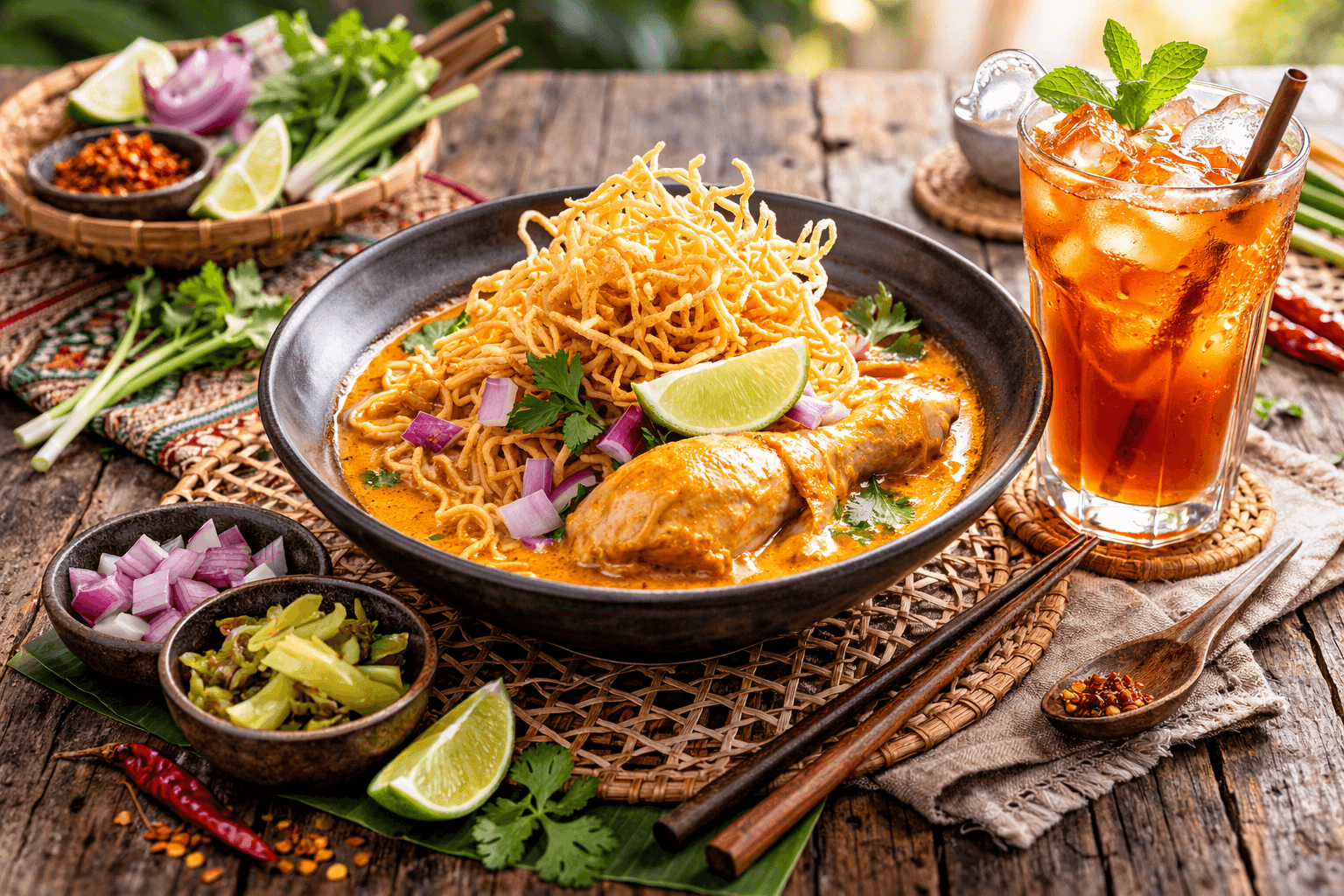
Street vendors and small family-run stalls are, without question, your best friends on these walking routes. Some of my favorite meals in Chiang Mai weren’t at restaurants at all. They were bowls of khao soi ladled out from a cart on a quiet soi, skewers of grilled meat cooked over charcoal on a corner, or a bag of freshly cut fruit handed over by someone who’s been selling from the same spot for years.
What makes these places special is that they’re never fixed. A vendor who’s there on Tuesday might not be there on Thursday. The stall selling grilled pork skewers this week might be replaced by someone selling som tam next month. This constant, quiet rotation is part of what makes street food here feel so much more authentic than a restaurant with a printed menu and a permanent sign. You’re not eating from a business built for tourists. You’re eating what the neighborhood happens to be eating that day.
I’ve learned to actively seek out the sections of these routes where you see mostly locals eating: a handful of plastic tables, a couple of motorbikes parked nearby, maybe no menu at all, just point-and-order. These are almost always the spots worth stopping at, even if you don’t know exactly what you’re ordering.
One tip that’s served me well: avoid the busy stretches near Tha Phae Gate during peak walking hours. That area tends to cater heavily to tourists, which means higher prices and food that’s been adjusted to suit a broader, less local palate. As a general rule, the further you walk from the main gates and the more you head into the quieter side streets, the more likely you are to stumble onto genuine local food, made the way it’s meant to be, at prices locals themselves are paying.
So don’t just walk past these small stalls on your way to somewhere else. Slow down, follow your nose a little, and let the food you find along the way become part of the walking experience itself, not just a stop you make in between sights.
For more local food experiences, see authentic Chiang Mai restaurants and Chiang Mai market guide.
For a Longer Break:
Walking for hours through the Old City is rewarding, but knowing when to pause is just as important as knowing where to walk. Some of my favorite rest spots aren’t cafés or restaurants at all. They’re the small, less famous courtyards and quiet temple grounds tucked between the busier streets, the kind of places most visitors walk straight past because there’s no sign pointing them in.
My routine is simple. I grab a bottle of coconut water from a nearby stall, find a shaded spot on a temple bench or a quiet corner of a courtyard, and just sit for 20 to 30 minutes. No itinerary, no rush to get to the next stop. Just enough time to let your legs rest, let the heat ease off, and let the noise of the street fade into the background.
These pauses do more than just recharge you physically. They give you a moment to actually absorb where you are, rather than just passing through it. You start noticing small details you’d otherwise miss while walking: the sound of wind chimes on a temple roof, an elderly monk sweeping leaves in silence, the way light filters through the trees in a courtyard at a certain time of day. It’s a different kind of experience than checking off landmarks.
Interestingly, when people look back on their time in the Old City, it’s rarely the busy, well-photographed spots they mention first. More often, it’s these quiet in-between moments, the ones with no name and no map pin, that stick with them the most.
So build in these pauses deliberately. Don’t treat rest stops as an afterthought or something you do only when you’re tired. Treat them as part of the walk itself. A slower pace, a quiet courtyard, and a bit of stillness can turn an ordinary walking route into something that actually stays with you.
General Off Path Philosophy on This Walk:
Some of my best meals and rest stops in Chiang Mai were never planned. I didn’t find them on a list, and I definitely didn’t find them by following a queue of tourists. They were places I stumbled onto simply by walking and paying attention.
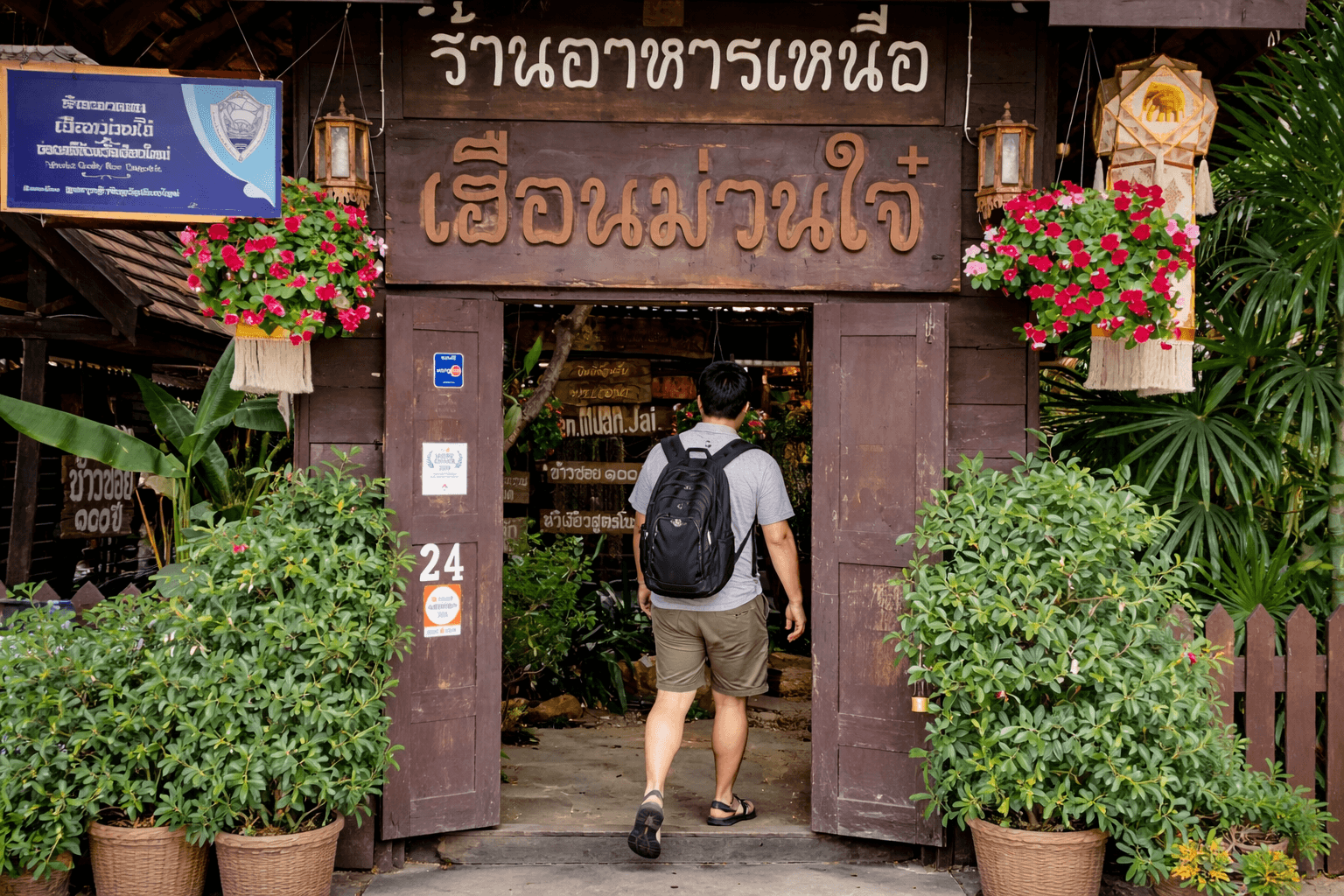
Over time, I’ve developed a rough instinct for this. If a place looks too polished, too curated, or has a cluster of foreign tourists standing outside with their phones out, I usually keep walking. That’s not a knock on those spots. It just means the search isn’t over yet. The places that tend to reward you are the ones that don’t try too hard: a few plastic stools on a corner, a hand-painted sign that’s faded from the sun, mostly local faces at the tables. Those are usually the ones worth stopping for.
There’s a kind of quiet confidence you build after enough of these walks. You stop needing a place to be validated by reviews or foot traffic before you trust it. Instead, you learn to read a street the way a local might: which stall has a line of motorbikes parked outside at lunchtime, which noodle shop has the same three regulars every time you pass, which quiet café has just enough chairs and just enough shade to make you want to sit down.
None of this is about avoiding popular places entirely. Some famous spots are famous for a reason. It’s more about not letting popularity be the only signal you follow. The unpolished, slightly worn-looking places, the ones that clearly aren’t performing for anyone, are often where the food is better, the prices are fairer, and the atmosphere feels real rather than staged.
This is really the philosophy behind the whole guide. Walking gives you the freedom to notice these places in the first place, but trusting your instincts is what turns that walk into something more than sightseeing. It’s what takes you from simply seeing Chiang Mai to actually experiencing it, one small, self-discovered stop at a time.
Practical Information & Safety
Here’s what I’ve learned that actually matters when exploring the Old City independently.
Good to know before you walk
Can you combine routes?
Yes, but don’t try to do everything in one day. The Old City is compact, so combining part of Route 1 with Route 3, or Route 2 with Route 4 works easily. I usually recommend choosing two routes maximum per day so you can actually enjoy them rather than rush through like a chore.
Is it safe to walk alone?
In my experience, Chiang Mai Old City is extremely safe for solo walking, even in the evening. I’ve walked all these routes many times, including after dark, without issues. Still, use normal common sense.
Navigation tips:
Don’t over-rely on Google Maps. The Old City’s grid layout is very forgiving. If you feel lost, simply walk toward the moat. It forms a clear square boundary. Once you reach the moat, it’s easy to reorient yourself. The best moments often happen when you allow yourself to wander slightly off the planned route.
Heat & weather:
Even in the cooler months, afternoon walking can get hot. Start early or late in the day. Carry water and refill often. There are 7-Elevens and small shops on almost every route. During the hot season (March–May), I sometimes cut walks short and save the rest for another morning.
Rainy season:
Afternoon showers are common from June to October. Buy an umbrella if you can. If it rains, most small cafés are happy for you to sit and wait it out. The streets can get slippery, so slow down and wear shoes with decent grip.
Temple etiquette:
Shoulders and knees should be covered when entering temple buildings. Shoes come off at the entrance. Move calmly and avoid walking directly in front of people praying. These small gestures of respect go a long way and are appreciated by locals.
What to bring:
Comfortable shoes that are easy to slip on and off, a small daypack or cross-body bag, water bottle, power bank (if using your phone for maps), and a light scarf or sarong for temple visits.
The Old City is very walkable, but the real key is pacing yourself. This isn’t a race. It’s about giving yourself permission to slow down and actually experience the place.
Final Thoughts
Most people experience the Old City through a fixed route — ticking off temples, following a guide, moving on quickly. It works, but it rarely leaves much room for the moments in between.
Over time, I’ve come to appreciate Chiang Mai in a slower, more flexible way. Walking without a set schedule lets you notice how each street feels slightly different, where to pause, and when to move on. Some of the best parts aren’t planned — they happen when you give yourself space to wander a little.
With visitor numbers continuing to grow in 2026, this kind of approach feels even more valuable. You can adjust your timing, avoid the busiest stretches, and experience the city in a way that feels more personal and unforced.
If you’d prefer to explore with someone who knows the city closely, we also offer private guided walks. These aren’t structured tours, but relaxed, paced experiences led by people who genuinely enjoy sharing Chiang Mai in a more thoughtful way.
Below are four routes I’ve shaped over time — each one designed to help you move through the Old City with a bit more intention, whether you want something easy, slower, or slightly off the usual path.
For broader planning, you can also explore:
Things to do in Chiang Mai
Northern Thailand hidden gems
Bangkok vs Chiang Mai
Prefer a quick chat?
Message us directly on WhatsApp
If you already have an idea of your trip, send us a message — we’ll guide you through the best options for your travel style.
Chat on WhatsAppFAQ (Chiang Mai Walking Routes 2026)
What are the best Chiang Mai walking routes in the Old City?
The best Chiang Mai walking routes combine both well-known landmarks and quieter residential areas. A balanced approach is to follow a classic Old City loop for temples like Wat Phra Singh and Wat Chedi Luang, then explore eastern Chiang Mai walking routes for a more local, lived-in atmosphere. Mixing both gives you a fuller experience of Chiang Mai beyond just the main sights.
Can you explore Chiang Mai walking routes without a guide?
Yes — Chiang Mai walking routes are ideal for self-guided exploration. The Old City is compact and laid out in a simple grid, making it easy to navigate without a guide. Self-guided Chiang Mai walking routes allow you to move at your own pace, stop for cafés, and explore smaller sois that most tours skip. However, a private guide can add deeper context if you want more insight into temples and local culture.
How long do Chiang Mai walking routes usually take?
Most Chiang Mai walking routes take between 1.5 to 3 hours depending on your pace and how often you stop. Shorter Chiang Mai walking routes, like sunset walks, can be done in under 2 hours, while more complete Old City walking routes with temple visits and café stops can take closer to 3 hours. Walking slowly and allowing time to explore side streets is part of the experience.
When is the best time to do Chiang Mai walking routes?
The best time for Chiang Mai walking routes is early morning (7–10am) or late afternoon into sunset (4:30–7pm). These times are cooler, quieter, and offer better light for exploring. Midday can be very hot, especially for longer Chiang Mai walking routes, so it’s best avoided unless you plan frequent breaks.
Are Chiang Mai walking routes safe for solo travelers?
Chiang Mai walking routes are generally very safe, including for solo travelers. The Old City is well-populated, easy to navigate, and has a relaxed atmosphere. As with any destination, basic awareness is recommended, but most Chiang Mai walking routes pass through calm neighborhoods, temples, and local streets where you’ll feel comfortable walking alone.
What should I bring for Chiang Mai walking routes?
For Chiang Mai walking routes, bring comfortable walking shoes, light clothing that covers shoulders and knees for temples, and water to stay hydrated. A small bag is enough. Since Chiang Mai walking routes often include frequent stops at cafés or local shops, you don’t need to carry much — just enough to stay comfortable while walking.
What to be careful of in Chiang Mai?
In Chiang Mai, common things to watch for include scooter traffic when crossing streets, uneven pavements in the Old City, and standard tourist-area scams like inflated tuk-tuk fares or gem shop detours. If you’re walking Chiang Mai walking routes during burning season (Feb–April), air quality can also be a concern, so check the AQI before heading out on longer walks.
What are some hidden gems to explore in Chiang Mai that are off the beaten path?
Some of the best hidden gems come from wandering off the main Chiang Mai walking routes into smaller sois. Look out for unmarked coffee shops tucked into old teak houses, quiet temples with dedicated meditation halls rather than tourist crowds, and rooftop bars with unassuming entrances. These are the kinds of spots that don’t show up on typical maps and are best found simply by walking and staying curious.
How long does it take to walk the Monks Trail in Chiang Mai?
The Monks Trail (Monk’s Trail) typically takes around 1.5 to 2 hours one way, depending on your pace and how often you stop. It’s a forest trail leading up to Wat Pha Lat and eventually toward Doi Suthep, so it’s a bit more strenuous than the flat Chiang Mai walking routes in the Old City. Comfortable shoes and water are essential.
Can you walk around Chiang Mai?
Yes, Chiang Mai is very walkable, especially within the Old City, which is compact and laid out in a simple grid. Many Chiang Mai walking routes cover temples, cafés, and local streets that are easy to explore entirely on foot. Areas outside the Old City are more spread out, so combining walking with occasional songthaew or Grab rides works well for longer distances.

About the author
Written by Dee, Thai-born founder of Off Path Thailand. My life changed after renting a scooter in Chiang Mai nearly a decade ago. I still remember the moment my jaw dropped at the natural beauty around me — riding into the distance with mountains on both sides felt more alive than any PS4 game I had ever played. Since that day, I’ve been hooked on this kind of travel — because there’s so much wonder to discover in Thailand’s quiet, hidden places. I’ve spent close to ten years exploring these off the beaten path corners and helping others experience parts of the country that feel far more meaningful than the usual tourist stops. About the founder
Tell us your dates and vibe — Our team replies within 24 hours to begin crafting your trip.
Leave everything to us and experience Thailand Off The Beaten Path
Every journey leaves a footprint — the difference is in how we choose to travel. At Off Path Thailand, we focus on keeping those footprints light. Discover how sustainable travel in Thailand connects comfort with care.