
Bangkok Transportation: How to Get Around the City Fast
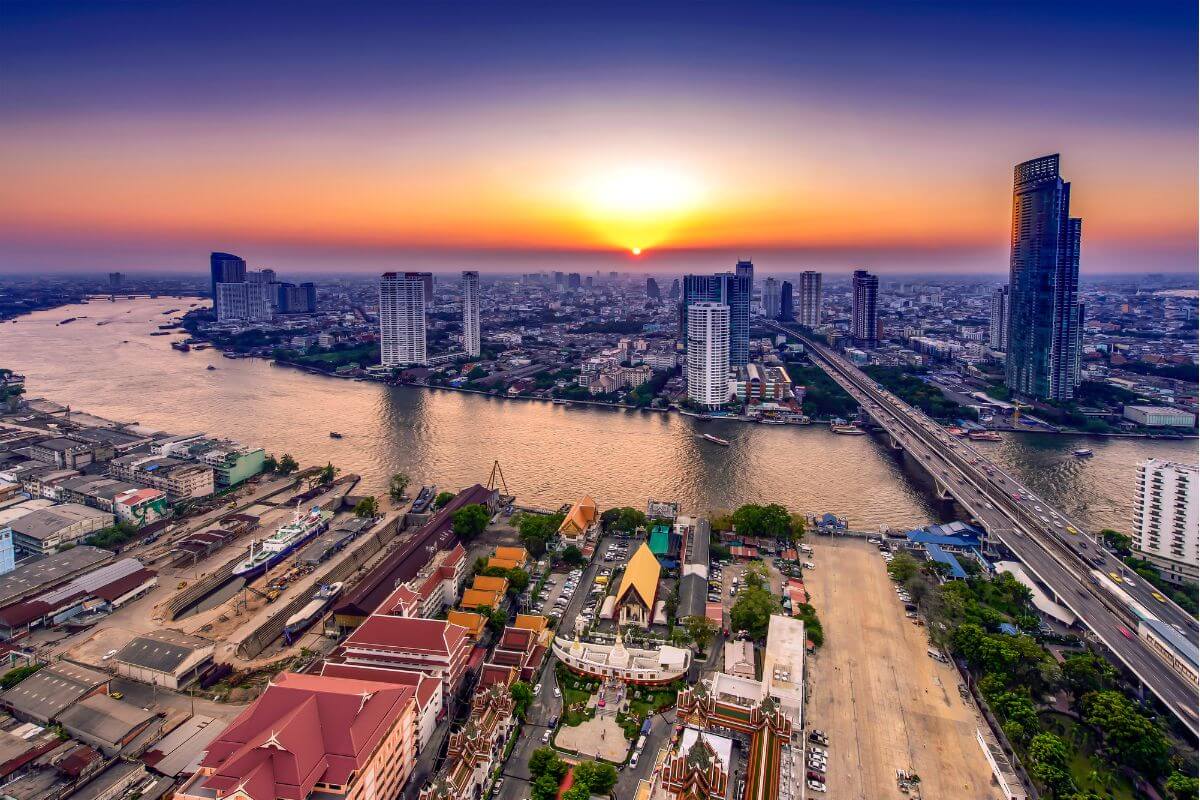
TL;DR: The easiest approach to Bangkok transportation is pairing the BTS Skytrain with the MRT subway. To skip heavy street traffic entirely, hop on river or canal boats. Use taxis or ride-hailing apps for short side trips, and combine these transit modes to explore the city like a local.
In this guide, we break down everything you need to know about getting around Bangkok efficiently. From the BTS Skytrain and MRT to river boats and taxis, navigating the city is far simpler than most first-time visitors realize.
Bangkok today is a very different city from the one I grew up in.
Learning Bangkok transportation like a local allows you to explore the best off-the-beaten-path spots using the same transit residents rely on every day.
I spent my childhood in Phrom Phong in the 1990s, when Sukhumvit was dense, chaotic, and defined almost entirely by traffic. There was no BTS, no mega malls, and very few high-rise condominiums. Emporium was the first major mall in the area. Everything else felt low, slow, and congested. During bad rush hours, it could take nearly two hours to travel from Phrom Phong to Nana—barely two kilometers. You could reach Pattaya in the same amount of time.
When the BTS Skytrain launched in the late 1990s, it felt surreal. In the beginning, rides were free as the system was tested and the public eased into using it. The initial lines were short—On Nut to Mo Chit, plus the Silom Line intersecting at Siam—but even in that limited form, it changed the experience of getting around Bangkok immediately. A trip that once took hours suddenly took ten minutes. It was clean, electric, and didn’t add to the heavy smog the city was already infamous for.
Bangkok Transportation: Average Cost Comparison
Estimated fare for a typical ~5km city trip, in Thai baht (฿)
| Mode | Typical Fare Range | Best For |
|---|---|---|
| Grab (car) | ฿60–200+ | Upfront pricing, door-to-door, no negotiation |
| Regular Taxi | ฿35 start + ~฿6.50/km | Cheapest for longer trips if metered |
| Canal Boat (Saen Saep) | ฿10–20 | Bypassing traffic on the eastern corridor |
| Bus | ฿8–25 | Cheapest option overall, if the route lines up |
| MRT | ฿17–42 | Reaching older districts like Chinatown |
| BTS | ฿17–62 | Fast elevated travel along Sukhumvit and Silom |
Figures are typical estimates for a short-to-medium trip and will vary based on distance, traffic, and time of day. Trains (BTS/MRT) and buses price by distance, while canal boats and many taxi/Grab rides depend more on route and demand.
How the Skytrain Transformed My Bangkok
Personal Story: I was born in Bangkok in the late 1980s, which means I got a front-row seat to one of the most dramatic urban transformations in modern Asian history, not from photos or stories passed down from older relatives, but from actually living through it. Bangkok transportation looked completely different when I was a kid. Traffic was legendary in the worst way, and getting anywhere meant setting aside real time and patience for it.
When I was in the fifth grade, the BTS Skytrain finally opened, and it genuinely changed how my family and I moved through the city. Suddenly, trips that used to eat up an hour or more in gridlocked traffic took a fraction of the time. I remember my parents talking about it the way people talk about a new invention that’s about to change everything, and for once, that wasn’t an exaggeration.
Since then, I’ve basically ridden every mode of Bangkok transportation there is. Songthaews as a kid, motorbike taxis weaving through traffic on the way to school, crowded buses with the windows down before AC ones became common, the MRT once it finally arrived years later, express boats down the Chao Phraya, and more Grab and taxi rides than I could ever count as an adult. Watching the system expand, station by station, line by line, over the decades has given me a pretty unique perspective on how the city actually moves.
This guide is shaped by all of that. It’s not just theory pulled from a transit map, it’s decades of actually living the evolution of Bangkok transportation, from the days before the Skytrain existed to the sprawling, multi-line network locals rely on today.
Before those elevated tracks stretched across the skyline, Bangkok felt impossibly huge. It wasn’t necessarily because of the city’s physical footprint, but because of the sheer effort and time required to get anywhere. My family home was and still is in Phrom Phong, and back then, venturing out to areas like Siam felt like planning a major expedition.
The Pre-Skytrain Grind: Traffic Jams and Street Haggling
Even though Bangkok was noticeably less populated back in the nineties than it is today, the gridlock was legendary. The city’s rapid growth had completely overwhelmed the existing road network, trapping everyone in standstill traffic.
The Evolution of Bangkok Transport – From Brutal Traffic to Convenient Options
- The Agonizing Sukhumvit Crawl: It sounds wild today, but it could literally take up to three hours just to travel from Phrom Phong to Nana—a distance of barely two kilometers! We would sit idling in the heat for what felt like an eternity.
- Tuk-Tuks & Non-Metered Taxis: Before metered cars became the standard, getting around meant relying heavily on tuk-tuks or non-metered taxis. Every single trip required a round of street-side bargaining before you even stepped inside the car.
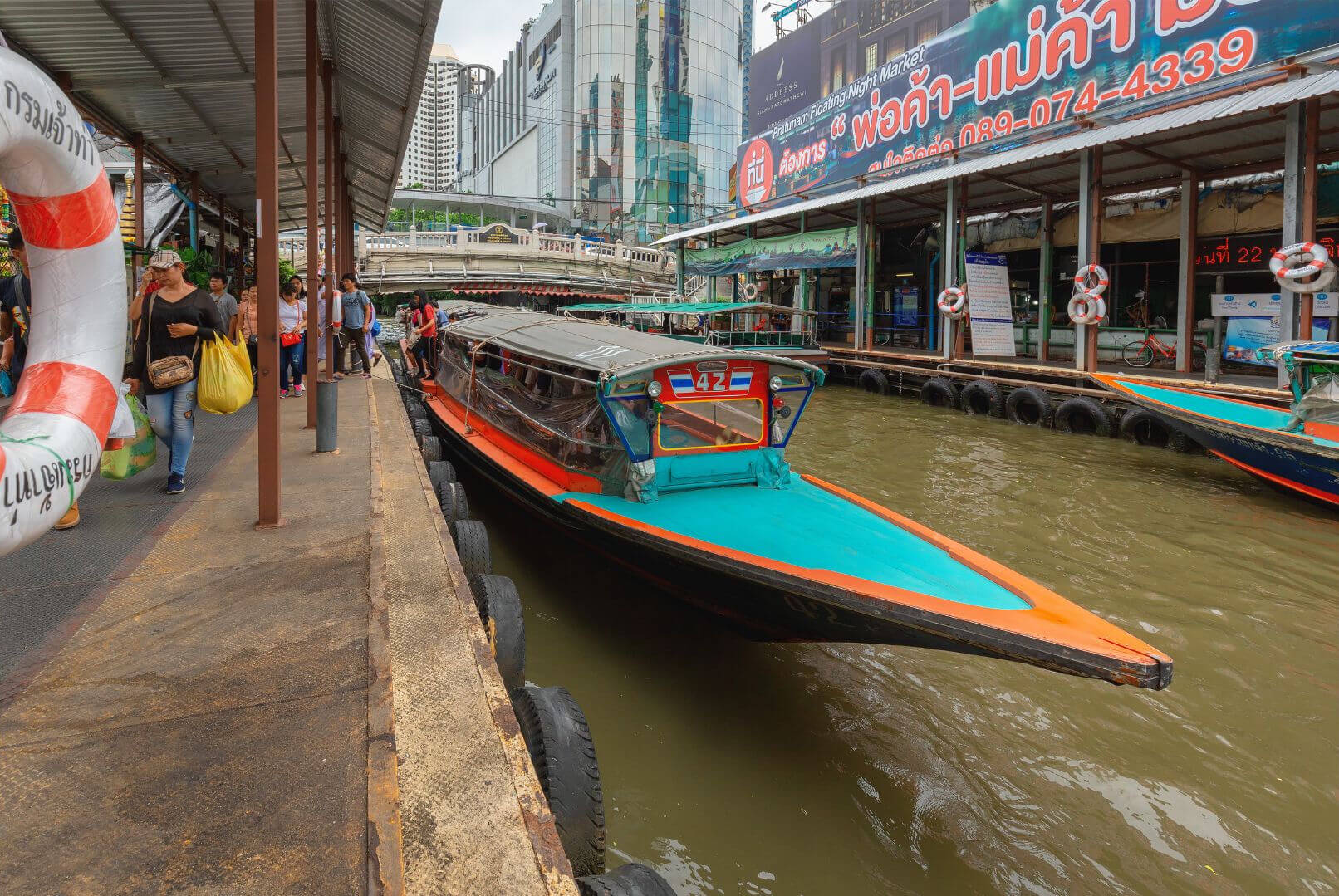
- The Old Canal Boats: When we had to dodge the traffic, the Saen Saap canal boats were the fastest option, but they were a world away from what they are today. The older boats were narrow, cramped, and packed shoulder-to-shoulder. Passengers constantly had to pull up canvas tarps to protect themselves from contaminated canal water splashing over the sides.
- Buses of Last Resort: I hardly ever took the bus back then, using it only when absolutely necessary, since they were stuck in the exact same brutal traffic as every other car on the road.
The Skytrain Miracle: Shrinking the City
When the BTS doors finally slid open in late 1999, it felt like magic. Almost overnight, that excruciating three-hour crawl from Phrom Phong to Nana turned into a clean, air-conditioned 10-minute ride.
The BTS effectively made Bangkok feel so much smaller. For the first time in my life, different parts of the city felt connected, and we could actually predict how long a journey would take down to the minute.
- Bangkok Transportation: How to Get Around the City Fast
- How the Skytrain Transformed My Bangkok
- A 25-Year Front-Row Seat to How Bangkok Transportation Evolved
- Getting around Bangkok: Why choose local transport in 2026
- 1. BTS Skytrain – how Bangkok changed overnight
- Understanding the Modern BTS Sky Train Strategy
- How to Buy a BTS Ticket in Bangkok
- 2. MRT subway – reaching older, less obvious districts
- 3. The Airport Rail Link: Connecting It All
- 4. Canal boats and river transport – fast, local, and still overlooked
- 5. Local and EV buses – slow on paper, smart in practice
- Filling the Gaps in the Transit Grid
- The Modern Transformation: The Rise of Smart Electric Buses
- 5. Motorbike taxis and last-mile connections
- Instant Agility & Hyper-Local Expertise: Why Motorbike Taxis Rule Bangkok
- 6. Regional rail connections (when they make sense)
- Practical Tips for Bangkok Transportation Without the Stress
- Conclusion
- Bangkok Hidden Gems: Reachable by Bangkok Transportation
- Need Help Getting Around Bangkok?
- FAQ – Bangkok Transportation Guide 2026
- What is the best way to get around Bangkok?
- How do tourists get around in Bangkok?
- Is Uber or Grab better in Bangkok?
- Is BTS or MRT better for getting around Bangkok?
- Are Saen Saep canal boats recommended for Bangkok transportation?
- What is the easiest strategy for Bangkok transportation to reach quieter neighborhoods?
- Are buses a good option for Bangkok transportation?
- Should I use tuk-tuks for Bangkok transportation?
- Is a tuk tuk or taxi cheaper when getting around Bangkok?
- Is a tuk tuk cheaper than a taxi?
- Is there a free shuttle between Bangkok airports if I am getting around Bangkok?
- What is the cheapest airport route for Bangkok transportation?
- Leave everything to us and experience Thailand off the beaten path
A 25-Year Front-Row Seat to How Bangkok Transportation Evolved
Looking back over the last 25+ years, watching Bangkok transportation evolve has been incredible. The cramped old canal boats have been replaced by modernized, safer vessels. Non-metered taxis faded away into metered cabs and ride-hailing apps, and the modest initial Skytrain route has expanded into a massive, interconnected web of overhead and underground trains.
For anyone who remembers what moving around Bangkok was like before 1999, the modern transit network isn’t just convenient—it completely reshaped how we experience our home.
Over time, the MRT followed, canal boats were upgraded, buses modernized, and rail lines now connect both major airports. Bangkok today has one of the most varied urban transport systems in Southeast Asia—but most visitors only experience a fraction of it.
If you want to explore off the beaten path Bangkok—quiet neighborhoods, local food areas, green pockets, and places most visitors never reach—how you move through the city matters as much as where you go. Exploring areas like these off-the-beaten-path Bangkok neighborhoods becomes far more rewarding when you follow the routes locals actually use—often faster, calmer, and more revealing than relying on cars alone.
It’s also how we approach the city ourselves, and how we design journeys for guests who want to experience Bangkok in a more grounded, authentic way—whether that’s through a Bangkok hidden gems itinerary, a Bangkok foodies itinerary, or by combining trains, boats, and short local connections rather than sitting in traffic. For a completely different perspective, you can also lace up your shoes and try getting around Bangkok on foot with our curated self-guided walking routes.
Air quality and seasonal weather can affect how you move around Bangkok, especially during the burning season. You can check real-time conditions on IQAir for the latest updates before heading out.
This post pairs naturally with our Bangkok hidden gems guide. If you’re also exploring food, our Bangkok vegan and vegetarian guide is built with the same local-first approach.
Note: Exploring the region is always easier with a private driver and a professional guide; we can arrange everything for you so you don’t have to worry about navigating, getting tired, or dealing with the heat—just contact us via WhatsApp to get started!
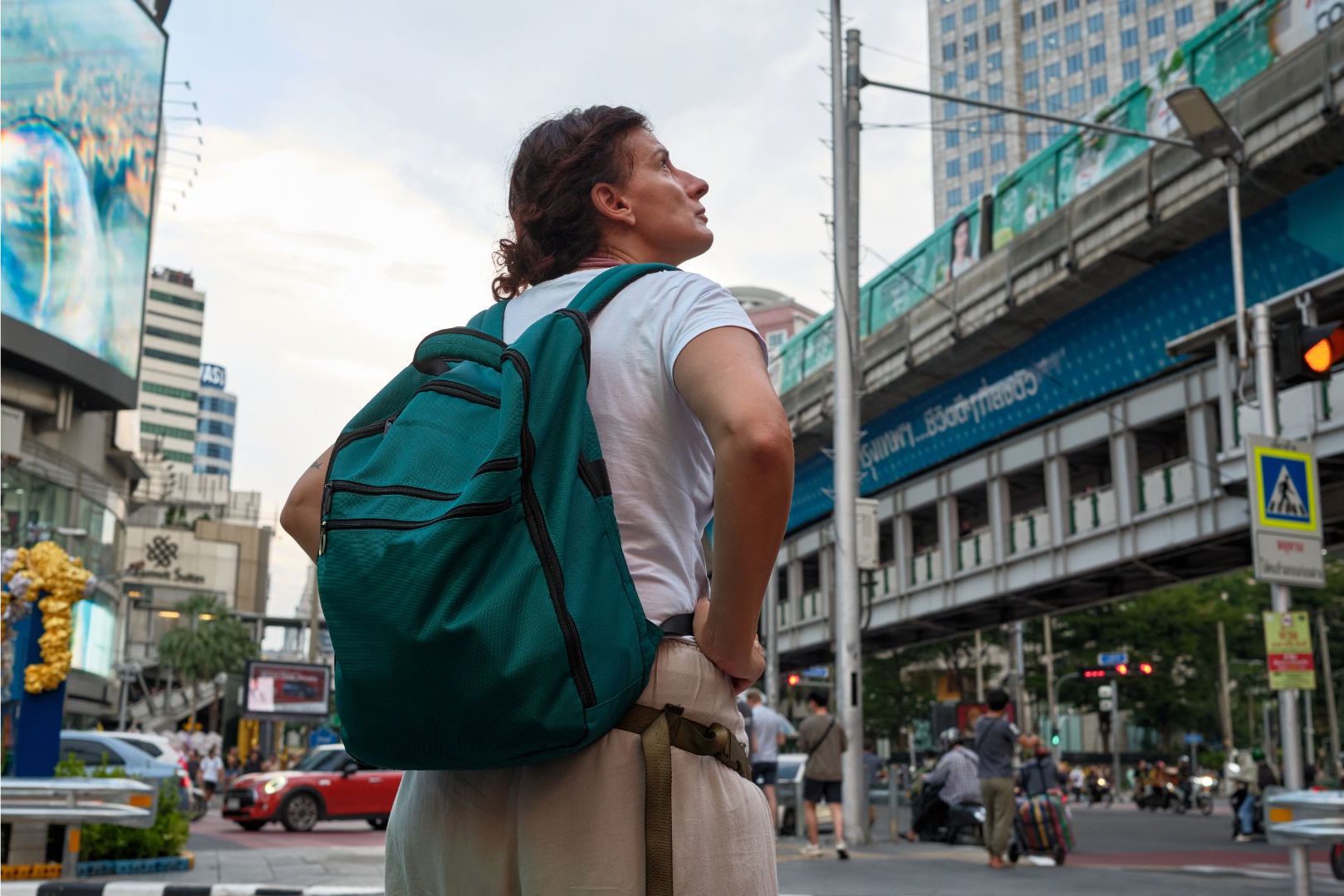
Getting around Bangkok: Why choose local transport in 2026
Understanding how to get around Bangkok efficiently is often less about distance and more about access, which is exactly why this local transport guide matters. Some of the city’s calmest and most rewarding pockets are only a few kilometers from the center, yet they can feel worlds away if you rely on cars during peak traffic.
Local transport solves that problem in a way taxis or ride hailing apps usually can’t. Trains are predictable, boats cut across the city without traffic, and buses cover the gaps where rail doesn’t reach. Used together, they make it easy to explore Bangkok without spending your day stuck on Sukhumvit or circling for turnarounds.
This approach also aligns with lower-impact travel. Public networks reduce congestion and emissions, and they support systems locals depend on every day. If you’re interested in the bigger picture, this connects closely with our approach to sustainable tourism in Thailand.
If you want to estimate realistic daily travel costs across Bangkok and the rest of Thailand, you can use the Thailand Trip Budget Calculator to plan your trip budget.
Walking is also a viable budget option if you want to explore particular areas, check out our guide on how to get around Bangkok on foot.
1. BTS Skytrain – how Bangkok changed overnight
I was in the 6th grade, just starting middle school, when the BTS actually opened. I still remember the free rides they gave out in those first days, and how my friends and I would ride it just for the sake of riding it, not even going anywhere in particular, because none of us had ever seen anything like it before. It felt closer to something out of a movie than actual public transportation.
Fast forward to today, and Bangkok now has fully unmanned monorail lines running through the city, something that would have genuinely stunned twelve-year-old me if I’d been told back then. What started as a handful of modest routes has expanded across nearly the entire city, and it’s strange to think that the system I once rode for fun as a kid has quietly become the backbone of how I, and millions of other people, get around Bangkok every single day.
The BTS Skytrain stands as the single most transformative piece of transit infrastructure in modern Thailand and the absolute cornerstone of efficient Bangkok transportation. Before its doors first slid open in the late 1990s, the city was legendary for its staggering, gridlocked traffic jams. Bangkok’s ancient canal networks had gradually been paved over into narrow, sprawling roadways (sois) that were simply never built to accommodate the explosion of modern vehicle traffic.
When the Skytrain launched with its modest initial routes, it provided an instant revelation for Bangkok transportation. Sweeping quietly above the chaotic sea of idling taxis and buses, it offered commuters a cool, air-conditioned, electric sanctuary. Neighborhoods along main arteries like Sukhumvit, Silom, and Phaya Thai were completely reinvigorated almost overnight, as residents realized they could predict their commute times down to the minute for the very first time.
Understanding the Modern BTS Sky Train Strategy
How to Buy a BTS Ticket in Bangkok
1. Find Your Current Station and Destination
Look at the BTS route map (available at every station and on the official BTS app). Note the name of the station you are at and the station you want to go to.
2. Check the Fare
- At the ticket kiosk (the blue/green machines), select your destination station on the screen.
- The machine will automatically show the exact fare from your current station.
3. Buy Your Ticket
You have two easy options:
Option A – Ticket Kiosk (fastest)
- Select your destination.
- Insert the exact amount using coins or banknotes.
- The machine will give you a small plastic token (ticket).
Option B – Ticket Counter
- Tell the staff your destination station.
- Pay the fare in cash.
- They will hand you the token.
4. Enter the Gate
- Touch or insert the token at the entry gate.
- Keep the token until you exit, you will need it again at your destination station.
Quick Tips
- Fares are calculated by distance, so longer trips cost more.
- Keep small change ready (coins are very useful).
- The BTS runs from roughly 6:00 AM to midnight every day.
- For multiple rides, consider a Rabbit Card (stored-value card) instead of single tickets.
Today, while the network has expanded dramatically to reach deep into suburban precincts, the BTS remains the backbone of Bangkok transportation, working best as a high-speed connector rather than a direct door-to-door shuttle.
- The Express Spine: Use the Sukhumvit and Silom lines to slice across huge swaths of the city in minutes, completely bypassing peak-hour surface traffic.
- The Interchanges: Seamlessly transition to the MRT (underground network) or the Suvarnabhumi Airport Rail Link at key hub stations like Makkasan or Phaya Thai.
- The “Last Mile” Connection: Because many of Bangkok’s best hidden eateries, boutique hotels, and historic alleys are tucked deep inside long side streets, pair your train ride with a local transit mode to complete the journey.
Pro Tip for Travelers: Ride the BTS to cross the major city sectors, then step off the platform and cover the remaining distance via a brief stroll, a quick canal boat (Khlong Saen Saep), or a swift motorbike taxi to glide straight down the quieter sois. By combining high-flying rail with grounded local transit, you turn one of Asia’s most intense metropolises into an effortless, highly accessible urban playground.
Buying a single-journey ticket on the BTS is straightforward once you know the steps. Here’s exactly how to do it:
That’s it — once you have the token, you’re ready to ride the BTS Skytrain across Bangkok.
If you want your transport to actively support your itinerary, pair BTS days with your key stops from the Bangkok hidden gems guide, then layer Bangkok transportation options like boats or local connections for places the trains don’t reach.
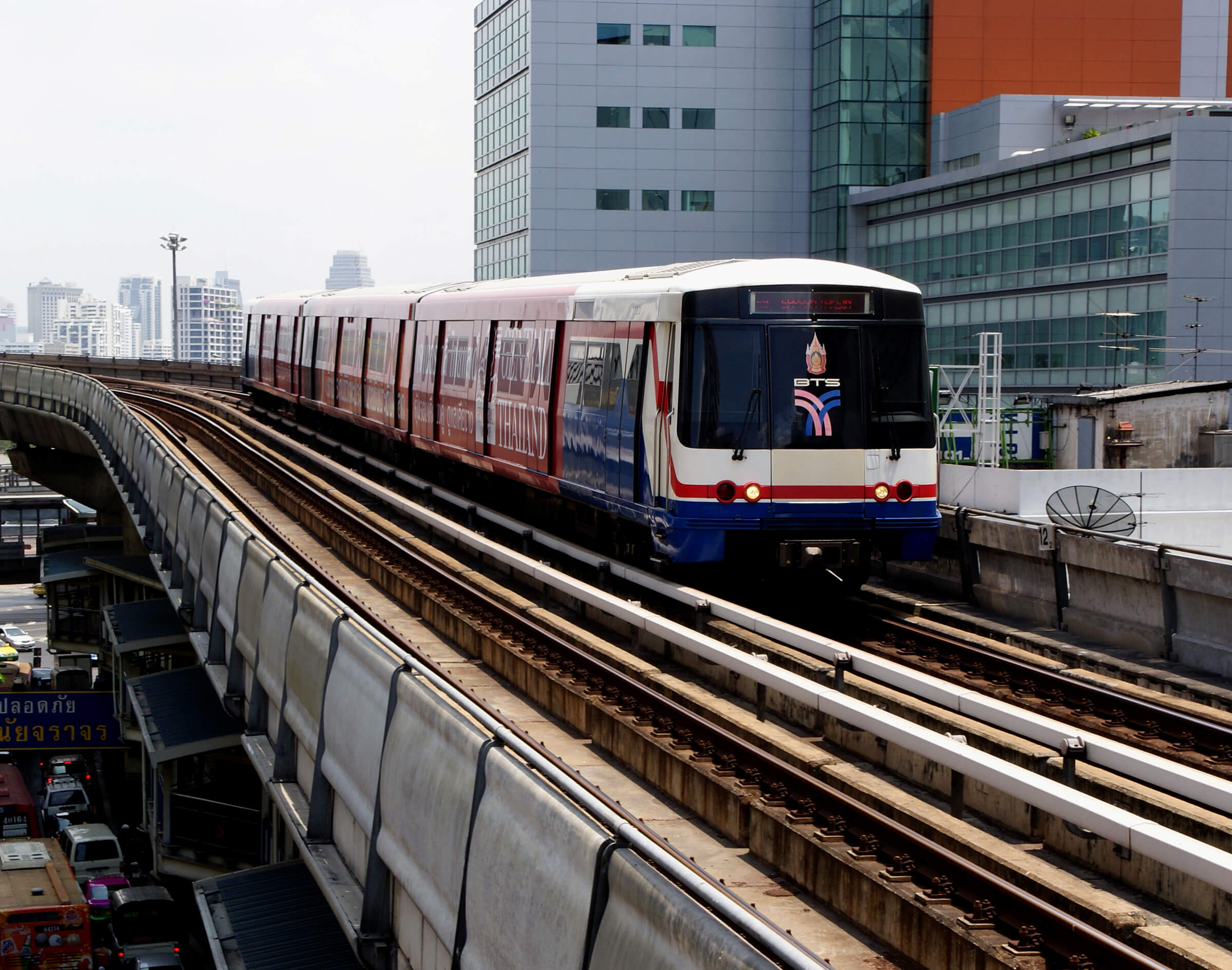
2. MRT subway – reaching older, less obvious districts
When the MRT (Metropolitan Rapid Transit) subterranean network first opened, it initially felt somewhat limited in scope. Terminating at Hua Lamphong Railway Station for many years, it functioned largely as a utilitarian commuter strip serving modern business corridors. However, as massive expansions pushed the Blue Line beneath the Chao Phraya River and deep into the historic core, the MRT transformed into one of the most indispensable and atmospheric transit systems in all of Southeast Asia.
Unlocking Historic Bangkok
By tunneling directly beneath regions where surface streets are narrow, winding, and notoriously gridlocked, the MRT seamlessly opened up the older quarters of the capital as part of Bangkok transportation’s broader network. Areas like Yaowarat (Chinatown) and Rattanakosin, where traditional shop houses, street food markets, and centuries-old temples define the urban landscape, are now reachable without spending hours stuck in a stationary taxi. Surfacing from an underground platform like Wat Mangkon or Sanam Chai instantly drops you into parts of the city where Bangkok feels distinctly everyday, vibrant, and rooted in local community life.
The Power of Multimodal Interchanges
Rather than viewing transport as a single choices—like relying strictly on taxis or sticking only to elevated trains—the true secret to mastering Bangkok lies in combining modes. The MRT functions as the ultimate bridge across transit systems:
- BTS Skytrain Connections: Hubs like Sukhumvit/Asok and Silom/Sala Daeng allow you to switch from sky-high elevated tracks to cool underground express tunnels in seconds.
- Boat & River Networks: Stations like Sanam Chai sit just steps away from Chao Phraya Express Boat piers, letting you swap rail travel for a scenic river cruise down historical waterways.
- Feeder Transit: Major hubs effortlessly link up with local bus routes, songthaews, and motorbike stands for short side trips.
If you are planning an Off Path exploration day, this flexibility matters far more than choosing a single “best” mode of Bangkok transportation. Mixing an underground leg with a brief water-taxi ride or walking trail keeps your trip nimble, scenic, and completely clear of traffic jams.
Effortless Access to Cafes and Green Spaces
Beyond major landmarks, the MRT is remarkably convenient for reaching tranquil, low-key spots tucked away from the main tourist trail.
- Peaceful City Parks: Key stations deliver you straight to the gates of Bangkok’s finest green escapes. Stations like Lumphini, Silom, and Queen Sirikit National Convention Centre place you seconds away from the expansive lawns and elevated walkways of Lumphini and Benjakitti Parks (highlights of our Bangkok Parks Guide).
- Quiet Neighborhood Cafes: Many of the serene, air-conditioned hideaways featured in our Bangkok Quiet Cafes Guide sit in leafy residential sois just a short 5-to-10-minute stroll from MRT exits in districts like Din Daeng, Lat Phrao, and Thonburi.
Pro Tip for Bangkok Transportation: You don’t need to stand in line for single-journey tokens during peak hours. The MRT Blue and Yellow lines etc accept contactless EMV payment cards (Visa or Mastercard), simply tap your credit/debit card directly at the turnstile gate to enter and exit.
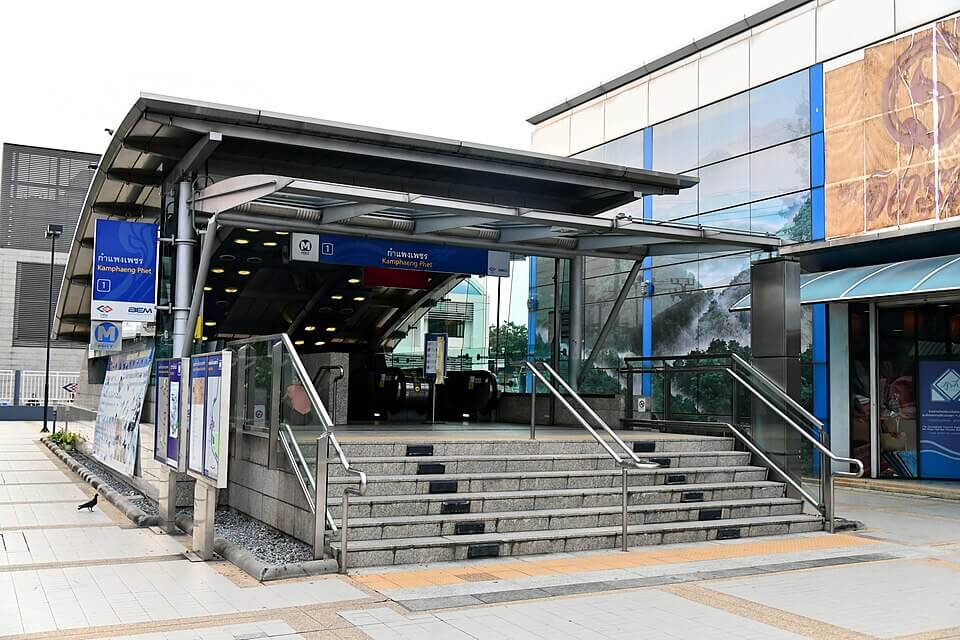
3. The Airport Rail Link: Connecting It All
The Airport Rail Link is one of the more underrated pieces of Bangkok transportation, mostly because people only think of it as the way to get to Suvarnabhumi Airport, when in reality it also works as a genuinely useful connector across the city itself. Running from Phaya Thai station all the way out to the airport, it cuts straight through several neighborhoods that would otherwise involve a fair bit of backtracking to reach by other means.
What makes it particularly useful is how well it ties into everything else. At Phaya Thai, it connects directly to the BTS, so you can move seamlessly between the Skytrain network and the airport line without leaving the station. Further along the route, it also links up with the MRT, meaning you can combine all three systems, BTS, MRT, and the Airport Rail Link, into a single, relatively smooth journey across the city depending on where you’re headed.
There’s also a quieter connection most visitors never think to use: the Airport Rail Link’s Makkasan station sits right by Phetchaburi MRT station, and from there it’s just a short walk to the Saen Saep canal boat pier. For a stretch, that means you can genuinely combine three completely different modes of Bangkok transportation, elevated train, underground train, and canal boat, in a single trip, cutting across parts of the city that would otherwise mean sitting in traffic for the better part of an hour.
For me, that’s really the underlying theme of getting around Bangkok well. It’s rarely about picking one perfect mode of transport and sticking to it. It’s about understanding how the pieces connect, BTS to MRT, MRT to the Airport Rail Link, Airport Rail Link to the canal boats, and stitching together a route that actually works for where you’re going, rather than defaulting to a taxi out of habit.
4. Canal boats and river transport – fast, local, and still overlooked
Long before elevated rail tracks or paved avenues spanned across the capital, waterways were the primary highways that defined life in Siam. The Chao Phraya River and its sprawling maze of interconnecting canals (khlongs) earned Bangkok its historic title as the “Venice of the East.” While many of the smaller waterways were paved over during the mid-20th-century push toward modern road infrastructure, the city’s remaining boat networks remain one of the absolute fastest ways to navigate the urban core.
Central to this aquatic transit network are the Khlong Saen Saep canal boats. Running straight through the middle of the city along a historical canal dug in the 19th century, these commuter boats operate entirely immune to the notorious gridlock idling on the asphalt bridges above them.
The Evolution of the Canal Experience
For decades, taking a Saen Saep canal boat was considered an adventurous, high-octane rite of passage reserved for intrepid commuters and seasoned locals. Today, it remains one of the fastest and most practical secrets for getting around Bangkok while bypassing the congested streets above.
- The Old Era: Boats were low-slung, packed to capacity, and passengers had to pull up plastic canvas sheets to block splashes of murky canal water as captains zipped beneath low-clearance bridges.
- Modern Upgrades: Extensive municipal initiatives have modernized the fleet. Today’s electric and modernized diesel vessels feature higher gunwales, improved boarding platforms, safety rails, cleaner engine standards, and stabilized hulls.
While the rustic, fast-paced spirit of the canal remains intact, the modern experience is significantly safer, smoother, and vastly more accessible for travelers. The fundamental value proposition hasn’t shifted at all when it comes to getting around Bangkok: a journey that takes well over an hour in bumper-to-bumper taxi traffic can easily be completed in under twenty minutes on the water.
The Chao Phraya Express: River Travel with Purpose
While the canal acts as an east-west express lane through the shopping and residential heartland, the majestic Chao Phraya River serves as the city’s grand north-south arterial route.
To travel like a local, skip the expensive private sightseeing cruises and head straight for the commuter ferry piers:
- Orange & Yellow Flag Express Boats: These scheduled public commuter ferries stop at key historic piers, providing a cheap, scenic, and surprisingly rapid connection between modern commercial districts and heritage neighborhoods like Rattanakosin, Wang Lang, and Bang Lamphu.
- The Saphan Taksin Hub: At Sathorn Pier, the river network meets the BTS Skytrain (Saphan Taksin Station). This vital interchange allows you to step directly off an elevated train and onto a passenger boat in less than two minutes.
Master the Multi-Modal Journey
The real secret to getting around Bangkok with total ease isn’t committing to one single mode of travel. Instead, it is learning how to seamlessly layer them together depending on the time of day and geography. A masterclass in local navigation often looks like this:
- The Rail Spine: Board the BTS Skytrain to quickly cover long suburban distances and cross major commercial hubs high above the street traffic.
- The Canal Cut-Through: Disembark at an interchange like Ratchathewi or Phaya Thai, walk down to the canal pier, and hop onto a Saen Saep boat to slice straight through the center of the city toward historic districts or eastern neighborhoods.
- The River Glide: Connect to the Chao Phraya Express boat to glide past landmark temples, historic shophouse communities, and open river views.
- The Last Mile: Step off at a local pier and finish the last few hundred meters with a leisurely stroll down a quiet residential soi, a river-crossing ferry, or a short motorbike ride.
Why It Matters for Off Path Exploration
Adopting this multi-transport mindset transforms the entire tone of your journey. Instead of spending valuable hours staring at brake lights inside an air-conditioned car, you stay in constant motion. It’s the most rewarding approach to Bangkok transportation, letting you experience the city from elevated Skytrain tracks, intimate canal banks, and wide-open river waterways.
This approach forms the foundation of how authentic, effortless trips are designed. By utilizing the exact transit systems that millions of Bangkokians rely on every single day, you bypass tourist bottlenecks, save huge amounts of time, and discover a dynamic, water-centric side of the capital that most travelers completely miss.
5. Local and EV buses – slow on paper, smart in practice
When it comes to Bangkok transportation, the city’s extensive bus network remains one of the most underrated transit options available. Although complex routes can make buses feel intimidating at first, they bridge a massive gap left by rail lines and ferries. They deliver you directly into the heart of everyday residential neighborhoods, local markets, and distinct cultural enclaves without requiring endless transfers.
Filling the Gaps in the Transit Grid
Bangkok’s elevated and underground train networks are spectacular for moving large distances across major commercial corridors, but their footprints are inherently linear. The city is famous for its deep, sprawling sois (side streets) and vast residential pockets where rail stations are miles away.
This is precisely where the city’s bus network shines:
- Direct Point-to-Point Travel: A single bus line often connects two distinct neighborhoods diagonally across the city, eliminating the need to take a train, transfer to another line at a crowded station, and then walk multiple blocks to your final destination.
- Neighborhood Access: Buses travel down major arterial roads that cut straight through everyday local communities, dropping you off directly outside local eateries, neighborhood temples, and quiet residential quarters that tourist guides rarely mention.
- Reduced Walking Effort: Navigating massive rail interchange stations often involves long concourses, multiple flights of stairs, and high-altitude skywalks. Hop-on, hop-off bus travel allows you to board and disembark at street level, saving physical energy during hot afternoon excursions.
The Modern Transformation: The Rise of Smart Electric Buses
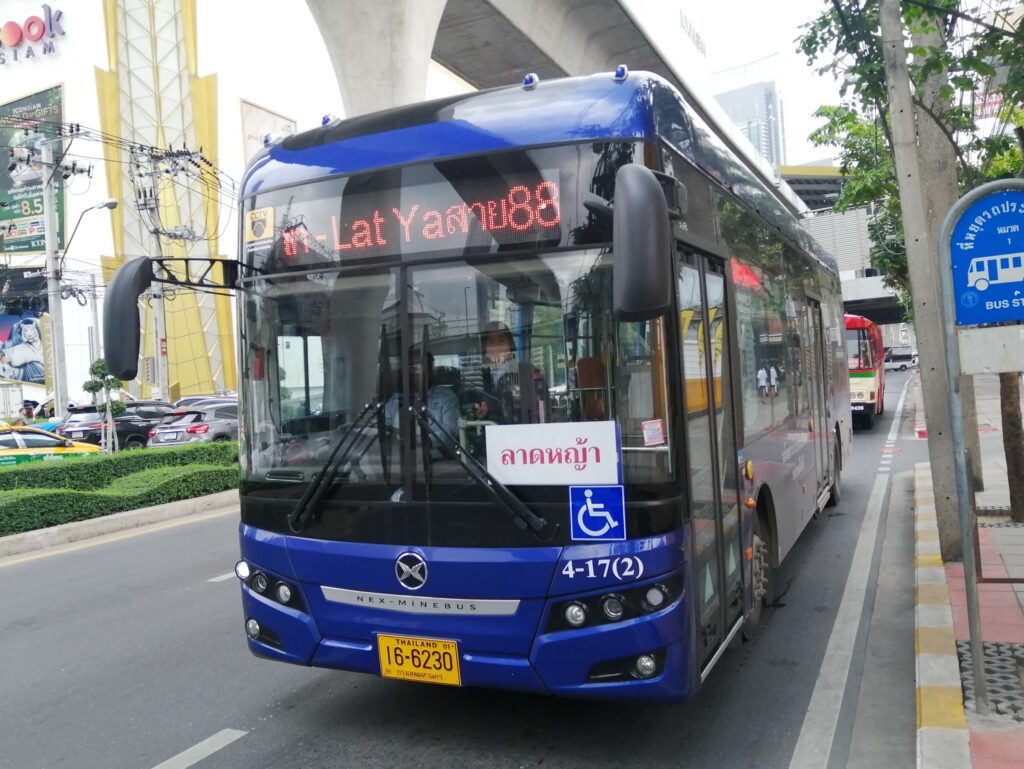
If you haven’t taken a bus recently, getting around Bangkok by road has undergone a quiet revolution. For decades, the network was defined by aging open-window vehicles that were noisy and reliant on older diesel engines. Today, the landscape is shifting dramatically due to the massive rollout of modern electric buses, often operated by Thai Smile Bus under sleek navy blue designs.
- Exceptional Comfort: These new EV fleets feature crisp air conditioning, whisper-quiet electric motors, smooth suspension, clean interior seating, and modern digital displays showing upcoming stops.
- Environmental Impact: Electric buses produce zero tailpipe emissions, contributing to a cleaner atmosphere along busy urban thoroughfares and offering a noticeably fresher ride for passengers.
- Incredible Value: Fares on modern air-conditioned and EV buses remain exceptionally budget-friendly. Most journeys are distance-based and typically capped at around 25 baht (under $1 USD), making it one of the most cost-effective ways to explore the city without sacrificing comfort.
Essential Practical Tools for Riding Like a Local
To turn the bus system from a confusing puzzle into an effortless navigation asset, keep these core strategies in mind:
1. Rely on Live-Tracking Technology
Never stand at a bus stop blindly guessing when the next vehicle will arrive. Apps like ViaBus provide real-time GPS tracking for incoming buses across Bangkok. You can see exact vehicle locations on a map, view arrival estimates, and verify route paths before you even leave your hotel or cafe.
2. Prioritize Air-Conditioned and EV Fleet Options
While non-air-conditioned buses (often painted pink or orange/red) offer a nostalgic, open-air glimpse of classic Bangkok, they can get warm during peak afternoon heat or heavy traffic. Look for modern blue EV buses or yellow/orange air-conditioned vehicles to ensure your journey is cool and relaxing.
3. Keep Small Change or Contactless Cards Ready
When boarding, an onboard conductor will approach you to issue a ticket. Have small cash denominations (20, 50, or 100 baht notes) or small coins ready, since these are still central to Bangkok transportation on buses. Many modern EV buses also support local contactless payment options or transit cards, making transactions quick and seamless.
The Balanced Strategy: When to Choose the Bus
The goal isn’t to replace fast rail lines entirely, but to use buses strategically when they offer a clear advantage.
- Use Rail For: Rush-hour cross-town dashes, long-distance journeys between major hubs (like Sukhumvit to Chatuchak), or escaping heavy surface gridlock.
- Use Buses For: Direct mid-length trips, journeys into districts without nearby train stations (such as parts of Old Town or Dusit), and relaxing low-speed sightseeing through vibrant streetscapes.
By adding smart bus connections to your transit toolkit, you unlock an authentic, flexible, and comfortable layer of Bangkok that remains completely hidden to those who rely solely on trains.
5. Motorbike taxis and last-mile connections
While trains cover major thoroughfares, motorbike taxis remain essential to Bangkok transportation for navigating its labyrinthine side streets (sois). They easily navigate narrow alleys and bypass choke points where cars get stuck.
This is where Bangkok’s famous motorbike taxis—locally referred to as Win (วิน) motorcycles—become an indispensable tool for navigating the city with speed and ease.
Solving the “Last Mile” Problem with Precision
Motorbike taxi drivers are the undisputed masters of local neighborhood navigation. Stationed at strategic points throughout the city, they act as the essential connective tissue between high-speed mass transit and your final destination.
Instant Agility & Hyper-Local Expertise: Why Motorbike Taxis Rule Bangkok
- Instant Agility: Motorbike taxis can effortlessly thread through tight traffic queues, zip down narrow lanes where cars cannot fit, and navigate complex shortcuts between interconnecting alleys.
- Hyper-Local Expertise: Drivers typically operate within a specific neighborhood radius. They know every hidden alleyway, boutique hotel, quiet cafe, and residential complex in their zone, saving you from navigating confusing turns on foot.
- Predictable & Budget-Friendly: For short trips from a BTS or MRT exit down a long side street, fares are remarkably cheap — often ranging from 20 to 50 baht. At established stands, prices for common destinations within the neighborhood are often posted on a board in Thai.
Navigating Local Etiquette: App Rides vs. Traditional Stands
When using motorbike transit, understanding local street dynamics ensures a smooth, respectful experience for everyone involved:
- Spotting Official Stands (Win): Official drivers wear bright, numbered vests (usually orange, green, or blue) over their clothes. Their stands are prominently situated near train station exits, busy intersections, and the entrances of major sois.
- Respecting Territorial Norms: In many neighborhoods, local driver stands have operated on specific corners for decades. Ordering a ride-hailing motorbike (via apps like Grab or Bolt) right in front of an established, waiting line of traditional drivers can sometimes create friction.
- The Best Practice: If you are right outside a train station or at the mouth of a busy alley where an official stand is waiting, simply walk up to the drivers and state your destination—it is almost always faster than waiting for an app driver to arrive. If you prefer using a ride-hailing app for fixed digital pricing or custom drop-offs, simply walk 30 to 50 meters away from the physical stand before requesting your ride.
The Reality of Tuk-Tuks: Nostalgic Novelty vs. Practical Travel
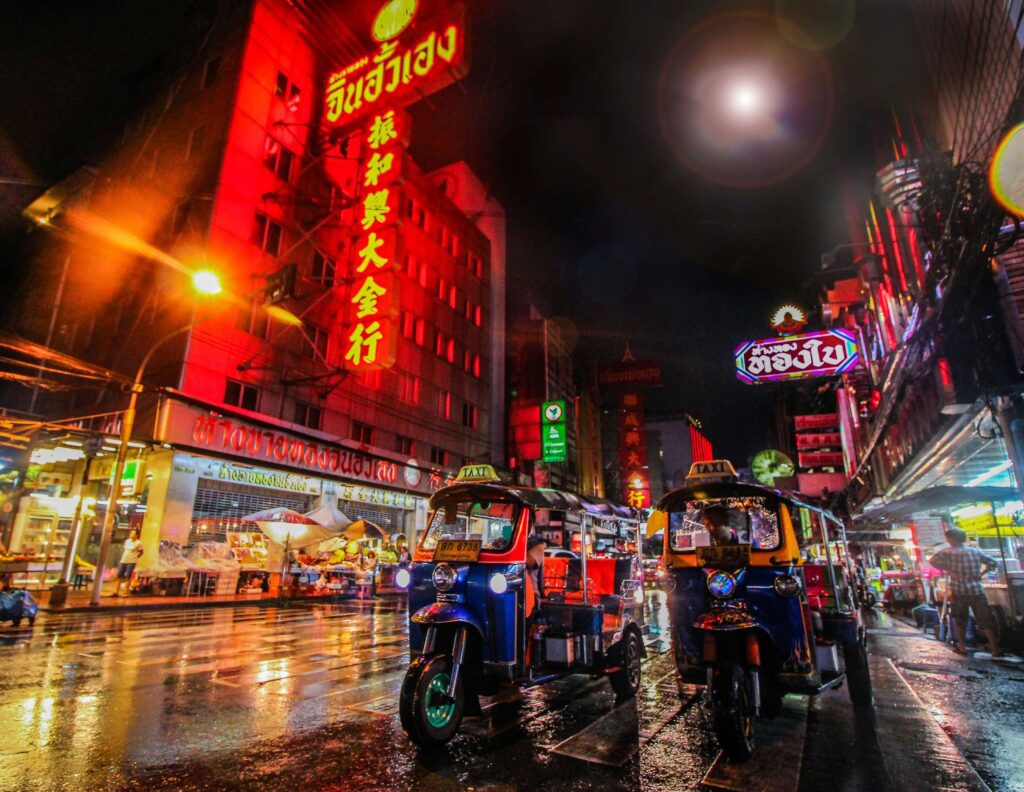
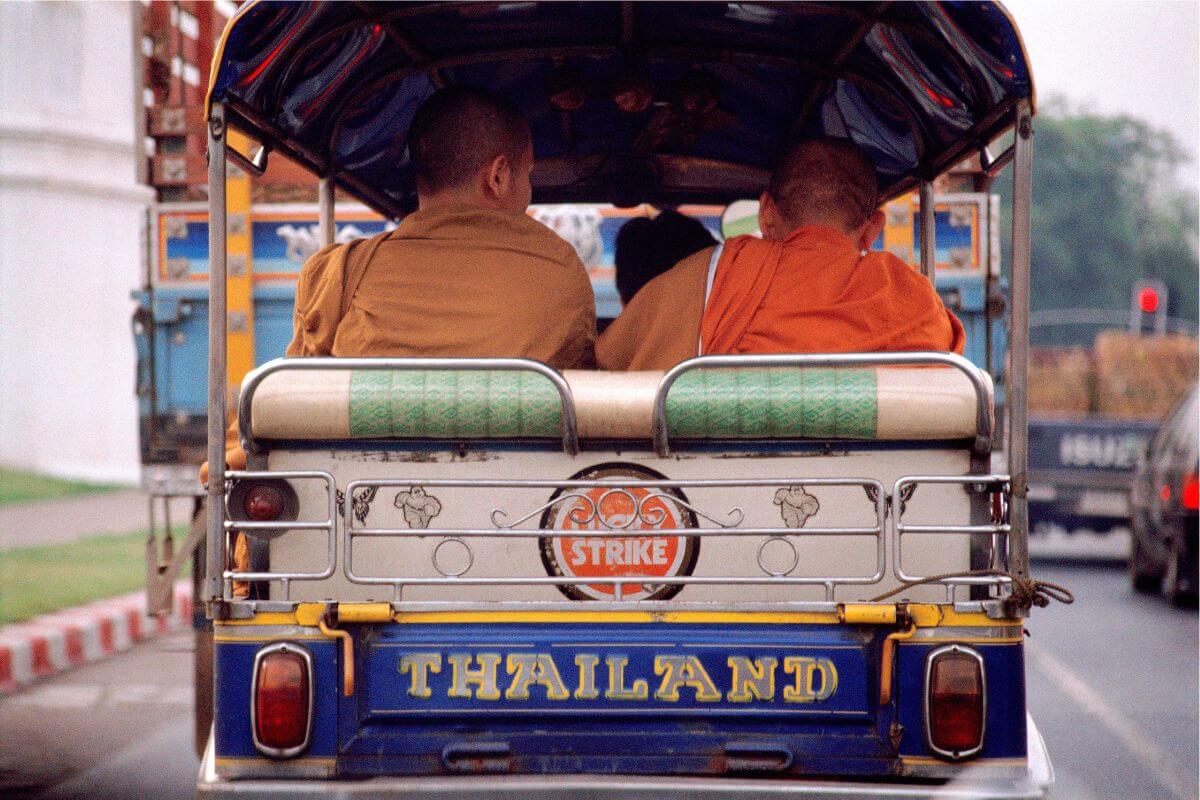
Three-wheeled tuk-tuks are an iconic symbol of Thailand, and taking a short, breezy ride in one is certainly a fun experience every visitor should try at least once for the novelty. However, when it comes to daily practical transportation and true efficiency, they are rarely the best choice.
- Inflated Tourist Pricing: Because tuk-tuks do not use meters, drivers negotiate fares upfront. Prices quoted to travelers are often significantly higher than equivalent taxi or motorbike rides.
- Traffic Limitations: Unlike two-wheeled motorbikes, tuk-tuks are wide vehicles that still get caught in the exact same traffic jams as standard cars, exposing passengers to street heat and exhaust fumes while sitting idle.
- When They Make Sense: Tuk-tuks can be useful if you are traveling in a small group of 3 or 4 people carrying lightweight shopping bags, or when moving between close historic sights in Old Town where rail access is limited and you want a memorable, open-air photo opportunity.
The Ultimate Efficiency Formula: Rail + Motorbike
At a Glance: The Local’s Multi-Modal Strategy
For travelers who want to move around Bangkok like a seasoned local, the ultimate street-smart strategy for Bangkok transportation is all about combining modes rather than relying on just one.
1. Take the BTS or MRT for Long Distances
Use the trains to cross long distances and completely bypass major highway and surface gridlock.
2. Exit the Station Directly onto the Street
Step out directly onto street level, no need to detour through a mall or plan a separate connection.
3. Hop Onto a Waiting Motorbike Taxi
Grab a motorbike taxi at the station base to glide down the final soi directly to your door.
Pairing rapid rail with a quick motorbike ride is the ultimate strategy for Bangkok transportation. This combination lets you skip traffic delays, avoid exhausting walks in the heat, and explore hidden neighborhoods far off the typical tourist track.
6. Regional rail connections (when they make sense)
If you’re connecting flights or planning day trips outside the city, rail options can save time and reduce stress.
The SRT Red Line has quietly become one of Bangkok’s most useful additions to the transport network, running through Bang Sue Grand Station, Southeast Asia’s largest train station and now a genuine hub where multiple lines converge under one roof. From Bang Sue, the Red Line connects directly to Don Mueang Airport, making it a fast, low-cost alternative for anyone flying with the budget carriers that dominate that airport. Because Bang Sue also links into the MRT Blue Line and sits within reach of several other rail connections, it’s turned into a genuine transfer point for getting across the city, not just a stop on the way to a train station.
Between this and the growing rail network elsewhere in the city, Bangkok transportation has quietly reached a point where you can cover both major airports without ever needing to rely on a taxi, something that simply wasn’t true even a few years ago.
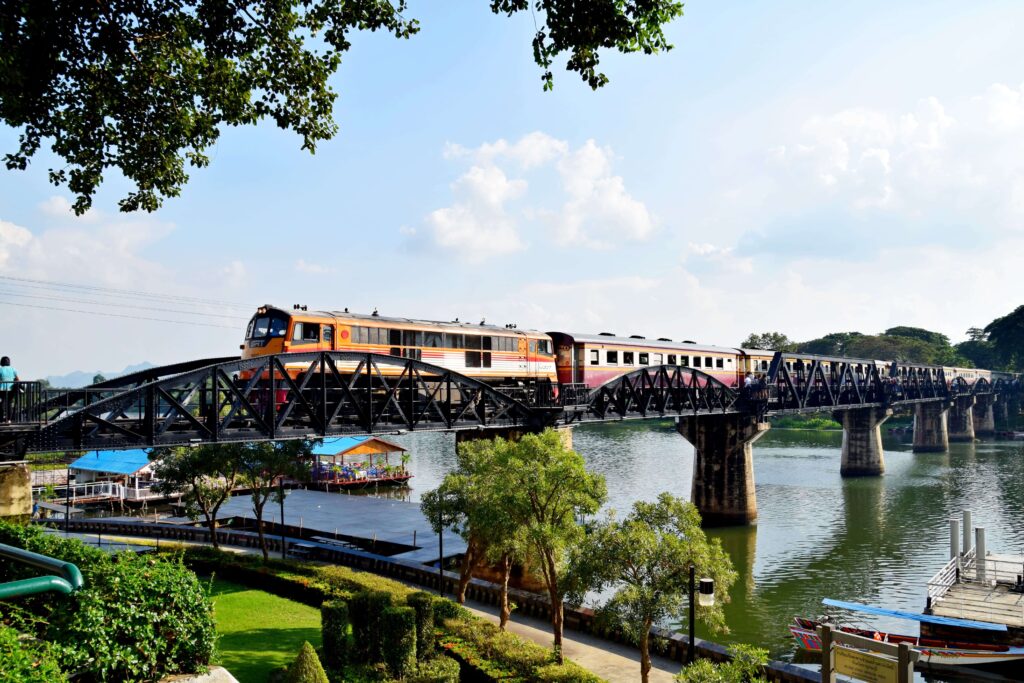
There are also commuter trains that run through parts of Bangkok and beyond. These can be extremely economical for longer rides. Depending on your route, trains can reach places like Hua Hin or Kanchanaburi for under 100 baht.
If you’re planning routes outside the capital, this pairs well with our day trips from Bangkok guide and our beach day trips from Bangkok guide, helping you expand your options for getting around Bangkok and beyond.
Practical Tips for Bangkok Transportation Without the Stress
Smart Travel Tips for Bangkok Parks
- Travel early morning or later evening for quieter rides.
- Combine modes (rail + boat + short local connection) instead of relying on a single method.
- Avoid peak taxi hours when possible.
- Plan for last-mile access — many off-path spots start a few streets away from the main road.
- Prioritize predictable travel times over “shortest distance” routes.
Bangkok transportation makes it easy to reach many of the city’s parks by MRT or BTS, allowing green spaces to fit naturally into everyday movement around the city.
Conclusion
Bangkok isn’t chaotic by default, it’s misunderstood. Once you understand Bangkok transportation without relying on cars for everything, and learn how trains, boats, buses, and short local connections fit together, the city becomes calmer, faster, and far more revealing.
This is the same local-first lens we use across the site, from our Bangkok hidden gems guide to our broader approach to sustainable travel in Thailand. If you want to understand how we design experiences, you can also read how we’re different.
If you’re building your Bangkok itinerary around food as well, the Bangkok vegan and vegetarian guide pairs naturally with this transport approach.
Bangkok Hidden Gems: Reachable by Bangkok Transportation
Need Help Getting Around Bangkok?
Have questions about routes, transit passes, or custom itineraries? Reach out directly via WhatsApp or Email for personalized guidance.
FAQ – Bangkok Transportation Guide 2026
What is the best way to get around Bangkok?
The best approach to Bangkok transportation is combining the BTS Skytrain and MRT subway as your main backbone, then filling in the gaps with river or canal boats, buses, or a short motorbike taxi ride into smaller sois. No single mode covers the whole city well, mixing a few is what makes Bangkok transportation efficient.
How do tourists get around in Bangkok?
Most tourists rely on a mix of BTS, MRT, Grab, and taxis for Bangkok transportation, since these are the easiest systems to navigate without much local knowledge. Rabbit Cards or contactless EMV payment cards make the trains simple to use, and ride-hailing apps remove the need to negotiate fares like you would with a tuk-tuk.
Is Uber or Grab better in Bangkok?
Uber does not operate in Bangkok, having sold its Southeast Asian operations to Grab back in 2018. Grab is the dominant ride-hailing app for Bangkok transportation today, offering cars, motorbike taxis, and food delivery all in one app, with upfront pricing that avoids the negotiation typical of street taxis or tuk-tuks.
Is BTS or MRT better for getting around Bangkok?
For Bangkok transportation, the BTS is usually best for crossing Sukhumvit and elevated corridors quickly, while the MRT is often better for reaching older districts like Chinatown and Rattanakosin. Many locals combine both systems to make getting around the city much more efficient.
Are Saen Saep canal boats recommended for Bangkok transportation?
Yes. Canal boats are an excellent choice for Bangkok transportation as they completely bypass road traffic. The system has become more comfortable in recent years, making this water-based option highly recommended for getting across the city fast.
What is the easiest strategy for Bangkok transportation to reach quieter neighborhoods?
The easiest strategy is to use the BTS or MRT as your main backbone for Bangkok transportation, then finish the journey with a short walk or motorbike taxi into the smaller sois and unique districts that trains don’t reach directly.
Are buses a good option for Bangkok transportation?
Yes, especially when a route lines up directly with your destination. Newer EV buses offer a great way to handle Bangkok transportation since they are quieter, cleaner, and more comfortable on many city routes, even if the route network can feel complex at first.
Should I use tuk-tuks for Bangkok transportation?
Tuk-tuks are iconic but usually not the most practical method for everyday Bangkok transportation. For daily transit, combining trains with short local connections is faster, more predictable, and much easier than relying on tuk-tuks, which typically require price negotiation.
Is a tuk tuk or taxi cheaper when getting around Bangkok?
Taxis are almost always cheaper and more comfortable because they use a meter, whereas tuk-tuks require negotiation and often overcharge tourists. When looking at Bangkok transportation on a budget, a metered taxi or ride-hailing app is the better choice.
Is a tuk tuk cheaper than a taxi?
In most cases, no. Tuk-tuks don’t use meters, so fares are negotiated upfront and tend to run higher than a metered taxi for the same distance, especially for tourists. For budget-conscious Bangkok transportation, a metered taxi or Grab ride is typically the more reliable and cheaper option.
Is there a free shuttle between Bangkok airports if I am getting around Bangkok?
Yes, there is a free airport shuttle bus between Suvarnabhumi (BKK) and Don Mueang (DMK) airports, but you must show a valid flight itinerary for your connecting flight. It is a highly convenient option for Bangkok transportation between transit hubs.
What is the cheapest airport route for Bangkok transportation?
The cheapest way to handle Bangkok transportation from the airport is taking the Airport Rail Link from Suvarnabhumi or the SRT Red Line from Don Mueang. These trains connect directly to the main MRT and BTS transit networks for just a few dozen baht.

About the author
Written by Dee, founder of Off Path Thailand. My life changed after renting a scooter in Chiang Mai nearly a decade ago, mountains on both sides, more alive than any game I’d ever played. I’ve been hooked on Thailand’s quiet, hidden places ever since, and I’ve spent close to ten years helping others discover corners of the country that feel far more meaningful than the usual tourist stops. About the founder
Tell us your dates and vibe — our team replies within 24 hours to begin crafting your trip.
Leave everything to us and experience Thailand off the beaten path
If you want to plan a calm, authentic Bangkok day built around local transport, start with our Bangkok hidden gems guide, then connect it with this transport approach to make the city feel effortless.