
How to Get Around Bangkok: BTS, MRT, Taxis & Boats Explained
TL;DR: The easiest answer to how to get around Bangkok is pairing the BTS Skytrain with the MRT subway. To skip heavy street traffic entirely, hop on river or canal boats. Use Grab, metered taxis or a motorbike taxi for the last stretch, and save tuk-tuks for the novelty. Combine these and you will get around Bangkok like a local.
In this guide, I break down how to get around Bangkok: the BTS Skytrain and MRT, the Airport Rail Link, river and canal boats, buses, motorbike taxis, taxis and Grab. Bangkok today is a very different city from the one I grew up in, and navigating it is far simpler than most first-time visitors expect.
Once you know how to get around Bangkok by BTS, MRT and canal boat, use them to reach the hidden gem restaurants in Bangkok my family has been eating at for generations. Most of them sit a short walk from a station or pier.
How to Get Around Bangkok: Quick Answer
Here is how to get around Bangkok at a glance: which option to use, where it works best, how to pay and what it costs.
| Option | Best for | How to pay | Typical cost |
|---|---|---|---|
| BTS Skytrain | Sukhumvit, Silom and Siam | Rabbit Card or single ticket | ฿17–62 |
| MRT subway | Chinatown, the Old Town and the Sukhumvit link | Contactless Visa/Mastercard or token | ฿17–44 |
| Airport Rail Link | Suvarnabhumi Airport to the city | Contactless card or single ticket | ฿15–45 |
| Chao Phraya Express Boat | Riverside temples and the Old Town | Cash at the pier or on board | ฿19–30 |
| Saen Saep canal boat | A fast east-west crossing | Cash on board | ฿13–23 |
| Bus | Areas without a station | Cash, some take cards | ฿8–25 |
| Motorbike taxi | The last stretch down a soi | Cash | ฿20–50 |
| Metered taxi | Door to door, late nights | Cash | From ฿35 |
| Grab / Bolt | Upfront prices, no bargaining | In the app (card or cash) | About ฿60–200+ |
Jump to a section
How to Get Around Bangkok: Average Cost Comparison
Estimated fare for a typical ~5km city trip, in Thai baht (฿)
| Mode | Typical Fare Range | Best For |
|---|---|---|
| Grab (car) | ฿60–200+ | Upfront pricing, door-to-door, no negotiation |
| Regular Taxi | ฿35 start + ~฿6.50/km | Cheapest for longer trips if metered |
| Canal Boat (Saen Saep) | ฿13–23 | Bypassing traffic on the eastern corridor |
| Bus | ฿8–25 | Cheapest option overall, if the route lines up |
| MRT | ฿17–44 | Reaching older districts like Chinatown |
| BTS | ฿17–62 | Fast elevated travel along Sukhumvit and Silom |
Figures are typical estimates for a short-to-medium trip and will vary based on distance, traffic, and time of day. Trains (BTS/MRT) and buses price by distance, while canal boats and many taxi/Grab rides depend more on route and demand.
How the Skytrain Changed My Bangkok
I grew up in Phrom Phong in the 1990s, when Sukhumvit was dense, chaotic and defined almost entirely by traffic. There was no BTS, no mega malls and very few high-rise condos. Emporium was the first big mall in the area. On a bad day, the two kilometers from Phrom Phong to Nana could take two hours or more. You could reach Pattaya in the same time.
Getting around meant tuk-tuks and non-metered taxis, with a round of street-side bargaining before every ride. When we needed to dodge the traffic, we took the Saen Saep canal boats, which back then were narrow and packed shoulder to shoulder, and you had to pull up canvas tarps to keep the canal water off. I hardly ever took the bus, since it sat in the same traffic as everyone else.
Then, in late 1999, the BTS Skytrain opened. I was in sixth grade. Rides were free in the first days, and my friends and I rode it just for the sake of riding it, because none of us had ever seen anything like it. Almost overnight, that crawl from Phrom Phong to Nana became a clean, air-conditioned ten-minute ride. For the first time, the city felt connected, and you could actually predict how long a trip would take.
Since then I have ridden pretty much every kind of Bangkok transportation there is: songthaews, motorbike taxis on the way to school, crowded fan buses with the windows down, the MRT once it finally arrived, express boats down the Chao Phraya, and more Grab and taxi rides than I could ever count. Today there are driverless monorail lines, trains to both airports and upgraded canal boats, something twelve-year-old me would never have believed. This guide to how to get around Bangkok comes from living through all of it, not from a transit map.
How to Get Around Bangkok: The Main Options in 2026
Knowing how to get around Bangkok well is less about distance and more about access. Some of the calmest neighborhoods are only a few kilometers from the center, yet they can feel worlds away if you rely on cars in peak traffic. Trains are predictable, boats cut across the city without traffic, and buses and motorbike taxis cover the gaps. Used together, they make exploring places like these off-the-beaten-path Bangkok neighborhoods far easier, and they are kinder to the city too, which is part of our approach to sustainable tourism in Thailand.
If you want to see these routes in action, my Bangkok hidden gems itinerary and Bangkok foodies itinerary are built around trains, boats and short local hops. To estimate realistic daily travel costs, try the Thailand Trip Budget Calculator.
1. How to get around Bangkok by BTS Skytrain
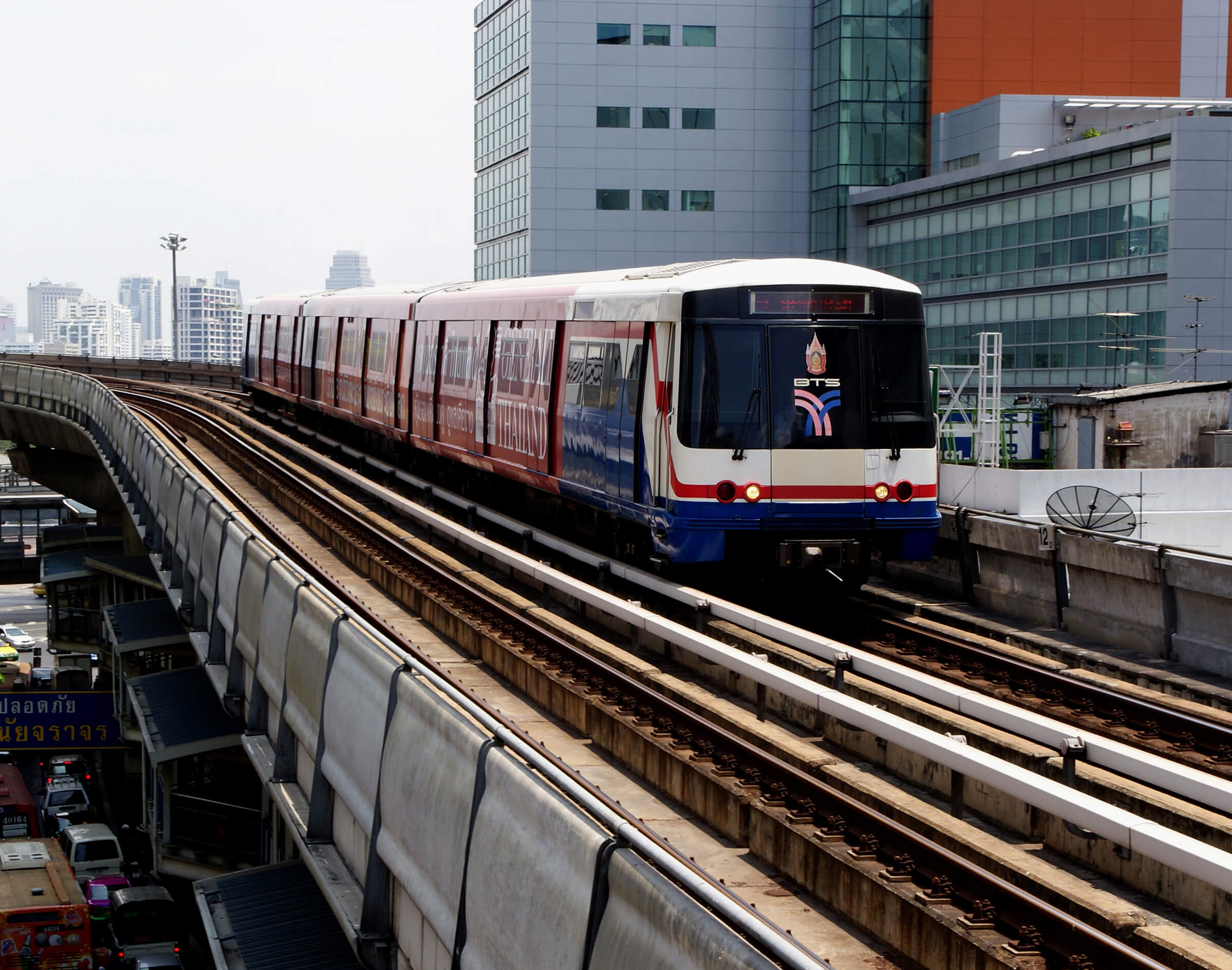
The BTS is still the most transformative piece of transit in modern Thailand, the backbone of Bangkok transportation and the first thing to learn about how to get around Bangkok. What started as two short lines has spread across most of the city, and it is the fastest way to cross the busy core along Sukhumvit, Silom and Phaya Thai without touching the traffic below. It works best as a high-speed connector rather than a door-to-door service.
How to Buy a BTS Ticket in Bangkok
1. Find Your Current Station and Destination
Look at the BTS route map (available at every station and on the official BTS app). Note the name of the station you are at and the station you want to go to.
2. Check the Fare
- At the ticket kiosk (the blue/green machines), select your destination station on the screen.
- The machine will automatically show the exact fare from your current station.
3. Buy Your Ticket
You have two easy options:
Option A: Ticket Kiosk (fastest)
- Select your destination.
- Insert the exact amount using coins or banknotes.
- The machine will give you a small plastic token (ticket).
Option B: Ticket Counter
- Tell the staff your destination station.
- Pay the fare in cash.
- They will hand you the token.
4. Enter the Gate
- Touch or insert the token at the entry gate.
- Keep the token until you exit, you will need it again at your destination station.
Quick Tips
- Fares are calculated by distance, so longer trips cost more.
- Keep small change ready (coins are very useful).
- The BTS runs from roughly 6:00 AM to midnight every day.
- For multiple rides, consider a Rabbit Card (stored-value card) instead of single tickets.
- The Express Spine: Use the Sukhumvit and Silom lines to slice across huge swaths of the city in minutes, completely bypassing peak-hour surface traffic.
- The Interchanges: Seamlessly transition to the MRT (underground network) or the Suvarnabhumi Airport Rail Link at key hub stations like Makkasan or Phaya Thai.
- The “Last Mile” Connection: Because many of Bangkok’s best hidden eateries, boutique hotels, and historic alleys are tucked deep inside long side streets, pair your train ride with a local transit mode to complete the journey.
Pro tip: Ride the BTS to cross the big distances, then cover the last stretch on foot, by canal boat (Khlong Saen Saep) or with a quick motorbike taxi down the quieter sois.
2. Getting around Bangkok by MRT: older, less obvious districts
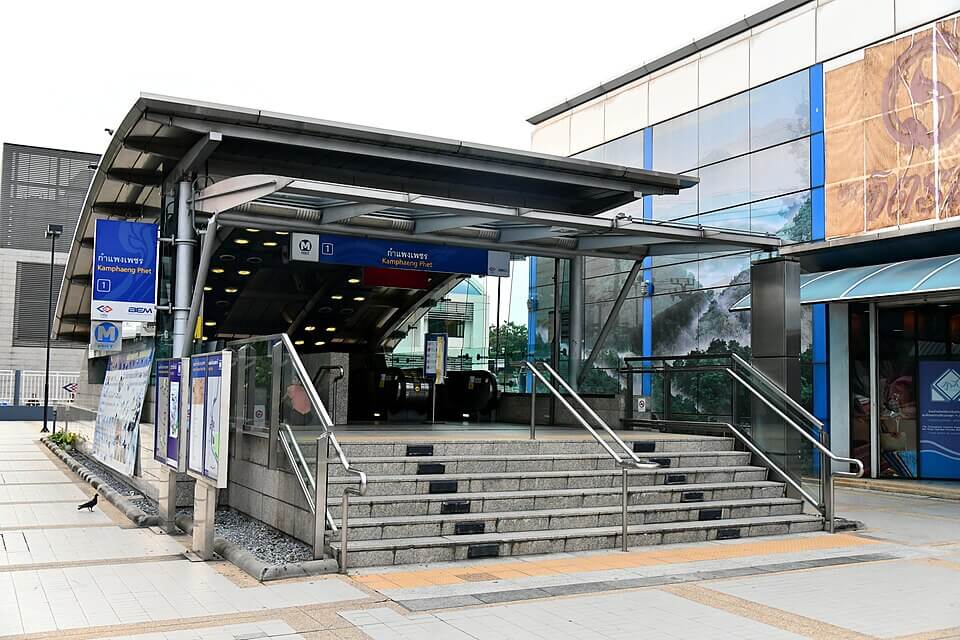
When the MRT (Metropolitan Rapid Transit) subterranean network first opened, it initially felt somewhat limited in scope. Terminating at Hua Lamphong Railway Station for many years, it functioned largely as a utilitarian commuter strip serving modern business corridors. However, as massive expansions pushed the Blue Line beneath the Chao Phraya River and deep into the historic core, the MRT transformed into one of the most indispensable and atmospheric transit systems in all of Southeast Asia.
By tunneling directly beneath regions where surface streets are narrow, winding, and notoriously gridlocked, the MRT seamlessly opened up the older quarters of the capital as part of Bangkok transportation’s broader network. Areas like Yaowarat (Chinatown) and Rattanakosin, where traditional shop houses, street food markets, and centuries-old temples define the urban landscape, are now reachable without spending hours stuck in a stationary taxi. Surfacing from an underground platform like Wat Mangkon or Sanam Chai instantly drops you into parts of the city where Bangkok feels distinctly everyday, vibrant, and rooted in local community life.
If you are working out how to get around Bangkok, the MRT is also the best bridge between systems:
- BTS Skytrain Connections: Hubs like Sukhumvit/Asok and Silom/Sala Daeng allow you to switch from sky-high elevated tracks to cool underground express tunnels in seconds.
- Boat & River Networks: Stations like Sanam Chai sit just steps away from Chao Phraya Express Boat piers, letting you swap rail travel for a scenic river cruise down historical waterways.
- Feeder Transit: Major hubs effortlessly link up with local bus routes, songthaews, and motorbike stands for short side trips.
- Peaceful City Parks: Key stations deliver you straight to the gates of Bangkok’s finest green escapes. Stations like Lumphini, Silom, and Queen Sirikit National Convention Centre place you seconds away from the expansive lawns and elevated walkways of Lumphini and Benjakitti Parks.
- Quiet Neighborhood Cafes: Many of the serene, air-conditioned hideaways featured in our Bangkok Quiet Cafes Guide sit in leafy residential sois just a short 5-to-10-minute stroll from MRT exits in districts like Din Daeng, Lat Phrao, and Thonburi.
Pro tip: You don’t need to stand in line for single-journey tokens during peak hours. The MRT Blue and Yellow lines accept contactless EMV payment cards (Visa or Mastercard), simply tap your credit/debit card directly at the turnstile gate to enter and exit.
3. The Airport Rail Link: more than an airport train
The Airport Rail Link is one of the more underrated pieces of Bangkok transportation, mostly because people only think of it as the way to get to Suvarnabhumi Airport, when in reality it also works as a genuinely useful connector across the city itself. Running from Phaya Thai station all the way out to the airport, it cuts straight through several neighborhoods that would otherwise involve a fair bit of backtracking to reach by other means.
What makes it particularly useful is how well it ties into everything else. At Phaya Thai, it connects directly to the BTS, so you can move seamlessly between the Skytrain network and the airport line without leaving the station. Further along the route, it also links up with the MRT, meaning you can combine all three systems, BTS, MRT, and the Airport Rail Link, into a single, relatively smooth journey across the city depending on where you’re headed.
There’s also a quieter connection most visitors never think to use: the Airport Rail Link’s Makkasan station sits right by Phetchaburi MRT station, and from there it’s just a short walk to the Saen Saep canal boat pier. For a stretch, that means you can genuinely combine three completely different modes of Bangkok transportation, elevated train, underground train, and canal boat, in a single trip, cutting across parts of the city that would otherwise mean sitting in traffic for the better part of an hour.
4. Canal boats and river transport: fast, local and still overlooked
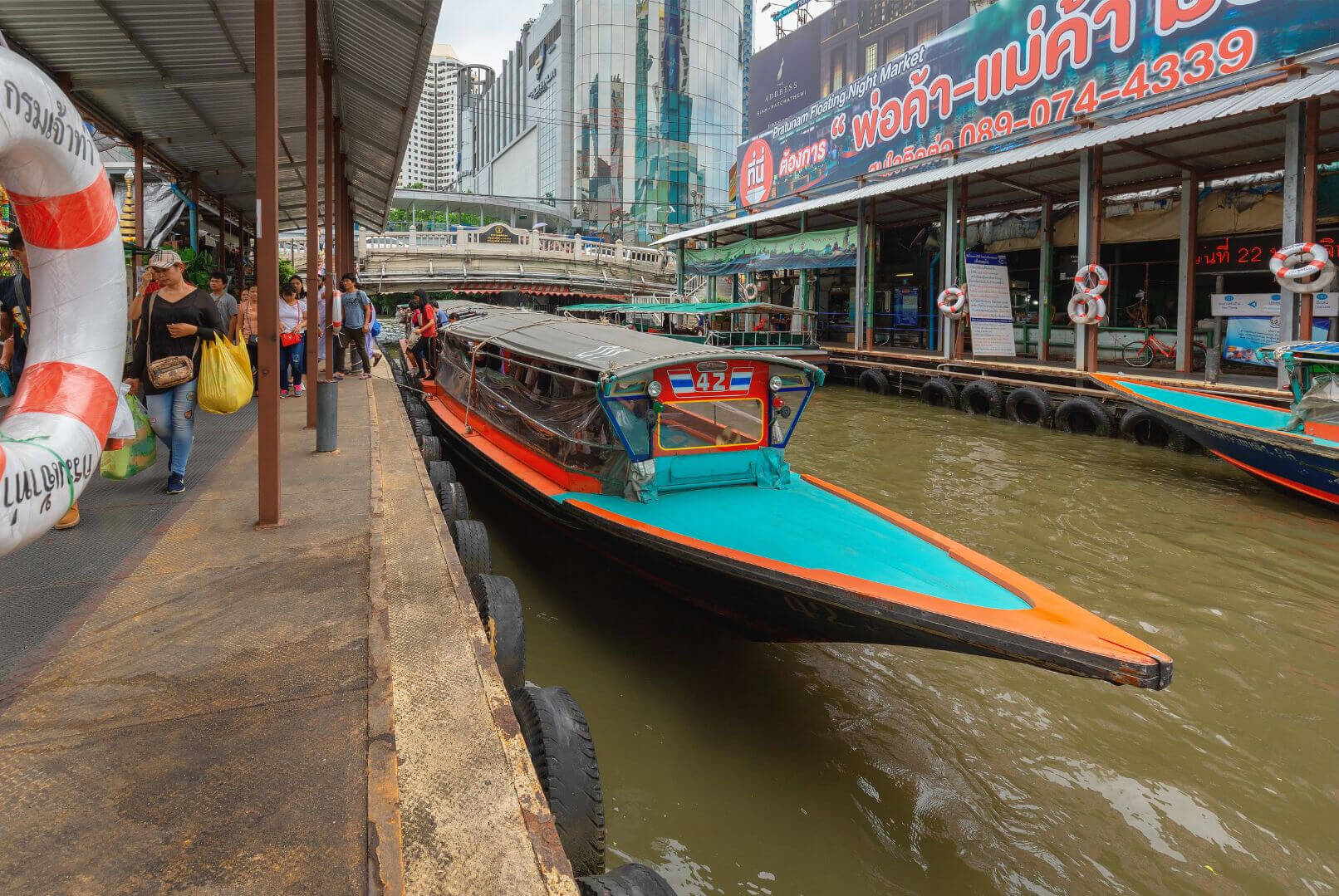
Long before rail tracks and paved avenues, waterways were the highways of Bangkok, which is why it was once called the “Venice of the East.” Many canals were paved over, but the boats that remain are still one of the fastest forms of Bangkok transportation.
The Khlong Saen Saep canal boats run east to west through the middle of the city, completely immune to the gridlock on the bridges above. The fleet has been modernized, with higher sides, better boarding platforms and cleaner engines, so it is far safer and more comfortable than the boats I grew up with. A trip that takes over an hour by taxi can take under twenty minutes on the water. If you only learn one thing about how to get around Bangkok, make it the boats.
The Chao Phraya River is the north-south route. Skip the pricey sightseeing cruises and use the commuter boats run by Chao Phraya Express Boat:
- Orange & Yellow Flag Express Boats: These scheduled public commuter ferries stop at key historic piers, providing a cheap, scenic, and surprisingly rapid connection between modern commercial districts and heritage neighborhoods like Rattanakosin, Wang Lang, and Bang Lamphu.
- The Saphan Taksin Hub: At Sathorn Pier, the river network meets the BTS Skytrain (Saphan Taksin Station). This vital interchange allows you to step directly off an elevated train and onto a passenger boat in less than two minutes.
5. Local and EV buses: slow on paper, smart in practice
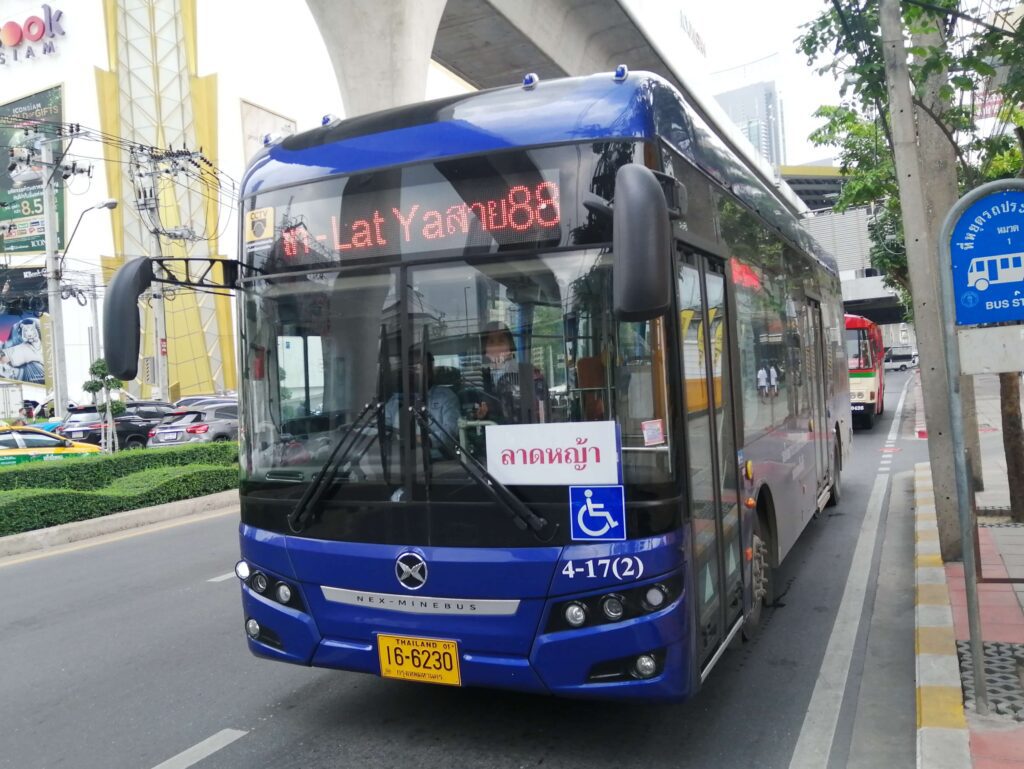
Buses are one of the most underrated answers to how to get around Bangkok. Trains run in straight lines, but buses reach the residential neighborhoods, local markets and districts without a station nearby, like parts of the Old Town and Dusit. One bus can often take you diagonally across the city with no transfers and at street level, which saves a lot of stairs in the heat.
They have also changed a lot. The old open-window diesel buses are being replaced by modern electric ones, many run by Thai Smile Bus in navy blue, with air conditioning, quiet motors and digital stop displays. Fares are distance-based and usually around 25 baht or less.
- Track buses live: apps like ViaBus show where your bus is and when it will arrive.
- Pick the cool ones: the pink, orange and red fan buses are nostalgic but hot. Look for the blue EV or air-conditioned buses.
- Have small change ready: a conductor comes to you for the fare. Some newer buses also take contactless cards.
- When to choose the bus: direct mid-length trips and areas the trains do not reach. For rush-hour cross-town trips, the train is still faster.
6. Is it safe to take a motorcycle taxi in Bangkok?
Trains cover the main roads, but part of learning how to get around Bangkok is the last stretch, because many of the places worth visiting sit deep inside long side streets. That is where Bangkok’s motorbike taxis, called win (วิน) locally, come in. Drivers wait at stands near station exits and soi entrances, know every alley in their area and can slip through traffic that traps cars. Short rides from a station down a soi usually cost about 20 to 50 baht, and stands often post prices for common destinations on a board in Thai.
So, is it safe? For short rides, generally yes, as long as you use official vested drivers, wear the helmet they give you and hold on. I would skip them in heavy rain, on long trips along busy main roads, or if you are carrying big bags.
- Spot the official drivers: they wear bright, numbered vests, usually orange, green or blue.
- Respect the stand: ordering a Grab or Bolt bike right in front of a waiting line of local drivers can cause friction. Either walk up to the stand and say where you are going, which is usually faster, or walk 30 to 50 meters away before booking on an app.
- Safety first: always ask for a helmet and hold on.
7. Bangkok taxis, Grab and Bolt: everything you need to know
Here is how to get around Bangkok by car without overpaying. For door-to-door trips, late nights or when you are carrying bags, a car is still the most practical Bangkok transportation. Metered taxis are cheap, starting at 35 baht. Always ask for the meter (“meter, khrap/kha”) and if a driver refuses or quotes a flat price, just wave down the next one. Expressway tolls are paid by the passenger, and taxis from the official airport queues add a small surcharge.
Ride-hailing apps are the easiest option for most visitors. Uber left Southeast Asia in 2018, so Grab and Bolt are the main apps now. You see the price upfront, there is no bargaining and you can book cars or motorbikes. They can cost a little more than a metered taxi, especially when it rains or at rush hour.
Taxi vs Grab vs BTS vs Bus: Typical Fares
Approximate one-way fare in Thai baht (฿), outside rush hour
Estimates only. Taxi fares rise in traffic because the meter keeps running, Grab prices go up when it rains or at rush hour, and tolls are extra. Trains and buses cost the same whatever the traffic, which is why they usually win for longer trips across the city.
Tuk-tuks: fun once, rarely practical
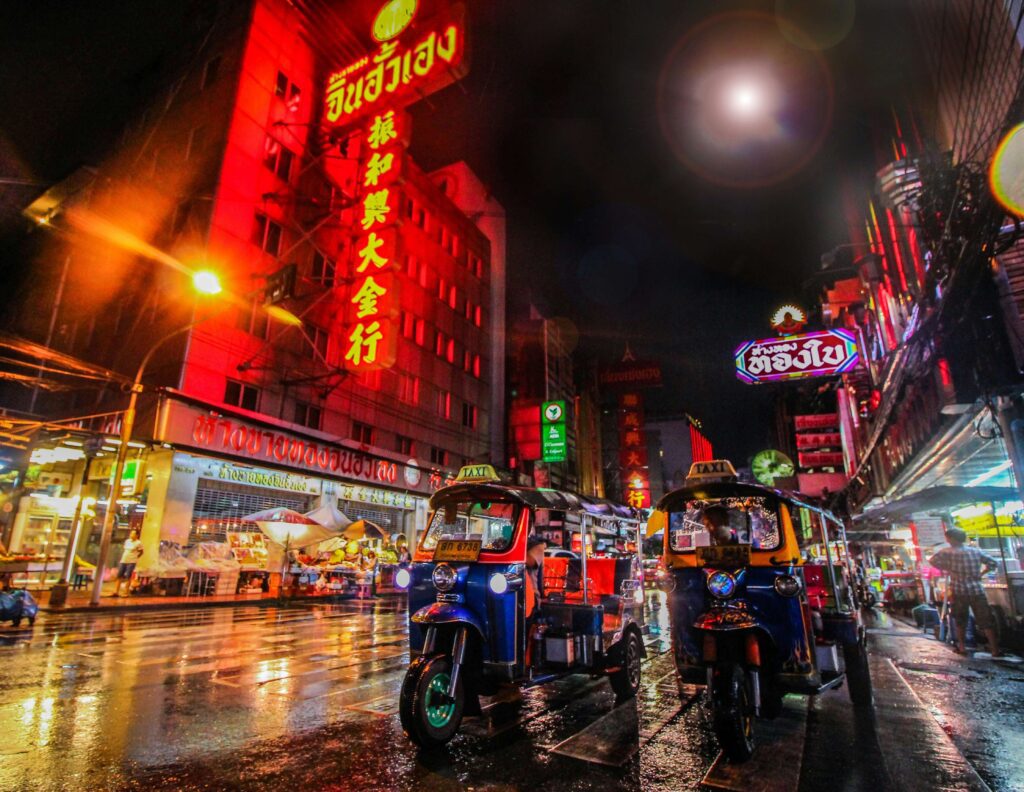
Tuk-tuks are an icon of Thailand, and a short ride is worth doing once for the experience. For everyday Bangkok transportation, though, they are rarely the best choice:
- Inflated Tourist Pricing: Because tuk-tuks do not use meters, drivers negotiate fares upfront. Prices quoted to travelers are often significantly higher than equivalent taxi or motorbike rides.
- Traffic Limitations: Unlike two-wheeled motorbikes, tuk-tuks are wide vehicles that still get caught in the exact same traffic jams as standard cars, exposing passengers to street heat and exhaust fumes while sitting idle.
- When They Make Sense: Tuk-tuks can be useful if you are traveling in a small group of 3 or 4 people carrying lightweight shopping bags, or when moving between close historic sights in Old Town where rail access is limited and you want a memorable, open-air photo opportunity.
8. Regional rail connections (when they make sense)
If you’re connecting flights or planning day trips outside the city, knowing how to get around Bangkok by rail can save time and reduce stress.
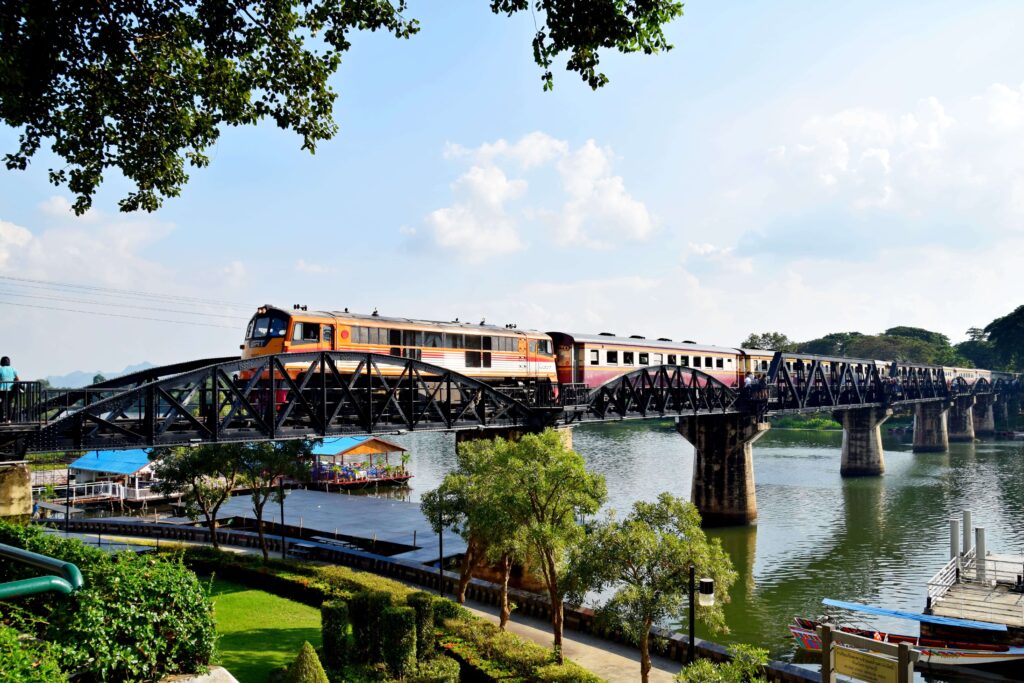
The SRT Red Line, run by the State Railway of Thailand, has quietly become one of Bangkok’s most useful additions. It runs through Krung Thep Aphiwat Central Terminal, still often called Bang Sue Grand Station, which is now the main hub for long-distance trains. From there, the Red Line runs straight to Don Mueang Airport, a fast and cheap option if you are flying with the budget airlines. The station also connects to the MRT Blue Line, so between this and the Airport Rail Link, you can now reach both airports by train without needing a taxi.
There are also commuter trains that run through parts of Bangkok and beyond. These can be extremely economical for longer rides. Depending on your route, trains can reach places like Hua Hin or Kanchanaburi for under 100 baht.
If you’re planning routes outside the capital, this pairs well with our day trips from Bangkok guide and our beach day trips from Bangkok guide, helping you expand your options for getting around Bangkok and beyond.
How to Pay for Public Transport in Bangkok (Rabbit Card vs Contactless)
Paying is the part that confuses most first-timers, but it is simple once you know which system takes what. Here is how to get around Bangkok without fumbling for change at every gate:
- Rabbit Card (BTS): a stored-value card you top up and tap, so you skip the ticket queues. Buy it at any BTS ticket office with your passport. There is a ฿100 card fee plus a minimum top-up. It works on the BTS but not on the MRT or airport trains.
- Contactless bank cards: the MRT Blue and Purple lines, the Yellow and Pink monorails, the Airport Rail Link and the SRT Red Line all let you tap in and out with a contactless Visa or Mastercard. Use the same card both ways. The BTS does not take contactless cards yet.
- Single tickets: fine for the odd ride on the BTS, MRT or Airport Rail Link. Buy them at the kiosk or counter.
- Cash: still needed for boats, most buses, motorbike taxis and taxis. Carry small notes and coins.
- Grab and Bolt: pay in the app by card, or in cash to the driver.
For cash and cards, see my guide to the best ATM to withdraw money in Thailand.
How to Get from Suvarnabhumi Airport (BKK) to Central Bangkok
Most international flights land at Suvarnabhumi, so this is usually your first lesson in how to get around Bangkok. You have three good options:
- Airport Rail Link (cheapest and most predictable): trains run from the airport basement to Phaya Thai in about 26 to 28 minutes for ฿45, from around 5 AM until midnight, and you can tap in with a contactless card. Change to the BTS at Phaya Thai or the MRT at Makkasan.
- Metered taxi: use the official taxi queue on Level 1. You pay the meter plus a ฿50 airport surcharge and any expressway tolls. Best if you have heavy bags or are arriving late.
- Grab or Bolt: book in the app and meet your driver at the pickup point shown. You see the price before you ride.
Flying into Don Mueang instead? Take the SRT Red Line from the station across the skywalk to Krung Thep Aphiwat (Bang Sue), where several lines meet, and change to the MRT Blue Line into the city, or catch the A1 airport bus to Mo Chit BTS station. If you are connecting between the two airports, there is a free shuttle bus for passengers with an onward flight.
Before you leave the airport, sort out a local SIM or eSIM so Grab and your maps work from the moment you land. My Thailand SIM card guide explains your options when you land.
Practical Tips: How to Get Around Bangkok Without the Stress
Smart Tips on How to Get Around Bangkok
- Travel early in the morning or later in the evening for quieter rides.
- Combine modes (rail, boat and a short local connection) instead of relying on just one.
- Avoid taxis at rush hour, roughly 7 to 9 AM and 4:30 to 7:30 PM, when the trains are much faster.
- Plan for the last mile. Many off-path spots start a few streets away from the main road.
- Choose predictable travel times over the “shortest distance” route.
- Download the City Transport Bangkok app to plan routes across the trains, boats and buses in one place.
- In the dry season, check air quality on IQAir before long walks or open-air rides.
Conclusion
Bangkok isn’t chaotic by default, it’s misunderstood. Once you know how to get around Bangkok without relying on cars for everything, and how trains, boats, buses, and short local connections fit together, the city becomes calmer, faster, and far more revealing.
This is the same local-first lens we use across the site, from our Bangkok hidden gems guide to our broader approach to sustainable travel in Thailand. If you want to understand how we design experiences, you can also read how we’re different.
If you’re building your Bangkok itinerary around food as well, the Bangkok vegan and vegetarian guide pairs naturally with this transport approach.
If you would rather not figure out how to get around Bangkok yourself, we can plan your days around the right mix of trains, boats and drivers as part of our custom tours in Thailand.
Map: Bangkok Hidden Gems You Can Reach by Public Transport
Need Help Getting Around Bangkok?
Have questions about routes, transit passes, or custom itineraries? Reach out directly via WhatsApp or Email for personalized guidance.
FAQ: How to Get Around Bangkok
How do you get around Bangkok as a tourist?
The best answer to how to get around Bangkok is using the BTS Skytrain and MRT subway as your backbone, then filling the gaps with river or canal boats, buses or a short motorbike taxi ride into the smaller sois. No single mode covers the whole city, so mixing a few is what makes it work.
What are the public transportation options available in Bangkok?
Bangkok has the BTS Skytrain, the MRT subway, the Airport Rail Link and the SRT Red Line for trains, plus Chao Phraya river boats, Saen Saep canal boats and a large bus network with newer electric buses. For short trips and the last stretch, there are motorbike taxis, metered taxis and ride-hailing apps like Grab and Bolt.
Is Uber or Grab better in Bangkok?
Uber does not operate in Bangkok. It sold its Southeast Asian business to Grab in 2018. Grab and Bolt are the main ride-hailing apps now, with upfront prices for cars and motorbikes, so there is no bargaining like with street taxis or tuk-tuks.
Which is cheaper, MRT or BTS in Bangkok?
Both start at 17 baht for short trips, but the MRT is usually a little cheaper for longer rides, topping out at around 44 baht, while longer BTS trips can cost up to around 62 baht. The MRT also lets you tap in with a contactless Visa or Mastercard.
Is BTS or MRT better for getting around Bangkok?
The BTS is usually best for crossing Sukhumvit, Silom and the busy central areas, while the MRT is better for older districts like Chinatown and Rattanakosin. Most locals use both, switching at interchanges like Asok and Sala Daeng.
Are Saen Saep canal boats a good way to get around Bangkok?
Yes. They skip road traffic completely and are often the fastest way across the middle of the city. The boats have been modernized in recent years, so they are much safer and more comfortable than they used to be.
Are buses a good option for Bangkok transportation?
Yes, especially when a route lines up with where you are going. The newer electric buses are cool, quiet and cheap, usually around 25 baht or less. Use an app like ViaBus to track them.
Are tuk-tuks cheaper than taxis in Bangkok?
Usually not. Tuk-tuks have no meter, so you agree on a price upfront, and tourists are often quoted more than a metered taxi or Grab would cost for the same trip. Take one for the experience, but use taxis, Grab or trains for everyday travel.
Is there a free shuttle between Bangkok’s two airports?
Yes. There is a free shuttle bus between Suvarnabhumi (BKK) and Don Mueang (DMK) for passengers with a connecting flight. You need to show your onward ticket.
What is the cheapest way to get from the airport into Bangkok?
Take the Airport Rail Link from Suvarnabhumi or the SRT Red Line from Don Mueang. Both connect to the BTS and MRT and cost far less than a taxi.

About the author
Written by Dee, Thai-born founder of Off Path Thailand. I was born and raised in Phrom Phong and have ridden Bangkok’s trains, boats and buses since the first Skytrain opened. I now live in Cha-am, close to my family in Bangkok, and I plan custom trips for travelers who want Bangkok to feel calm, real and easy to get around. About the founder
Tell us your dates and vibe. Our team replies within 24 hours to begin crafting your trip.
Leave everything to us and experience Thailand off the beaten path
If you want to plan a calm, authentic Bangkok day built around local transport, start with our Bangkok hidden gems guide, then connect it with this transport approach to make the city feel effortless.