
Updated: September 13, 2026
Bangkok Self Guided Walking Tour
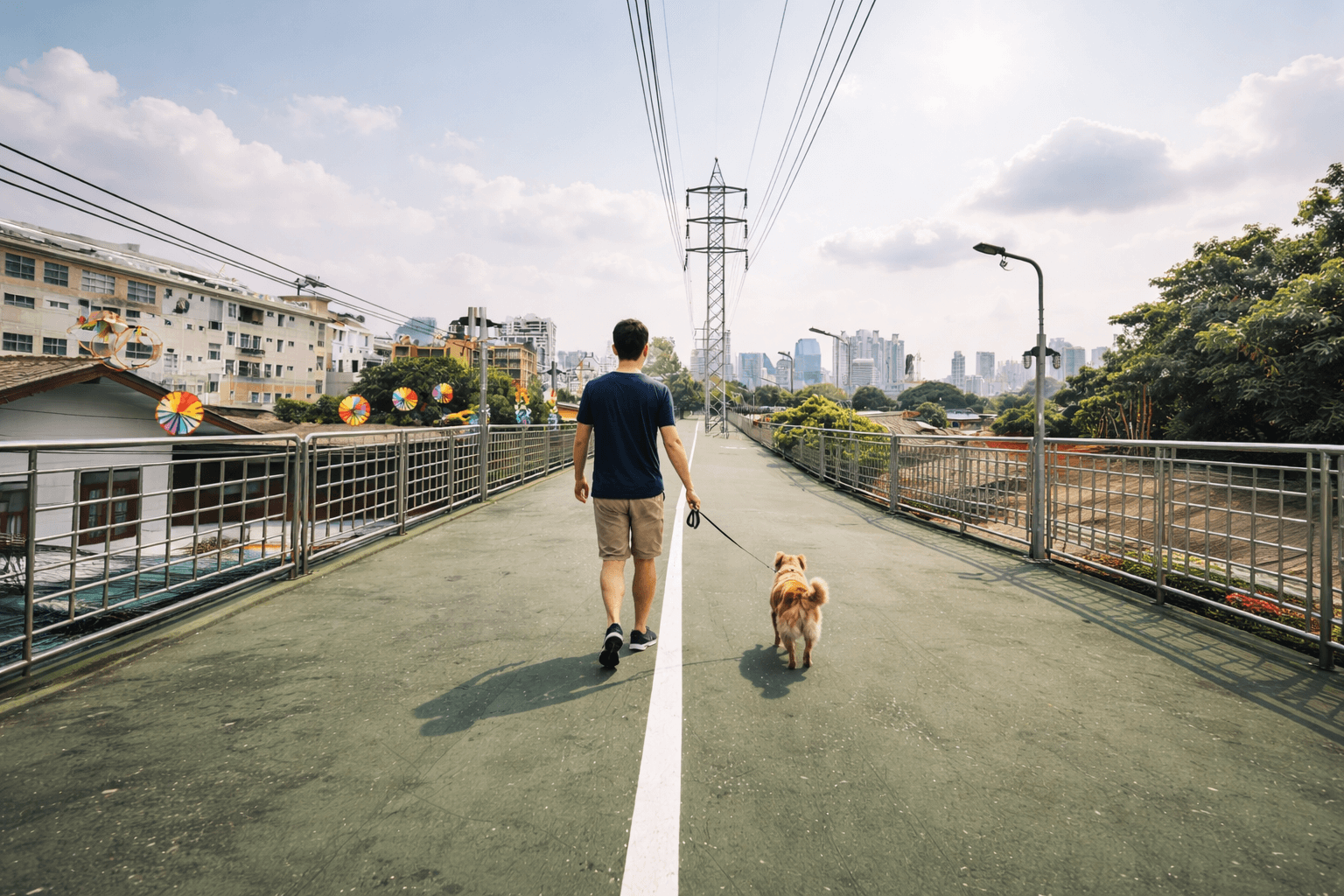
TL;DR: Bangkok isn’t a city I recommend rushing. It’s a city where you stop to smell the roses—on foot, inside sois, through parks, along khlong edges, and inside the “in-between” neighborhoods that never make the usual itineraries. Each curated Bangkok Self Guided Walking Tour is designed for a calm pace in 2026: fewer crowds, more local life, and plenty of natural pause points.
These options for a Bangkok Self Guided Walking Tour don’t need to be rushed. The city reveals itself best at a slower pace—through parks, canal paths, residential streets, and the in-between neighborhoods that never appear on rushed itineraries. When you walk without forcing a checklist, Bangkok feels layered, livable, and surprisingly calm.
Each route takes about an hour or so, and is convenient to start and end near BTS/MRT. I recommend starting with the route closest to where you’re staying and letting the day naturally unfold without forcing things. You can estimate what a walking day might cost (transport, snacks, small purchases) with the Thailand Trip Budget Calculator.
- Bangkok Self Guided Walking Tour
- The 5 Routes for a Bangkok Self Guided Walking Tour (Calm Pace)
- Route 1:
- Benjakitti to Lumphini Walk
- Route 2:
- Route 2: Phrom Phong → Nana → Chidlom (Modern Bangkok Walk)
- Route 3:
- Route 3: Khlong Saen Saep Canal Walkway (Thonglor → Sukhumvit 39 → Asoke)
- Ready to go beyond self-guided walks?
- Route 4:
- Route 4: Old Bangkok Loop — Wat Mangkon → Sampheng → Pahurat → Hua Lamphong
- Route 5:
- Route 5: Silom Station → Patpong Crossroads → Sri Maha Mariamman Temple → Iconic Skyscrapers
- The Case for a Slow Bangkok Walking Tour
- How to Use These Best Bangkok Walking Routes
- Map – Best Bangkok Walking Routes
- Practical Tips & Safety (Bangkok 2026)
- Conclusion
- FAQ (Bangkok Self Guided Walking Tour)
- Are these Bangkok Self Guided Walking Tour routes safe for solo travelers?
- What is the best time of day for a Bangkok Self Guided Walking Tour?
- How long should a Bangkok Self Guided Walking Tour take?
- Do I need a guide for a Bangkok Self Guided Walking Tour?
- Is a Bangkok Self Guided Walking Tour suitable during the hot season?
- How much does a day on a Bangkok Self Guided Walking Tour cost?
- Which Bangkok Self Guided Walking Tour options are the calmest?
- Can I combine a Bangkok Self Guided Walking Tour with other guides?
- What shouldn't you miss in Bangkok?
- What Bangkok tours are worth the cost?
- How many days for Bangkok is enough?
- Where to go in Bangkok for first timers?
- Experience Thailand off the beaten path with a calm, private plan
- The 5 Routes for a Bangkok Self Guided Walking Tour (Calm Pace)
The 5 Routes for a Bangkok Self Guided Walking Tour (Calm Pace)
Route 1:
Benjakitti → Green Mile Walkway → Wireless Road → Lumphini (Parks + Contrast Route)
Route at a glance
Benjakitti to Lumphini Walk
- Start: Benjakitti Park area (Sukhumvit 10 / Asok access)
- End: Lumphini Park (Silom access)
- Distance: ~5–6 km
- Time: 2.5–4 hours at an easy pace
- Type: Linear walk (park to park)
- Difficulty: Easy / mostly flat
- Best time: Early morning or late afternoon
- Feel: Two parks plus the strongest “Bangkok contrast” you can get without trying
- Best for: First-time visitors, relaxed walkers, skyline + green space
- Transit: BTS Asok / MRT Sukhumvit to start · BTS Sala Daeng / MRT Lumphini to finish
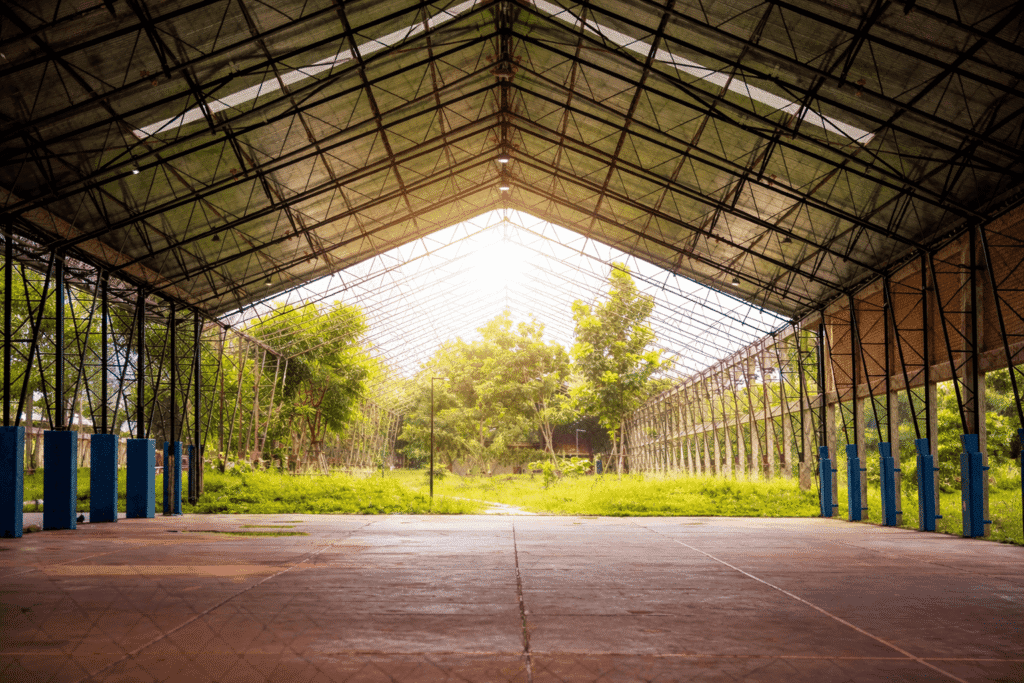
What makes this route special is that it shows Bangkok from an angle I never had growing up, even though I know the area well. The newly built walkway connecting Benjakitti Park toward Wireless Road is beautifully designed, and it completely changes how this part of the city fits together on foot. Places that once felt separated by traffic and busy roads now link up naturally, and you start to see how green and walkable Bangkok can actually be. It’s the kind of discovery that turns a simple walk into one of the best Bangkok walking tour routes you can do on your own.
It starts with Benjakitti’s transformation. What used to be the Tobacco Monopoly area has become an extension of the park—open space and real activity zones, including futsal, pickleball, basketball, badminton, and a cycling track. I used to ride my bicycle from Phrom Phong to spend the whole morning here: playing basketball, a few loops around the track, or just time on a bench when the city felt too chaotic.
From there, the Green Mile walkway pulls you into a legit contrast: polished city planning, then pockets that feel more rough-and-real—slummier edges, then suddenly a fancy neighborhood; a mosque nearby; temples; the geometry of an elevated highway overhead. I like this walk because it doesn’t pretend Bangkok is one aesthetic.
It’s multiple lives stacked together, and the route lets you see reality without turning it into a spectacle—something that defines a great Bangkok Self Guided Walking Tour at its core.
Lumphini becomes your second reset. The walkway naturally leads you right to one of Lumphini Park’s entrances via Wireless Rd. so the transition feels seamless rather than planned. If you’re thinking of doing a bicycle day, Lumphini allows cycling from 10:00 AM to 3:00 PM, when the park is less crowded—an unusually useful detail if you’re planning your timing.
(Official listing: Lumphini Park.)
If you want to keep this day practical, it pairs well with Bangkok on a Budget 2026 and the Bangkok Hidden Gems Guide. For more green resets like this, see quiet park escapes in Bangkok.
Route 2:
Phrom Phong → Nana → Chidlom (Modern Bangkok Walk)
Route at a glance
Route 2: Phrom Phong → Nana → Chidlom (Modern Bangkok Walk)
- Start: Phrom Phong (BTS)
- Via: Nana
- End: Chidlom (BTS)
- Distance: ~3–4 km
- Time: 2–3 hours at an easy pace
- Type: Linear walk (mostly straight along the BTS line)
- Difficulty: Easy / flat / fully walkable
- Best time: Morning or late afternoon
- Feel: Modern, international Bangkok — busy, but walkable and surprisingly enjoyable
- Best for: First-time visitors, people who want to see everyday modern Bangkok on foot
- Transit: Start at BTS Phrom Phong · Finish at BTS Chidlom
- How it works: Follow the BTS Skytrain line from Phrom Phong through Nana to Chidlom
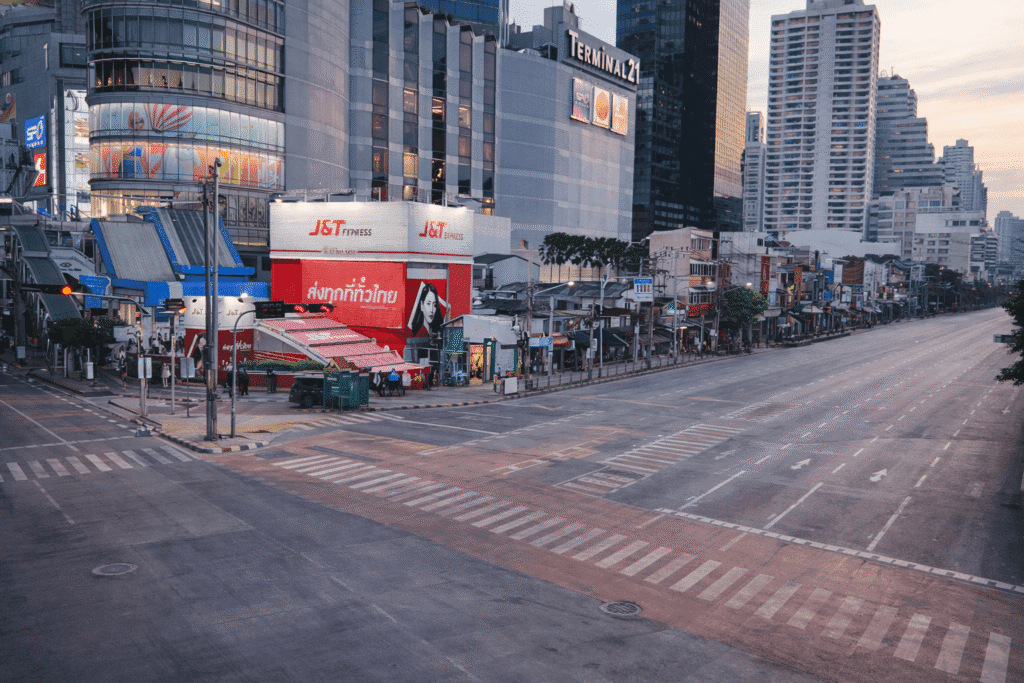
I used to take the BTS for this distance by default. But once you do it on foot, you realize it’s not that long and it captures a side of Bangkok that feels very modern. You hear languages changing block by block. You see expats, locals, tourists, and office workers sharing the same sidewalks. It’s a living collage of modern life, and an ideal addition to a Bangkok Self Guided Walking Tour.
The easiest part of this route is that its practically a straight line, you just follow the BTS Skytrain rails from Phrom Phong until you reach Chidlom.
To keep this route calm, use BTS stations as loose checkpoints, but let yourself drift slightly off the main road or malls when the noise or heat feels too much. The best moments are usually the in-between: a shaded side lane, a quick stop at a cafe, or a shopping mall.
This walk connects naturally into your calmer Sukhumvit layer: quiet cafes in Bangkok for breaks, and Bangkok vegan restaurants if you want an easy food plan without chasing hot spots. If you’re timing your visit around heat and rain, use the Best Time to Visit Thailand 2026 Planner.
Route 3:
Khlong Saen Saep Canal Walkway (Thonglor) → Sukhumvit 39 → Asoke
Route at a glance
Route 3: Khlong Saen Saep Canal Walkway (Thonglor → Sukhumvit 39 → Asoke)
- Start: Thonglor or Sukhumvit 39
- Along: Khlong Saen Saep Canal Walkway
- End: Asoke
- Distance: ~3–4 km
- Time: 1.5–2.5 hours at an easy pace
- Type: Linear canal-side walk
- Difficulty: Easy / mostly flat
- Best time: Morning or late afternoon
- Feel: “Bangkok behind Bangkok” — residential pockets, hidden entrances, water-side calm
- Best for: Travelers who want a quieter, more local side of Sukhumvit
- Transit: BTS Thonglo to start · BTS Asok / MRT Sukhumvit to finish
- How it works: Follow the canal walkway between Thonglor and Sukhumvit 39, then continue toward Asoke
This route isn’t an attraction, and that’s exactly why it feels so authentic. Walking the canal-side stretches between Thonglor and Sukhumvit 39 reveals a side of the city most visitors never see, tucked just behind the glossy face of Sukhumvit Road. You’ll pass through quiet residential pockets and long-established Muslim neighborhoods, and follow narrow backstreets that suddenly open onto the canal. Along the way, you’ll find small shortcuts and connections that change how you think about getting around. For anyone who wants a Bangkok walking tour that feels real rather than staged, this is the side of the city worth slowing down for.
It’s also calming in a simple way: walking (or cycling) next to water slows your nervous system down, even if the water isn’t perfect—something you notice often when following a Bangkok Self Guided Walking Tour. Sometimes it smells, and it’s not the cleanest canal. But the atmosphere still shifts from the regular Bangkok we all know.
Do this route as a meander. Walk a segment, take a side exit if it looks interesting, then re-enter the canal path when you want the calmer path again. If you want more context on the “in-between” areas that make Bangkok feel livable, start with off-the-beaten-path Bangkok neighborhoods, and see how it fits your values via how we’re different and sustainable tourism in Thailand.

Ready to go beyond self-guided walks?
Explore hidden Bangkok in comfort with a private driver and expert guide. Reach out today for a consultation or let us design your custom itinerary!
Route 4:
Old Bangkok Walking Tour Loop — Wat Mangkon → Sampheng → Pahurat → Hua Lamphong
Route at a glance
Route 4: Old Bangkok Loop — Wat Mangkon → Sampheng → Pahurat → Hua Lamphong
- Start: Wat Mangkon (MRT)
- Via: Sampheng → Pahurat
- End: Hua Lamphong
- Distance: ~4–5 km
- Time: 3–4 hours at an easy pace
- Type: Heritage loop through working market streets
- Difficulty: Easy to moderate (narrow streets, busy sections)
- Best time: Morning (best atmosphere and cooler temperatures)
- Feel: Heritage Bangkok — ethnic Chinese, Indian, and Thai layers in real working streets
- Best for: Culture, markets, food, and old Bangkok atmosphere
- Transit: Start at MRT Wat Mangkon · Finish near Hua Lamphong / MRT Blue Line
- How it works: Walk from Wat Mangkon through Sampheng and Pahurat, ending around Hua Lamphong
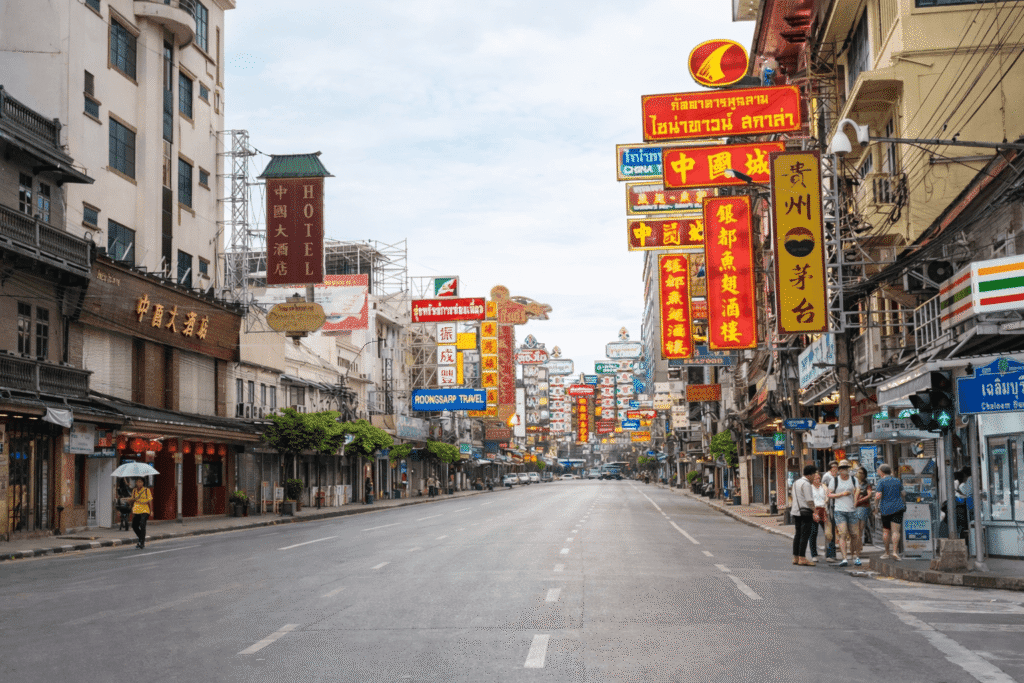
This is the route that feels like continuity. It runs through the kind of Bangkok my dad grew up in—and the same streets still felt familiar to me as when I was a kid. Even now, it holds that atmosphere: families working in narrow shop-houses, shops that have lasted for decades, and markets where the goal is daily commerce, not a touristy attraction.
Discover some of the best Bangkok authentic markets with our detailed Bangkok market guide.
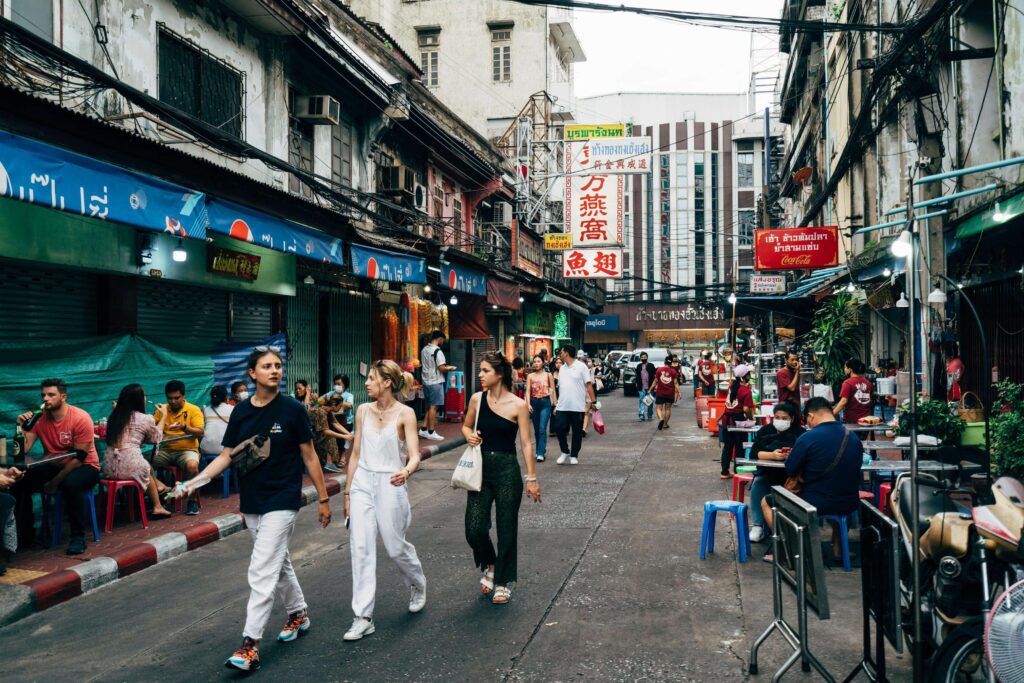
Wat Mangkon places you near the Chinese-heritage side of the city. Sampheng shifts into wholesale energy—tight lanes filled with stock and movement. Then Pahurat changes the tone again, with a clear Indian layer: fabrics, gold shops, groceries, and street scenes that feel culturally distinct from the blocks before. And throughout it all is Thai everyday life holding the area together—making this one of the most layered examples of a Bangkok Self Guided Walking Tour.
This loop isn’t “quiet” in volume, but it can still be slow and calm if you walk with the street instead of against it: step aside often, sit and grab some Chinese tea, and treat the market as something you’re moving through respectfully. If you’re planning a food-heavy day here, use your Bangkok street food prices comparison table for reality checks, then build in calmer stops via Bangkok hidden gems food or reset with a lighter day through day trips from Bangkok.
Route 5:
Silom Station → Patpong Crossroads → Sri Maha Mariamman Temple → Iconic Skyscrapers
Route at a glance
Route 5: Silom Station → Patpong Crossroads → Sri Maha Mariamman Temple → Iconic Skyscrapers
- Start: Sala Daeng (BTS) or Silom (MRT)
- Via: Patpong Crossroads → Sri Maha Mariamman Temple
- End: Iconic Silom Skyscrapers
- Distance: ~3–4 km
- Time: 2–3 hours at an easy pace
- Type: Linear central Bangkok walk
- Difficulty: Easy / flat / busy sidewalks
- Best time: Morning or late afternoon
- Feel: The clearest “old and new coexisting” walk in central Bangkok
- Best for: First-time visitors who want temples, business district energy, and a bit of nightlife atmosphere in one walk
- Transit: Start at BTS Sala Daeng / MRT Silom · Easy connections back via Silom or Rama 4
- How it works: Walk from Silom through Patpong and Sri Maha Mariamman Temple, then into the surrounding skyscraper district
Silom changes personality as you walk. You can pass Sri Maha Mariamman Temple, the old South Indian Hindu temple that anchors this stretch of the road, then move through a section that feels distinctly Indian and Burmese before suddenly finding yourself surrounded by office towers and the tempo of a business district. Keep going and the nightlife layer appears—Patpong and the streets around it—and then you’re back in the practical, connective feel of Rama 4 Road.
Note: I would highly recommend avoiding Patpong though, as it is infamously known for scams at their night venues. For more tips on staying safe while traveling, check out our Thailand safety guide.
What I like about Silom is that Bangkok doesn’t try to separate these identities neatly. They sit next to each other without apology. A small community street can exist under glass towers. A temple can sit near infrastructure built for speed. It’s also an easy route to start or end—and a good example of how to get around Bangkok efficiently—because Silom MRT and Sala Daeng BTS sit close together, almost like an interchange, so you’re never “stuck” if you want to stop early. It’s also one of the areas that best represents what makes a great Bangkok Self Guided Walking Tour, where the city’s layers reveal themselves more naturally.
If Silom’s pace starts to feel too intense, balance it with a calmer route day (like Route 1) and keep your spending realistic using Bangkok on a Budget 2026 and the budget calculator.
The Case for a Slow Bangkok Walking Tour
Bangkok is typically built around speed: “do this in one day,” “hit these 10 spots,” “don’t miss anything.” That works for some people, but it often creates a Bangkok that feels more stressful than it needs to be.
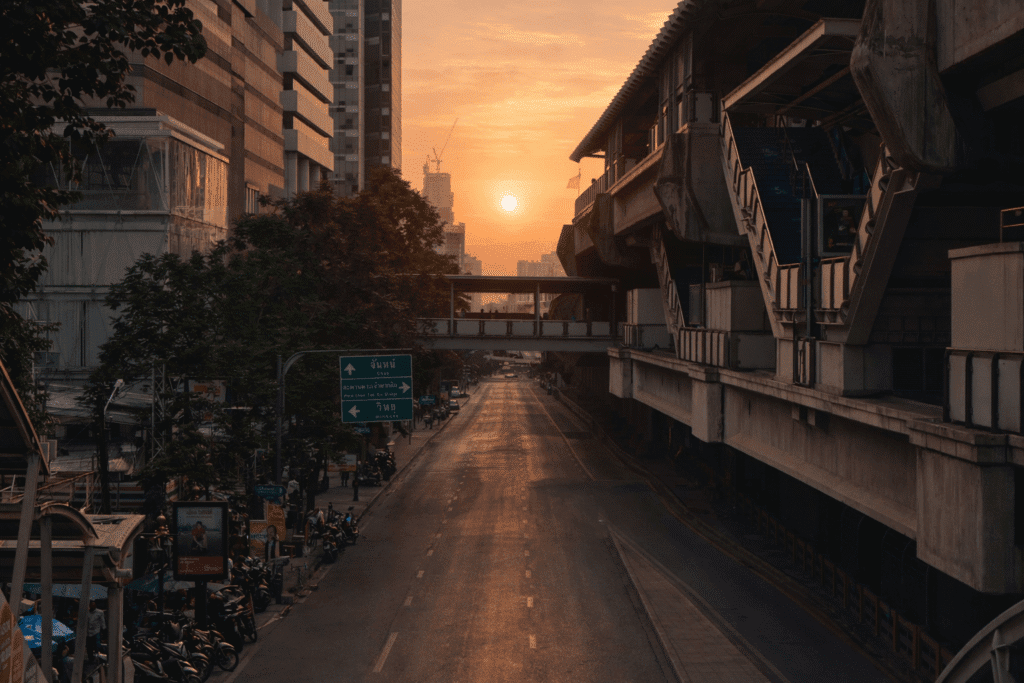
I grew up in Bangkok, and the city I know is made of constant contrasts. A polished new condominium can stand right beside a worn, working alley. A mosque and a temple can sit just a few minutes’ walk apart. An elevated highway slices across the skyline while a quiet green path runs above it. When you walk, you feel these contrasts up close, and you start to understand Bangkok as a layered city rather than a single mood. That’s what a slow Bangkok walking tour gives you that no taxi or skytrain ride ever can.
Walking also slows you down, bringing you closer to everyday life—something that defines a great Bangkok Self Guided Walking Tour: morning bike deliveries, street vendors setting up, monks moving in small groups, and small repair shops opening their shutters.
These routes are intentionally calm, practical, and updated for how Bangkok functions now: QR payments (PromptPay) are common for locals, transit is ever-expanding, and new public spaces have evolved—changing how areas connect.
What I’m trying to avoid is the impression that Bangkok is mainly congestion + attractions. When you walk, you get the feel that the city is really livable: a pocket garden randomly pops up, you discover a shaded bench next to a canal, or you notice an elderly couple opening their shop in the same place they’ve opened it for decades. Those moments don’t show up in a Bangkok vlog, but they’re often what people remember.
These routes are also flexible. If you’re traveling with someone who walks slower, if you want to stop often for photos or breaks, or if you just want a gentler day between bigger sightseeing days, you can do that here without feeling like you’re “missing” Bangkok.
You honestly don’t need a guide to do any of these routes. You just need time, water, and the willingness to move slowly.
However to go deeper into hidden Bangkok with an experienced guide and to travel deeper into hidden alleyways it would be a good idea to have a driver and a car ready, on days that you decide to enhance your Bangkok experience you can shoot us a message on WhatsApp – even if its for free advice or we can hook you up with a car and a guide to make your travel more seamless so you can get more out of your Bangkok experience!
How to Use These Best Bangkok Walking Routes
Best time of day:
Morning (7:00–9:30): coolest and quietest
Late afternoon (4:30–6:30): softer light, more street life
Midday is possible, but use an umbrella, shorten the route, and add shade breaks.
What to bring: water, light shoes, sunscreen/cap, a small towel/tissues, and a phone with offline maps downloaded.
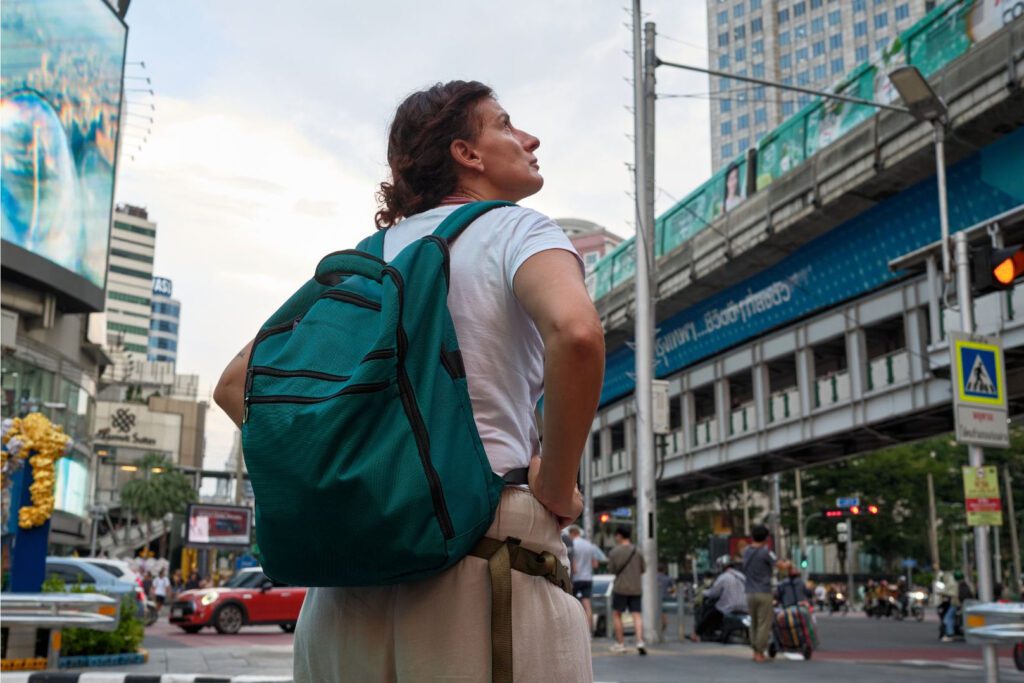
Navigation that stays calm: use BTS/MRT stations as landmarks, then walk in short segments. If a sidewalk disappears, don’t fight it — cross early, take a parallel street, or loop back.
Safety: Bangkok is very safe for walking at any time in lived-in areas. The only real risks are heat and traffic crossings. Slow down more than you think you need to, hydrate constantly, and use footbridges when possible.
Budget note: walking is cheap, but Bangkok days still add up in small ways (snacks, cold drinks, short rides). If you’re changing money for the day, use our Bangkok money exchange guide to avoid poor rates before you head out.
Air quality: Bangkok sometimes experiences high PM2.5 levels, so be sure to check IQAir’s website for the latest air quality updates before heading out. I wouldn’t recommend walking outdoors if the AQI is 150 or above.
Map – Best Bangkok Walking Routes
Practical Tips & Safety (Bangkok 2026)
- Hydrate before you feel thirsty. Heat sneaks up fast, even on “short” walks.
- Choose shade over direct routes. A longer shaded path often feels easier than a short sunny one.
- Use footbridges when possible. Road crossings are where most walking stress happens.
- Keep neighborhoods residential-friendly. Lower your voice, avoid close-up photos of people, and don’t treat local streets like a set.
- Reduce waste where you can. One refillable bottle and fewer disposable snacks makes a bigger difference than people think.
- Check out our Bangkok safety review page for a calm, practical overview before you explore.
Conclusion
If Bangkok ever feels overwhelming, the solution usually isn’t more planning—it’s slowing down, especially when following best Bangkok walking routes 2026. These routes are how I experience the city when I want it to feel human again: parks that reset you, canal edges that reveal hidden residential life, markets that carry decades of routine, and districts like Silom that show the city’s layers side by side.
For a peaceful escape from the city buzz, check out our Bangkok park guide or explore our beach day trips from Bangkok.
Start with the walk closest to where you’re staying, go early or late, and let Bangkok reveal itself in small transitions. When you’re ready to plan the rest of your trip, use the Thailand Trip Budget Calculator for realistic daily costs, and check the Best Time to Visit Thailand 2026 Planner to choose a calmer season. This closes my Bangkok walking guides—next, I’ve mapped quiet, local Chiang Mai walking routes with the same slow-travel approach.
If you want the day to feel effortless, we can also arrange an English-speaking private guide to handle the small frictions—meeting point, pacing, transit hops, and food stops—so you can simply walk, pause, and enjoy Bangkok without having to think through logistics.
Related Reading: Bangkok Hidden Gems Guide, Bangkok on a Budget 2026, Quiet Cafes in Bangkok 2026, Bangkok Vegan Restaurants 2026, Bangkok Hidden Gems Food 2026, Bangkok Neighborhoods, Day Trips From Bangkok.
Prefer a quick chat?
Message us directly on WhatsApp
If you already have an idea of your trip, send us a message — we’ll guide you through the best options for your travel style.
Chat on WhatsAppOr email us at [email protected]
FAQ (Bangkok Self Guided Walking Tour)
Are these Bangkok Self Guided Walking Tour routes safe for solo travelers?
Yes. The Bangkok Self Guided Walking Tour routes pass through lived-in, central neighborhoods that are active throughout the day. Bangkok is generally very safe for walking. The main things to watch for are heat and traffic crossings, not crime. Move slowly, hydrate often, and use footbridges when available along your walking route.
What is the best time of day for a Bangkok Self Guided Walking Tour?
Early mornings (7:00–9:30 AM) are the calmest and coolest for a Bangkok Self Guided Walking Tour. Late afternoons (4:30–6:30 PM) offer softer light and more street life. Midday is possible but shorter segments of the walking tour are recommended due to heat.
How long should a Bangkok Self Guided Walking Tour take?
Most Bangkok Self Guided Walking Tour routes take between 1.5 to 4 hours at a relaxed pace. The idea is not to rush but to allow natural pauses—parks, canal edges, tea stops, or simply sitting when something feels worth observing along the way.
Do I need a guide for a Bangkok Self Guided Walking Tour?
No. Every Bangkok Self Guided Walking Tour is designed for independent exploration and starts near BTS or MRT stations. If you prefer not to manage navigation, we can arrange English-speaking guides so you can experience the routes without handling logistics.
Is a Bangkok Self Guided Walking Tour suitable during the hot season?
Yes, but timing matters. For a Bangkok Self Guided Walking Tour, start early, reduce distance, and use parks and shaded streets. Routes like Benjakitti to Lumphini are especially effective for a self-guided tour because green space reduces heat exposure.
How much does a day on a Bangkok Self Guided Walking Tour cost?
Walking itself is free, but small expenses add up—drinks, snacks, short transit rides, or market stops. A realistic day out on a Bangkok Self Guided Walking Tour ranges from budget-friendly to moderate depending on food and café choices. Use the Thailand Trip Budget Calculator to estimate costs.
Which Bangkok Self Guided Walking Tour options are the calmest?
The Benjakitti → Green Mile → Lumphini route is one of the calmest options for a Bangkok Self Guided Walking Tour because it connects parks and elevated green walkways. Canal routes also feel quieter compared to main-road sections of the city.
Can I combine a Bangkok Self Guided Walking Tour with other guides?
Yes. A Bangkok Self Guided Walking Tour pairs naturally with the Bangkok Hidden Gems Guide, Bangkok on a Budget 2026, and Quiet Cafes in Bangkok 2026 for a fuller itinerary.
What shouldn’t you miss in Bangkok?
Don’t miss a mix of green space, old neighborhoods, and everyday city life. A calm park-to-park walk, a heritage market area like Sampheng or Pahurat, and one modern Sukhumvit stretch usually give a better feel for Bangkok than chasing only the biggest landmarks. These Bangkok Self Guided Walking Tour routes are built around exactly that balance.
What Bangkok tours are worth the cost?
The best value is usually a private or small-scale experience that saves time and removes logistics stress, not a packed group bus tour. A self-guided walking day costs very little, while a private guide or driver is worth it when you want local context, efficient routing, or help with less straightforward areas. If you want support without a full group tour, we can arrange that around these walking routes.
How many days for Bangkok is enough?
3 full days is enough for a strong first visit if you keep the pace calm. That gives you time for 2–3 walking routes, one food-focused area, and a quieter neighborhood or park stretch without rushing. 4–5 days is better if you also want day trips or a slower rhythm.
Where to go in Bangkok for first timers?
First-timers do well starting with simple, well-connected areas: a park route like Benjakitti to Lumphini, a modern Sukhumvit walk such as Phrom Phong to Chidlom, and one old-city heritage loop through Sampheng and Pahurat. These give you green space, everyday modern Bangkok, and historic neighborhoods without needing complicated transport.

About the author
Written by Dee, Thai-born founder of Off Path Thailand. This article is based on routes I return to across Bangkok, shaped by daily life rather than one-off sightseeing. About the founder
Tell us your dates and travel style. We reply within 24 hours to begin shaping your trip.
Experience Thailand off the beaten path with a calm, private plan
Every journey leaves a footprint. The difference is in how we choose to travel. At Off Path Thailand, we focus on keeping those footprints light. Discover how sustainable travel in Thailand connects comfort with care.