
Chiang Mai vs Phuket – My experiences
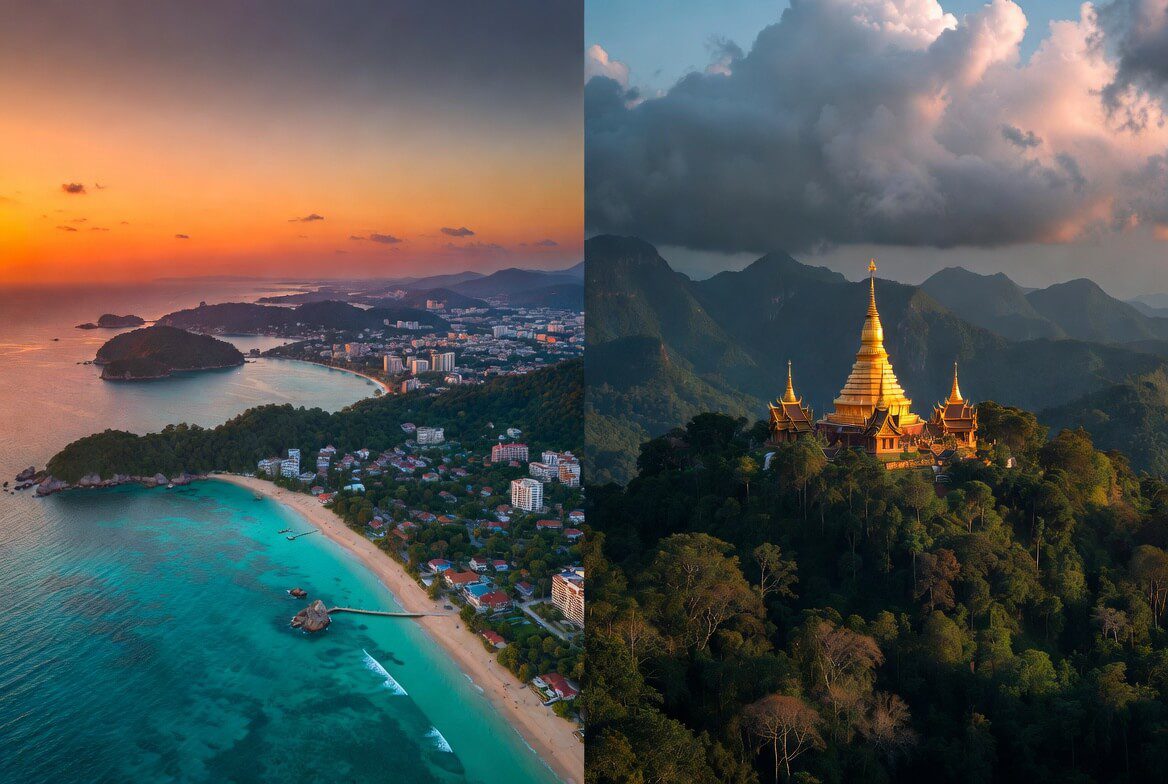
Decision Guide · Updated for 2026
Chiang Mai vs. Phuket
Mountains or coastline — this Chiang Mai vs Phuket which is better guide breaks down daily costs, air quality, weather, and exactly who each destination suits, so you can book the right base for 2026 instead of guessing.
Before You Decide
Honestly? I’d Visit Both
If I could, I’d recommend visiting both. They’re entirely different experiences, one’s an island, one’s a mountainous region, and each comes with its own cuisine, culture, and even dialect. But if you only have time for one, that’s exactly what this guide is here to help you decide.
I’ve traveled to both as a tourist, but I’ve also lived and worked in each of them. When you actually live somewhere, you end up exploring nearly every corner of it, not just the highlights. And one thing that becomes obvious once you’re there long enough is that the expats who settle in each place tend to be noticeably different types of people. In Phuket, they lean sporty, into MMA, triathlons, swimming, general fitness culture. In Chiang Mai, they lean toward veganism, spirituality, meditation, and yoga, and the city has become something of an unofficial tech hub for Thailand’s digital nomad community as a result.
I’m honestly a mix of both.
Fitness was a huge part of my life growing up. I captained the junior volleyball and basketball teams through middle school and high school, played badminton, competed in a city basketball league, and stayed fairly disciplined at the gym for most of my life. Both my parents played sports too, so it was always encouraged. When I moved to Phuket, I fit in almost immediately. I worked at a health and sports resort with world-class gyms, tennis courts, and trainers, and ended up becoming friends with the resort’s triathlon coach. We went on a jungle hike together in a national park one weekend. I also connected with people from a local crypto meetup who invited me to a beach volleyball session. Phuket is genuinely somewhere I could see myself settling down in the near future, it has a lot to offer, and the beaches are spectacular. Most people generalize the island as just Patong, but Phuket is nearly the size of Singapore. There are waterfalls like Bang Pae, quiet nature trails, secluded beaches, and easy access to Phang Nga and Khao Lak, both of which have their own hidden gems. The “party island” image couldn’t be further from the full picture.
That said, if I were retiring, it would be in Chiang Mai. Realistically, I’d probably split time between the two, spending most of the year in Chiang Mai and heading to Phuket whenever the burning season smoke rolls in around February and March.
Chiang Mai awakened a different side of me. It’s where I got into veganism, spirituality, and meditation. I know spirituality gets misunderstood a lot, but to me it’s simply about understanding yourself, and that self-awareness tends to settle you into a more peaceful way of experiencing life. Chiang Mai also has beautiful nature if you know where to look: waterfalls, hot springs, jungle treks, mountain temples with dedicated meditation halls, and no shortage of yoga classes. If wellness and culture are what you’re after, this is the place. It’s also become a genuine hub for coworking spaces, work-friendly cafés, and a steady stream of SEO conferences, coworking summits, and digital nomad events.
Both cities also suit honeymoons, romantic stays, and adventure travel equally well, just in very different ways. Chiang Mai tends to pull ahead for cultural trips and culinary exploration, while Phuket leans into beach-and-resort romantic travel.
So, back to the real question: if you only have one destination to choose in Thailand, I’d pick whichever one resonates with what you actually need right now. Are you looking to get back into shape, or dabble into spirituality? Maybe it’s testing out the remote work lifestyle in a Chiang Mai café, or training at a Muay Thai gym like Tiger Muay Thai in Phuket. The choice is entirely yours, this guide is just here to help you make it with your eyes open.
Why Listen to Me? (My Personal Take on Both Cities)
Having actually lived in both Chiang Mai and Phuket, I’ve experienced firsthand how vastly different life in these two destinations really is.
PHUKET
I’ve been traveling to Phuket since I was a teenager, originally accompanying my father on business trips. Later, during the pandemic, I pivoted my career and spent time working in digital marketing for a luxury resort on the island. I lived up in Thalang — far from the tourist-heavy crowds of Patong. It’s a much more local area near the airport, home to spot-the-plane views right over the water at Nai Yan Beach, lush natural escapes like Khao Phra Thaeo Wildlife Sanctuary, and a welcoming expat community around Bang Tao where I’d drop by bi-weekly meetups and make lasting friends.
Most people misunderstand Phuket, assuming it’s just one rowdy beach street. In reality, the island is nearly the size of Singapore, and every beach community carries its own distinct personality. It’s an incredible hub if you’re into active outdoor living — think watersports, cycling, golf, and extreme sports, all framed by pristine ocean views.
CHIANG MAI
Chiang Mai captured my heart for entirely different reasons. Its community leans heavily into holistic wellness, digital entrepreneurship, and a grounded, creative pace of life set against northern mountain landscapes. In fact, the love for travel and Off Path Thailand basically started with one trip to Chiang Mai. I went there to work remotely and, feeling bored one day, decided to rent a scooter for four days. I had no plan to go beyond the city, but once I left the streets behind I couldn’t stop. Exploring the surrounding valleys, talking with people on the road, stumbling upon unexpected waterfalls and hidden hot springs brought me more alive than I had ever felt. What was meant to be a short break turned into four months. When I finally returned to Bangkok, my life had shifted completely. I sold my PS4 and chose to live closer to nature and the quieter corners of Thailand. That single scooter ride is the reason Off Path Thailand exists today.
Both cities are exceptional in their own right. If it were up to me, I’d take a mix of both — but depending on what you’re looking for, one will definitely suit your travel or lifestyle goals better than the other.
Want a custom trip instead of a guessing game?
We’re a private tour company, not a booking aggregator. Whichever way the Chiang Mai vs Phuket decision goes for you, we design full Thailand itineraries around either destination, or both, built for how you actually want to travel.
The Snapshot
Chiang Mai vs Phuket which is better, head to head
Six factors that actually decide this trip. Where one destination has a clear edge, we’ve marked the win — but the right answer depends heavily on what kind of trip you’re after.
Locally, Chiang Mai is easy to navigate with Grab or a traditional songthaew (shared red truck), both cheap, both everywhere.
The Quick Answer
Chiang Mai vs Phuket which is better: the quick answer
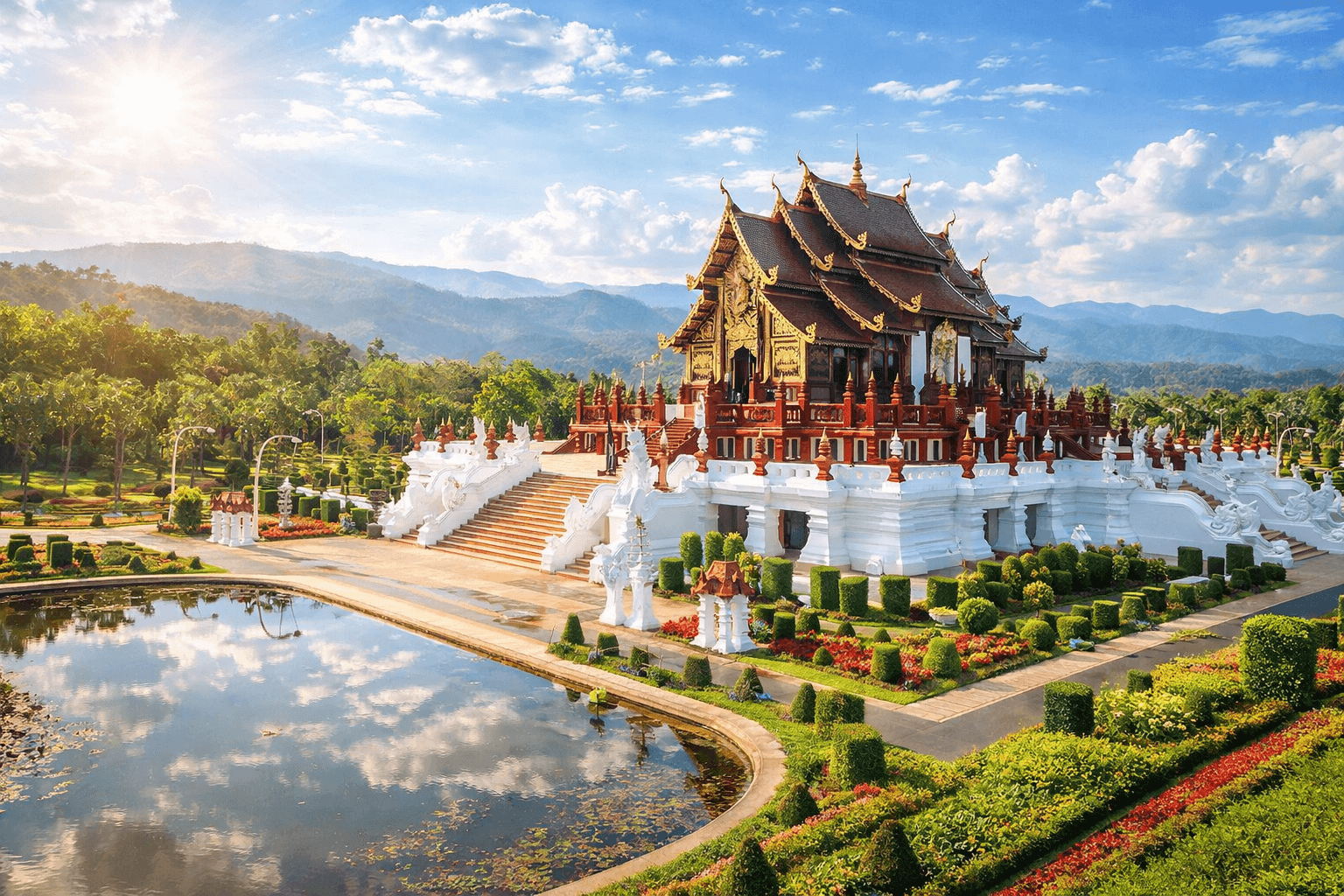
You want culture, mountains, and a slower budget-friendly pace
Temples, cooking classes, jungle trekking, and a genuine old-city feel. It’s also the cheaper of the two, and the better base if you want one fixed home for a week rather than moving between resorts.
You want beaches, island-hopping, and resort comfort
Phuket is Thailand’s most developed beach destination — international flights land direct, the resort infrastructure is excellent, and neighboring islands like Phi Phi and Phang Nga Bay are a short boat ride away.
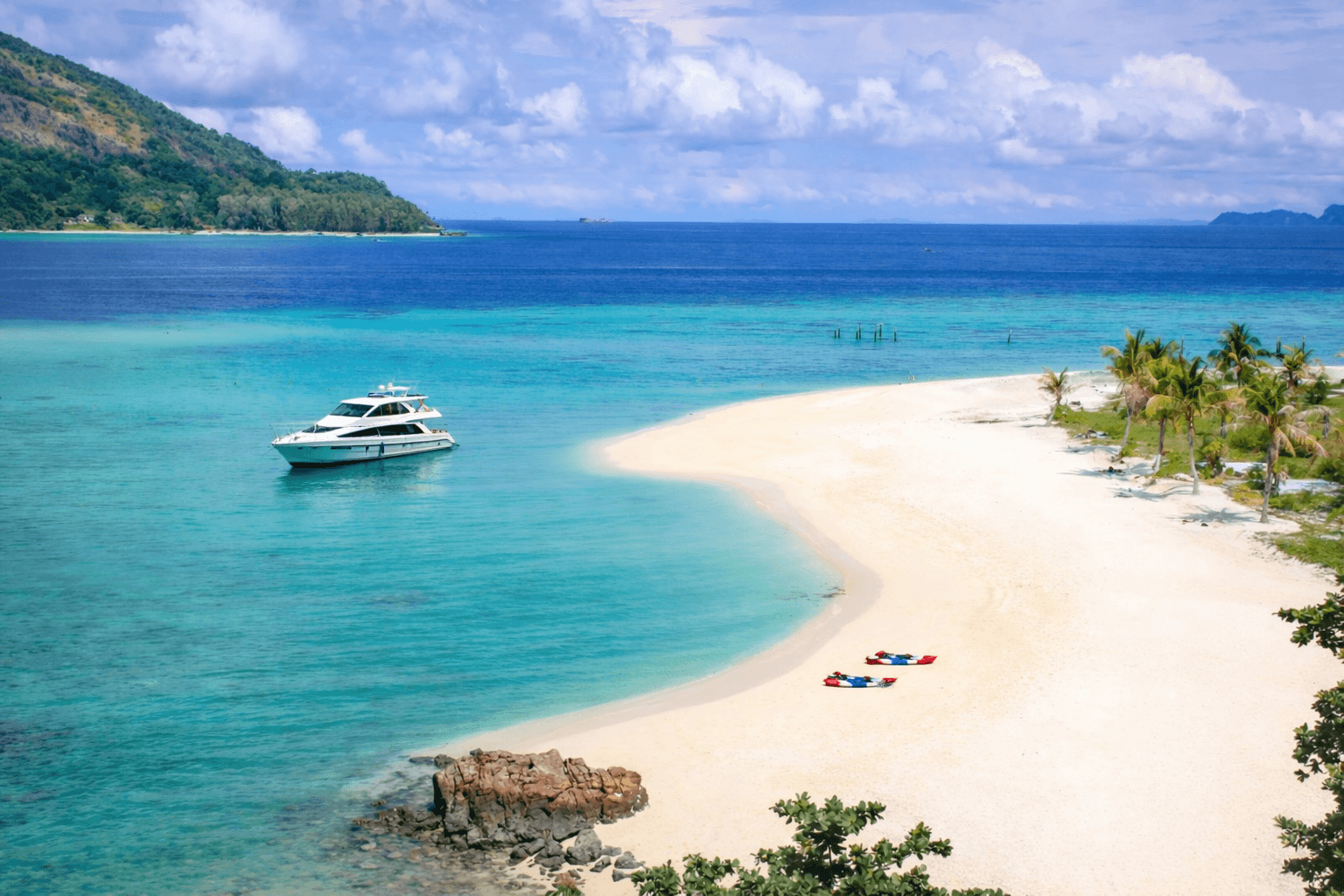
“Chiang Mai vs Phuket isn’t really mountains versus beaches — it’s slow immersion versus easy resort comfort.”
The Numbers
Chiang Mai vs Phuket which is better cost: daily spend, category by category (2026)
Figures reflect moderate travelers — comfortable guesthouses or 3-star hotels in Chiang Mai, mid-range beachfront or near-beach stays in Phuket, regular meals out, and normal local transport for each destination.
Daily spend by category (THB)
Phuket runs higher in every category, driven mainly by accommodation and the cost of boat-based activities.
| Category | Chiang Mai (฿/day) | Phuket (฿/day) | Notes |
|---|---|---|---|
| Accommodation | 700–1,800 | 1,800–3,000 | Beachfront and resort-style stays push Phuket’s average well above Chiang Mai’s guesthouses |
| Food & Dining | 120–250 | 250–400 | Resort-area restaurants in Phuket cost noticeably more than Chiang Mai’s street food and local spots |
| Transport | 80–200 | 200–350 | Grab and songthaews in Chiang Mai vs taxis, scooters, and boat transfers in Phuket |
| Activities | 200–600 | 500–1,000 | Island-hopping tours and boat trips in Phuket carry a real cost premium over Chiang Mai’s workshops and treks |
| Coffee / Casual Spend | 120–250 | 200–320 | Both have strong café scenes; Phuket’s beach-adjacent cafés run pricier |
| Moderate Daily Total | 1,300–2,800 | 2,750–5,000 | Approx. $45–85 vs. $75–140 |
For the Northern Thailand alternative to the islands, see our South Thailand Itinerary if Phuket is one stop among several. Not sure which destination suits your dates? Try the interactive Thailand planning tool to compare AQI, crowd levels, and seasonal conditions side by side.
The Risk Factor
Chiang Mai vs Phuket which is better: air quality month by month
This is the sharpest seasonal contrast in the Chiang Mai vs Phuket comparison. According to IQAir Phuket and IQAir Chiang Mai, Phuket holds one of the cleanest year-round air profiles in Thailand, largely because it sits outside the northern burning-season belt and benefits from steady coastal winds. Chiang Mai, by contrast, swings from excellent air for most of the year into genuinely poor conditions during the regional burning season.
Typical monthly AQI (US AQI scale)
Above 150 is “unhealthy” for general groups. Phuket stays in the “good” to “moderate” band essentially all year; Chiang Mai spikes sharply from February through April.
Why Phuket avoids burning season entirely
Open burning practices are concentrated in the northern regions of Thailand, with Phuket largely outside that belt, and the island’s strong coastal winds help clear what particulate matter does drift in. Phuket’s yearly PM2.5 average has historically landed in the “good” air quality bracket, making it the cleanest major destination in the country by this measure. If your travel dates fall in February through April and air quality matters to you — especially for kids, asthma, or simply wanting clear horizon views — Phuket holds a real structural advantage over Chiang Mai in that window. For Chiang Mai specifically during this period, see our full Chiang Mai Rainy Season Guide for how the rest of the calendar compares.
Timing It Right
Chiang Mai vs Phuket which is better weather: seasonal comparison at a glance
| Factor | Chiang Mai | Phuket |
|---|---|---|
| Cool / Dry Season | Nov–Feb (best overall, clear air) | Nov–Apr (best overall, dry and sunny) |
| Hot Season | Mar–May (hot + smoke risk) | Mar–May (hot but sea breeze helps) |
| Rainy / Monsoon Season | Jun–Oct (lush, frequent afternoon rain) | May–Oct (heavier monsoon, rougher seas for island trips) |
| Crowds | Peaks Nov–Feb, quieter rest of year | Peaks Dec–Feb, very busy over Christmas/New Year |
| Air Quality (AQI) | Excellent most of the year, spikes Feb–Apr | Consistently good to moderate year-round |
| Sea conditions for islands | Not applicable | Calm and clear Nov–Apr; choppier and some boats pause May–Oct |
If you’re weighing Phuket against Thailand’s quieter island alternatives, our Hidden Gem Islands of Thailand guide covers options with fewer crowds than Phuket’s main beaches. For a full seasonal breakdown across Thai destinations, see our best time to visit Thailand’s hidden gems guide, or use the interactive Thailand planning tool to factor in AQI, crowd levels, and weather for your dates.
Where To Actually Stay
Chiang Mai vs Phuket which is better areas: where to actually stay
Both sides of the Chiang Mai vs Phuket decision have very different “good” answers depending on what you came for — picking the right base matters more than picking the right city.
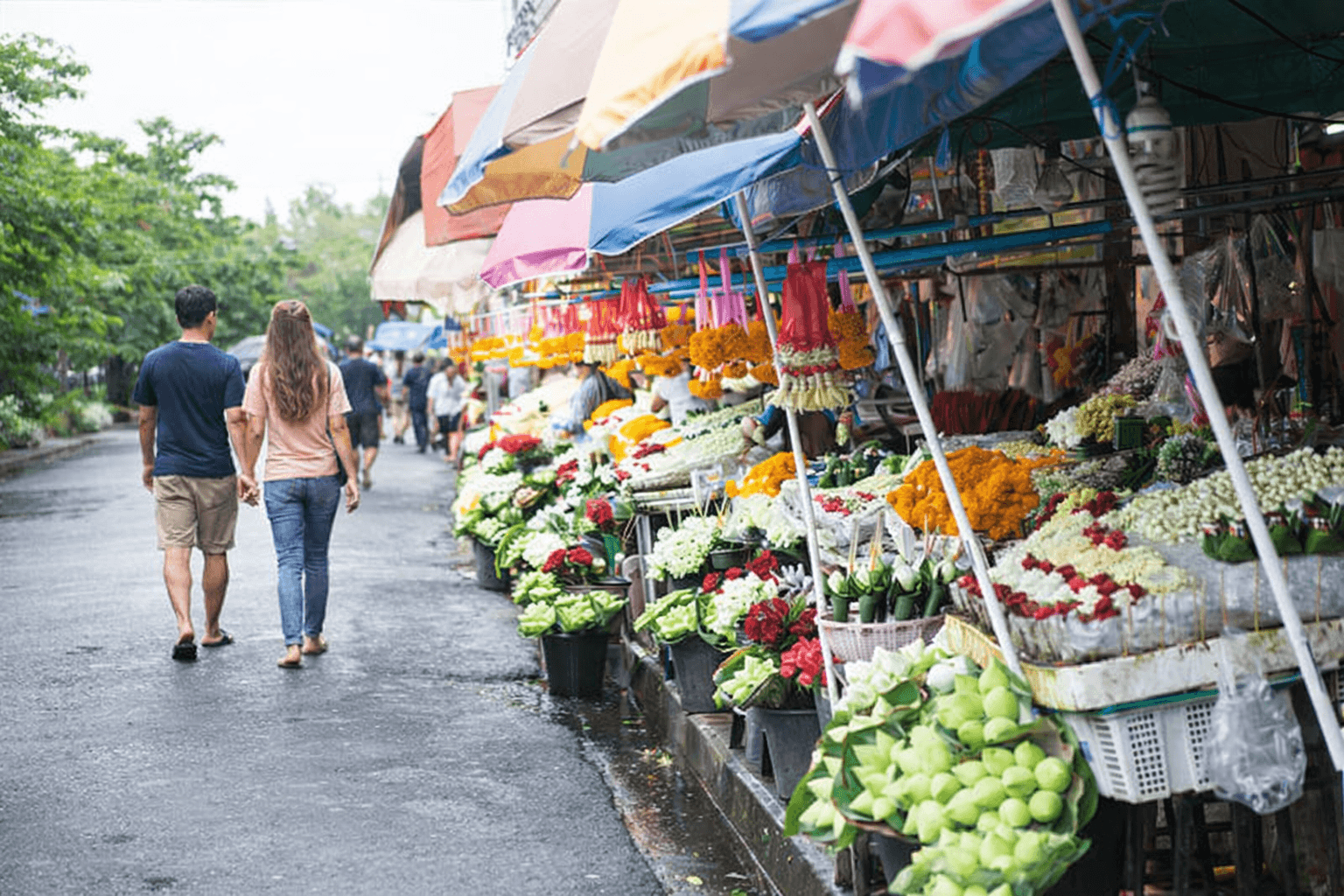
Old City
Inside the moat walls — temples on every block, easiest to walk, but the most touristy and noisiest at night during high season.
Nimmanhaemin
The café-and-design district, popular with long-stay visitors, a short ride from the Old City. See our guide to unique things to do in Chiang Mai for area-specific picks.
Riverside / Charoenrat
Quieter, slower, restaurants along the Ping River — the calmest base if you want distance from crowds.
Patong
The most developed and busiest beach area — nightlife, shopping, and the widest range of hotels, but the most crowded and least relaxed.
Kata & Karon
Calmer beaches a short drive south of Patong, good for families and couples who still want easy restaurant and shopping access.
Rawai & Nai Harn
The quieter southern tip — fewer crowds, better boat access for day trips, and a noticeably slower pace than the main tourist strip.
By Traveler Type
Chiang Mai vs Phuket which is better by traveler type
A relative Chiang Mai vs Phuket fit score for common traveler profiles — longer bar means the better fit, not an absolute ranking of the destination itself.
The Case For Chiang Mai
When Chiang Mai wins the Chiang Mai vs Phuket which is better question
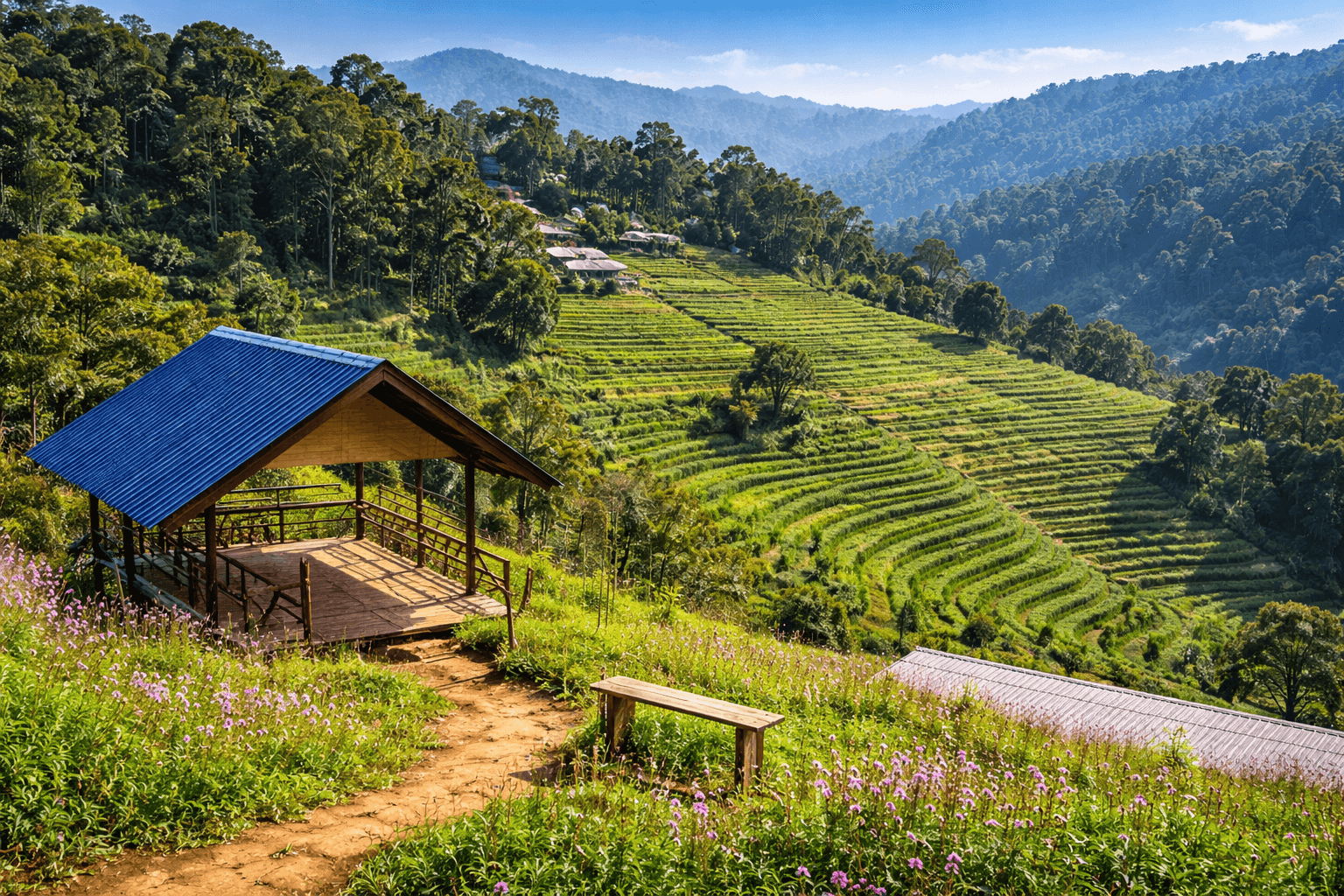
- Significantly lower daily costs across accommodation, food, and activities
- Genuine cultural depth — temples, Lanna heritage, and everyday traditions that aren’t staged for tourists — ideal for a cultural travel style
- Easy access to mountains, waterfalls, and nature within a 30–40 minute drive — a natural fit for wellness-focused trips
- Walkable Old City core, so you can skip taxis and scooters for much of the trip
- Less crowded outside peak cool season, even in popular areas
- Don’t miss our guide to Chiang Mai hidden gems 2026 for spots beyond the obvious temple circuit
Better for hands-on food experiences
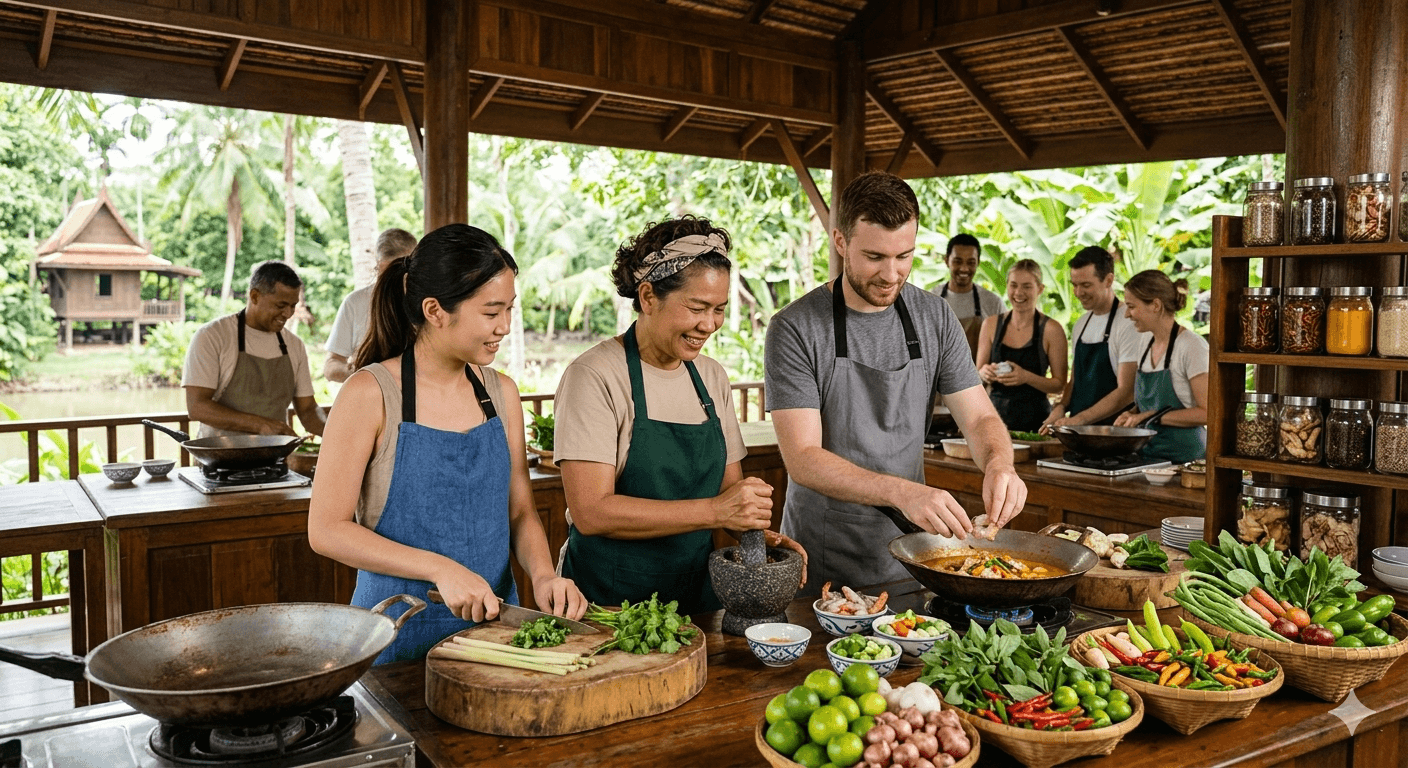
Chiang Mai is home to a huge concentration of Thai cooking schools, many set on small farms just outside the city, where you pick ingredients yourself before cooking. It’s a natural pairing with a culinary exploration travel style, and honestly one of the more memorable half-days you can spend in Northern Thailand.
Better for vegans and plant-based travelers
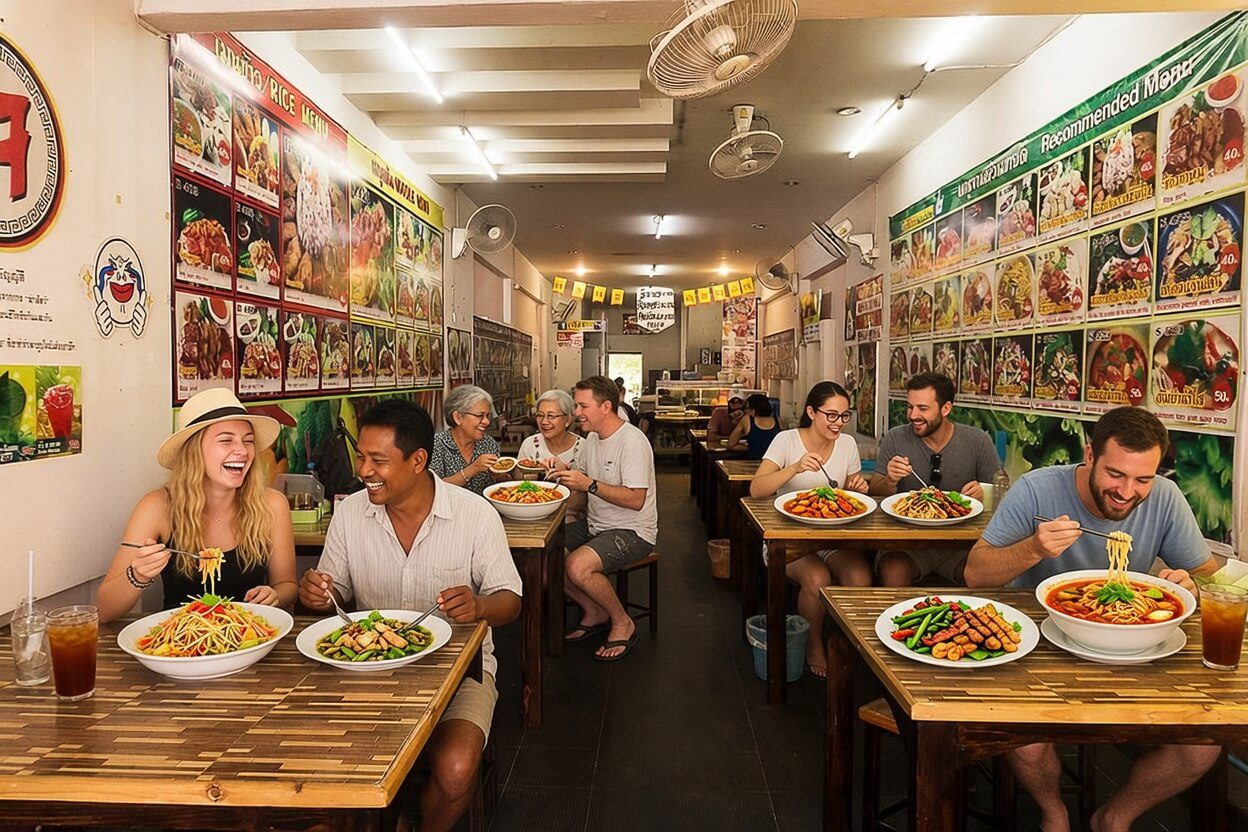
Chiang Mai also pulls ahead noticeably if you eat plant-based. The city has a genuinely large, long-standing vegan and vegetarian food scene, shaped in part by its Buddhist and wellness-focused communities, ranging from all-you-can-eat vegan buffets to dedicated vegan cafés. Phuket has some good options too, but nowhere near the density or variety. See our best vegan restaurants in Chiang Mai guide for specific picks.
The Case For Phuket
When Phuket wins the Chiang Mai vs Phuket which is better question
On the other side of the Chiang Mai vs Phuket which is better comparison, here’s where Phuket pulls ahead.
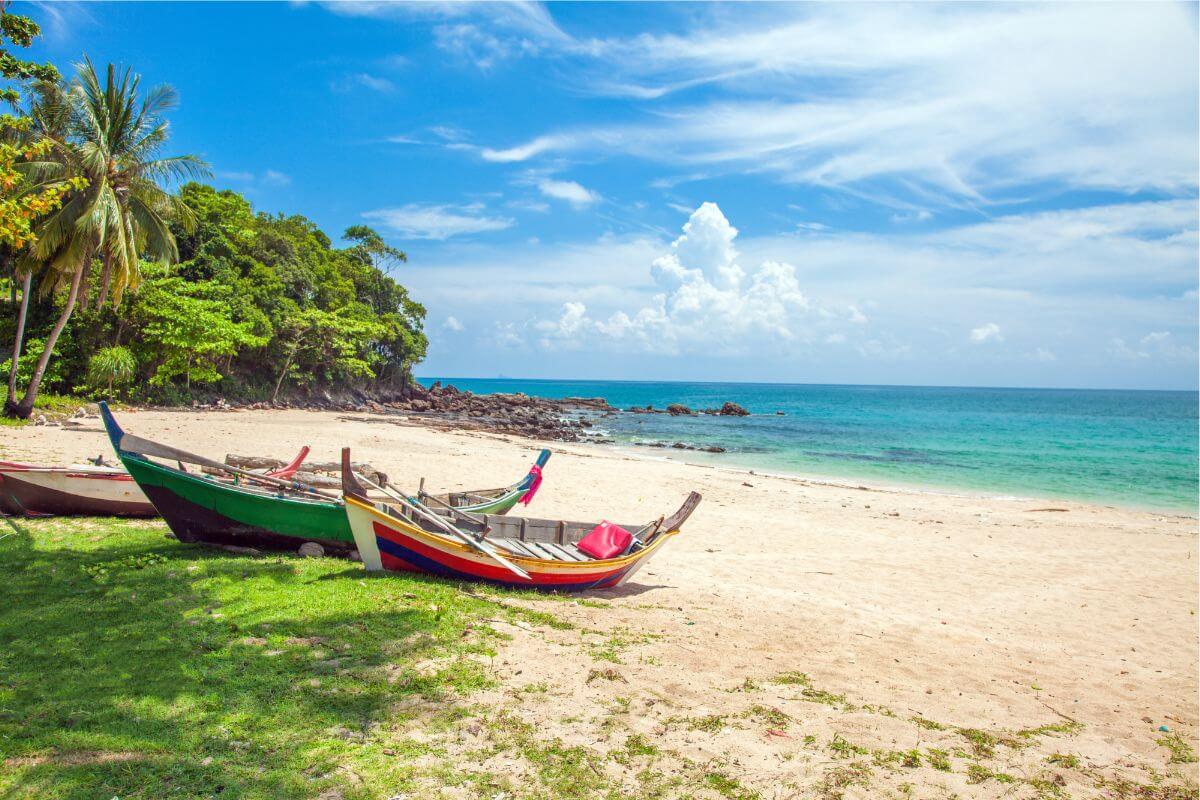
- Direct international flights land on the island, cutting out an extra domestic leg
- The widest range of beach and resort infrastructure in Thailand — from budget guesthouses to five-star private villas, ideal for a romantic trip
- Easy access to Phi Phi, Phang Nga Bay, and the Similan Islands by day boat — perfect for an adventure travel style
- Consistently good air quality year-round, including through Chiang Mai’s burning season
- Better suited to families and travelers who want a single comfortable base rather than moving around
- For a broader island-hopping plan beyond Phuket itself, see our South Thailand Itinerary and Hidden Gem Islands guide
Better for fresh seafood
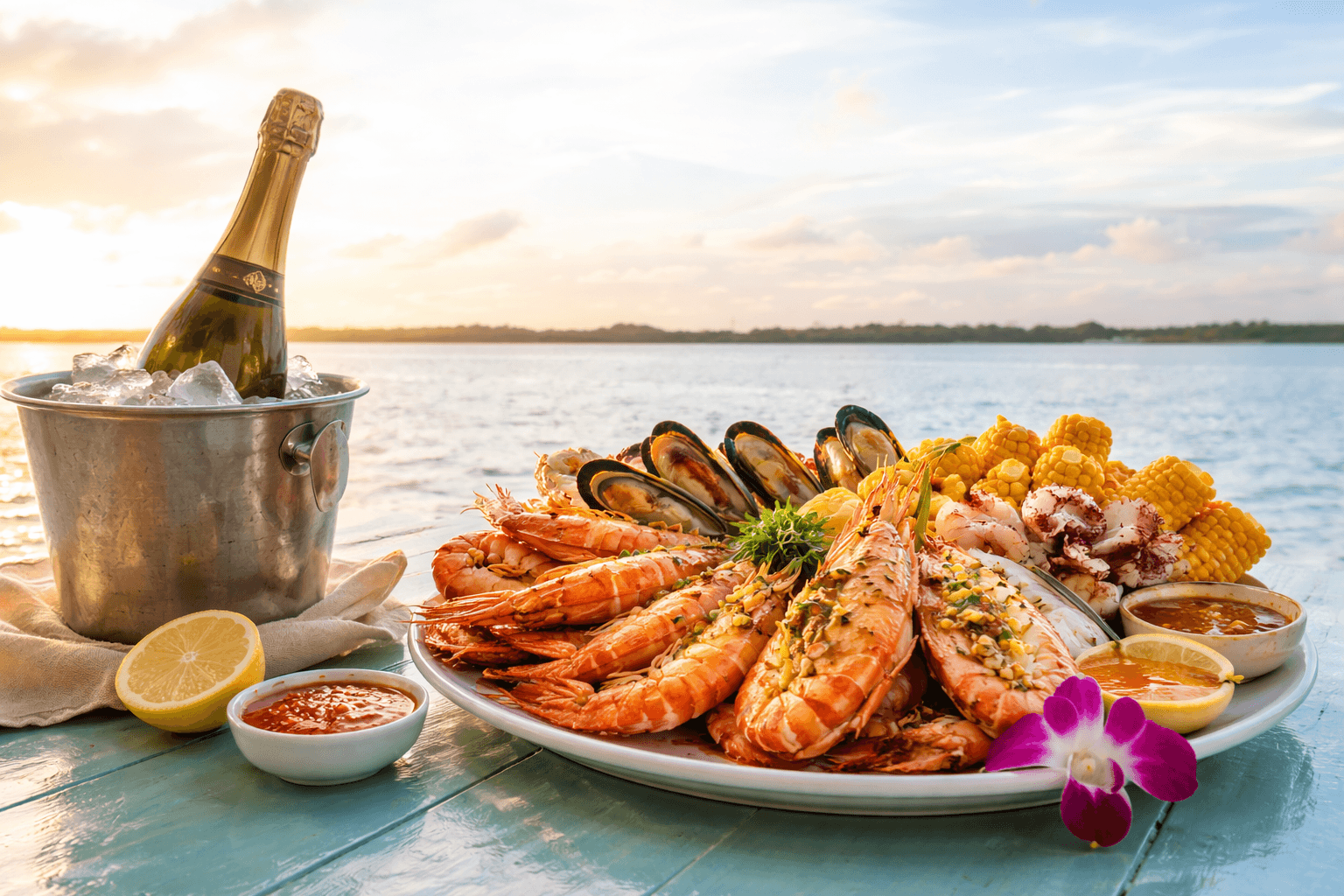
This one’s not close. Being an island, Phuket has access to genuinely excellent, fresh seafood, grilled prawns, whole fish, and seafood platters served right on the sand at beachfront restaurants. Chiang Mai’s food scene is excellent in its own right, but landlocked mountain cities were never going to compete on seafood, and Phuket doesn’t try to.
The Practical Plan
The ideal Chiang Mai vs Phuket which is better split: 10–14 days
Rather than treating Chiang Mai vs Phuket which is better as an either-or decision, most travelers get the best of both by splitting the trip.
- Days 1–5: Chiang Mai (Old City, a nature day, cooking class, one cultural village visit)
- Days 6–11: Phuket (beach time, one full-day island-hopping trip, a slower resort day)
- Optional extension: Add Bangkok at the start or end — see our Bangkok vs Chiang Mai comparison if you’re deciding where to fly in and out
This order works well because Chiang Mai’s slower, cooler pace is a strong way to ease into the trip, with Phuket’s beaches as the reward at the end — though plenty of travelers reverse it to start with beach time and finish on culture. Either way, flying between the two takes roughly 90 minutes and keeps the logistics simple.
Getting There
Chiang Mai vs Phuket which is better for flights: both have international airports
One genuine advantage both destinations share in the Chiang Mai vs Phuket which is better comparison over landlocked alternatives like Nan or Chiang Rai is that each has its own international airport — meaning you can fly directly into either city without a domestic connection from Bangkok. That said, the two airports differ significantly in scale and international reach. Despite both being international airports, Phuket handles considerably more international traffic and long-haul routes than Chiang Mai does.
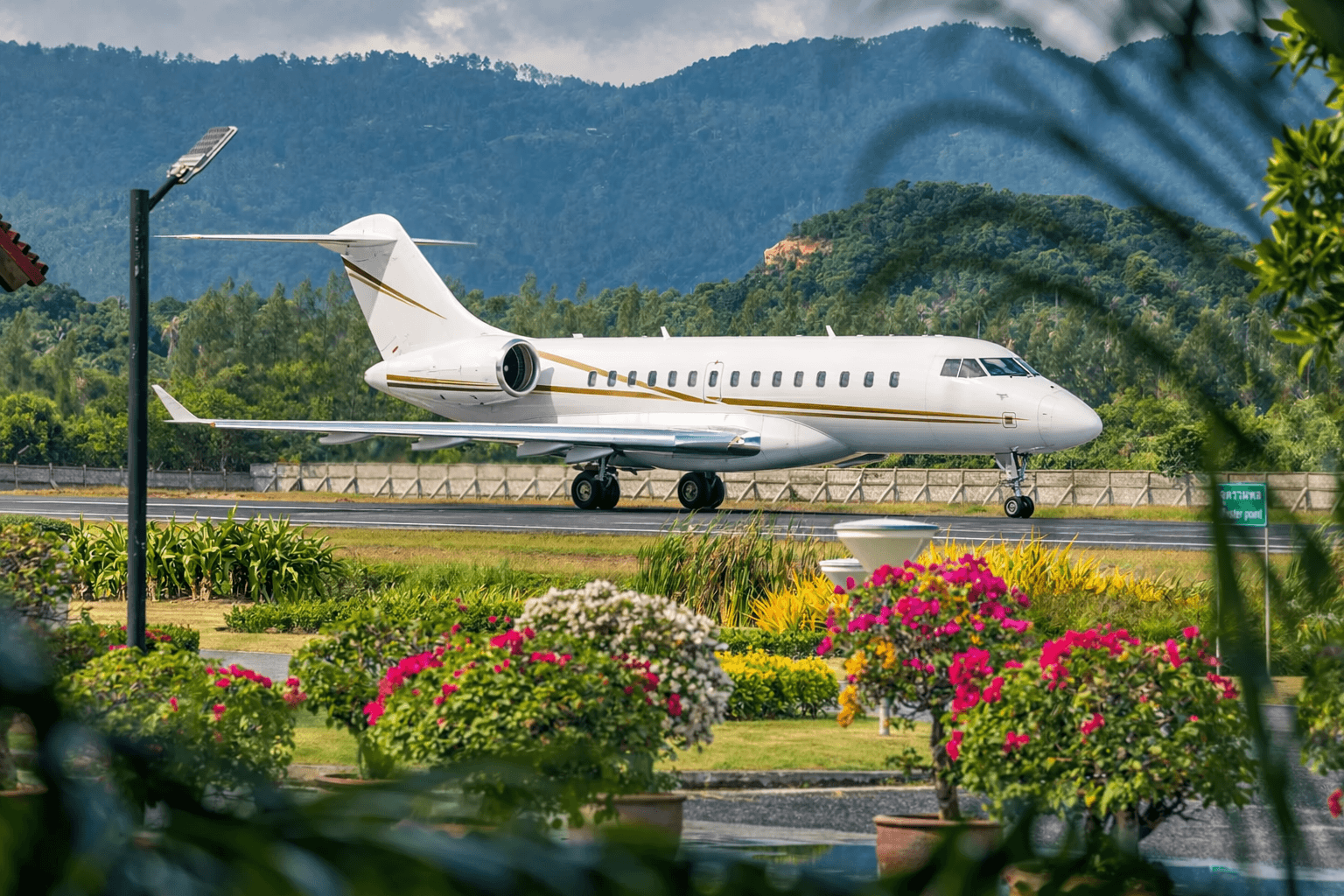
Chiang Mai International Airport (CNX)
A growing regional hub with direct routes from China, Malaysia, Singapore, South Korea, and Japan. For most long-haul travelers from Europe or North America, Bangkok remains the main connection point into Chiang Mai. The airport sits just 10 minutes from the Old City, making arrival unusually straightforward.
Phuket International Airport (HKT)
Thailand’s second busiest international airport and one of the fastest-expanding in Southeast Asia. Direct long-haul routes from Europe, the Middle East, Australia, Russia, and across Asia connect into Phuket without a Bangkok stopover, a genuine logistical advantage if beach time is the primary goal. The airport sits around 45 minutes from Patong and Kata by road.
Chiang Mai is easier and cheaper to reach from Bangkok
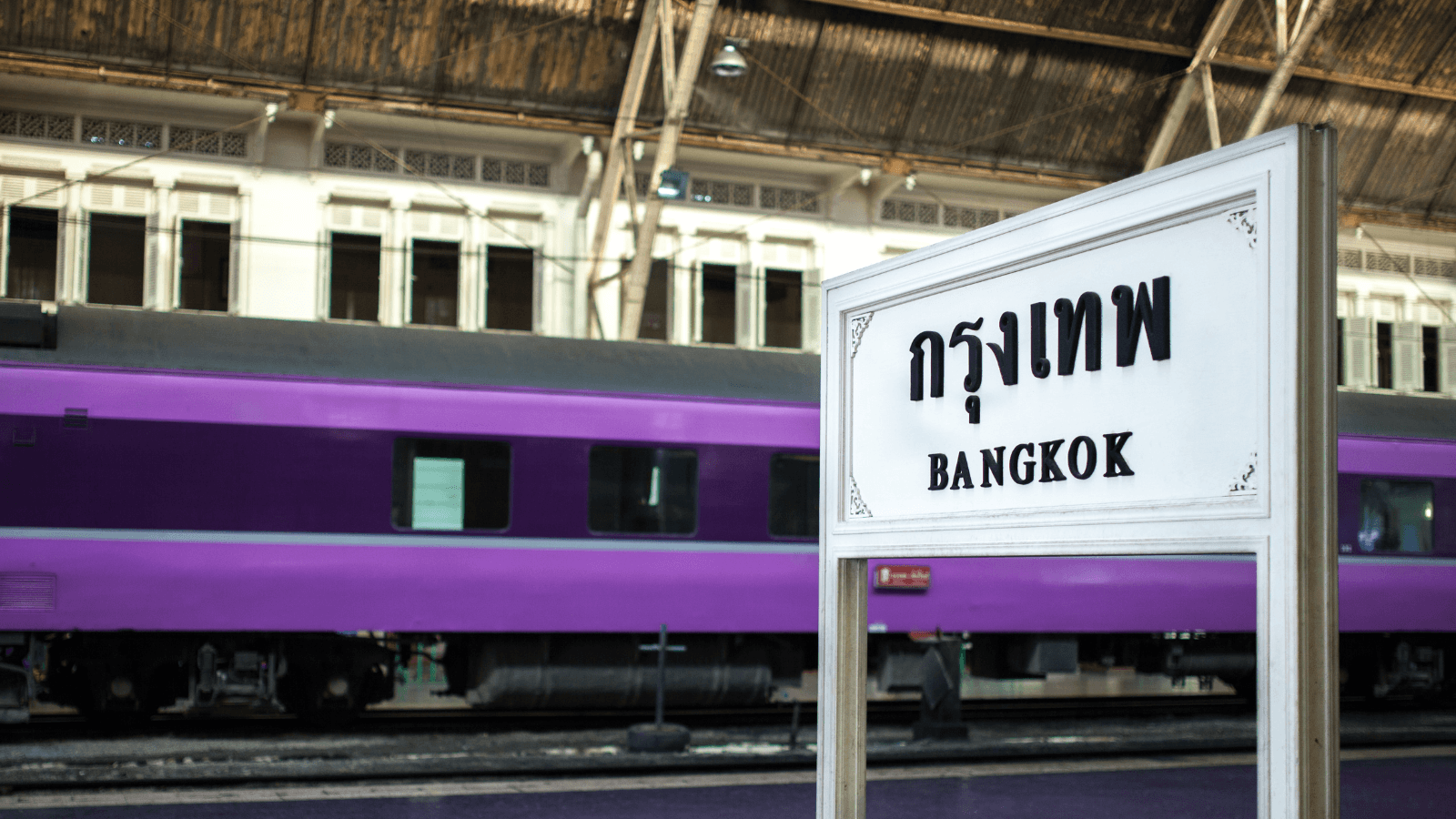
If you’re already routing through Bangkok, Chiang Mai is generally the easier and cheaper add-on. Domestic flights are frequent and inexpensive, and unlike Phuket, you also have the option of an overnight train, a slower but genuinely enjoyable way to cover the distance while you sleep, arriving in Chiang Mai the next morning without losing a travel day. Phuket is reachable by an overnight bus or a long drive, but realistically most travelers fly, which narrows the budget options compared to Chiang Mai’s mix of flights, buses, and trains.
If you’re combining both destinations, flying into Chiang Mai and out of Phuket (or the reverse) is usually the most efficient routing — the domestic flight takes around 90 minutes and costs very little. Off Path Thailand handles all domestic and international flight arrangements as part of every private itinerary.
Bottom Line
Chiang Mai vs Phuket which is better: bottom-line summary
However you’ve been weighing Chiang Mai vs Phuket so far, this table is the fastest way to land the decision — and it’s worth bookmarking if you’re still deciding between Chiang Mai vs Phuket closer to your travel dates.
| If you care most about… | Choose | Why |
|---|---|---|
| Lower costs and slower culture | Chiang Mai | Cheaper stays, walkable Old City, real temple and village life |
| Beaches, islands, and resort comfort | Phuket | Direct flights, the widest resort range, and easy boat trips to nearby islands |
| Avoiding seasonal air quality risk | Phuket | Stays clean year-round; Chiang Mai spikes Feb–Apr |
| Best conditions for both | Nov–Feb | Cool, dry, and clear in Chiang Mai; calm seas and sunshine in Phuket |
Exploring more options? Compare Bangkok as a third destination in our Bangkok vs Phuket guide, browse all of our Thailand destinations, or use the interactive seasonal planning tool to factor in AQI, crowd levels, and weather for your exact travel dates.
Ready to plan your Chiang Mai and Phuket trip?
However the Chiang Mai vs Phuket decision lands for you, as a private tour company we build the entire itinerary around you — flights, stays, transfers, and activities — rather than handing you a generic package.
Common Questions
FAQ: Chiang Mai vs Phuket which is better 2026
Prefer a quick chat?
Message us directly on WhatsApp or Email
If you already have an idea of your trip, send us a message — we’ll guide you through the best options for your travel style.

About the author
Thai-born founder of Off Path Thailand. I’ve spent years exploring the quieter corners of the country — from northern mountain valleys and hidden temples to lesser-known islands and local communities far from the usual tourist routes. I design trips for travelers who want Thailand to feel authentic, unhurried, and deeply personal. About the founder
Tell us your dates and vibe — our team replies within 24 hours to begin crafting your trip.
Leave everything to us and experience Thailand off the beaten path
If you want official inspiration for Thailand trip planning, start here: Tourism Authority of Thailand.