
Last Updated: September 19, 2026
35 Best Things to Do in Chiang Mai (A Local’s Guide)
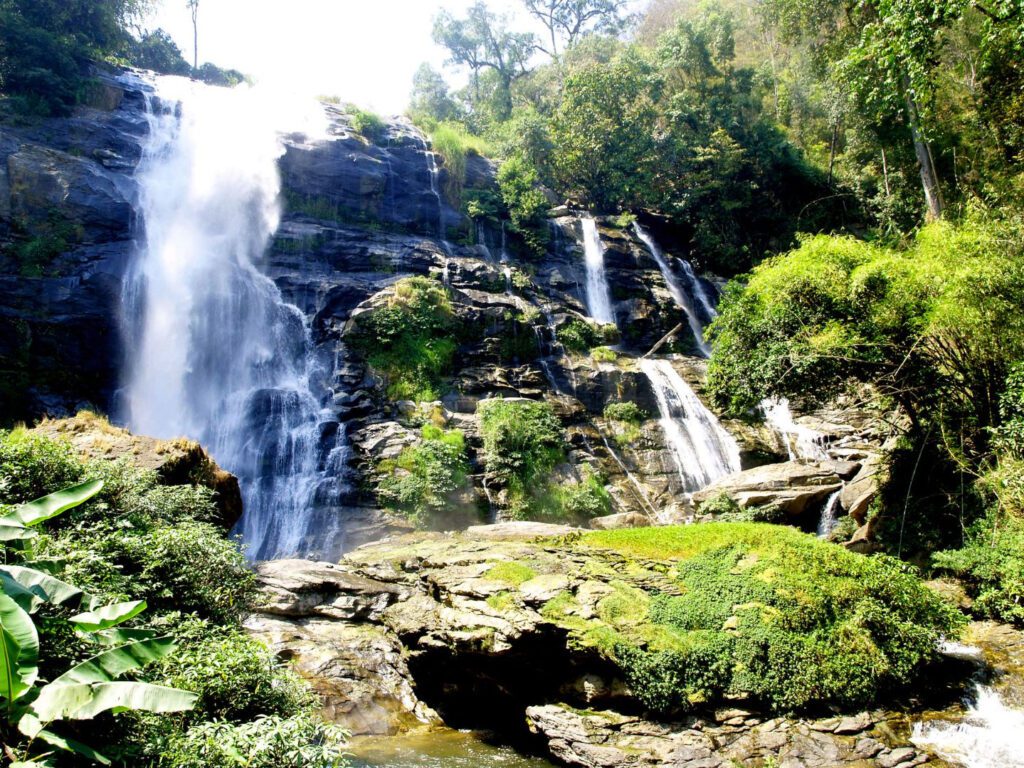
TL;DR: This guide covers the best things to do in Chiang Mai, Northern Thailand’s cultural capital, based on real experience actually living in and repeatedly returning to the city, not a list pulled together from other blogs. It spans 35 experiences across every side of the city: sunrise hikes to Wat Doi Suthep, quiet neighborhood temples the tour buses skip, night markets and morning food stalls, mountain day trips, ethical elephant encounters, cooking classes, and the kind of hidden local spots that only surface after years of actually living here rather than just visiting.
Whether you have a few days or a few weeks, this guide is built to help you go beyond the usual tourist checklist and experience the version of Chiang Mai that keeps people coming back.
- 35 Best Things to Do in Chiang Mai (A Local's Guide)
- How Many Days Should You Spend Exploring the Best Things to Do in Chiang Mai?
- Best Time to Visit Chiang Mai in 2026
- How to Get Around for the Best Things to Do in Chiang Mai
- Best Things to Do in Chiang Mai in 2026: The Full List
- Temples & Culture
- Wat Phra That Doi Suthep — Quick Information
- Wat Phra Singh — Quick Information
- Wat Umong — Quick Information
- Wat Pha Lat — Quick Information
- Wat Suan Dok — Quick Information
- Temple Stay Experience — Quick Information
- Wat Sri Suphan (Silver Temple) — Quick Information
- Ethical Animal Experiences
- Elephant Nature Park — Quick Information
- Hand to Paw Thailand — Quick Information
- Karen Village — Quick Information
- Nature & Adventure
- Monk's Trail — Quick Information
- Sticky Waterfalls (Bua Tong) — Quick Information
- Doi Inthanon National Park — Quick Information
- Grand Canyon Water Park — Quick Information
- Jungle Flight — Quick Information
- Mae Ping River Cruise — Quick Information
- Huay Tung Tao Lake — Quick Information
- Chiang Mai Night Safari — Quick Information
- Food & Night Markets
- Weekend Walking Streets — Quick Information
- Chiang Mai Night Bazaar — Quick Information
- Waroros Market (Kad Luang) — Quick Information
- Thailand Cooking Class — Quick Information
- Khao Soi Mae Sai — Quick Information
- Cafés, Viewpoints & Instagram Spots
- The Giant Chiangmai — Quick Information
- Cafés in Nimman — Quick Information
- Angkaew Reservoir — Quick Information
- Wat Lok Moli — Quick Information
- Doi Kham View Point — Quick Information
- Day Trips from Chiang Mai
- Day Trips from Chiang Mai: Nature at Its Best
- White Temple (Wat Rong Khun) — Quick Information
- Pai — Quick Information
- Lampang — Quick Information
- Mae Kampong — Quick Information
- Wat Tham Pha Plong — Quick Information
- Bhubing Palace & Doi Pui Hmong Village — Quick Information
- Chiang Mai Highlights Map
- Chiang Mai 3-Day Itinerary (Quick Summary)
- Where to Stay in Chiang Mai 2026 – Best Areas & Hotels
- Conclusion
- Chiang Mai FAQs
- How many days do you need to experience the best things to do in Chiang Mai?
- What is the best time to visit and enjoy the best things to do in Chiang Mai?
- What are the must-see temples when looking into the best things to do in Chiang Mai?
- What are the best day trips included in the best things to do in Chiang Mai's surroundings?
- Is slow travel featured among the best things to do in Chiang Mai?
- Are there evening experiences included in the best things to do in Chiang Mai?
- What are the top 10 things to do in Chiang Mai?
- Is 3 days enough in Chiang Mai?
- What is Chiang Mai most famous for?
- What are some hidden gems to explore in Chiang Mai?
- What to be careful of in Chiang Mai?
- Do they speak English in Chiang Mai?
- Is it safe to go to Chiang Mai now?
- Leave everything to us and experience Thailand Off The Beaten Path
Why I’m Qualified to Share the Best Things to Do in Chiang Mai
Before diving into the 35 best things to do in Chiang Mai, I want to be upfront about something: I haven’t personally done every single item on this list. A few of these come from close, trusted friends who’ve lived here as long as I have, or from firsthand recommendations by locals I’ve gotten to know over the years.
I think that kind of honesty matters more than pretending to have done absolutely everything, because the truth is, nobody who’s lived in Chiang Mai for any real length of time has done it all. The city keeps producing new corners to discover, and that’s part of why I keep coming back.
What I can say with full confidence is that I’ve personally done the overwhelming majority of what’s on this list, and in most cases, more than once. My relationship with Chiang Mai isn’t a single trip or a rushed weekend, it’s built from years of returning here in completely different capacities: as a wide-eyed tourist the first time around, as a remote worker grinding out deadlines from quiet cafés, as someone who actually lived and worked here full-time in a marketing role at a furniture company, and eventually as someone who just kept finding excuses to come back until the excuses stopped being necessary.
Each version of me that’s passed through this city noticed different things. As a tourist, I gravitated toward the obvious highlights, temples, night markets, the things every guide tells you to see. As a remote worker, I started paying attention to the quieter rhythms, which cafés had reliable Wi-Fi and good natural light, which neighborhoods felt calm enough to actually think in.
Once I had a real job and an apartment here, the city stopped being something I visited and started being something I simply lived in, which meant I got to know it the way locals do: the shortcut through a certain soi, the temple with the quiet meditation hall nobody else seems to know about, the noodle stall where the owner remembers your order.
I’m also the kind of traveler who prefers discovering things on my own terms rather than following someone else’s checklist to the letter. A lot of the best things to do in Chiang Mai came from exactly that instinct, riding a scooter with no destination in mind, taking a random turn just to see where it led, or striking up a conversation with a local who pointed me toward something incredible.
I think that spirit shows up throughout this guide. It’s less “here are 35 boxes to tick” and more “here are the absolute best things to do in Chiang Mai according to someone who’s spent real time here.”
I should also mention that my connection to Chiang Mai runs a bit deeper than travel alone. This is a city that shaped parts of who I am, it’s where I first got seriously into meditation and spirituality, where I transitioned toward a more plant-based way of eating, and where I learned to appreciate a slower, more intentional pace of life. None of that happens on a five-day vacation. It happens over years of showing up, leaving, and coming back because something about the place keeps pulling you in.
So when you read through this list, know that it’s not written from a place of theory or a single guidebook-style visit. It’s built from real, repeated experience, supplemented in a few places by trusted local recommendations where my own experience had gaps. I think that combination, personal depth plus honest acknowledgment of its limits, is exactly what makes a guide like this actually useful, rather than just another recycled list pulled from other blogs.
How Many Days Should You Spend Exploring the Best Things to Do in Chiang Mai?
Four days is enough to experience some of the most essential best things to do in Chiang Mai: a temple or two, a waterfall, a night market, a cultural experience, and a little café exploring. But to truly feel the heartbeat of the city, seven days is perfect.
With a week, you can slow down and let the city unfold naturally. You’ll have time for an elephant sanctuary visit, a proper Chiang Mai itinerary including a waterfall day, a day exploring various authentic markets, temple hopping at your own pace, and at least one or two day trips into the mountains.
Chiang Mai rewards longer stays. I once stayed for four months straight and still couldn’t get enough of it. The longer you’re here, the more you start noticing, little details in the Old City, hidden cafés tucked inside small sois, and the kinds of best things to do in Chiang Mai you’d never stumble onto during a quick trip, like secret mountain viewpoints and tiny local restaurants that quietly become favorites you keep going back to.
However, if you’re on a tight schedule and only have 4 days to explore, don’t worry—I’ve put together a specialized guide on Chiang Mai 4 day itinerary to help you hit all the major highlights without feeling rushed.
Chiang Mai is one of the most vegan-friendly cities in the world, and honestly, it’s the city that turned me vegan in the first place. Something about the wellness-driven community here, combined with just how good and available the plant-based food is, made the shift feel natural rather than restrictive. If you want to know exactly where to eat, read my personal guide to the best vegan restaurants in Chiang Mai, based on years of actually living there.
Best Time to Visit Chiang Mai in 2026
The cool season from November to February is the best time to explore the best things to do in Chiang Mai. The weather is comfortable, the air is crisp in the mornings, and the evenings make walking around the Old City or night markets genuinely enjoyable. This is peak season, so expect more people at major attractions like Doi Suthep or the weekend walking streets.
The rainy season, from June to October, is surprisingly peaceful and a great time to explore nature-focused things to do in Chiang Mai. The mountains are green, the waterfalls are strong, and the temperature is cooler than you’d expect. Afternoon showers come and go quickly.
For anyone planning a northern Thailand trip and stuck choosing between Chiang Dao and Pai, here’s our full side-by-side guide.
Chiang Mai — Average Monthly Rainfall
Historical averages · Millimetres (mm) · Jan – Dec
| Month | Rainfall (mm) | Season |
|---|---|---|
| January | 5 | Dry |
| February | 10 | Dry |
| March | 30 | Dry |
| April | 55 | Dry |
| May | 160 | Rainy |
| June | 125 | Rainy |
| July | 145 | Rainy |
| August | 205 | Rainy |
| September | 225 | Rainy |
| October | 120 | Rainy |
| November | 40 | Dry |
| December | 8 | Dry |
March to May can be hot, and air quality varies each year. Checking forecasts helps, especially if you’re planning lots of outdoor Chiang Mai activities. For a detailed month-by-month breakdown, refer to the best time to visit Thailand guide on our blog.
When planning your overall Thailand trip, see my Thailand Hidden Gems guide for a region-by-region breakdown.
If you’re visiting in February, March, or April, be sure to check IQAir for the latest air quality (AQI) updates before heading out. It’s also worth checking AccuWeather for the current forecast, since unexpected rainy days can noticeably improve air quality year to year, and conditions can shift quickly during this window. Staying informed on both fronts is the best way to plan your days finding things to do in Chiang Mai without any surprises.
Best Time to Visit Chiang Mai
Monthly breakdown: temperature, rainfall, and air quality
| Month | Avg Temp | Rainfall | Air Quality | Overall |
|---|---|---|---|---|
| January | 21–29°C | Very Low | Good | Excellent |
| February | 23–32°C | Very Low | Moderate | Good (haze starts) |
| March | 25–35°C | Low | Poor | Avoid (burning season) |
| April | 26–36°C | Low | Poor | Avoid (burning season) |
| May | 25–34°C | Moderate | Moderate | Improving |
| June | 24–32°C | High | Good | Good (rainy, green) |
| July | 24–32°C | High | Good | Good (rainy, green) |
| August | 24–31°C | High | Good | Good (rainy, green) |
| September | 23–31°C | Very High | Good | Rainiest month |
| October | 22–30°C | Moderate | Good | Excellent |
| November | 20–29°C | Low | Good | Excellent |
| December | 19–28°C | Very Low | Good | Excellent |
Quick takeaway: November through February is the sweet spot for exploring the best things to do in Chiang Mai, cool, dry, and clear skies. Avoid March–April if air quality matters to you, that’s peak burning season. June–October is underrated for lush scenery, just expect rain showers.
Wondering whether to add a private guide to your Northern Thailand itinerary? Our latest guide on Private Guide Costs in Northern Thailand will help you decide.
How to Get Around for the Best Things to Do in Chiang Mai
Getting Around Chiang Mai: Fast, Cheap & Fun
Chiang Mai is super easy to get around — whether you walk, ride, or take local transport. Here are the best options:
- Grab — Fast, reliable, and affordable. Great for temple hopping or nightlife. Grab app
- Songthaews — Red trucks that work like shared taxis. Wave one down, tell the driver your destination, and hop in. Iconic and part of the Chiang Mai experience. Watch a ride here
- Scooters — Perfect for exploring waterfalls, mountain roads, hidden cafés, and day trips. Always wear a helmet and check your insurance.
- Bicycles — Ideal for the Old City and quiet neighborhoods.
- Walking — Many top attractions are within easy walking distance if you stay centrally.
- Tuk-tuks — Fun for short trips, especially at night. Learn more
Need a private driver and guide for ultimate comfort? Message us on WhatsApp

Best Things to Do in Chiang Mai in 2026: The Full List
Below is the full list of experiences, combining culture, nature, food, markets, viewpoints, and day trips. These are the best things to do in Chiang Mai that make the city unforgettable.
Temples & Culture
1. Visit Doi Suthep Temple at Sunrise
Wat Phra That Doi Suthep — Quick Information
Location: Suthep, Mueang Chiang Mai District (~15 km mountain drive from Old City)
Opening Hours: 5:00 AM – 9:00 PM daily
Entrance Fee: 50 THB for foreigners (plus optional 20 THB for the funicular elevator)
Best Time to Visit: Early morning before 8:30 AM to avoid crowds, or late afternoon for sunset and panoramic night views
Highlights: Golden chedi (stupa), 306-step Naga staircase, sweeping views of Chiang Mai city
Doi Suthep Temple is the most famous temple in northern Thailand and the perfect sunrise vantage point. Visiting early lets you avoid crowds and experience the peaceful side of Chiang Mai’s most iconic landmark. The golden stupa reflects the morning light, monks chant softly inside the viharns, and the city glows below.
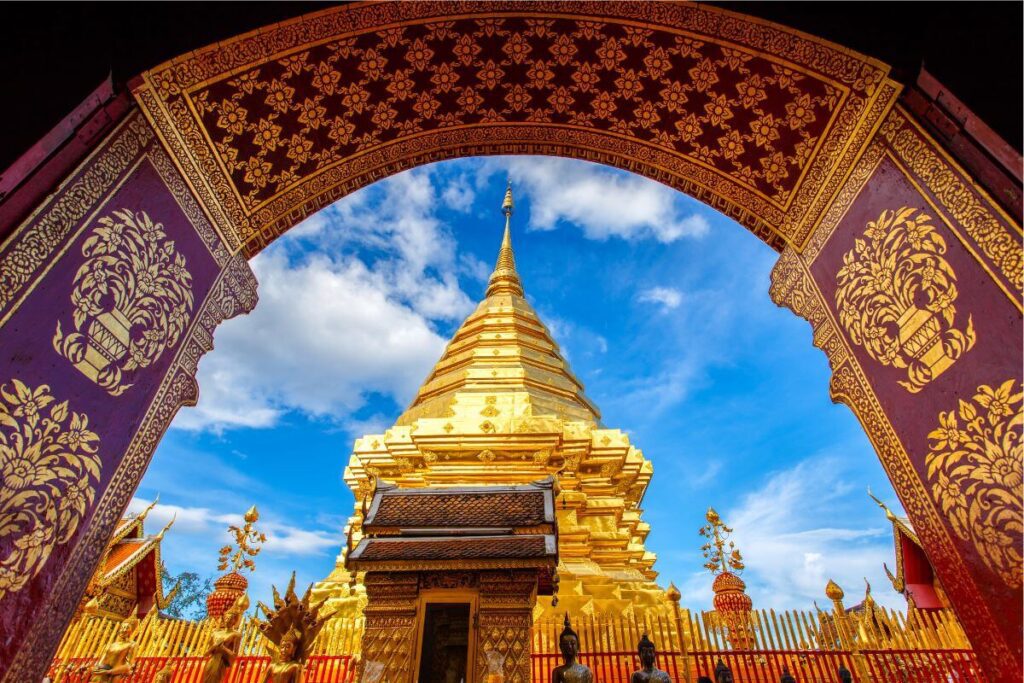
Personal Story: One sunrise I’ll never forget was catching a red taxi from near Maya Shopping Mall with two digital nomad friends, one from Italy, one from Sweden. The driver dropped us at Wat Pha Lat, where we picked up the Monk’s Trail and hiked the rest of the way on foot, passing small local villages and lush mountain paths as the sky slowly lightened above the trees.
By the time we reached the entrance of Wat Doi Suthep, I grabbed a pineapple smoothie from the food stalls outside, and it genuinely tasted like the reward after a mini pilgrimage. If you want a feel for the trail before attempting it yourself, this video captures the walk well.
2. Explore the Hidden Temples Inside the Old City Moat
Wat Phra Singh — Quick Information
Location: Ratchadamnoen Road, western end of the Old City (10–15 min walk from Tha Phae Gate)
Opening Hours: Daily, roughly 6:00 AM – 6:00 PM (varies slightly by source, worth checking on arrival)
Entrance Fee: Grounds are free; a 20 THB donation is typically requested for foreigners to enter the main Viharn Lai Kham hall
Best Time to Visit: Early morning (around 8:00 AM) for a peaceful visit before crowds and tour groups arrive
Highlights: The revered Phra Singh Buddha image, Lanna-style architecture, historic murals depicting Lanna Kingdom life, and a reclining Buddha statue
The Old City is filled with temples, famous ones like Wat Chedi Luang and Wat Phra Singh, and dozens of smaller neighborhood temples that feel almost untouched by tourism. Some of these smaller ones don’t even have English signage, you just notice the gate half open, step inside, and find a quiet courtyard with maybe one or two locals lighting incense. There’s no entrance fee, no queue, and often no one else around, just the sound of wind chimes and the occasional monk sweeping leaves.
Wandering the Old City without a plan is one of the simplest, most refreshing things to do in Chiang Mai. The whole area sits inside a square moat, so it’s genuinely hard to get lost, you can turn down any random soi (side street) and eventually find your way back to a main road. Some of my favorite discoveries here happened exactly this way: a hidden café tucked behind a temple wall, a mural down an alley, a tiny noodle stall with three tables and a queue of locals. Give yourself at least half a day with absolutely no itinerary, and let the temples find you rather than the other way around.
Check out our Chiang Mai self-guided walking routes to help you navigate the city while exploring the best things to do in Chiang Mai, it maps out a few specific loops if you’d rather have some structure alongside the wandering.
3. Wat Umong – The Forest Tunnel Temple
Wat Umong — Quick Information
Location: Suthep, Mueang Chiang Mai District, at the base of Doi Suthep mountain (~3 km west of the Old City)
Opening Hours: Daily, roughly 6:00 AM – 6:00 PM
Entrance Fee: Free (donations welcome)
Best Time to Visit: Early morning or late afternoon for the best light through the forest canopy and the quietest atmosphere
Highlights: Ancient underground tunnels with fading frescoes, a 700-year-old bodhi tree, the “starving Buddha” statue, forest meditation grounds, and a peaceful lake with fish and birds
Wat Umong is a forest temple west of the city with ancient meditation tunnels, shady grounds, and a calm, almost timeless atmosphere. The temple feels older and more mysterious than many Chiang Mai temples. Monks walk slowly along the forest paths, roosters wander freely, and everything feels quiet in a way that sinks into you.
The first time I ended up at Wat Umong, it wasn’t even planned. I was riding around with no real destination and somehow followed a side road that led straight into the temple grounds. I decided to sit in one corner of the forest area to meditate, and immediately felt this intense force of energy in the air, something I didn’t expect at all. It wasn’t dramatic or mystical, just a deep stillness that felt powerful.
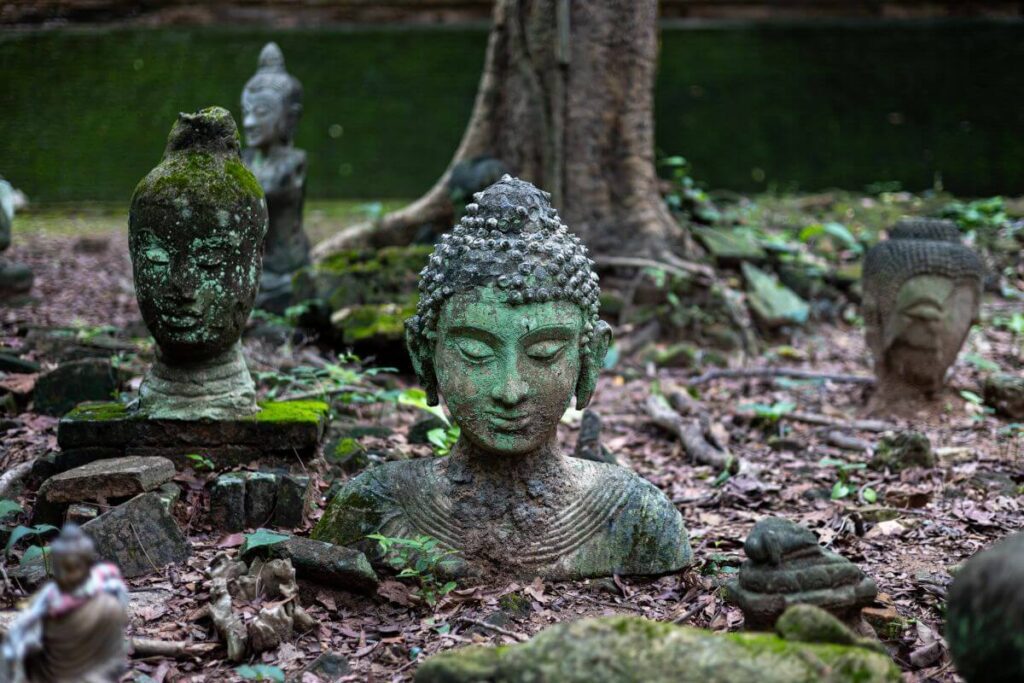
I’ve been back twice since then, and every time I’ve felt that same presence. It’s a place that draws you in without trying, making it one of the best things to do in Chiang Mai.
4. Wat Pha Lat – The Secret Jungle Temple
Wat Pha Lat — Quick Information
Location: Doi Suthep foothills, reached via the Monk’s Trail starting behind Chiang Mai Zoo (~15–20 min from the Old City)
Opening Hours: Daily, roughly 6:00 AM – 6:00 PM
Entrance Fee: Wat Pha Lat itself is free to enter; the Monk’s Trail leading up to it now has a 100 THB access fee (introduced October 2025), collected at a ticket booth near the trailhead
Best Time to Visit: Early morning, ideally before 8am, to catch the monks’ chants, beat the heat, and enjoy the temple with fewer people around
Highlights: A jungle-set forest temple with a restored Burmese-style riverside pavilion, moss-covered statues, small waterfalls, and a genuinely peaceful stop before the steeper climb to Doi Suthep
Wat Pha Lat sits quietly in the forest between Chiang Mai and Doi Suthep. It has mossy statues, jungle paths, and a small waterfall running through the grounds.
Personal story: The first time I visited, I didn’t pay much attention. I was just passing through with friends, more focused on the ride than the place itself. But on a solo trip up the mountain some time later, I stumbled onto it again, completely by accident, not even realizing at first it was the same spot. That second time, I actually stopped and looked around properly.
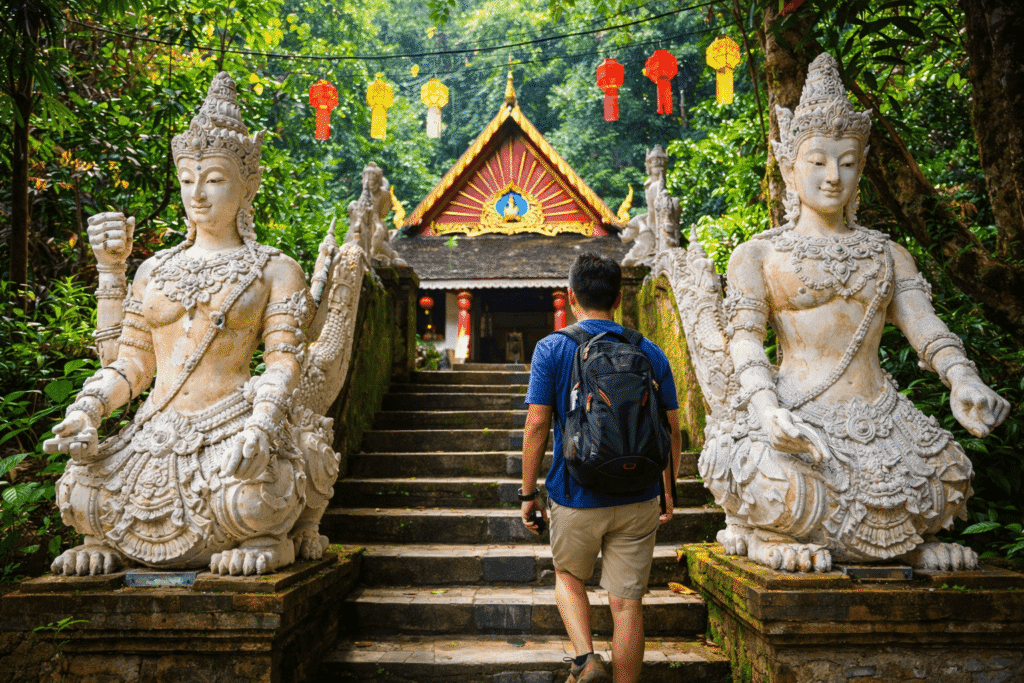
The temple architecture struck me immediately, it reminded me more of a Chinese-style monastery than the typical Lanna temples scattered around the city. There’s a wide open lawn, a small waterfall trickling nearby, and tucked off to the side, a small cave-like structure that felt almost hidden. I sat inside and meditated there for a while, and something about the enclosed, quiet space made it easier to actually settle into stillness than most places I’d tried before.
It’s become one of my personal favorite things to do in Chiang Mai whenever I need real silence and clarity, not the curated, Instagram version of peaceful, but the genuine kind that comes from a place most people simply drive past without stopping.
Update: On my last trip back to Chiang Mai, I was surprised to find this place wasn’t the quiet escape it used to be. The parking lot out front, which used to be almost empty, barely had a space left. The meditation spots I always relied on, in the cave and in the sala, were taken every time I looked. Word has clearly gotten out. I’m glad more people are discovering it, but it’s no longer the hidden gem I once described, and I’d rather be honest about that than let you arrive expecting solitude. If you still want to go, get there as early as you can, before the crowds arrive.
5. Monk Chat at Wat Suan Dok
Wat Suan Dok — Quick Information
Location: Suthep Road, Mueang Chiang Mai District (~1 km west of Suan Dok Gate, Old City)
Opening Hours: Roughly 6:00 AM – 6:00 PM daily
Entrance Fee: Free or a small donation (around 20–40 THB may be requested from foreigners)
Best Time to Visit: Late afternoon for golden light on the white chedis, or early morning for a quieter visit
Highlights: 14th-century golden chedi, white royal mausoleums of the Chiang Mai royal family, Monk Chat sessions with student monks
I stumbled upon this experience by accident, I was just riding through and stopped to admire the temple’s decor, but it became a highlight of my trip. Participating in a Monk Chat is easily one of the best things to do in Chiang Mai.
I spent time discussing various philosophies with a Thai monk, touching on everything from daily life to the nuances of Tibetan Buddhism, despite it being different from the local tradition. The monks are incredibly open-minded, warm, and humble, making for a friendly and surprisingly insightful cultural exchange.
6. Join a Temple Stay Experience
Temple Stay Experience — Quick Information
Where: Several Chiang Mai temples host foreigners, including Wat Suan Dok (short retreats), Wat Ram Poeng (longer insight meditation courses) and Wat Phra That Doi Suthep
Duration: From an overnight introduction to multi-week silent retreats
Cost: Usually donation-based or a modest fee that covers simple meals and lodging
What to Expect: Pre-dawn wake-ups, chanting, sitting and walking meditation, no meals after midday, and long periods of silence
What to Wear: Plain white, modest clothing (often available to buy on-site)
Good to Know: Book ahead; places are limited and schedules change around Buddhist holidays
Several temples offer meditation retreats and overnight stays where you can learn chanting, mindfulness, and the daily routines of monastic life. It is widely considered one of the most profound and immersive things to do in Chiang Mai.
While I haven’t personally participated in a retreat, I know many people who found the experience truly transformative. If you decide to go, I recommend locking your phone away and immersing yourself fully; you might just walk away with mental tools and perspectives that serve you for the rest of your life.
Wat Suan Dok is home to the Chiang Mai campus of Mahachulalongkornrajavidyalaya University, one of Thailand’s two Buddhist universities for monks, which is why you’ll see so many young monks studying on the grounds.
7. Watch the Monk Alms Ceremony
At sunrise, monks walk barefoot through local neighborhoods to collect alms, a tradition practiced all over Thailand. Watching shop owners and residents get down on their knees to offer food and receive blessings is a deeply humbling sight, and experiencing it firsthand is one of the most 35 unique things to do in Chiang Mai.
Observing this ritual respectfully is a peaceful and moving experience, and it’s easily one of the best things to do in Chiang Mai. Witnessing such devotion and simplicity always makes me curious about the monk lifestyle and the sense of peace that comes with it.
This activity is a perfect fit for travelers seeking deep cultural immersion. We fully customize and design our cultural experience trips to ensure you connect with these local traditions in a meaningful and respectful way.
8. Visit the Silver Temple (Wat Sri Suphan)
Wat Sri Suphan (Silver Temple) — Quick Information
Location: Wua Lai Road, Hai Ya Subdistrict, in the historic silversmith district just south of the Old City near Chiang Mai Gate
Opening Hours: Sunday to Friday 6:00 AM – 6:00 PM; Saturdays open later, until around 9:00–11:00 PM (coinciding with the Wua Lai Saturday Walking Street)
Entrance Fee: 50 THB for foreigners, often includes a small souvenir like a keychain or bottle of water; free for Thai nationals
Best Time to Visit: Early evening, when the lighting makes the silver detailing glow, especially on a Saturday when it stays open into the night
Highlights: A fully silver-covered ordination hall with hand-hammered panels depicting Buddhist mythology, nearby silversmith workshops, and Friday night monk chat sessions
Good to Know: Women are not permitted inside the main ordination hall due to religious tradition, but can view and photograph it from outside
This unique temple is covered in handcrafted silver panels with incredible detail, and you can still see artisans working on-site today. Even if you don’t usually consider yourself the “temple type,” the artistry at Wat Sri Suphan is enough to capture anyone’s attention.
While I haven’t personally made it there yet, it’s high on my list for next time. Back in my old “party lifestyle” days before I became the traveler I am today, I probably wouldn’t have given a place like this a second thought, but now, I can really appreciate the craftsmanship. It’s definitely one of the best things to do in Chiang Mai if you want to see something different from the traditional gold-leaf temples.
Ethical Animal Experiences
9. Elephant Nature Park
Elephant Nature Park — Quick Information
Location: Mae Taeng District, roughly 60 km (about 1.5 hours) north of Chiang Mai city
Opening Hours: Half-day, full-day, and overnight programs run year-round; half-day visits typically start 7:30–8:00 AM or 12:00–12:30 PM, with round-trip hotel pickup included
Entrance Fee: Roughly 2,500–3,500 THB for a half or full-day program (varies by program and season), booked in advance rather than paid on arrival
Best Time to Visit: November to January for cooler, more comfortable weather; book early during peak season since slots fill up quickly
Highlights: Observing and feeding rescued elephants in a genuine no-riding, no-chains environment, guided walks alongside the herd, and learning each elephant’s individual rescue story
Chiang Mai’s most respected elephant sanctuary. You observe rescued elephants, learn their stories, and support ethical care.
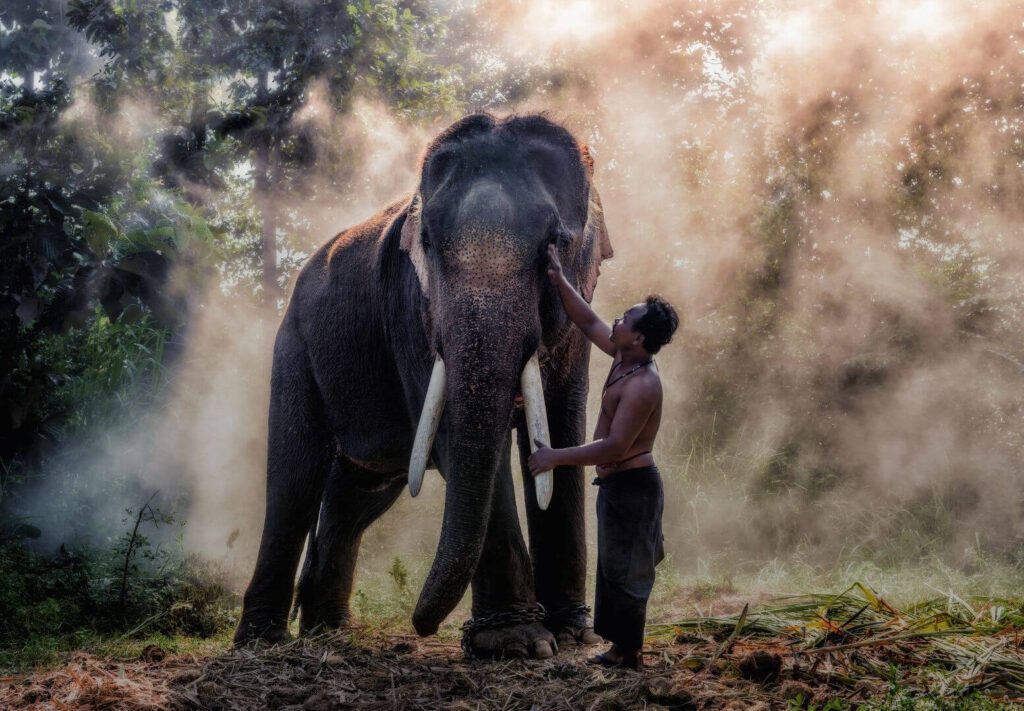
My first time there, I was in line for an elephant to lift me with its trunk. I felt uncomfortable, like the elephant was being used for entertainment. I tried to back out, but the elephant lifted me anyway, as if it knew that I was hesitant. Later I learned that Elephant Nature Park had actually rescued these elephants from abusive camps, and the frustration I felt turned into relief once I understood they were finally somewhere safe. Learning their stories and supporting ethical sanctuaries is truly one of the most meaningful of the best things to do in Chiang Mai.
Elephant Nature Park, about 60 km north of Chiang Mai, is the sanctuary I recommend to anyone who wants to see elephants the right way: no riding, no shows, just rescued elephants living freely in a river valley. I was recently in touch with their team to arrange a visit for a client bringing his son from Canada, and they were quick to respond, friendly and genuinely helpful. It’s a well-respected institution, and it shows in how they operate. Beyond day trips, you can stay overnight or volunteer for a week, all bookable through the booking portal on their official website. Book early in high season, since spots fill up fast.
10. Support Rescue Dogs and Cats – Hand To Paw
Hand to Paw Thailand — Quick Information
Location: Chiang Mai, working with communities across the province
What They Do: Free spay and neuter days, rescue and treatment of sick and injured street dogs and cats, foster care and adoption
How to Help: Donate online or sponsor a dog in their care
Where Your Money Goes: 100% of donations fund supplies and medical care
Good to Know: A community foundation, not a visitor attraction — contact them before planning any visit
Not listed on Google Maps — they work out in the community rather than from a public location.
If you love animals and want your trip to leave something good behind, Hand to Paw Thailand is worth knowing about. This small Chiang Mai foundation helps street dogs and cats, and the people who care for them. It runs free spay and neuter days in local communities, rescues sick and injured animals, and arranges foster care and adoption. It isn’t a place to visit like an elephant sanctuary.
The best way to support it is through a donation or by sponsoring one of the dogs in its care, both of which you can do on its website. The foundation says 100% of donations go to supplies and medical care, so even a small contribution makes a real difference.
11. Buffalo and Ethical Farm Visits
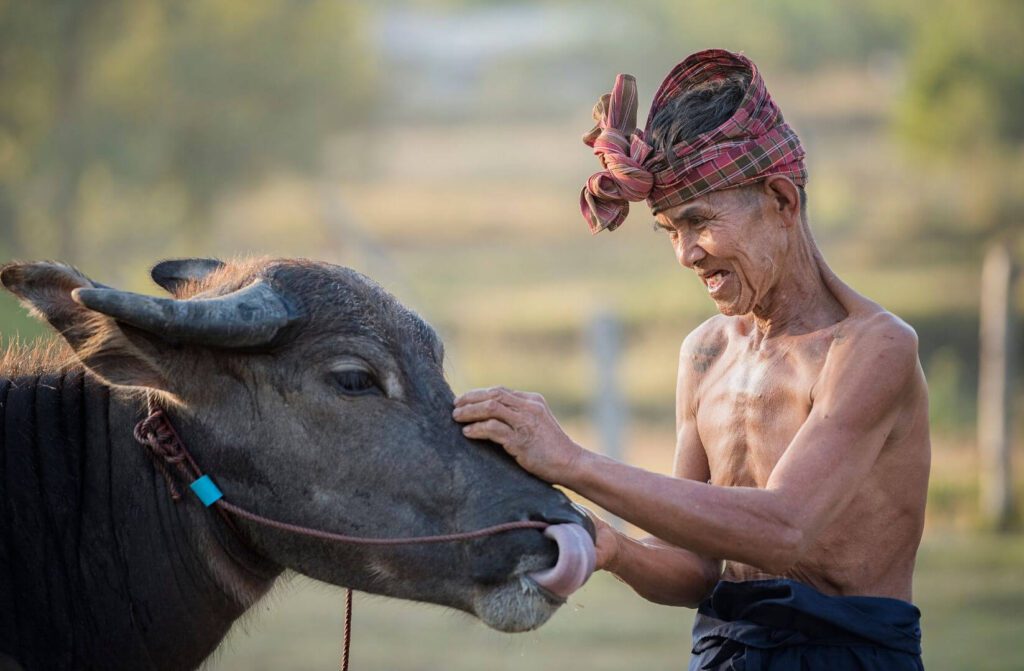
Meet water buffalo up close, walk through working rice fields, and learn how local farmers actually plant, tend, and harvest their crops throughout the year. It’s a slower, more grounded kind of activity, no crowds, no performance for tourists, just genuine insight into rural life that most visitors never get close to during a typical Chiang Mai trip. Farmers are usually happy to explain the process in detail, from preparing the paddies to the role the buffalo play in tilling the land, and many visits include a chance to try planting rice by hand yourself.
It’s peaceful, educational, and genuinely good for families, kids especially tend to love meeting the buffalo and getting their hands dirty in the mud. But it’s just as rewarding for adults looking for a quieter, more authentic morning away from the city, the kind of experience that sticks with you longer than another temple photo.
12. Visit Karen Long-Neck Villages Ethically
Karen Village — Quick Information
Location: Northwest of Chiang Mai city, in the surrounding hill tribe communities of the province
Opening Hours: Varies by tour and community; most visits are arranged as part of a guided day trip rather than independent drop-in access
Entrance Fee: Typically included as part of a guided tour; independent entry fees where applicable range from roughly 300–500 THB
Best Time to Visit: Cooler months (November to February) for a more comfortable visit, ideally as part of a smaller, community-focused tour rather than a large group stop
Highlights: Traditional Karen weaving demonstrations, handicrafts, and a genuine look into daily hill tribe life
A Note on Ethics: Not all Karen village visits are created equal, some of the more commercialized “long neck” tourist stops have been criticized as staged and exploitative. As operators, we ensure your trip is both sustainable and ethical by working directly with local communities. Our tours prioritize cultural exchange, traditional weaving, and an authentic look into daily life rather than exploitation, making this one of the most meaningful and rewarding things to do in Chiang Mai.
As operators, we ensure your trip is both sustainable and ethical by working directly with local communities. Our tours prioritize cultural exchange, traditional weaving, and an authentic look into daily life rather than exploitation, making this one of the most meaningful and rewarding things to do in Chiang Mai.
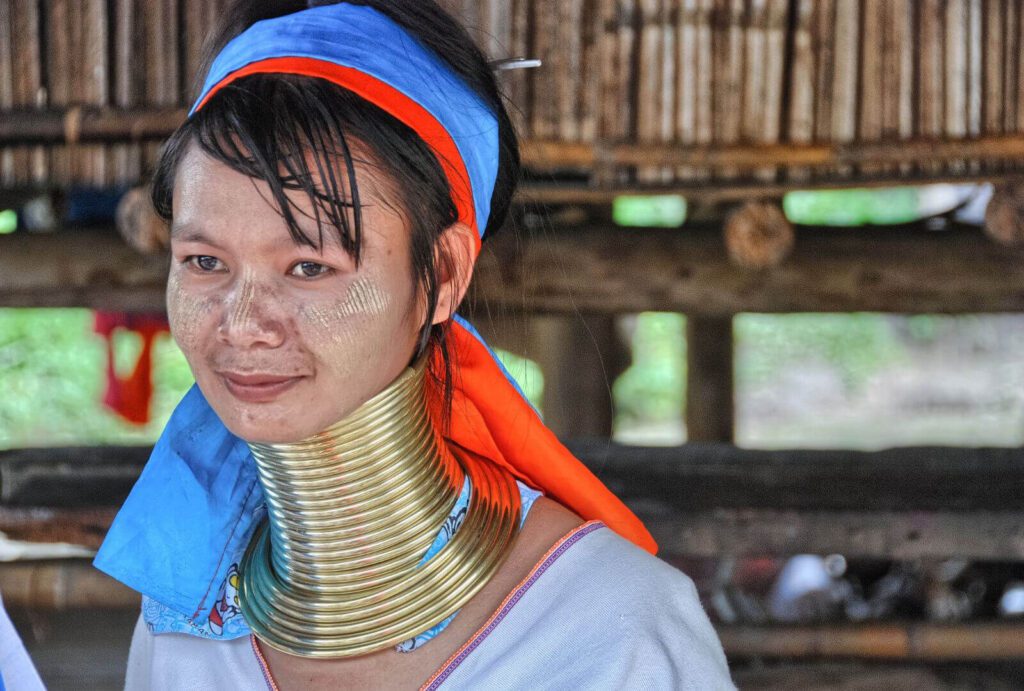
The Karen Long Neck people, who call themselves the Kayan Lahwi, are a subgroup of the Red Karen (Karenni) from Kayah State in eastern Myanmar. In the late 1980s and early 1990s, many fled across the border into northern Thailand to escape military conflict and political unrest at home, settling mostly in the hills of Mae Hong Son and later in villages near Chiang Mai and Chiang Rai.
They’re best known for the brass coils Kayan women wear around their necks, a tradition that often starts in childhood, with more coils added over the years. The coils don’t actually lengthen the neck. Their weight gradually pushes the collarbone and shoulders down, creating the famous elongated look. The origins of the custom are debated. Some say it began as protection, others as a mark of beauty and cultural identity, and today many younger women choose whether to wear the coils at all.
Update: Visiting a Kayan village is one of the more complicated experiences in northern Thailand, and it’s worth going in with open eyes. Many Kayan still live with limited legal status, which restricts where they can travel and work, and some villages near the cities were set up mainly for tourists. Critics have long called these “human zoos.” At the same time, tourism is an important source of income for many families. If you do go, choose a genuine community village over a roadside attraction, buy crafts directly from the makers, ask before taking photos, and take time to talk with people rather than just photographing them.
Nature & Adventure
13. Hike the Monk’s Trail to Wat Pha Lat
Monk’s Trail — Quick Information
Location: Trailhead behind Chiang Mai Zoo, off Suthep Road (~15–20 min from the Old City)
Opening Hours: Daily, roughly 6:00 AM – 6:00 PM
Entrance Fee: 100 THB access fee (introduced October 2025), collected at a ticket booth near the trailhead
Best Time to Visit: Early morning, ideally before 8am, to beat the heat and catch a chance of passing monks on their walk up
Highlights: A shaded jungle path marked by saffron cloth wrapped around trees, leading up to Wat Pha Lat, with the option to continue further to Wat Phra That Doi Suthep at the summit
Good to know: The short version of the trail (to Wat Pha Lat only) takes around 30–45 minutes and is fairly easy. Continuing on to Doi Suthep adds significant elevation and roughly 3–3.5 hours total, and since there’s no trail back down from the summit, plan on a songthaew or Grab for the return trip.
This is a classic highlight among the 35 unique things to do in Chiang Mai, and one of my favorite memories of the city.
The Monk’s Trail starts near Chiang Mai University and winds up the forested slopes of Doi Suthep to Wat Pha Lat, a small temple tucked into the jungle beside a waterfall. It’s older than most people realize. Legend says that in the 14th century, a white elephant carrying a sacred Buddha relic climbed this mountain to choose the site for Wat Phra That Doi Suthep, and it stopped to rest at the spot where Wat Pha Lat now stands. For centuries, there was no road to the top. Monks and pilgrims made the climb on foot, and Wat Pha Lat, whose name means “sloping rock,” served as their resting place halfway up. That changed in 1935, when the road to Doi Suthep was built, largely by volunteers, and the old path slowly faded into a quiet hiking trail. Today it’s marked by strips of orange monk’s robe tied around the trees.
I hiked it after the Nomad Summit in Chiang Mai. Once the summit ended, a big group of us stayed on for workshops, and I became friends with two other participants, one from Sweden and one from Italy. One morning, we took a songthaew to Wat Pha Lat and set off from there all the way up to Doi Suthep.
I’ll be honest: they were far more experienced hikers than I was, and I spent a good part of the climb trailing behind them. The trail gets noticeably steeper after Wat Pha Lat. But it was a fantastic workout, and I was completely immersed in nature. We passed through small villages and deep forest, with the crunch of dry leaves underfoot and birdsong all around, until we finally came out near Doi Suthep temple. We celebrated with a smoothie each, sweaty and happy. It’s still one of my favorite ways to experience Chiang Mai.
If you go, start early. Many locals hike at sunrise for cooler temperatures and a quiet trail. Bring plenty of water and dress respectfully, with shoulders and knees covered, since you’ll be visiting two temples. If you’d rather keep it easy, stop at Wat Pha Lat and head back down; the section to Doi Suthep is noticeably tougher.
14. Sticky Waterfalls (Bua Tong)
Sticky Waterfalls (Bua Tong) — Quick Information
Location: Sri Lanna National Park, Mae Taeng District (~60 km / 1.5 hours north of Chiang Mai via Highway 107)
Opening Hours: Daily, 8:00 AM – 5:00 PM, year-round
Entrance Fee: Free
Best Time to Visit: Weekday mornings (8–10am) to beat the crowds; rainy season (Jul–Oct) gives the strongest water flow and greenest surroundings, while cool season (Nov–Feb) offers the most comfortable temperatures
Highlights: Climbing barefoot straight up the limestone-coated cascade, which grips your feet instead of being slippery, thanks to mineral deposits from the natural spring feeding it
Good to know: Go barefoot rather than wearing water shoes, the porous limestone actually grips better on bare skin. Ropes are installed along the steeper sections for extra confidence, and it’s a genuinely fun, low-risk climb for kids too.
The Sticky Waterfalls are unlike anything else in Thailand. Thanks to the mineral-rich limestone, the rocks grip your feet like sandpaper, allowing you to climb the waterfall as if it were a staircase. It’s fun, playful, and suitable for most ages.
Personal Story: The first time I visited, it felt unreal. Walking up flowing water barefoot without slipping was almost magical, easily one of the best things to do in Chiang Mai. The drive there was scenic with rolling hills and small villages, and the falls looked like something out of a fantasy movie. There are wooden walkways that take you through the hills, perfect for exploring.
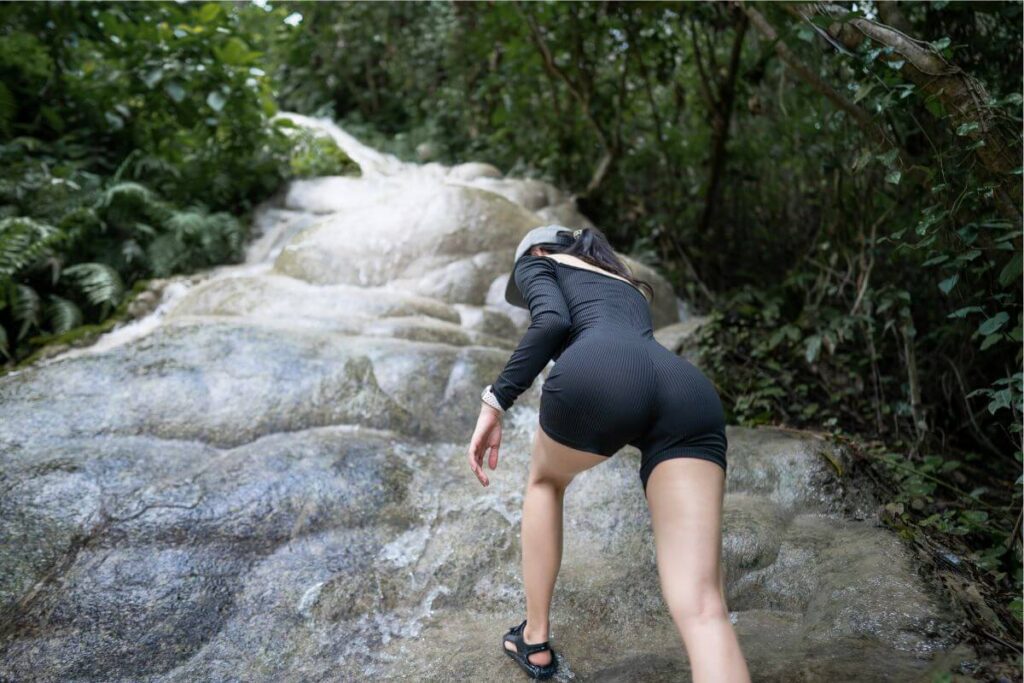
It’s one of those places where you think you’ll stay for an hour, and suddenly half the day is gone because it’s just that peaceful. Beyond the falls themselves, there’s a wooden walkway that loops for around 2 km through the forest surrounding the waterfall. It’s an easy, pleasant little trail, shaded by tall trees and alive with birdsong, with the sound of rushing water never far away.
You can take it slowly, stop at quiet spots along the way to sit and listen, and catch the falls from different angles as you go. It’s a gentle walk rather than a hike, so it suits almost anyone, and it’s the perfect way to stretch your legs before settling back by the water.
“If you’re exploring more northern regions, my Northern Thailand Hidden Gems blog post covers more forest trails, viewpoints, and untouched mountain villages.”
15. Doi Inthanon National Park Day Trip
Doi Inthanon National Park — Quick Information
Location: Chom Thong District, roughly 60 km (about 1.5–2 hours) southwest of Chiang Mai city
Opening Hours: Daily, 5:30 AM – 6:30 PM, year-round
Entrance Fee: 300 THB for foreign adults, 150 THB for children (3–14), plus a small vehicle fee (20–50 THB)
Best Time to Visit: November to February for the coolest, most comfortable weather; note the Kew Mae Pan trail closes June–October for forest recovery
Highlights: Thailand’s highest peak (2,565m), the twin royal pagodas, waterfalls including Wachirathan and Mae Ya, Karen hill tribe villages, and some of the country’s best birdwatching with over 400 recorded species
Good to know: The park is large and spread out, so leave Chiang Mai early (ideally by 8–9am) to fit in the summit, waterfalls, and trails comfortably in one day. Keep your entrance ticket on you, some attractions inside the park require it to be shown again.
Doi Inthanon is Thailand’s highest peak, offering cool air, picturesque nature trails, stunning waterfalls, and the famous Royal Pagodas. The viewpoints sometimes sit above the clouds, creating surreal morning scenes. Visiting the waterfalls like Wachirathan and Sirithan adds variety to the day. Many visitors combine a hike on the Kew Mae Pan Nature Trail with a visit to the pagodas for a complete experience.
Doi Inthanon is Thailand’s highest peak, rising about 2,565 meters above sea level roughly two hours southwest of Chiang Mai, and it’s one of the most popular day trips from the city.
I’ll be honest: I’ve been to almost every corner of Chiang Mai, from the main attractions to the most off-the-beaten-path spots, but this is the one I’ve deliberately saved for later.
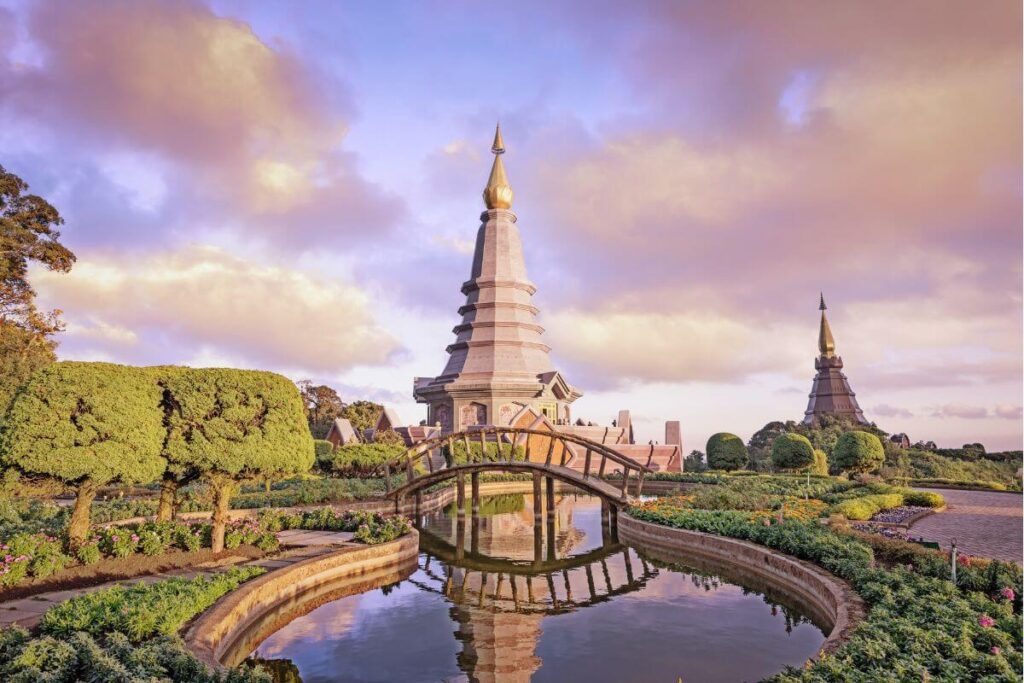
I want to go when it’s at its absolute coldest. In December and January, temperatures at the summit can drop close to freezing, and on the coldest mornings you may even find frost on the grass. That’s a side of Thailand most visitors never imagine. The twin royal pagodas, the misty cloud forest and the waterfalls on the way up are on everyone’s list, but standing at the top of Thailand in a jacket with my breath fogging in the air is the experience I’m waiting for. When I finally make the trip, I’ll update this section with the full story.
16. Grand Canyon Water Park Chiang Mai
Grand Canyon Water Park — Quick Information
Location: Nam Phrae, Hang Dong District (~20 km / 30–45 min southwest of the Old City)
Opening Hours: Daily, 10:00 AM – 7:00 PM
Entrance Fee: 1,200 THB for adults and anyone 120cm+, 1,000 THB for kids 90–120cm, free under 90cm (includes life jacket, floating aqua park, kayaks, SUP boards, and one zipline round)
Best Time to Visit: Weekday mornings for shorter queues on the slides and cliff jump platforms
Highlights: A flooded former quarry with dramatic orange cliffs, giant floating inflatable obstacle courses, 8–10 meter cliff jumping platforms, kayaking, and a dedicated kids’ zone
Good to know: Life jackets are compulsory in the water areas and included in the ticket price. Outside food and drink aren’t allowed, and booking online in advance (via the official site or platforms like Klook) can sometimes save on the entrance fee compared to walk-up prices.
I’ll be upfront here: I’ve only ever seen Grand Canyon Chiang Mai from the outside, driving past the red clay cliffs on my way to somewhere else, I’ve never actually gone in and done the activities myself. So take this one with that caveat in mind.
From what I’ve gathered and heard from friends who have been, this outdoor adventure park features inflatable obstacle courses floating on the water, cliff jumping platforms of varying heights for different comfort levels, and calmer spots to just swim or kayak if you’d rather skip the adrenaline. It’s energetic, loud, and clearly built for a day of pure, uncomplicated fun rather than anything reflective or cultural.
What strikes me every time I drive past, even without having gone in, is how unexpected the whole setup looks against the landscape. The park sits inside old quarry pits carved into striking red clay cliffs, giving the place a genuinely dramatic, almost otherworldly backdrop that has nothing to do with the water park itself.
It’s one of those spots that surprises people precisely because nobody expects to find a massive inflatable water playground tucked away in the middle of red clay mountains outside Chiang Mai. If you’re looking for the best things to do in Chiang Mai for a full day of physical activity, and you don’t mind heights or getting soaked, it is worth adding to your itinerary. I just can’t personally vouch for the experience inside the gates the way I can for the other entries on this guide.
17. Ziplining Through the Canopy (Jungle Flight)
Jungle Flight — Quick Information
Location: Doi Saket District, roughly 1 hour from Chiang Mai city (set in Doi Lankah mountain rainforest)
Opening Hours: Daily, 9:00 AM – 5:00 PM; multiple pickup slots available starting as early as 6:30 AM
Entrance Fee: Roughly 1,900–2,500 THB depending on package (course length and whether the zipline roller coaster is included), usually includes round-trip hotel transfer and lunch
Best Time to Visit: Book an earlier morning slot for cooler temperatures and to avoid afternoon crowds
Highlights: Thailand’s longest zipline roller coaster (1,000–1,100m), sky bridges, an abseil point, and canopy walkways through genuine mountain rainforest
Good to know: TAT-licensed and uses a two-cable safety system with Petzl equipment. Maximum weight limit is around 120kg, and closed-toe shoes are required. Round-trip transfer is included on most packages, so you won’t need your own transport.
Ziplining through the forest canopy gives you a genuinely unique perspective on the northern Thai landscape, one you simply can’t get from the ground, gliding above the treetops with the mountains stretching out in every direction. Operators like Jungle Flight and Eagle Track run extensive courses built into the jungle outside Chiang Mai, featuring long zipline routes, suspension bridges, abseiling stations, and scenic platforms tucked into the forest canopy where you can pause and actually take in the view before the next line.
What surprised me most was how far safety standards have come across these operators in general. Guides are well-trained, genuinely attentive, and clearly used to putting nervous first-timers at ease, checking harnesses repeatedly, explaining each station clearly, and keeping the pace relaxed rather than rushed. It’s easily one of the best things to do in Chiang Mai if you want an activity that sounds intimidating on paper, but ends up feeling secure and well-managed once you’re actually clipped in and moving.
That said, it’s worth doing a bit of homework before booking, check recent reviews and current safety certifications for whichever operator you choose, since standards and track records can vary. A full course typically takes a few hours and combines the adrenaline of the longer, faster lines with quieter stretches where you’re simply suspended above the jungle, listening to birdsong along the way.
This activity is perfectly aligned with our adventure travel style—it’s a must for thrill-seekers looking for the most heart-pumping things to do in Chiang Mai.
18. Mae Ping River Cruise
Mae Ping River Cruise — Quick Information
Location: Pier at Wat Chai Mongkol, 133 Charoenprathet Road, near the Night Bazaar area
Opening Hours: Boats depart roughly every hour, daily from 9:00 AM – 5:00 PM (last two afternoon departures don’t include return hotel transfer)
Entrance Fee: Roughly 550–650 THB for the standard 2-hour cruise, with khao soi included on some packages; longer or dinner cruise options run higher
Best Time to Visit: Late afternoon departures for a chance at a rural sunset over the greenery on the way back
Highlights: A slow, open-air long-tail boat ride past teak houses and riverside life, with a stop at a traditional Thai farmer’s house for fresh fruit, herbal drinks, and a look at the organic herb garden
A slow cruise along the Mae Ping River reveals a quieter, local side of the city and stands out as one of the 35 unique things to do in Chiang Mai. You drift past traditional wooden houses, small temples, and lush riverside gardens, offering a glimpse into the city’s gentle rhythm. Some tours include a stop at a riverside herbal farm where you can sample fresh fruit juices or local herbal teas.
This experience is particularly ideal for romantic travel; if you’re visiting with your significant other, it’s one of the best things to do in Chiang Mai for a lazy, intimate afternoon on the water.
19. Huay Tung Tao Lake
Huay Tung Tao Lake — Quick Information
Location: Don Kaeo, Mae Rim District (~20 min / 12 km north of Chiang Mai city)
Opening Hours: Daily, roughly 7:00 AM – 6:00 PM (waterfront huts typically close around 5pm)
Entrance Fee: 50 THB per person, plus a small separate fee (~20 THB) to rent a bamboo hut by the water
Best Time to Visit: Early morning (7–9am) for cooler temperatures and calm reflections on the water, or after 4pm for sunset; weekdays are noticeably quieter than weekends
Highlights: Lunch or drinks in a floating bamboo hut with mountain views, swimming, paddle boats, cycling the 4km lake loop, and the quirky giant straw King Kong sculptures
Huay Tung Tao is a reservoir lake in the foothills just northwest of Chiang Mai, and it’s a local favorite, especially on weekends, when Thai families and groups of friends come out to spend the whole afternoon by the water. Rows of simple bamboo huts on stilts line the lake’s edge, each one a shaded spot to kick back on a mat, order food from the lakeside restaurants and watch the day go by. The menu is classic northern Thai picnic fare: grilled fish and chicken, som tam (papaya salad), sticky rice and cold drinks, delivered right to your hut. Behind the lake, the green mountains of Doi Suthep rise up, giving the whole scene a calm, postcard-like backdrop.
There’s more to do than eat and lounge. You can walk or cycle the path around the lake, take a dip in the water on a hot day, and look out for the giant straw sculptures that often pop up around the grounds, a fun photo stop, especially with kids. It’s easy to reach, about 20–30 minutes from the Old City, and there’s a small entrance fee. Go on a weekday if you want the lake mostly to yourself, or on a weekend if you’d like to see how Chiang Mai locals like to unwind. Arrive in the late afternoon and stay for sunset, when the light softens over the mountains and the water turns golden.
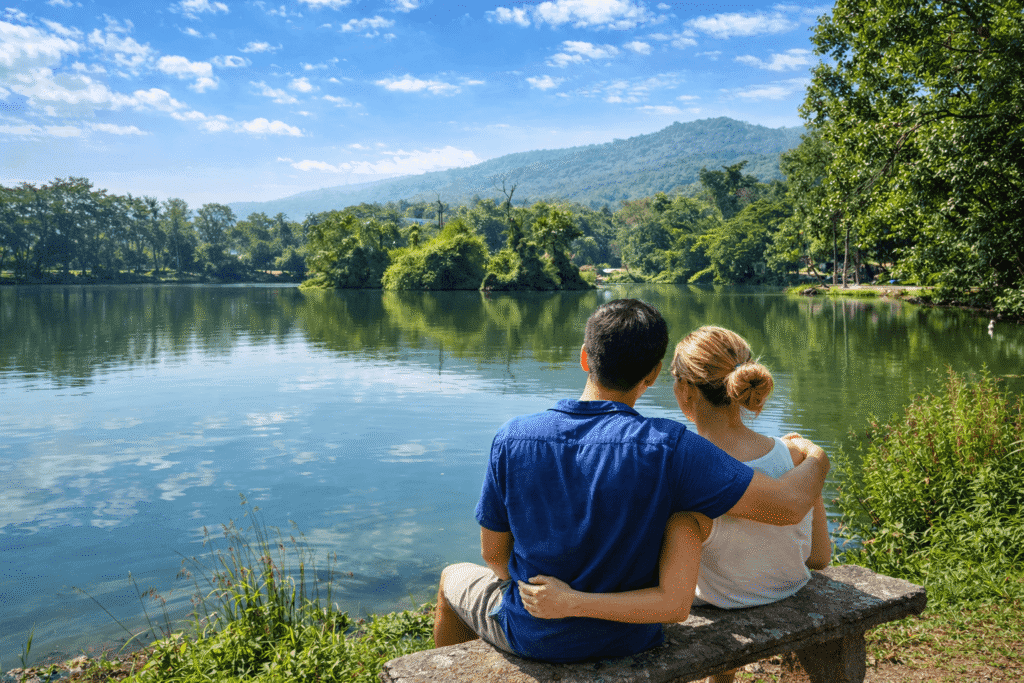
Personal Story: When my dad visited Chiang Mai, I brought him here. The moment we sat in a bamboo hut with a big meal spread across the table, we both felt the stress of everyday life just melt away. The breeze, the view, the fried fish, the sound of people laughing in nearby huts, it’s one of those experiences that feels simple but completely stays with you, making it a favorite among the best things to do in Chiang Mai.
20. Chiang Mai Night Safari
Chiang Mai Night Safari — Quick Information
Location: Nong Kwai, Hang Dong District (~20–25 min / 12 km southwest of Old City)
Opening Hours: Daily, roughly 11:00 AM – 10:00 PM (night tram rides typically run from 6:30 PM to 10:00 PM)
Entrance Fee: ~800 THB per adult / ~400 THB per child for international visitors (includes tram tours and shows)
Best Time to Visit: 6:00 PM – 9:00 PM for the cool evening air, nocturnal animal activity, and illuminated tram rides
Highlights: Open-air tram rides through open enclosures (Savanna Safari & Predator Prowl), walking Jaguar Trail, musical fountain show, and close-up animal encounters
The Chiang Mai Night Safari is one of the city’s most popular family outings, and it’s easy to see why. Set in the foothills of Doi Suthep-Pui National Park, about 20–30 minutes from the Old City, it offers a completely different way to see wildlife: after dark, when many animals are at their most active. You board an open-air tram and roll through wide, naturalistic enclosures, with animals wandering across the terrain around you.
The park is split into different tram routes. One takes you through savanna-style zones where giraffes, zebras, deer and other grazing animals often come right up to the tram, which is always a highlight for kids. Another route winds past big cats and other predators, which feels thrilling in the dark. If you’d like to stretch your legs, there’s also a walking trail around the lake, where you can see smaller animals at your own pace. It’s a relaxed way to spend part of the evening before or after the trams.
With children, it’s an easy, fun night out that feels very different from a typical daytime zoo visit. Arrive early to buy tickets and catch the first tram rounds before the crowds build, and bring bug spray, since the park sits right against the forest. Plan on around three to four hours to see it all without rushing.
I’ll be upfront: the Night Safari is one of the few big Chiang Mai attractions I haven’t been to yet, so this isn’t a first-hand review. But I understand the appeal, especially if you’re traveling with kids. Seeing a park after dark changes everything compared to a daytime zoo. The evening air is cooler, which is a relief in Thailand’s heat, and the soft lighting shows off the habitats without disturbing the nocturnal animals. Add the calls and rustles of wildlife waking up around you, and it’s easy to see why families come away feeling like they’ve been on a real adventure. If you’ve been, I’d love to hear what you thought, and if I make it there myself, I’ll update this with my own take.
Food & Night Markets
21. Saturday and Sunday Walking Street Markets
Weekend Walking Streets — Quick Information
Saturday Walking Street (Wua Lai)
Location: Wua Lai Road, just outside the southern end of the Old City walls
Opening Hours: Saturdays only, roughly 16:00–22:00 (some stalls run later, closer to 23:00)
Entrance Fee: Free
Best Time to Visit: Early evening (5–6pm) before the busiest stretch between 7–9pm
Highlights: Northern Thai silverware and lacquerware from Chiang Mai’s historic silversmith district, handicrafts, street food, and the nearby Silver Temple (Wat Sri Suphan)
Sunday Walking Street (Tha Phae)
Location: Ratchadamnoen Road, running from Tha Phae Gate through the Old City toward Wat Phra Singh
Opening Hours: Sundays only, roughly 16:00–24:00 (busiest between 18:00–21:00)
Entrance Fee: Free
Best Time to Visit: Arrive by 5pm to walk the full 1.1km stretch before it gets shoulder-to-shoulder later on
Highlights: Handmade crafts in ceramic, silk, wood, and metal, live music and street performers, and temple courtyards (Wat Phan On, Wat Inthakhin) turned into food courts for the night
Which to choose: Sunday is the bigger, more iconic version, if you only have time for one, make it this. Saturday’s smaller scale makes it easier to actually walk through without getting swept along in a crowd.
These weekend markets are essential things to do in Chiang Mai if you love food, crafts, live performers, and proper local shopping, the kind of evening that turns a normal Saturday or Sunday into an actual event. Saturday Walking Street runs along Wualai Road in Chiang Mai’s historic silversmith district, while Sunday Walking Street, the bigger and more famous of the two, takes over Ratchadamnoen Road running the full stretch through the Old City from Tha Phae Gate.
Both markets shut the road down entirely to traffic, turning it into a slow-moving river of stalls, street food carts, and performers, featuring everything from traditional Thai dance to buskers playing acoustic sets on a street corner. Wandering through them is easily one of the best things to do in Chiang Mai to try street food you might not find elsewhere, such as khao soi, grilled skewers, and mango sticky rice.
You can buy handmade crafts directly from the artisans, including silverwork, textiles, and woodcarvings, while enjoying the atmosphere as temple courtyards along the route light up into their own mini food courts for the night. If you only have time for one, Sunday is the bigger, more iconic version, but Saturday’s slightly smaller scale makes it easier to walk through without feeling swept along in a crowd.
22. Chiang Mai Night Bazaar and Anusarn Market
Chiang Mai Night Bazaar — Quick Information
Location: Chang Khlan Road, Chang Moi Sub-district (~5 min east of Old City / Night Bazaar Area)
Opening Hours: Daily, roughly 5:00 PM – 12:00 AM (midnight)
Entrance Fee: Free entry (pay-as-you-go for food, drinks, and shopping)
Best Time to Visit: 7:00 PM – 10:00 PM when all stalls are fully operational, the food courts are vibrant, and live music is performing
Highlights: Extensive street food stalls, local Northern Thai handicrafts, clothing and souvenirs, live music performances, and adjacent night markets (Kalare & Anusarn)
The Night Bazaar stretches along Chang Klan Road and remains one of the most famous things to do in Chiang Mai at night. There are stalls selling clothes, accessories, artwork, souvenirs, and lots of food.
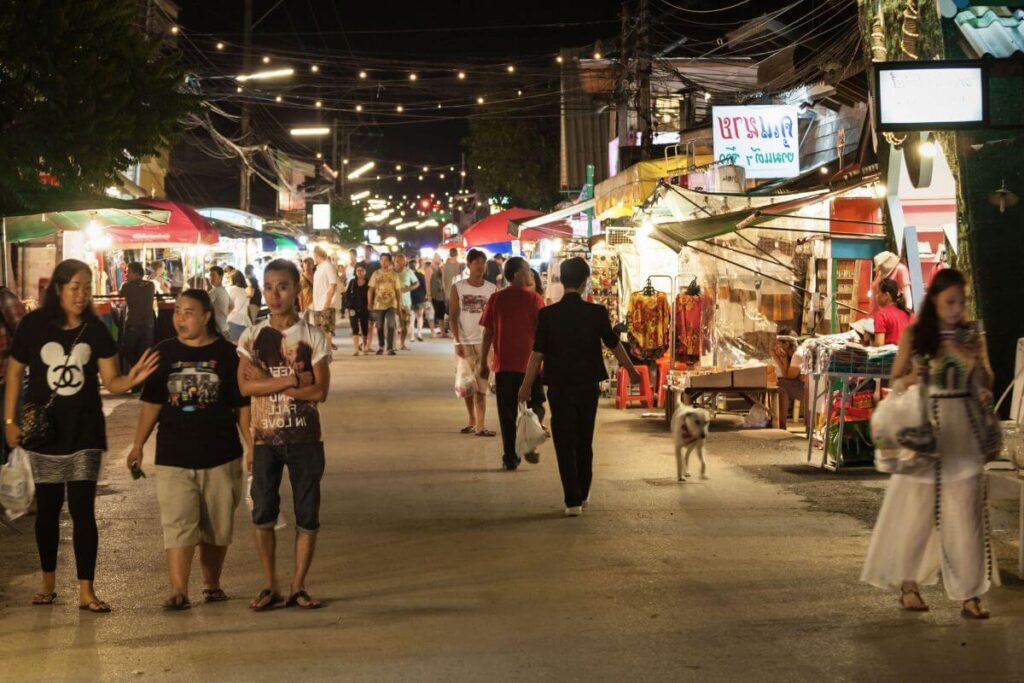
Personal Story: The Night Bazaar never gets old for me. There is always a distinct buzz in the air, with travelers wandering through, vendors chatting, and music drifting between the stalls. For a while, I made it a weekly ritual to swing by for a foot massage at Anusarn Market, where the same local masseuses looked after me like clockwork, turning every visit into a comforting routine.
What keeps pulling me back to browse is that you will find regional northern crafts here that you simply won’t come across in Bangkok. That authentic local character is exactly why visiting this market remains one of the best things to do in Chiang Mai whenever I’m in town.
23. Warorot Market (Kad Luang)
Waroros Market (Kad Luang) — Quick Information
Location: Wichayanon Road, Chang Moi Sub-district (~5 min east of Old City, near the Ping River)
Opening Hours: Daily, roughly 4:00 AM – 6:00 PM (indoor building); outdoor night stalls run until ~10:00 PM
Entrance Fee: Free entry (pay-as-you-go for goods and local street food)
Best Time to Visit: 8:00 AM – 11:00 AM for the bustling indoor day market experience, or around 6:00 PM for the outdoor street food vendors
Highlights: Authentic Northern Thai specialty foods (Sai Oua sausage, Nam Prik Ong, Cap Moo), wholesale textiles and hill-tribe handicrafts, dried fruits, teas, and affordable local snacks
Warorot Market, known locally as Kad Luang or “the big market,” isn’t just a tourist stop for me. It’s where I actually go when I need things. Whenever I’m in Chiang Mai and need new bedding, a few extra clothes, or practical household bits like plastic containers and storage boxes, this is my first stop. It’s packed with the kind of everyday essentials locals shop for, usually at much better prices than a mall, and if you can’t find something here, it probably doesn’t exist.
But honestly, some days I go with nothing to buy at all, just to wander. Warorot sits on the edge of Chiang Mai’s Chinatown, close to the Ping River, and the whole area buzzes with life from early morning. Vendors call out to customers, scooters squeeze through narrow lanes piled high with goods, and the air shifts from sweet dried fruit to spices to sizzling street food as you walk. The ground floor is a maze of northern Thai snacks: crispy pork rinds, spicy chili dips like nam prik noom, and fragrant sai ua sausage, all perfect for picking up a few things to try as you go. Upstairs, you’ll find clothing, fabrics and textiles, while the streets around the building spill over with shops selling everything imaginable.
Right next door, the Ton Lamyai flower market is worth a detour too, a burst of color with fresh flowers and garlands for temple offerings. For me, a slow morning at Warorot is one of the best ways to feel the everyday rhythm of Chiang Mai, far from the polished tourist version of the city. Go early, when it’s cooler and the market is at its liveliest, and bring cash, since most vendors don’t take cards.
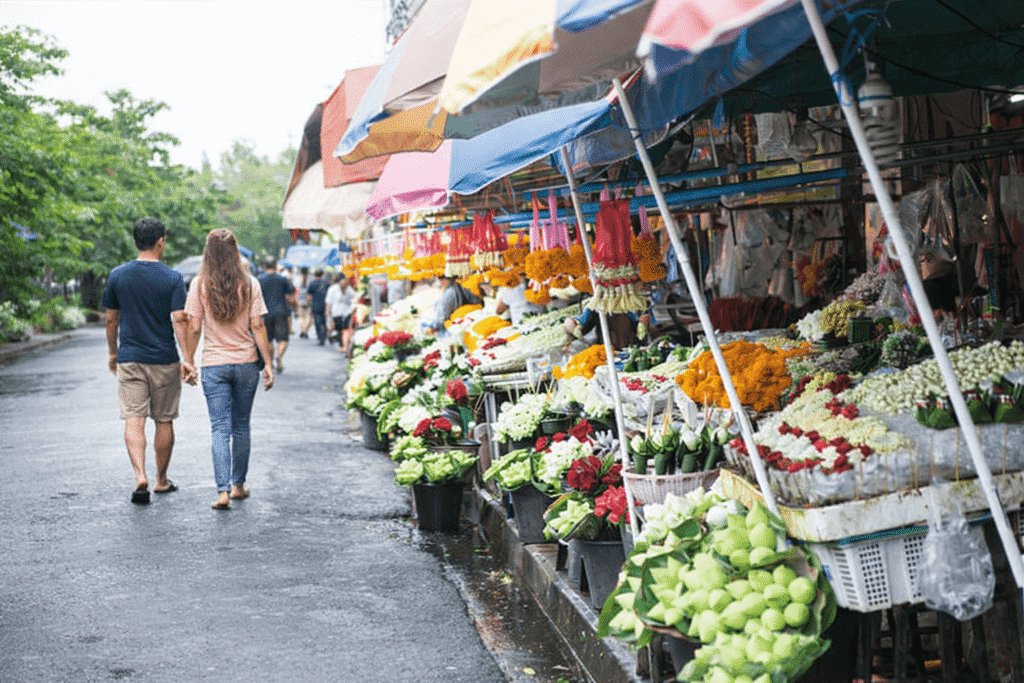
Warorot Market is the busiest market in Chiang Mai’s Chinatown district, and honestly the closest thing this city has to Bangkok’s Sampheng Market, sprawling, chaotic in the best way, and built entirely around how locals actually shop rather than tourist foot traffic. It’s one of the essential things to do in Chiang Mai if you want to see local life in action rather than a curated, tourist-facing version of it.
The market sits inside a three-story building right along Wichayanon Road, next to the Ping River, with the ground floor given over almost entirely to food and daily goods. Exploring these narrow aisles packed with dried fruits, local spices, fresh flowers, and regional snacks is easily one of the best things to do in Chiang Mai if you want an authentic local market experience. Upper floors shift into clothing and household goods, and once the sun goes down, the streets surrounding the building come alive as a vibrant night market layer stacks on top of the daytime one.
It’s affordable, loud, and full of genuine energy, the kind of place where you can smell sai oua grilling from three stalls away before you even see it. If you only visit one market in Chiang Mai to get a real sense of how the city actually eats and shops day to day, this is the one.
24. Join a Northern Thai Cooking Class
Thailand Cooking Class — Quick Information
Location: Flexible / Customized based on your travel itinerary
Opening Hours: Morning, afternoon, or evening sessions available
Options: Hands-on group or private classes, organic farm tours, market visits, and specialized dietary menus
Best Time to Visit: Scheduled around your preferred day and travel pace
Highlights: Local market sourcing, learning authentic Thai flavor balancing, mastering regional dishes (Northern, Southern, or Central style), and enjoying your self-cooked meal
You can contact us to arrange a tailored cooking class for you according to your location, availability, and preferred cuisine.
Cooking classes in Chiang Mai often include market visits, farm tours, and hands-on guidance through several local dishes. Joining a class is easily one of the best things to do in Chiang Mai, where you will learn the secrets behind northern specialties like Khao Soi, Sai Ua (herbaceous sausage), Nam Prik Ong, and mango sticky rice. This is a core part of the activities we feature in our culinary exploration travel style, as it allows you to truly understand the local culture through its unique flavors.
Cooking classes aren’t really my thing, so I’ll be honest: I haven’t taken one myself. But I’d still recommend them to almost anyone visiting Chiang Mai, and it’s one of the activities I hear the most glowing feedback about from friends and travelers. Chiang Mai is widely considered one of the best places in Thailand to learn Thai cooking, with dozens of schools to choose from, from classes in the city to relaxed organic farms just outside town.
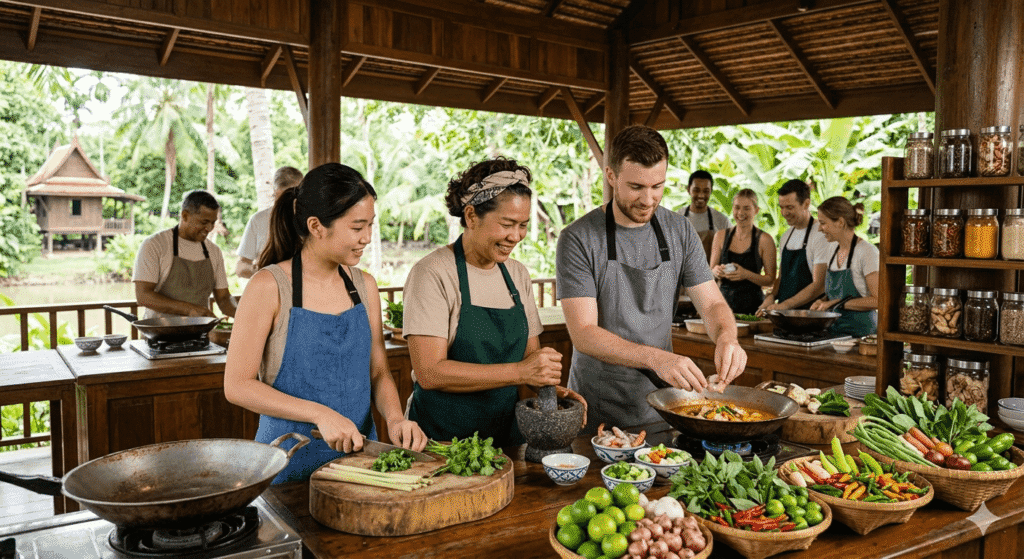
Most start with a trip to a local market, where you learn about ingredients like lemongrass, galangal and Thai basil. Then you head to the kitchen to cook several dishes of your choice, often a curry paste from scratch, a stir-fry, a soup and a dessert, before sitting down to eat everything you made. Vegetarian and vegan options are usually easy to arrange. What I love most about the idea is that it’s a souvenir that never gathers dust. Long after the trip is over, you can recreate the flavors of Thailand in your own kitchen and share them with family and friends, which beats a fridge magnet any day.
Beyond the classroom, exploring the local food scene is one of the essential things to do in Chiang Mai. To get you started, don’t forget to check out these authentic restaurants I’ve personally visited and highly recommend
25. Eat Khao Soi at Khao Soi Mae Sai
Khao Soi Mae Sai — Quick Information
Location: Ratchaphuek Road, Chang Phueak (~5 min north of Old City / Santitham area)
Opening Hours: Monday – Saturday, roughly 8:00 AM – 4:00 PM (Closed Sundays)
Entrance Fee: Free entry (dishes typically cost ~50–70 THB)
Best Time to Visit: 10:30 AM – 11:30 AM (arriving before the main lunch rush helps avoid long queues and seating waits)
Highlights: Michelin Bib Gourmand-recognized rich coconut curry curry noodles (Khao Soi with beef, chicken, or pork), Khanom Chin Nam Ngiew, and authentic Northern Thai flavors
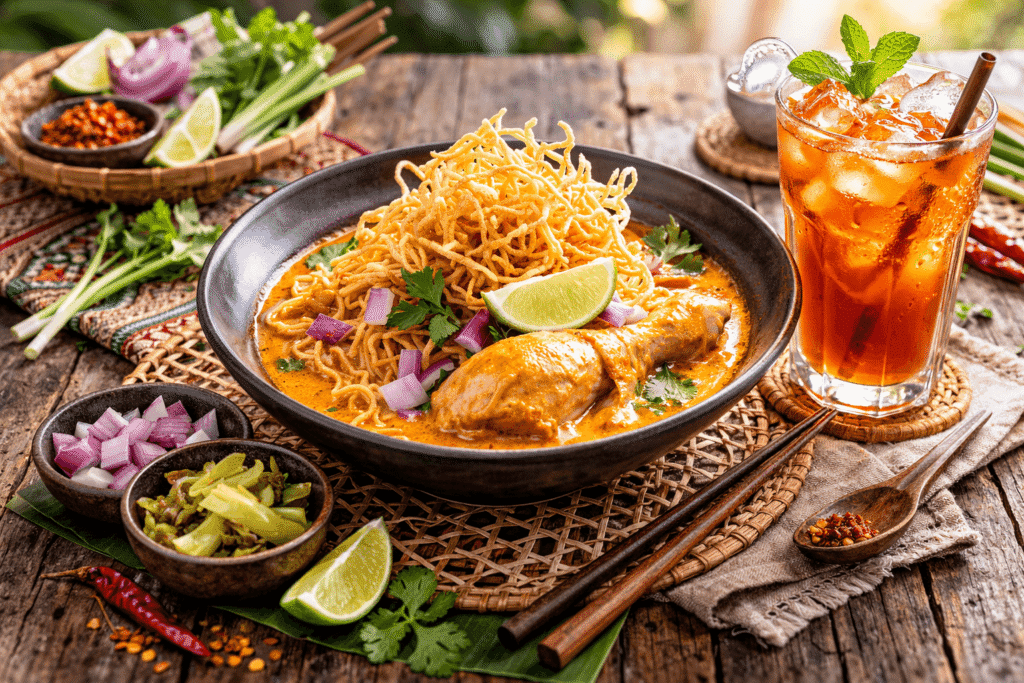
If you eat only one dish in Chiang Mai, let it be Khao Soi. This rich, fragrant curry noodle soup is the signature dish of northern Thailand, and you won’t find it done better anywhere else in the country. It’s made with a creamy coconut curry broth, soft egg noodles and tender chicken or beef, then topped with a nest of crispy fried noodles for crunch. It comes with small plates of pickled mustard greens, shallots, lime and chili paste, so you can adjust each bite to your taste. It’s comforting, a little spicy and completely addictive.
For one of the city’s most famous bowls, head to Khao Soi Mae Sai. It’s a simple, no-frills local shop, the kind of place where plastic stools and a queue of regulars tell you everything you need to know. The broth is rich and well balanced, and a bowl costs just a fraction of what you’d pay at a tourist restaurant. It’s a morning and lunchtime spot that often closes by mid-afternoon, and popular dishes can sell out, so go early to avoid disappointment.
Personal story: Before I went fully vegan, this was my go-to spot, and it helped that I lived right next door. I lost count of how many bowls I had here, and not once was I disappointed. The curry broth is rich and fragrant, the noodles are cooked just right, and the crispy topping adds the perfect crunch. It’s probably the best khao soi I’ve ever tasted. What impressed me most was the consistency. Every bowl tasted exactly as good as the last, like a recipe that’s been perfected over decades and never needed changing. It’s simple, authentic and unforgettable. Just be warned that it fills up fast, especially around lunchtime, so arrive early if you don’t want to wait for a seat.
Cafés, Viewpoints & Instagram Spots
26. The Giant Treehouse Café
The Giant Chiangmai — Quick Information
Location: Ban Pok, Huai Kaew, Mae On District, near Mae Kampong (~60 km east of Old City, around 1.5 hours by car)
Opening Hours: Around 8:30 AM – 5:00 PM, usually closed Mondays
Entrance Fee: Around 100 THB per person
Best Time to Visit: Morning on a clear day for the best views and fewer crowds; cool season (Nov–Feb) for crisp mountain air
Highlights: Treehouse café built into a giant banyan tree, suspension bridge entrance, sweeping mountain and forest views, local coffee
Getting There: The final stretch is steep and winding; if you’re not confident on mountain roads, hire a driver
There’s a café built right around a massive tree, with lush greenery spilling out in every direction. It’s the kind of spot where you can slow down, order dessert, snap a few photos, or just sit back and take in the sounds of the forest around you. No hiking required, just a scenic, laid-back stop to add to your day, and it easily earns its place among the best things to do in Chiang Mai.
27. Hidden Café Hopping in Nimmanhaemin
Cafés in Nimman — Quick Information
Location: Nimmanhaemin Road and its side streets (sois), about 2 km west of the Old City near Chiang Mai University
Known For: Specialty coffee made with northern Thai beans, stylish design cafés, bakeries and laptop-friendly spaces
Typical Price: Roughly 60–150 THB for a coffee, a little higher at specialty and design-led cafés
Best Time to Visit: Weekday mornings for quiet seats; weekends and afternoons get busy
Getting Around: Very walkable — wander the numbered sois off the main road for the best finds
Good to Know: Many independent cafés close one day a week, so check hours before you go
Nimman is famous for its café culture. Specialty coffee shops, dessert spots, brunch cafés, and minimalist tea houses line the area. Exploring these hidden coffee spots tucked inside the side streets is easily one of the best things to do in Chiang Mai for anyone who loves great coffee and relaxing atmosphere.
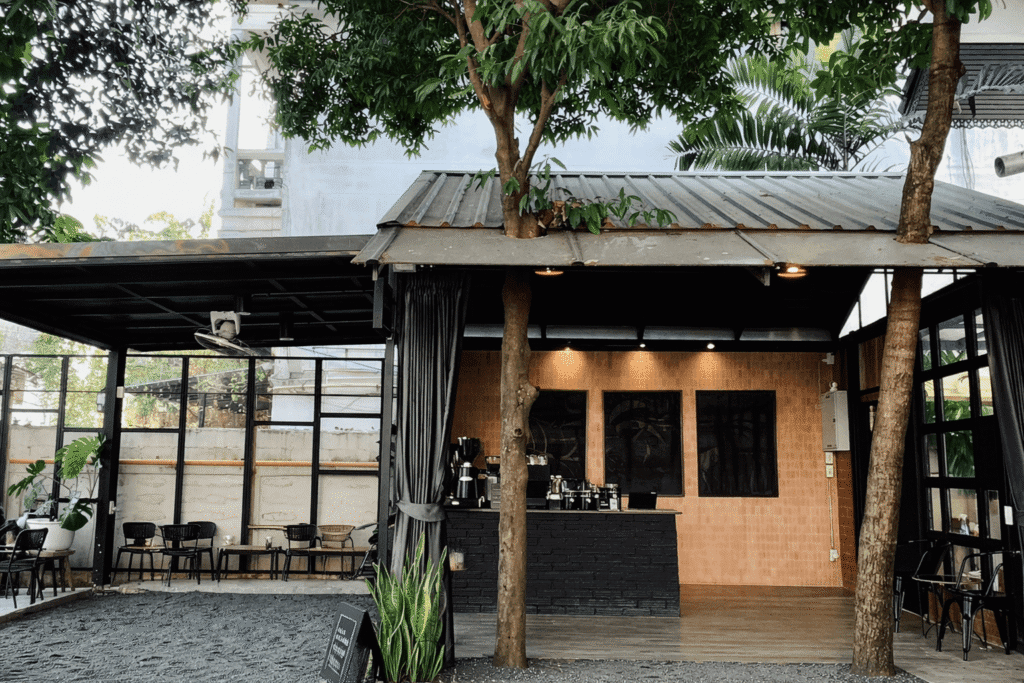
Personal story: Nimman feels like a small town within Chiang Mai. I’ve spent entire afternoons café hopping here. Don’t just stay on the main street; the best spots are hidden away. You walk into a quiet soi, and suddenly there’s a beautiful café with a courtyard, another with handmade pastries, another with specialty espresso. You can easily spend two days exploring, and you’ll still feel like you missed something.
Bonus: Chiang Mai University Lakes & Gardens
Angkaew Reservoir — Quick Information
Location: Chiang Mai University (CMU) Campus, Suthep Road, Su Thep (~10 min west of Old City)
Opening Hours: Daily, 5:00 AM – 10:00 PM
Entrance Fee: Free entry
Best Time to Visit: 5:00 PM – 6:30 PM (ideal timing for golden hour, cooler temperatures, and sunset views over the water)
Highlights: Picturesque artificial lake framed by Doi Suthep mountain views, paved walking trails, grassy picnic lawns, and a relaxed local atmosphere
Chiang Mai University has some of the most beautiful lakes and gardens in the city, and it’s not just for students. The campus is open to the public, and it’s one of my favorite places to slow down in Chiang Mai. I love coming here for an evening stroll, when the heat eases off and the light turns soft and golden over the water. Mornings are just as lovely, cool and quiet, with the day only just starting.
The highlight for me is Ang Kaew, the university’s reservoir, where the paths around the water look out toward the mountains of Doi Suthep. Honestly, the views are nicer than many parks in Bangkok. You’ll share the paths with plenty of Chiang Mai residents going about their routines: joggers doing laps, families out for a walk, couples sitting by the lake and students winding down after class. It’s a real glimpse of everyday local life, far from the tourist crowds.
There are food stalls nearby when you get hungry, shaded paths to wander and plenty of green space to sit and take it all in. If you’re looking for one of the quieter things to do in Chiang Mai, this is it. Come in the early morning or around sunset, bring some water, and give yourself time to just walk.
Personal story: Chiang Mai University has some of the most beautiful lakes and gardens in the city. It’s not just a place for students. I love walking here in the evenings. The views are nicer than many parks in Bangkok, and the atmosphere is relaxing. There are food stalls nearby, paths to walk, and plenty of nature to enjoy. It’s one of the quieter things to do in Chiang Mai.
28. Wat Lok Moli at Sunset
Wat Lok Moli — Quick Information
Location: Manee Nopparat Road, Si Phum (~just outside the northern moat of the Old City)
Opening Hours: Daily, 6:00 AM – 6:00 PM
Entrance Fee: Free entry
Best Time to Visit: Early morning or late afternoon (offering softer light for photos and a quieter, less crowded experience)
Highlights: 14th-century historic Lanna temple featuring an impressive massive brick chedi, intricately carved wooden viharn entrance, Nagas lining the walkway, and beautiful night illuminations
Wat Lok Moli sits just outside the northern edge of the Old City moat, and it’s one of those temples that’s easy to walk right past without realizing how special it is. In fact, I have a feeling I’ve been here before without knowing it. Chiang Mai has so many temples that after a while they can blur together on a long day of wandering. That’s exactly why Wat Lok Moli deserves a proper, intentional visit.
The temple’s history dates back to the Lanna Kingdom, making it one of the older temples in the city. Its centerpiece is a towering ancient brick chedi, weathered and softened by centuries, that’s believed to hold the ashes of members of the Lanna royal family. Next to it stands a dark teak prayer hall with intricate carvings, a striking example of traditional Lanna architecture. Unlike the polished white and gold temples elsewhere in the city, Wat Lok Moli has a raw, timeworn beauty that feels closer to what old Chiang Mai must have been like.
It’s especially beautiful in the late afternoon, when the low sun lights up the old brick of the chedi and bathes the whole temple in soft golden light. It’s a peaceful place to take photos, sit quietly and reflect, and it’s usually far less crowded than the temples inside the Old City. If you’re walking around the northern side of the moat, make time to stop here. And if you think you might have already seen it, like me, it’s worth a second look with fresh eyes.
29. Doi Kham Viewpoint
Doi Kham View Point — Quick Information
Location: Wat Phra That Doi Kham, Mae Hia (~25 min southwest of Old City)
Opening Hours: Daily, 6:00 AM – 6:00 PM
Entrance Fee: Free entry (optional funicular ride up costs ~20 THB for Thais, ~30 THB for foreigners)
Best Time to Visit: Early morning or late afternoon (offering clearer city views and cooler temperatures while avoiding midday heat)
Highlights: Panoramic views across the Chiang Mai valley, a towering 17-meter seated Buddha statue, historic temple grounds, and a significantly quieter vibe than Doi Suthep
Doi Kham Viewpoint sits just behind Wat Phra That Doi Kham, the “Temple of the Golden Mountain,” on a hill southwest of Chiang Mai, not far from the Night Safari and Royal Park Rajapruek. From up here, you get sweeping views across the whole valley: the city spread out below, rice fields and villages stretching into the distance, and the mountains of Doi Suthep rising on the horizon.
It’s one of the easiest viewpoints around Chiang Mai to reach. It’s only around 20–30 minutes from the Old City, and you can drive almost all the way up, or climb the staircase to the temple if you’d like a short workout. The temple itself is well worth exploring too. It’s home to a huge seated Buddha statue gazing out over the valley, and it’s especially popular with Thai visitors, who come to make wishes and return with jasmine garlands as offerings when their wishes come true.
For me, the best time to come is late afternoon. Arrive an hour or so before sunset, wander the temple while the light softens, then settle in at the viewpoint as the sun sinks behind the mountains and the valley glows gold. It’s a much calmer alternative to Doi Suthep, which can get crowded around sunset, and it has a more local, relaxed feel. Bring something to cover your shoulders and knees for the temple, and stay a few minutes after sunset, when the city lights start flickering on below.
30. Rooftop Bars in the Old City
Chiang Mai has a growing number of rooftop bars, and on a clear evening, the views are hard to beat: the Old City spread out below, temple spires catching the last of the light, and the mountains of Doi Suthep fading into the distance. Heading up for a sunset drink is one of the best ways to unwind before or after exploring the night markets.
Believe it or not, long before my Off Path way of life, Chiang Mai was a party trip for me. I’d come up for a few days, hit the bars and barely see the city in daylight. My life looks very different now. Over the years, I’ve given up alcohol and found myself drawn toward spirituality, meditation and a vegan lifestyle. Funnily enough, Chiang Mai is one of the places that helped me make that shift.
But I still love a good rooftop, and I still go for the music. These days, I just order a plain soda with lime. You don’t need to drink to enjoy these places. The music, the atmosphere and the view are the real draw. Watching the sky turn orange over the temples and the city lights flicker on below, with a good DJ or live band playing, is just as magical without the alcohol. Arrive about an hour before sunset to grab a good seat, since the best spots fill up fast.
Day Trips from Chiang Mai
Day Trips from Chiang Mai: Nature at Its Best
The entire region around Chiang Mai is packed with mountains, waterfalls, quiet villages, hot springs, viewpoints, and scenic roads. You can explore places that feel untouched and remote without ever leaving the city.
Here are the 6 most popular official day trips (plus the best surrounding areas):
- Mae On – Waterfalls, viewpoints, and quiet villages. See on map
- Mon Jam – Serene hot springs and nature escapes. See on map
- Mae Rim – Scenic roads, viewpoints, and hidden gems. See on map
- Chiang Dao – Dramatic mountains, temples, and peaceful villages. See on map
- Doi Saket – Historic town with lush mountain backdrops and local vibes. See on map
- Sri Lanna National Park – Remote waterfalls, caves, and untouched nature. See on map
Want a private driver and guide for ultimate comfort and safety? Message us on WhatsApp
31. Chiang Rai & White Temple Day Trip (From Chiang Mai)
White Temple (Wat Rong Khun) — Quick Information
Location: Pa O Don Chai, roughly 13–15 km south of Chiang Rai city center (about 3–4 hours from Chiang Mai by road)
Opening Hours: Daily, 8:00 AM – 5:00 PM (some sources cite 5:30 PM close, last entry generally around 5pm)
Entrance Fee: 200 THB for foreign visitors (as of January 2026, up from 100 THB), free for Thai nationals, seniors 70+, and children under 120cm; includes access to the on-site Cave of Art
Best Time to Visit: Arrive right at 8am on a weekday, tour buses from Chiang Mai typically arrive around 10am and the grounds fill quickly after that
Highlights: A striking all-white, mirror-tiled contemporary Buddhist temple designed by artist Chalermchai Kositpipat, still an active, ongoing art project decades after construction began in 1997
Good to know: Photography is not permitted inside the main hall. Budget at least 90 minutes to 2 hours if you want to see the full complex, not just the main structure everyone photographs from outside.
Chiang Rai is an easy and culturally rich day trip from Chiang Mai. The highlight is Wat Rong Khun, the White Temple, one of the most famous modern temples in Thailand. The bright white exterior and mirrored mosaics make it look like a temple carved from ice. The Blue Temple (Wat Rong Suea Ten) has deep sapphire interiors, while the Black House (Baan Dam) is more like an art museum with dark, intriguing structures.
Wat Rong Khun, better known as the White Temple, is about three hours north of Chiang Mai in Chiang Rai, and it’s easily one of the most popular day trips from the city. It also holds a special place in my memory.
The first time I came here, I was in my twenties, long before I turned toward spirituality and my Off Path way of life. Back then, my trips up north were all about the bars. One night in Chiang Rai, I got chatting with the bartender, and when she heard how little of the area I’d actually seen, she offered to show me around. The next day, she brought me here. I didn’t know what to expect, and I certainly wasn’t looking for anything meaningful at the time, but seeing this dazzling white temple glittering in the sun stopped me in my tracks. It was the first time the north felt like more than a party destination. Looking back, it may have been one of the small moments that planted the seed for the way I travel and live today.
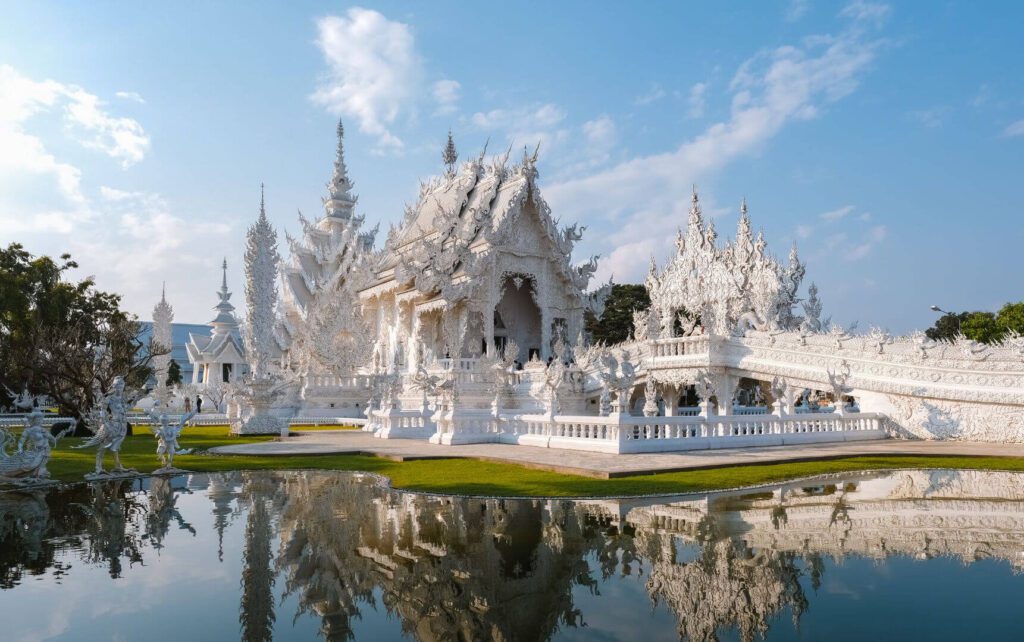
Unlike most temples in Thailand, Wat Rong Khun isn’t centuries old. It’s the vision of Thai artist Chalermchai Kositpipat, who began rebuilding it in the late 1990s, and it’s still a work in progress. The whole temple is white, symbolizing the purity of the Buddha, and it’s inlaid with thousands of small mirrors that make it shimmer in the sunlight. To reach the main hall, you cross a bridge over a sea of outstretched hands reaching up from below, representing desire and suffering, before passing into a symbolic “heaven.” Inside, the murals mix traditional Buddhist imagery with surprising modern pop culture references, which is part of what makes it so unique. Photos aren’t allowed inside the main hall.
Go early in the morning to beat the tour buses, since it gets very crowded by late morning. There’s an entrance fee for foreigners, and as with all temples, cover your shoulders and knees. If you’re coming from Chiang Mai, it’s a long day trip, so consider pairing it with the Blue Temple nearby or staying a night in Chiang Rai to see more of the area.
Many travelers combine all three for a full-day tour. The drive north takes you through mountain scenery, rice fields, and quiet rural communities. Chiang Rai offers a calmer vibe than Chiang Mai and is perfect for anyone who loves architecture, art, and slower provincial towns. If you want an atmospheric day trip, exploring this neighboring province is easily one of the most memorable of the 35 unique things to do in Chiang Mai.
32. Pai (2–3 Day Trip Mini-Guide)
Pai — Quick Information
Location: A mountain town in Mae Hong Son Province, roughly 135 km northwest of Chiang Mai
How to Get There: ~3-hour drive along a famously winding mountain road (762 curves), or a short 25-minute flight from Chiang Mai
Best Time to Visit: November to February for cool, comfortable mountain weather; nights get genuinely cold, so pack a layer
Recommended Stay: 2–3 days minimum; many travelers end up extending once they’re there
Highlights: A bohemian night market, waterfalls, viewpoints, hot springs, canyon walks, and a laid-back café culture that draws long-stay travelers and backpackers alike
Why Include It Here: Pai isn’t technically in Chiang Mai, but it’s such a common extension for anyone already in the region that it earns a spot on this list. If you have the extra time, it’s one of the most rewarding side trips in Northern Thailand.
Pai is a relaxed mountain town known for its laid-back atmosphere, mountain viewpoints, rice fields and hot springs. It’s technically possible as a whirlwind day trip from Chiang Mai, but staying at least one or two nights is much better. The road to Pai is famous for its endless twists and turns through beautiful forest scenery, so the journey itself becomes part of the adventure.
Popular sights include Pai Canyon with its narrow ridges and sunset views, the bamboo walking bridge stretching across the rice fields, Yun Lai Chinese Village with its sunrise views over the valley, and the lively evening walking street. Hot springs like Sai Ngam and Tha Pai are perfect for a relaxing soak and fit right in with our wellness travel style.
I’ve been to Pai four times now, and my third visit wasn’t even planned. I set out early one morning to visit Mokfa Waterfall, because I love exploring new waterfalls. When I reached the entrance, the ranger casually mentioned that I was already more than halfway to Pai. I looked at the road ahead, shrugged, and kept going. It turned into one of the best spontaneous rides of my life. I stayed one night, ate some local food and explored the viewpoints before heading back to Chiang Mai the next day.
That first taste kept pulling me back. On my most recent trip, I spent a whole month in Pai, and it completely changed how I see the place. Most visitors only experience the backpacker trail: the walking street, the canyon and the busy cafés in town. But slow down and venture a little further, and there’s so much more. Quiet villages sit tucked into the hills, breathtaking mountain viewpoints are all your own, and there are hot springs far away from the crowds of the walking street. Spending a month there showed me the peaceful, authentic side of Pai that most people drive right past.
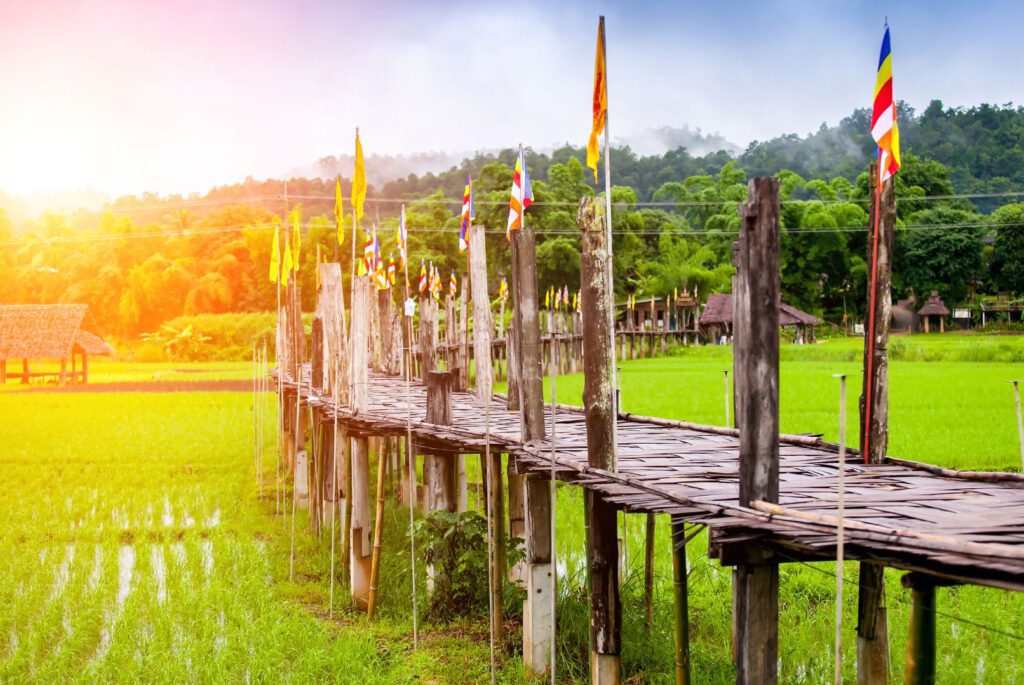
If you can, give Pai more time than you think you need. Even a few extra days lets you see beyond the main strip and discover why so many people, me included, keep coming back.
For more slow-travel mountain towns like Pai, see my Northern Thailand Hidden Gems post for quieter routes and hidden viewpoints.
If you’re still deciding between Pai and Chiang Mai, check out my complete Pai vs Chiang Mai Comparison Guide — packed with everything you need to choose the perfect trip for your vibe, budget, and adventure style.
33. Lampang
Lampang — Quick Information
Location: A province southeast of Chiang Mai, roughly 100 km / 1.5–2 hours by road
How to Get There: A short train or drive from Chiang Mai; also a common stop on the night train route between Bangkok and Chiang Mai
Best Time to Visit: November to February for cooler, more comfortable sightseeing weather
Recommended Stay: A day trip works well, though staying overnight lets you catch the old town at a quieter pace
Highlights: Horse-drawn carriages still used as everyday transport, well-preserved teak architecture, and a slower, far less touristy version of Northern Thai heritage
Why Include It Here: I’ll be honest, I haven’t actually stopped in Lampang myself, only passed through it on the night train to and from Bangkok. But I didn’t want to leave it off this list in case it’s something you’re curious to explore for yourself.
I’ll be honest, I haven’t actually stopped in Lampang myself, only passed through it on the night train to and from Bangkok, but I didn’t want to leave it off this list in case it’s something you’re curious to explore for yourself.
Lampang is a charming town southeast of Chiang Mai known for its old wooden houses, riverfront cafés, ceramic heritage, and slower pace of life. You can wander the old walking street, visit local temples with distinctive Burmese-style architecture, and enjoy the town’s peaceful atmosphere. The Thai Elephant Conservation Center, located between Chiang Mai and Lampang, is dedicated to elephant health, vet care, and responsible education programs.
This trip becomes even better when expanded with nearby natural areas:
Mae On: This district east of Chiang Mai has hidden viewpoints, quiet forest roads, and the stunning Mae On Mountain area. The scenery here is refreshing and less visited, making it ideal for anyone who wants nature-focused things to do in Chiang Mai without crowds.
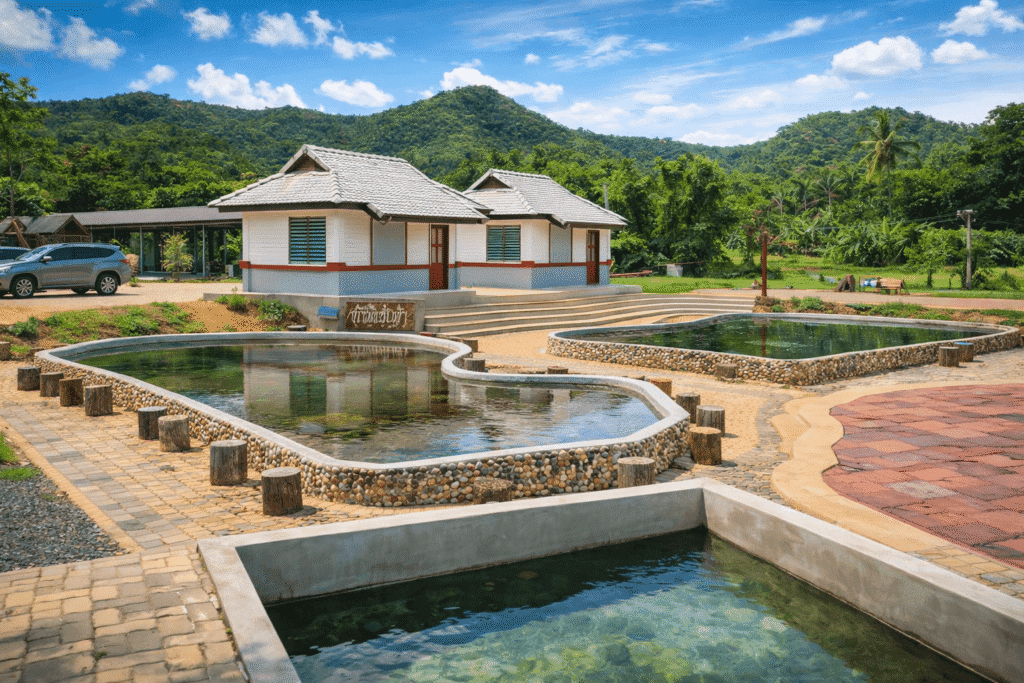
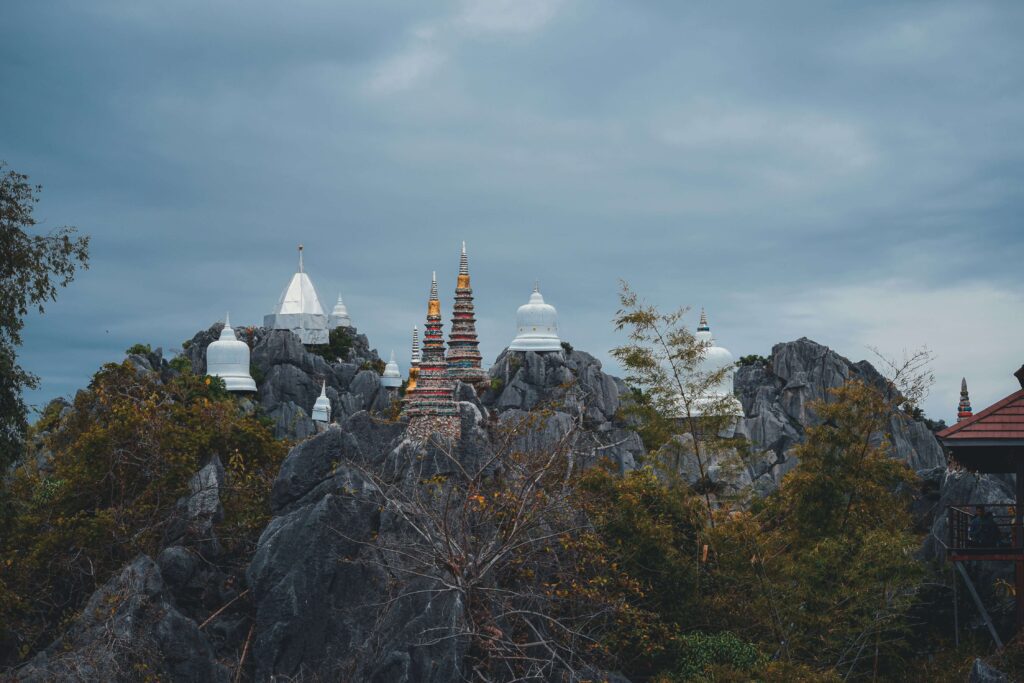
San Kamphaeng Hot Springs: These natural mineral hot springs have steaming geysers, hot pools, shaded gardens, and relaxing soaking areas. Many visitors enjoy boiling eggs in the hot spring baskets, a local tradition.
Doi Saket: Doi Saket District is known for its hilltop temple overlooking rice fields, meditation retreats, and peaceful art communities. The area has a very calm atmosphere and gentle landscapes. Doi Saket also has Hot Springs (image below).
Si Lanna National Park: This national park covers lakes, forests, and mountain areas north of Chiang Mai. You can visit Mae Ngat Dam Reservoir for boating, floating restaurants, and scenic views.
This entire expanded loop makes Lampang one of the most flexible things to do in Chiang Mai for travelers who want a full day of culture, scenery, and relaxing countryside stops.
34. Mae Kampong Village & Waterfall
Mae Kampong — Quick Information
Location: Mae On District, roughly 50 km (about 1 hour) east of Chiang Mai city, sitting at around 1,300m elevation
Opening Hours: The village itself is accessible all day; individual cafés, shops, and homestays keep their own hours, generally morning to early evening
Entrance Fee: Free to enter the village; homestays and specific cafés may have their own charges
Best Time to Visit: Before 9am on a weekday for a quiet, uncrowded visit; weekends between 11am–2pm bring the heaviest day-tripper traffic
Highlights: A century-old mountain village built around a fast-running stream, known for fermented tea (miang) production, a 7-tier waterfall, coffee terraces, and a genuine homestay network run by the community
Good to know: Parking is limited and gets genuinely difficult on weekends, park at the temple near the village entrance rather than trying to drive further in. If you want the full experience rather than a quick stop, an overnight homestay is worth considering, the village feels completely different once the day-trippers leave.
Mae Kampong is a cool, misty mountain village about an hour from Chiang Mai. The village sits in a valley surrounded by forest, waterfalls, and small cafés built above streams. Walking through the village feels like stepping back in time. You can hike to Mae Kampong Waterfall, enjoy coffee at one of the hillside cafés, or simply relax in the cooler mountain air.
This day trip becomes even more amazing when expanded into a full northern mountain loop:
Mon Jam: One of the most beautiful mountaintop viewpoints in northern Thailand. Cool weather, flower fields, sky-high platforms, hill tribe villages, and panoramic views make it extremely popular with locals. It’s a great sunrise or sunset spot and one of the most scenic things to do in chiang mai.
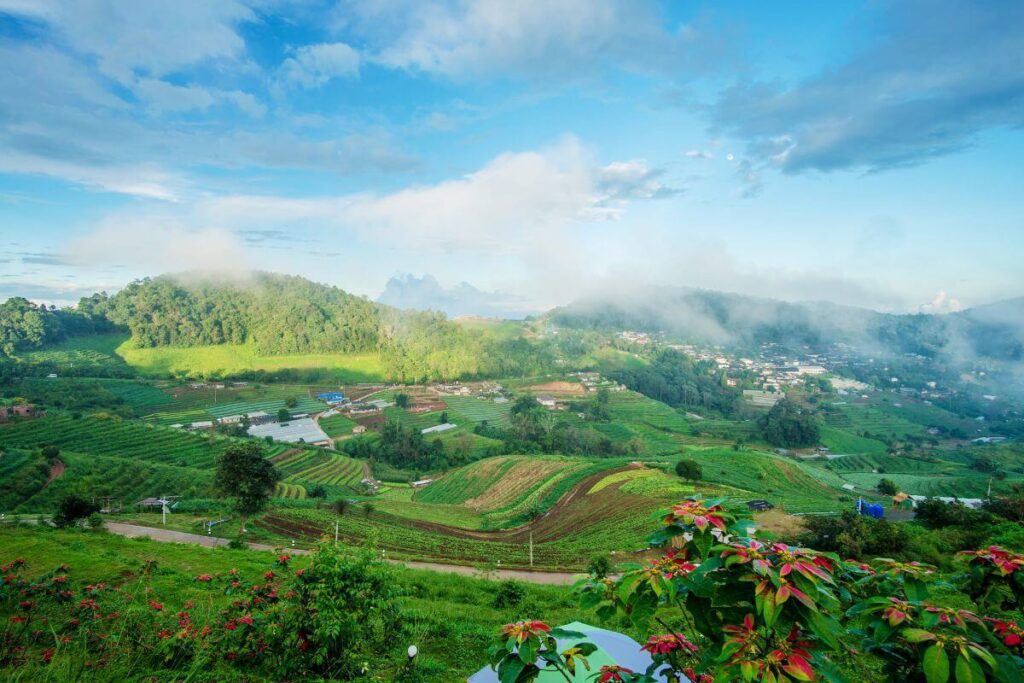
Mae Rim: Between Chiang Mai and Mon Jam, Mae Rim is packed with experiences: strawberry farms, botanical gardens, adventure parks, ATV trails, ziplining, and cafés with mountain views. You can easily fill half a day here just exploring gardens and tasting fruit.
Chiang Dao: Chiang Dao is a breathtaking mountain district north of Chiang Mai. The centerpiece is Doi Luang Chiang Dao, a massive limestone peak that rises sharply from the valley floor. The area has caves, jungle trails, hot springs, rice fields, peaceful temples, and a calm atmosphere that makes it feel like a retreat.

Wat Tham Pha Plong: A temple reached by a staircase of more than 500 steps through the forest. The climb is shaded and quiet, with jungle sounds surrounding you. Chiang Dao Cave is another major stop, with caverns full of ancient formations. The hot springs nearby are perfect for relaxing after hiking. Cafés overlook rice fields with the mountain in the background, making a visit here easily one of the best things to do in Chiang Mai for a peaceful day trip.
Wat Tham Pha Plong — Quick Information
Location: Chiang Dao District (~1.5 hours north of Chiang Mai Old City)
Opening Hours: Daily, 6:00 AM – 6:00 PM
Entrance Fee: Free entry (donations welcome)
Best Time to Visit: Early morning (for cooler temperatures during the stair climb and peaceful meditation conditions)
Highlights: A serene forest monastery nestled on a hillside, a scenic climb up 500+ shaded steps flanked by inspirational Buddhist dhamma signs, and panoramic valley views from the golden pagoda top
This route covering Mae Kampong, Mon Jam, Mae Rim, and Chiang Dao delivers a breathtaking full-day journey and stands out as one of the best things to do in Chiang Mai for mountain lovers.
I’ve put together a comprehensive guide on Chiang Dao right here, covering everything from mountain peaks to hidden caves.
Don’t miss this Chiang Dao itinerary I’ve put together—it’s the perfect addition to your list of things to do in Chiang Mai if you’re craving some mountain magic.
For even more hidden northern spots beyond this loop, my Northern Thailand Hidden Gems guide has a full list of lesser-known villages, caves, and mountain routes.
35. Doi Suthep + Bhubing Palace + Hmong Village Combo
This is a classic, easy Chiang Mai day trip. Start at Doi Suthep for sunrise or early morning. Continue higher into the mountain to Bhubing Palace, known for its gardens and cool weather. Finish the loop at a Hmong village, where you can explore the local market, buy handicrafts, taste local snacks, and learn about hill tribe culture.
This combination is convenient, culturally rich, and close to Chiang Mai, making it one of the best half-day things to do in Chiang Mai for first-time visitors.
Bhubing Palace & Doi Pui Hmong Village — Quick Information
Bhubing Palace
Location: Doi Suthep-Pui National Park, about 4 km past Wat Phra That Doi Suthep
Opening Hours: Daily, 8:30 AM – 4:30 PM (last tickets ~3:30pm; closed when the royal family is in residence)
Entrance Fee: 50–100 THB for foreign adults
Best Time to Visit: November to February when the rose gardens are in full bloom; arrive right at opening to avoid crowds
Highlights: The royal winter residence’s landscaped gardens, roses, hydrangeas, and orchids thriving in the cooler mountain climate
Doi Pui Hmong Village
Location: A short drive further up the mountain from Bhubing Palace, within Doi Suthep-Pui National Park
Opening Hours: Daily, roughly 8:00 AM – 5:00 PM
Entrance Fee: Around 10 THB per person
Best Time to Visit: Morning, paired with Bhubing Palace and Doi Suthep on the same route up the mountain
Highlights: Handmade Hmong textiles and silver jewelry, a small history museum, and (in season) the striking poppy fields
Good to know: These two sit on the same mountain road, so they’re almost always visited together, often paired with Wat Phra That Doi Suthep and Wat Pha Lat for a full day out. As we mentioned earlier in this guide, the village stop is worth approaching thoughtfully rather than just as a photo op, we work directly with communities to keep this side of the trip genuinely respectful.
Bhubing Palace on Google Maps · Hmong Village on Google Maps
Chiang Mai Highlights Map
Here’s an easy interactive map showing all the temples, nature spots, markets, and day trip locations featuring the best things to do in Chiang Mai mentioned in this guide.
Chiang Mai 3-Day Itinerary (Quick Summary)
Day 1: Explore the Old City temples in the morning, eat lunch at a local restaurant, head to Doi Suthep for sunset, and end the day at the Night Bazaar.
Day 2: Spend the day exploring the Sticky Waterfalls or Doi Inthanon. Rest in the afternoon at a café in Nimman, then explore the Saturday or Sunday Walking Street Market in the evening.
Day 3: Visit an ethical elephant sanctuary in the morning. Spend the afternoon café hopping in Nimman or relaxing at Chiang Mai University’s lakes. End the day with sunset at a viewpoint like Doi Kham or at a rooftop bar in the Old City.
If Chiang Mai is part of a longer Thailand route, use the Thailand trip budget calculator to estimate realistic costs across destinations before you book accommodation.
Hit us up on WhatsApp for a chat in case you have any queries.
Where to Stay in Chiang Mai 2026 – Best Areas & Hotels
Old City: Best for first-timers and temple lovers. Walkable, charming, and full of history. If your list of things to do in chiang mai includes many cultural attractions, stay here.
Nimman: Trendy, modern, and full of cafés, boutique hotels, community malls, and coworking spaces. Perfect for long stays and food lovers.
Riverside: Peaceful, scenic, and ideal for couples or families who want a slower pace. Great for sunrise walks and dinner by the river.
If your trip also includes Bangkok, my Bangkok Hidden Gems guide helps you explore the capital beyond the usual malls and busy attractions.
Conclusion
Chiang Mai in 2026 is still the same city that made me cancel flights home years ago. The best things to do in Chiang Mai haven’t really changed, the temples are still golden in the morning light, the mountains are still cool enough to make you forget you’re in Southeast Asia, and the khao soi is still, without exception, perfect. What’s changed is how much easier it’s become to actually live that pace out. Coworking spaces are better, cafés with reliable Wi-Fi are everywhere, and the whole ecosystem around slower, longer stays has matured into something genuinely built for people who don’t want to just check boxes off a list.
That’s really the throughline of everything in this guide. It’s not really about ticking off 35 attractions in a week. It’s about understanding that Chiang Mai rewards patience, the same waterfall hits differently on your third visit than your first, the same temple courtyard means something different once you’ve sat in it enough times to stop taking photos and just be there. I’ve watched this city shape parts of who I am over the years, my relationship with food, with stillness, with what actually matters on a trip, and I don’t think that happens on a rushed itinerary.
So take what’s useful from this list, skip what doesn’t call to you, and build your own version of it. Come for a week if that’s all you have, but don’t be surprised if a week quietly turns into a month. It happened to me. It’s happened to more people than I can count. Chiang Mai has a way of making you recalculate your return flight, and honestly, that’s exactly what makes it worth coming back to, again and again.
And if you’re continuing south after Chiang Mai, my Thailand’s Secret Islands guide highlights the quietest beaches and off-path islands to pair with your northern journey.
Prefer a quick chat?
Message us directly on WhatsApp
If you already have an idea of your trip, send us a message — we’ll guide you through the best options for your travel style.
Chat on WhatsAppor
[email protected]Chiang Mai FAQs
How many days do you need to experience the best things to do in Chiang Mai?
Three days is enough for a quick trip, one temple day, one nature day, and one market or café day. But if you want to slow down, explore hidden forest temples, visit an ethical elephant sanctuary, and take a couple of day trips into the mountains, a full week is ideal to experience more of the best things to do in Chiang Mai.
What is the best time to visit and enjoy the best things to do in Chiang Mai?
The cool season from November to February has the most comfortable weather and is the best time for outdoor exploring. The rainy season from June to October is underrated, with lush green mountains and powerful waterfalls offering an amazing setting for many of the best things to do in Chiang Mai. March to May is hot, and air quality varies each year.
What are the must-see temples when looking into the best things to do in Chiang Mai?
If you are exploring the top options among the best things to do in Chiang Mai, you must visit Wat Phra That Doi Suthep, Wat Chedi Luang, Wat Phra Singh, Wat Umong, Wat Pha Lat, and Wat Lok Moli. Each offers a completely different atmosphere, from hidden forest meditation tunnels to ancient city shrines.
What are the best day trips included in the best things to do in Chiang Mai’s surroundings?
Popular day trips that make up the regional highlights of the best things to do in Chiang Mai include visiting the White Temple in Chiang Rai, hiking in Doi Inthanon National Park, climbing the Sticky Waterfalls, exploring Mae Kampong village, and visiting the peaceful Chiang Dao mountain area. These trips give you a brilliant mix of nature, culture, and countryside.
Is slow travel featured among the best things to do in Chiang Mai?
Yes. Chiang Mai is one of the best places in Thailand for slow travel. Spending days wandering old temples, relaxing in hidden jungle cafés, walking around quiet lakes, and exploring local neighborhoods are some of the most rewarding experiences featured among the best things to do in Chiang Mai when you want to travel without feeling rushed.
Are there evening experiences included in the best things to do in Chiang Mai?
Absolutely. Some of the best nighttime options within the best things to do in Chiang Mai include exploring the massive Sunday Walking Street market, trying local street food at the Chang Phueak Gate market, catching a traditional live music performance, or visiting the night bazaar for local handicrafts.
What are the top 10 things to do in Chiang Mai?
Among the best things to do in Chiang Mai, the most popular picks include visiting Wat Phra That Doi Suthep, exploring the Old City temples, browsing the Sunday Walking Street market, hiking to Wat Pha Lat via the Monks Trail, visiting an ethical elephant sanctuary, cooling off at the Sticky Waterfalls, eating khao soi at a local shop, wandering Nimmanhaemin’s cafés, taking a day trip to Doi Inthanon National Park, and catching the Night Bazaar for local handicrafts and street food.
Is 3 days enough in Chiang Mai?
Three days is enough to cover the essentials among the best things to do in Chiang Mai, a temple day, a nature or waterfall day, and a market or food-focused day. It’s a solid amount of time for a first visit, though many travelers, myself included, end up extending their stay once they realize how much more there is to explore at a slower pace.
What is Chiang Mai most famous for?
Chiang Mai is best known for its hundreds of Buddhist temples, its Old City surrounded by a moat and ancient walls, Doi Suthep mountain temple overlooking the city, its vibrant night markets, Northern Thai (Lanna) cuisine like khao soi, and its reputation as one of Southeast Asia’s top hubs for digital nomads and slow travelers. These reputations are exactly why it consistently shows up on lists of the best things to do in Chiang Mai and beyond.
What are some hidden gems to explore in Chiang Mai?
Beyond the well-known spots, some of the best things to do in Chiang Mai come from wandering into smaller sois and quieter neighborhoods. Look for unmarked coffee shops tucked into old teak houses, quiet temples like Wat Umong with dedicated meditation grounds rather than tourist crowds, and small local markets away from the main tourist strips. These are the kinds of places that rarely show up on typical itineraries but often end up being the most memorable.
What to be careful of in Chiang Mai?
The realistic concerns in Chiang Mai are road safety (motorbike accidents are common, especially among inexperienced riders on mountain roads), petty scams and pickpocketing near major temples and tourist strips, and seasonal air quality during burning season (February to April), which can be a genuine health concern rather than a minor inconvenience. Violent crime against tourists is rare, and most visitors experience the city as one of the safer, more relaxed destinations in Southeast Asia.
Do they speak English in Chiang Mai?
English is widely spoken in tourist areas, hotels, restaurants, and among younger locals, especially around the Old City and Nimmanhaemin. Outside these areas, in local markets, smaller neighborhoods, and rural day trips, English becomes noticeably more limited, so a translation app or a few basic Thai phrases go a long way. Locals are generally patient and happy to help even with a language gap.
Is it safe to go to Chiang Mai now?
Yes, Chiang Mai remains one of the safest and most straightforward cities in Southeast Asia to visit, with no current safety advisories specific to the city beyond the usual seasonal air quality caution during burning season. Day-to-day risks are the same as they’ve long been, road safety and petty scams, rather than any acute security concern. For a broader picture of Thailand’s current safety situation, see our full Thailand Safety Rating 2026 guide.

About the author
Written by Dee, Thai-born founder of Off Path Thailand. My life changed after renting a scooter in Chiang Mai nearly a decade ago. I still remember the moment my jaw dropped at the natural beauty around me — riding into the distance with mountains on both sides felt more alive than any PS4 game I had ever played. Since that day, I’ve been hooked on this kind of travel — because there’s so much wonder to discover in Thailand’s quiet, hidden places. I’ve spent close to ten years exploring these off the beaten path corners and helping others experience parts of the country that feel far more meaningful than the usual tourist stops. About the founder
Tell us your dates and vibe — Our team replies within 24 hours to begin crafting your trip.
Leave everything to us and experience Thailand Off The Beaten Path
Every journey leaves a footprint — the difference is in how we choose to travel. At Off Path Thailand, we focus on keeping those footprints light. Discover how sustainable travel in Thailand connects comfort with care.