
Last Updated: September 15, 2026
Markets in Chiang Mai: The Ones Locals Actually Use
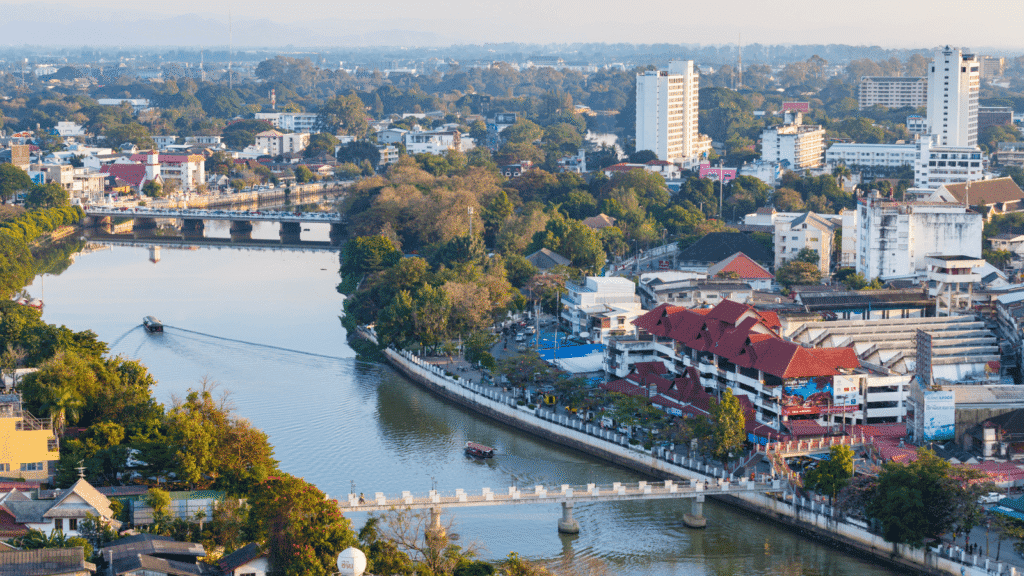
TL;DR: Most Chiang Mai market guides start and end with the Saturday and Sunday Night Markets. This one doesn’t. Those two get plenty of coverage elsewhere, so instead, this guide focuses on the markets in Chiang Mai that residents actually rely on week after week, morning food markets, neighborhood produce stalls, and local shopping spots that rarely make it onto a typical tourist itinerary.
That’s not to say the famous ones aren’t worth a visit, they are, and we’ll touch on them too. But if you only ever see the walking streets, you’re missing the version of Chiang Mai that locals experience every single day. This guide is built around that gap: real hours, real directions, and real reasons to go, not just a list of “top markets” recycled from other blogs.
Written by someone who actually lives this life in Chiang Mai, not someone passing through for two weeks.
Personal History With Chiang Mai
I’ve been to Chiang Mai more times than I can easily count at this point, and never really in the same capacity twice. I’ve come as a tourist with nothing but a loose itinerary and a few days to explore. I’ve come back to work remotely out of its cafes for weeks at a stretch. I’ve lived here while working an actual job, a marketing executive role at a furniture company, which meant real mornings, real routines, and real reasons to know where the nearest fresh produce or quick meal was, not just where the nicest photo spot was. And I’ve come back simply to explore, with no other goal than to wander and see what I hadn’t seen before.
Each version of that trip taught me something different about the city’s markets. As a tourist, I gravitated toward what was easy to find and already recommended, the big night markets, the walking streets. As a remote worker, I started noticing the smaller, quieter markets tucked into the neighborhoods I was actually living in, the ones open at odd hours that locals used without a second thought.
And once I had a job and an apartment here, markets stopped being a “thing to do” altogether and just became part of how I lived, where I bought breakfast, where I grabbed dinner on a bad day, where I ran into the same vendors enough times that they started remembering my order.
That shift, from visiting markets to actually using them, is really what this guide is built around. It’s not a list of the most photogenic spots. It’s the markets that earned a place in my week when Chiang Mai wasn’t a vacation anymore, it was just where I lived.
- Markets in Chiang Mai: The Ones Locals Actually Use
- Personal History With Chiang Mai
- Markets in Chiang Mai
- Finding Markets in Chiang Mai Beyond the Tourist Circuit
- Markets in Chiang Mai Worth Actually Visiting
- 1. Muang Mai Market
- Muang Mai Market
- 2. CMU & Malin Plaza
- Malin Plaza (Kad Na Mor)
- 3. Kad Manee Market
- Kadmanee Market
- 4. Amulet Market
- Amulet Market (Old City)
- 5. Baan Haw Muslim Market
- Ban Haw Muslim Market (Kad Ban Ho)
- 6. Baan Tawai Woodcarving Village
- Baan Tawai (Woodcarving Village)
- 7. Chang Phuak Gate Market
- Chang Phuak Gate Night Market
- Popular & Touristic Markets in Chiang Mai
- Culinary Deep Dive: Beyond the Basics
- Market Etiquette
- Conclusion
- Markets in Chiang Mai: FAQ
- What are the best markets in Chiang Mai for authentic experiences?
- Are Chiang Mai night markets worth visiting for authentic food?
- Where do locals shop among the markets in Chiang Mai?
- What are the best markets in Chiang Mai for cheap food and shopping?
- What food should you try at the markets in Chiang Mai?
- Which markets in Chiang Mai are best for crafts and wholesale goods?
- What is the biggest market in Chiang Mai?
- Where did Anthony Bourdain eat in Chiang Mai?
Markets in Chiang Mai
This guide to the best local markets in Chiang Mai covers the spots residents actually use in 2026 — early-morning produce hubs, student markets, neighborhood food streets, and the wholesale craft corners that supply the Saturday Night Market, Sunday Walking Street, and Night Bazaar directly. The same goods, from the same makers, at the price before the markup.
If you start researching Chiang Mai markets online, you’ll quickly notice a pattern. Most articles repeat the same handful of places, Night Bazaar, Saturday Walking Street, Sunday Walking Street — as if those markets represent how things actually work in the city.
They don’t.
Before the walking streets and curated night markets became the default answer to “what to do in Chiang Mai,” the city’s market culture was simply how people lived. Warorot Market, Muang Mai, and the neighborhood produce stalls that still line the older parts of the city were never tourist attractions. They were infrastructure.
Residents bought their morning groceries there. Vendors sourced ingredients before dawn. The daily rhythm of the city moved through these spaces in a way that had nothing to do with visitors and everything to do with the city feeding and supplying itself.
That version of Chiang Mai still exists, but you have to look past the more recent additions to find it. Many of the markets that now appear at the top of travel guides and social media lists were designed with a foreign audience in mind from the start. They have clean layouts, English signage, and stalls selling the same silk scarves and elephant-print trousers you will find in Bangkok, Phuket, and every other tourist corridor in the country.
They are not dishonest, but they are not local either. The best local markets in Chiang Mai in the truest sense are the ones that predate the tourism boom. These are the markets that would keep operating exactly as they do even if every guesthouse in the Old City closed tomorrow. Those are the best local markets in Chiang Mai this guide is built around. Understanding the difference between the staged version of the city’s market culture and the real one is exactly what makes exploring the best local markets in Chiang Mai so worthwhile for anyone who wants more than a souvenir and a photograph.
Most guides stop at the Saturday Night Market. This one starts where that market’s vendors do, at the wholesale hubs where produce, ingredients, and handicrafts are sourced before they reach any stall. These are the best local markets in Chiang Mai for understanding how the city actually trades, not just what it sells to tourists.
The well-known markets in Chiang Mai are carefully staged evening events built mainly for visitors. They’re lively, colorful, and interesting to see on one visit, but they aren’t real, where locals actually buy their vegetables, grab dinner after work, or shop for everyday things like household items
Many of these areas also have some of the best cafes in Chiang Mai nearby, making it easy to slow down after exploring the markets.
The neighborhood food streets and student spots around the university are some of the best local markets in Chiang Mai for everyday eating — honest prices, no performance, just the city going about its day
Note: Most of the markets mentioned here are open daily or several days a week, so the structure below isn’t meant to be followed like a strict itinerary. Think of it more as a way to explore different corners of Chiang Mai’s market scene while avoiding the typical tourist loop.
If you want to see how Chiang Mai actually works and not how it performs for visitors, the best local markets in Chiang Mai are where you start.
If you’re exploring markets for what to actually eat, this connects directly to our full Chiang Mai food guide, where we break down the local dishes and spots these markets feed into across the city.
The easiest way to get to these markets is with your own rental car or bike, or you can use Grab. Alternatively, we can arrange a driver and guide for you, making it simple to visit multiple markets in a single day—just contact us on WhatsApp.
Want to visit this spot without the stress of driving or rushing with a group?
Our guide to hiring a Chiang Mai private tour guide and driver explains the best options.
Finding Markets in Chiang Mai Beyond the Tourist Circuit
Chiang Mai Market Locations Map
Markets in Chiang Mai fall into three broad zones.
The Old City and Night Bazaar area is where most foreign visitors end up. These markets focus heavily on souvenirs, handicrafts, and street food catered towards tourists.
Around Chiang Mai University, markets cater to students. Prices are lower, the food is more varied, and the atmosphere is energetic.
Unlike the tourist spots listed in most travel guides, many of the markets in Chiang Mai, from outer neighborhood produce hubs to wholesale sourcing spots, are an essential part of how the city operates every day.
Once you understand this layout, understanding Chiang Mai’s markets becomes much easier. If you’re mapping this into a broader plan, it helps to see how these areas fit into what to do in Chiang Mai in 3 days, where different market zones naturally fall into each day.
I’ve also written a guide on why Chiang Mai can actually be better during the rainy season, including important tips and things to know for visiting at that time.
Check out our Bangkok vs Chiang Mai or Phuket vs Chiang Mai comparison guides if you’re still deciding which city to visit first in Thailand.
Discovering
Northern Thailand
Markets in Chiang Mai Worth Actually Visiting
1. Muang Mai Market
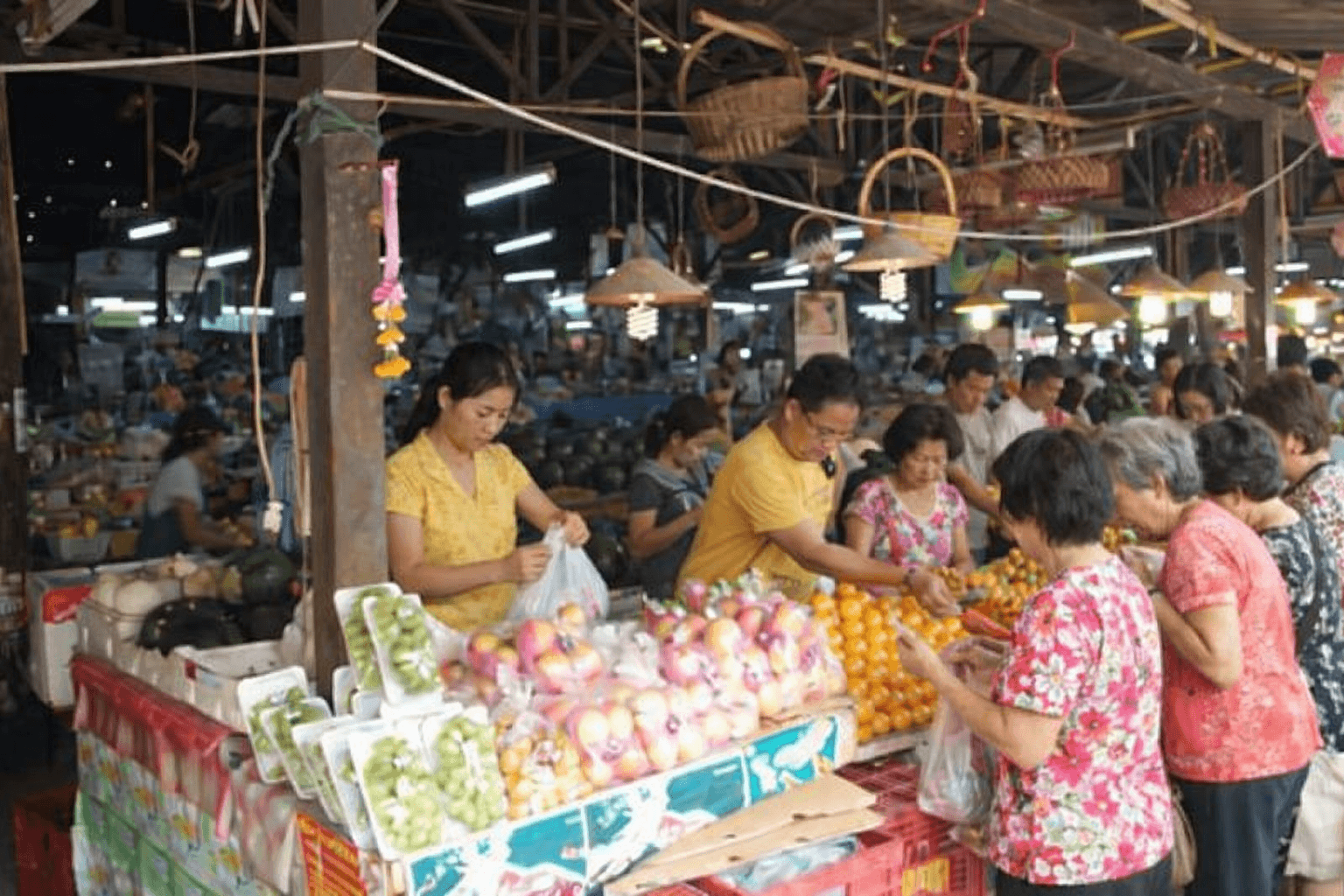
The classic tourist starting point is the Night Bazaar. It is lively and entertaining, but it functions more as a shopping strip than one of the truly best markets in Chiang Mai.
If you want to experience where Chiang Mai sources its food, go to Muang Mai Market instead.
Located near Warorot Market, this is one of the main produce markets in the city. Restaurants from across Chiang Mai come here early in the morning to buy vegetables, fruit, and ingredients for the day.
It’s not polished. In fact, it can be a little chaotic. The smell of fresh produce mixed with fish and herbs sometimes reminds me of Khlong Toei Market in Bangkok (you can read more about that market in our Bangkok hidden markets guide here). But that’s part of the authenticity.
In the wee hours of the morning you’ll see vendors unloading trucks, chefs selecting ingredients, and locals buying bags of vegetables at real market prices. Stalls here sell clothing too, but not souvenir shirts or tourist designs. These are the kinds of clothes locals actually wear and need for daily life.
If you want a glimpse of how Thailand’s market system really works, this is one of the best markets in Chiang Mai.
Muang Mai Market
Type: Wholesale fruit, vegetable, meat & seafood market
Neighborhood: Chang Moi, on Wichayanon Road, just north of Warorot Market along the Ping River
Opening Hours: Daily, roughly 06:00–19:00 (some stalls open earlier; freshest produce arrives before sunrise)
How to Get There: A short walk or tuk-tuk from Warorot Market, or a quick Grab ride from the Old City, look for Wichayanon Road near the river
What to Buy: Fresh fruit (mango, dragon fruit, durian in season), vegetables, meat, seafood, cut flowers, all at wholesale prices
Price Range: Bulk/wholesale pricing, some of the lowest produce prices in the city
Best For: Home cooks, restaurant owners, and anyone who wants to see Chiang Mai’s food supply chain up close
Why Visit: This is where Chiang Mai’s restaurants and households actually source their produce, not a market built for tourists. Vendors typically specialize in just one or two items, so plan to walk the stalls and piece together a full basket rather than expecting one-stop shopping. Go early for the freshest picks and the most authentic version of the market in full swing.
2. CMU & Malin Plaza
Many visitors never venture near Chiang Mai University, which is a mistake because some of the city’s most interesting markets are located in this area. It’s actually not far from Nimmanhaemin and the Maya Shopping Mall, yet most travelers never explore beyond those spots.
I usually go here for delicious desserts and affordable street food, but it’s also a great spot for reasonably priced shirts, sunglasses, plants, jewelry, shoes, and a wide variety of other items—offering more variety and better value than anywhere else in Chiang Mai.
Malin Plaza, located near CMU, is one of the best markets in Chiang Mai for students.
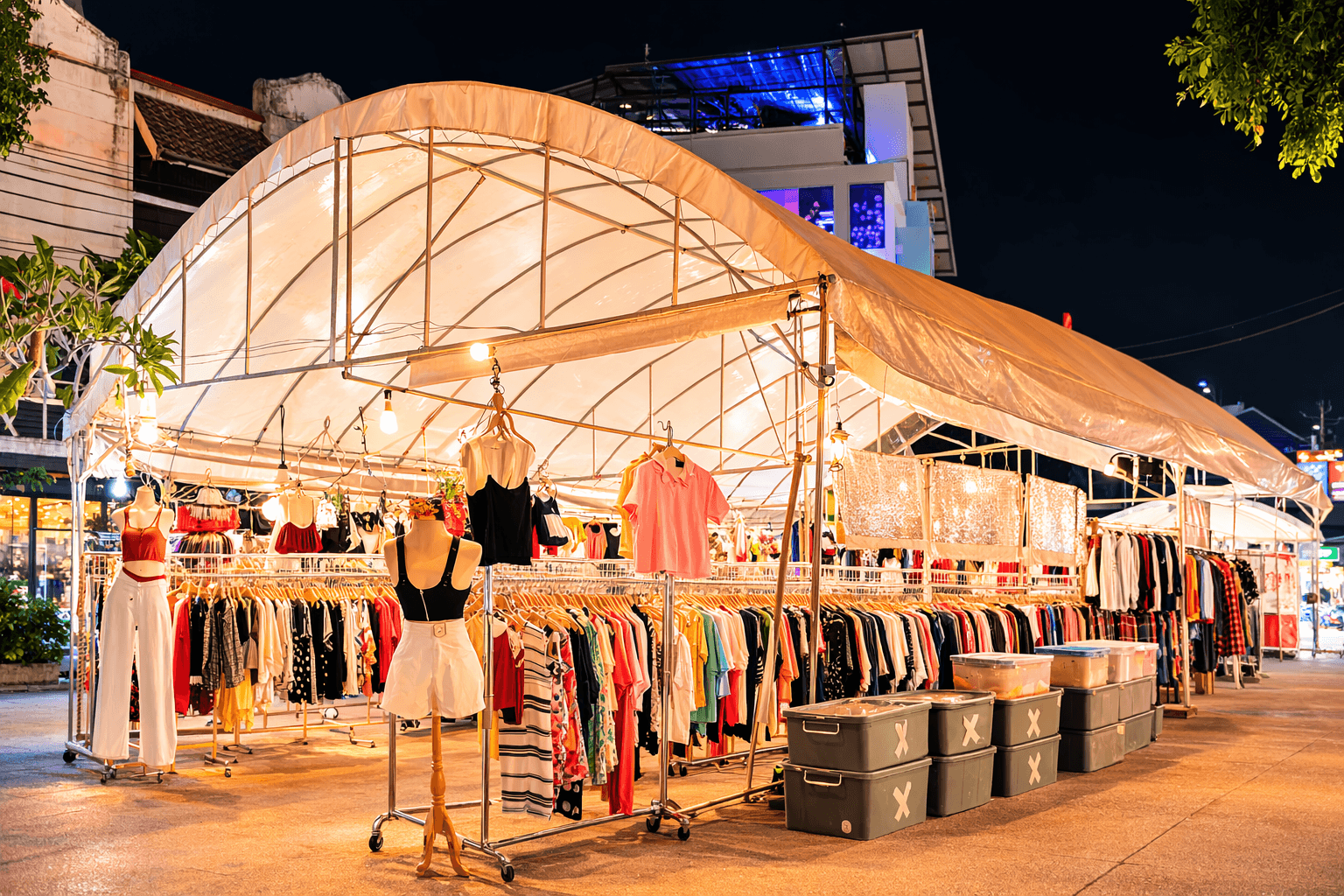
The affordable pricing is what makes this one of the best markets in Chiang Mai. Catering mainly to students, vendors keep costs low, with T-shirts often selling for around 90 baht, and the designs are nothing like the generic tourist prints you see elsewhere. Many stalls create their own unique designs, giving the market a selection you won’t find anywhere else.
Beyond clothing, the variety is impressive. You’ll find sunglasses shops, nail salons, small hair salons, and plenty of casual food stalls.
There is also a large food court area where you can sit anywhere and order from different vendors. Grilled food, hot pot, noodle dishes, fried snacks — the selection is massive. Across the food court are dessert stalls with everything from Thai sweets and fresh fruit to iced drinks, making it one of the best markets in Chiang Mai for a full evening of eating without moving more than a few steps.
Cheap handbags, shoes, bags, and accessories are also everywhere, and surprisingly, the quality is decent.
For value, originality, and variety, Malin Plaza might be the best market in Chiang Mai, and potentially all of Thailand.
Malin Plaza (Kad Na Mor)
Type: Evening food court and clothing/accessories market
Neighborhood: Huay Kaew Road, directly across from Chiang Mai University’s main gate
Opening Hours: Daily, roughly 18:00–22:30 (evening only)
How to Get There: A short Grab or songthaew ride from Nimman or the Old City, look for the covered arched canopy across from CMU’s front gate
What to Buy: A wide mix of Thai, Japanese, and Korean street food, hotpot, ramen, noodle soups, plus budget clothing, accessories, and cheap student-priced goods
Price Range: Student-budget prices, some of the cheapest food and goods in the city
Best For: University students, locals, and anyone wanting a lively evening market without the Old City tourist crowds
Why Visit: Sitting right across from Chiang Mai University, this market runs on student energy rather than tourist traffic, which means genuinely cheap food and a relaxed, local atmosphere. The food court alone covers an impressive range of cuisines, and the adjoining clothing stalls are worth a browse even if you’re just there to eat.
3. Kad Manee Market
Kad Manee was one of my personal favorites when I briefly worked in Chiang Mai.
For a few months I stayed at a hotel directly across from the market compound while working outside the city, so this place became part of my daily routine.
This place feels like a real Thai market that locals actually go to. It’s the kind of market you’ll see in various towns across northern Thailand.
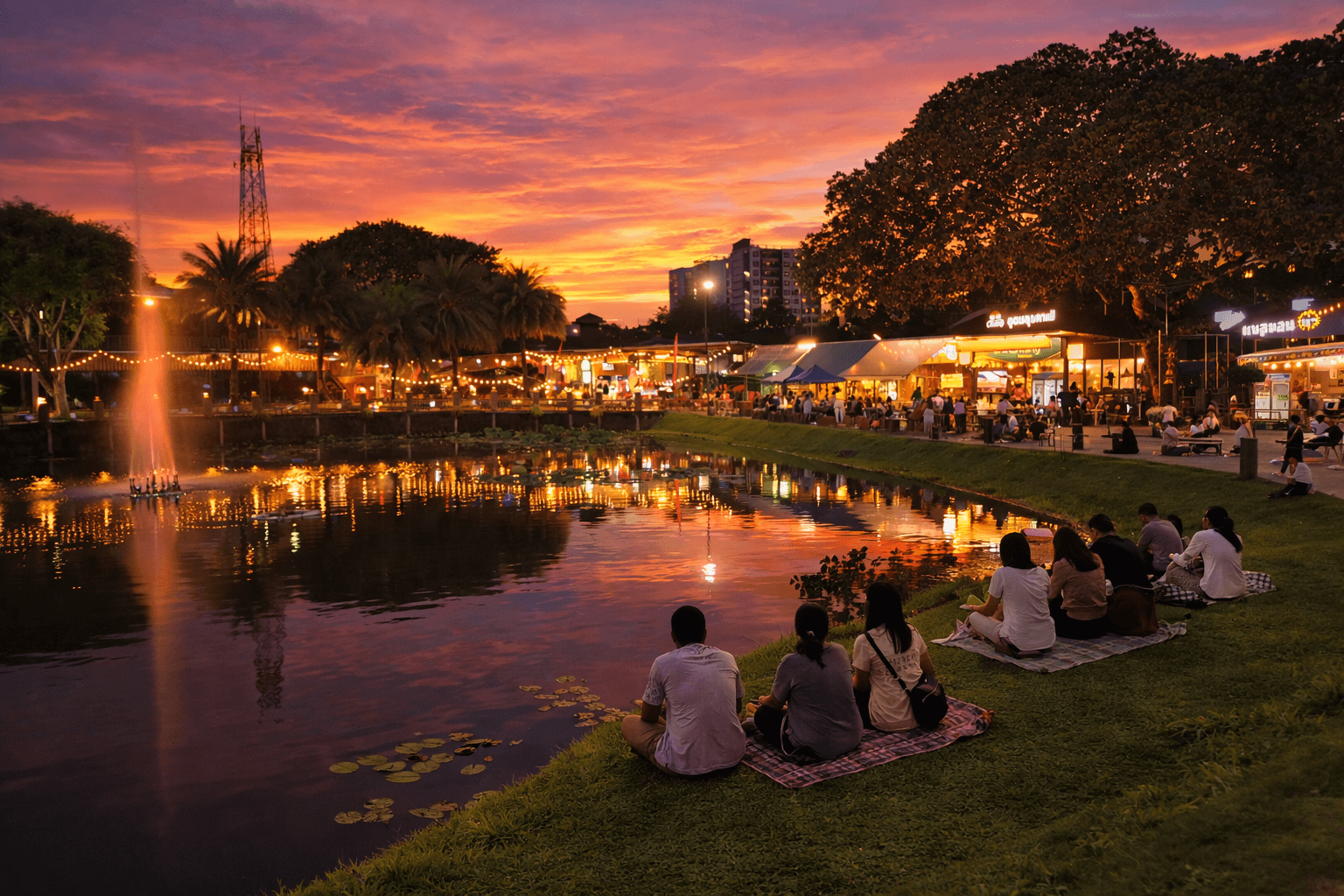
Food stalls are everywhere, fresh fruit vendors line the walkways, and the whole market has a relaxed but energetic atmosphere. There is a large lake nearby and several beer garden areas where people gather in the evening after a hard day’s work, giving it a community feel that most of the markets in Chiang Mai simply do not have.
At the time I was living nearby, I’d often walk across after work. There was always something happening — food grilling, people chatting, music playing. It never felt dull.
Kad Manee offers an incredible variety of grilled meats, local snacks, and noodle stalls, capturing the true flavor profile you expect from the markets in Chiang Mai.
Markets like this are how Chiang Mai actually functions for everyday people.
Kadmanee Market
Type: Local night market and open-air food court
Neighborhood: Thipanet Road, Hai Ya, south of the Old City (near Airport Plaza)
Opening Hours: Daily, roughly 16:00–23:00
How to Get There: About 8 minutes by Grab from the Old City, or a songthaew/tuk-tuk directly to Thipanet Road
What to Buy: Thai street food, grilled skewers, casual sit-down restaurant meals, beer, plus small fashion and handicraft stalls
Price Range: Budget-friendly, local prices with minimal tourist markup
Best For: A relaxed dinner and hangout rather than fast-paced shopping, good for couples or a low-key evening
Why Visit: Built around a small pond with lakeside seating, Kadmanee has a noticeably calmer, more “hang out and eat” atmosphere than the big tourist night markets. It’s a favorite with locals precisely because you can pick your food first, then settle in by the water rather than getting swept along in a crowd.
4. Amulet Market
The Amulet Market is not for everyone, but it can be fascinating if you’re interested in Thai culture.
Honestly, it’s not really my thing—I may have only passed through a couple of times—but I thought it was worth mentioning for anyone who might be interested.
Many vendors specialize in Buddhist amulets, small protective charms worn or carried for luck, protection, or spiritual reasons. Some stalls sell antique pieces, while others offer newly blessed amulets from temples.
You’ll also find stalls selling religious statues, small Buddha figures, incense holders, and other spiritual objects.
Even if you’re not buying anything, the atmosphere is interesting. Serious collectors sometimes gather here to inspect amulets closely, discussing age, materials, and temple origins.
For visitors curious about Thailand’s spiritual traditions, it offers a unique perspective.
Amulet Market (Old City)
Type: Buddhist amulet, talisman, and religious collectibles market
Neighborhood: Old City, near Wat Chedi Luang
Opening Hours: Most active on weekends and around major temple visiting hours; individual vendor stalls vary, so mornings tend to be quieter and more relaxed for browsing
How to Get There: Walkable from most Old City hotels and guesthouses, well-connected by songthaew, sits right near the temple
What to Buy: Buddhist amulets, bronze and wooden pendants, silver casings, amulet accessories, and religious collectibles, prices start as low as ฿10 for casual pieces
Price Range: ฿10 for beginner pieces up to serious collector prices for rare or documented amulets
Best For: First-time visitors and casual browsers, given its central, walkable Old City location compared to the more serious, transport-required collector markets elsewhere in the city
Why Visit: Amulet collecting is a genuine part of Thai Buddhist culture, not just a tourist curiosity, and this Old City market is the most accessible place to see it up close. Vendors are often happy to explain what individual amulets represent and the beliefs behind them, though it’s worth bringing a bit of skepticism (and ideally a magnifying glass) if you’re buying anything positioned as rare or valuable.
5. Baan Haw Muslim Market
Chiang Mai is more culturally diverse than many people expect, and Baan Haw Muslim Market is a good example.
I first came here with an Indian friend who told me he sometimes visits when he misses home because of the way they make their milk and Chai.
This market feels very community-focused. Many of the vendors know each other and might be related, and there’s a strong sense that the market operates within its own network of buyers and sellers.
Food is the highlight here. Chai, milk tea, halal dishes, and samosas reflect the influence of Thai Muslim communities that have lived in northern Thailand for generations.
You’ll also notice architectural differences in the surrounding area, reflecting the cultural identity of the neighborhood.
Visiting markets like this helps reveal a side of the region that travelers rarely see when exploring the markets in Chiang Mai.
Ban Haw Muslim Market (Kad Ban Ho)
Type: Weekly halal and Yunnanese Chinese Muslim morning market
Neighborhood: Charoen Prathet Road, near the mosque and just steps from the Night Bazaar
Opening Hours: Fridays only, roughly 05:00–12:00
How to Get There: A short walk from the Night Bazaar area, on Charoen Prathet Road opposite Ban Haw Mosque
What to Buy: Halal meats, black chicken, sun-dried beef, fermented bean curd, Muslim-style chili paste, herbs, and Yunnanese Chinese specialties like moo nam khang (salted sun-dried pork)
Price Range: Local, everyday market prices
Best For: Food-curious travelers wanting to see a genuinely different side of Chiang Mai’s multicultural history
Why Visit: Run largely by descendants of the Yunnanese Chinese Muslim community who settled in Chiang Mai generations ago, this small Friday-only market sells ingredients and dishes you genuinely won’t find anywhere else in the city, a living piece of the area’s multicultural trade history, tucked just around the corner from the tourist-heavy Night Bazaar.
6. Baan Tawai Woodcarving Village
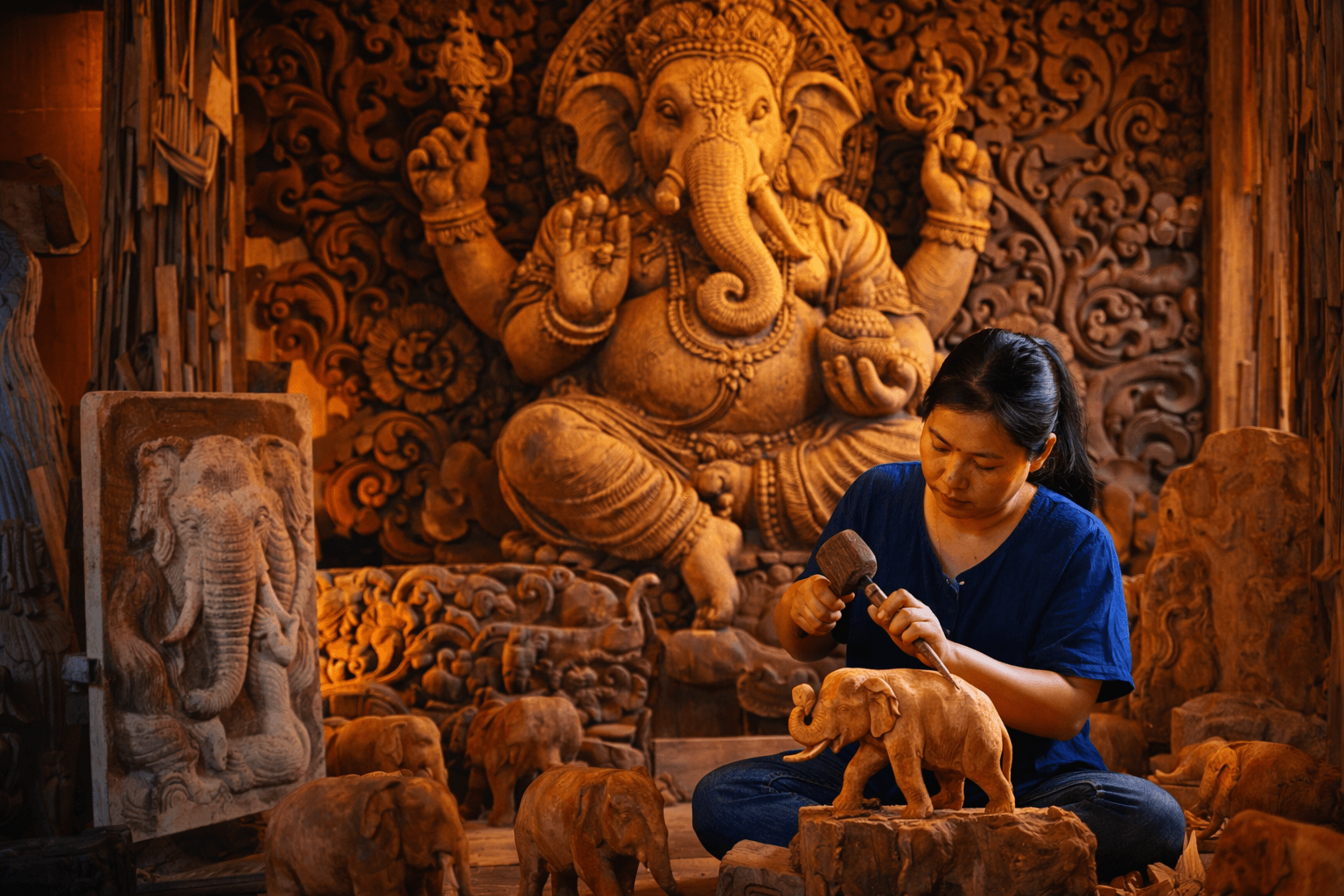
Technically outside the city center, Baan Tawai is one of the most interesting craft markets in northern Thailand.
This is a woodcarving village where many decorative items sold in markets and hotels across Thailand originate. Buddha statues, spirit houses, lanterns, carved panels, and Ganesh sculptures are all produced here.
Hotels, decorators, and wholesale buyers often come here to source pieces directly from workshops.
I used to work in the area at a furniture shop, and you’ll often see hotels featuring statues sourced from this market. Even the famous Chatuchak Market in Bangkok frequently resells many of the handcrafted items made here.
Walking through the village, you’ll see artisans working with wood, carving intricate patterns, and creating crafts sold across authentic markets in Chiang Mai.
If this place appeared on every travel blog, it would likely become overrun with visitors. But for now it remains surprisingly low-profile. Honestly this is one of the best authentic markets in Chiang Mai.
Technically this could be one of the best authentic markets in Chiang Mai because it sources to all of the other markets.
For travelers interested in craftsmanship, design, or even export, it is one of the most unique experiences among the markets in Chiang Mai and the surrounding area.
Before heading out to Baan Tawai, make sure you have enough cash on hand as most vendors here are cash only. Our Thailand ATM guide covers which banks charge the lowest fees and how to avoid the 220 baht per-withdrawal charge before you leave the city.
Baan Tawai (Woodcarving Village)
Type: Handicraft and woodcarving village, dozens of workshops and showrooms
Neighborhood: Hang Dong District, about 12km southwest of Chiang Mai city, just off Hang Dong Road
Opening Hours: Daily, roughly 09:00–17:00 (some workshops open earlier or close later)
How to Get There: Best reached by car, Grab, or as part of a day-trip tour, since it’s outside the city and spread across a village rather than a single market street
What to Buy: Hand-carved wooden furniture, sculptures, lacquerware, antique-style reproductions, and decorative pieces
Price Range: Varies widely, from small souvenir carvings to large furniture pieces costing thousands of baht
Best For: Craft lovers, furniture shoppers, and anyone wanting to watch artisans work rather than just browse stalls
Why Visit: This isn’t a typical market, it’s an entire village built around generations of woodcarving craftsmanship, where you can watch artisans shape raw wood into finished furniture and sculpture in real time. Free to enter and easily worth a half-day, it pairs well with other stops in Hang Dong if you’re making a day of it outside the city.
7. Chang Phuak Gate Market
Sunday Walking Street is one of Chiang Mai’s most famous markets. It’s worth seeing once, but it becomes extremely crowded after sunset.
If you want something that feels more grounded in everyday life, Chang Phuak Gate Market is a more authentic experience.
This open-air market is busy with street food vendors and small stalls selling all kinds of goods.
Unlike standard souvenir spots, the markets in Chiang Mai like this one feature used electronics sections where vendors sell second-hand phones, laptops, and gadgets at reasonable prices.
If you need a cheap phone in Chiang Mai or a temporary replacement, this is the place to go. I have personally bought a phone here when mine died during a trip, which is exactly the kind of practical, no-nonsense experience that separates the markets in Chiang Mai from anything you will find on the tourist circuit.
The food stalls serve grilled meats, hotpot, noodle dishes, and classic Thai street snacks.
Many vendors here don’t speak much English, which is actually a good sign that the market is still serving locals. Having offline Google Translate can help with communication.
It’s busy, energetic, and very much part of daily Chiang Mai life.
Chang Phuak Gate Night Market
Type: Street-side local night food market
Neighborhood: Along the north edge of the Old City moat, right by Chang Phuak (North) Gate
Opening Hours: Daily, roughly 17:00–24:00 (energy peaks in the first couple of hours)
How to Get There: A short walk or tuk-tuk/songthaew from the Old City to the northern gate along the moat
What to Buy: Khao kha moo (braised pork leg rice) from the legendary “Cowboy Hat Lady,” sukiyaki, grilled skewers, khao soi, and Thai desserts
Price Range: Very budget-friendly, many dishes around ฿50–70
Best For: Street food lovers wanting an authentic, mostly local crowd, roughly 70% Thai on any given night
Why Visit: This is the market Anthony Bourdain famously visited for the Cowboy Hat Lady’s khao kha moo, and it’s remained genuinely local ever since, a mix of university students, Old City families, and late-shift workers rather than a tourist-oriented setup. Arrive between 6:30 and 7:30pm for the best selection before popular stalls sell out.
Popular & Touristic Markets in Chiang Mai
While the heart of this guide focuses on the markets in Chiang Mai where residents actually shop and eat daily, it would be incomplete without covering the city’s most well-known tourist-oriented markets. These are the ones you’ll find recommended everywhere online, and for good reason. They are lively, colorful, easy to reach, and a solid starting point for first-time visitors.
Below are the four most popular markets in Chiang Mai: the two famous walking streets, the Night Bazaar, and Warorot Market. I’ve included my own honest experiences with each after years of living in and visiting the city.
1. Sunday Walking Street (Tha Pae Gate)
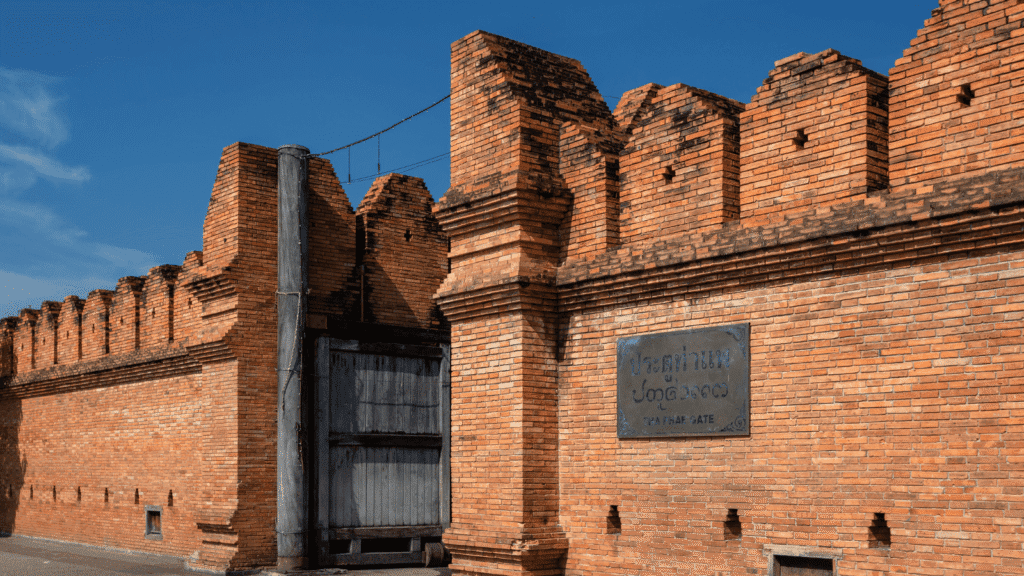
The Sunday Walking Street at Tha Pae Gate is the one of the best authentic markets in Chiang Mai and often the first one visitors experience. Every Sunday from late afternoon until around 10:30 PM, the entire street in front of Tha Pae Gate and inside the Old City is closed to traffic and transforms into a long stretch of stalls.
Even though it’s highly touristy, the Sunday Walking Street remains one of the best markets in Chiang Mai for first-time visitors who want a lively atmosphere and easy shopping in the heart of the Old City.
It is lively, colorful, and tourist-oriented. You will find handmade souvenirs, silver jewelry, Chiang Mai umbrellas, clothing, artwork, and plenty of street food. The atmosphere is energetic with live music, street performers, and thousands of people walking through — and while it does not rank among the best markets in Chiang Mai for everyday life, it is a genuine spectacle worth experiencing at least once.
I usually end up here by accident — either walking around Tha Pae Gate or simply passing through the area. The market is basically unavoidable on Sundays, so I casually stroll through, enjoying the vibrant energy. There are always plenty of places offering foot massages, good desserts, and interesting things to look at while live music plays in the background. While it’s worth visiting once for the experience, it’s important to understand that this is a heavily staged event designed mainly for visitors. Prices are generally higher than at local markets, and many products (especially souvenirs) are mass-produced. This market is also covered in our self-guided walking routes article.
Sunday Walking Street (Tha Phae)
Type: Weekly pedestrian street market, crafts, art, food, and performances
Neighborhood: Ratchadamnoen Road, running from Tha Phae Gate through the Old City toward Wat Phra Singh
Opening Hours: Sundays only, roughly 16:00–24:00 (some stalls start winding down closer to 22:00–23:00)
How to Get There: Walk to Tha Phae Gate from anywhere in the Old City, the road closes to traffic for the market, so it’s pedestrian-only once you’re there
What to Buy: Handmade crafts in ceramic, silk, wood, and metal, clothing, jewelry, silverwork, lacquerware, and a wide range of street food (khao soi, sai oua, mango sticky rice, grilled skewers)
Price Range: Wide range, budget street snacks alongside handmade crafts that can run higher; bargaining is common and expected
Best For: First-time visitors, craft shoppers, and anyone wanting the full atmosphere of live music, street performers, and temple courtyards lit up at night
Why Visit: At roughly 1.1km long, this is the biggest and most iconic walking street in Chiang Mai, and despite its size, it still draws a genuinely strong local crowd, especially after 6pm when Thai families and students arrive post-dinner. The stalls shift character as you walk west from Tha Phae Gate, mass-produced goods near the entrance give way to genuine handmade craftsmanship the further you go, so it’s worth walking the full stretch before buying anything.
2. Saturday Walking Street (Wua Lai Road)
Every Saturday evening, Wua Lai Road (just south of the Old City) becomes the Saturday Walking Street. It’s similar to the Sunday market but generally slightly less crowded and more focused on handicrafts and local products.
Having lived right next door, I can confidently say the Saturday Walking Street is easily one of the best markets in Chiang Mai for a more relaxed evening stroll combined with good local food and handicrafts.
This market has a strong emphasis on silverwork, handmade jewelry, woodcarvings, textiles, and northern Thai crafts. The street also has many food stalls serving grilled items, sticky rice snacks, and northern Thai specialties.
I lived right next door for a while and would often hop on my bike and walk over. This place never gets boring. Once I brought a friend I had just met in a park near Chiang Mai University who was doing a medical internship in the city and had no idea the market existed.
His jaw dropped the moment we arrived and he was genuinely excited as we walked through. The food is wonderful, and while it is not as big as the Sunday Walking Street, that is often a good thing. You can comfortably cover every inch of it without feeling overwhelmed, which is more than you can say for most of the best markets in Chiang Mai on a busy weekend night.
Like the Sunday Walking Street, it is primarily aimed at tourists, but it has a slightly more authentic feel in certain sections. Many of the artisans selling here actually make their own products, making it a better place to buy higher-quality souvenirs compared to the Night Bazaar.
Saturday Walking Street (Wua Lai)
Type: Weekly pedestrian street market, silverware, handicrafts, and street food
Neighborhood: Wua Lai Road, just outside the southern end of the Old City walls
Opening Hours: Saturdays only, roughly 16:00–22:00 (some stalls run later, closer to 23:00)
How to Get There: About a 10–15 minute walk from Tha Phae Gate, or a short Grab/songthaew ride to Wua Lai Road near the south city wall
What to Buy: Northern Thai silverware and lacquerware (this neighborhood is historically Chiang Mai’s silversmith district), handicrafts, clothing, jewelry, and a wide range of street food and snacks
Price Range: Budget street food alongside pricier handmade silver and craft pieces; bargaining is expected
Best For: Visitors who want the Sunday Walking Street experience with noticeably fewer crowds
Why Visit: Wua Lai has been Chiang Mai’s silversmith neighborhood for generations, so the craftsmanship here runs deeper than most souvenir markets, look out for the dazzling Silver Temple nearby. It’s often described as the calmer, more leisurely cousin of the Sunday Walking Street, similar energy and stall variety, but easier to actually stroll through without getting swept along in a crowd.
3. Chiang Mai Night Bazaar
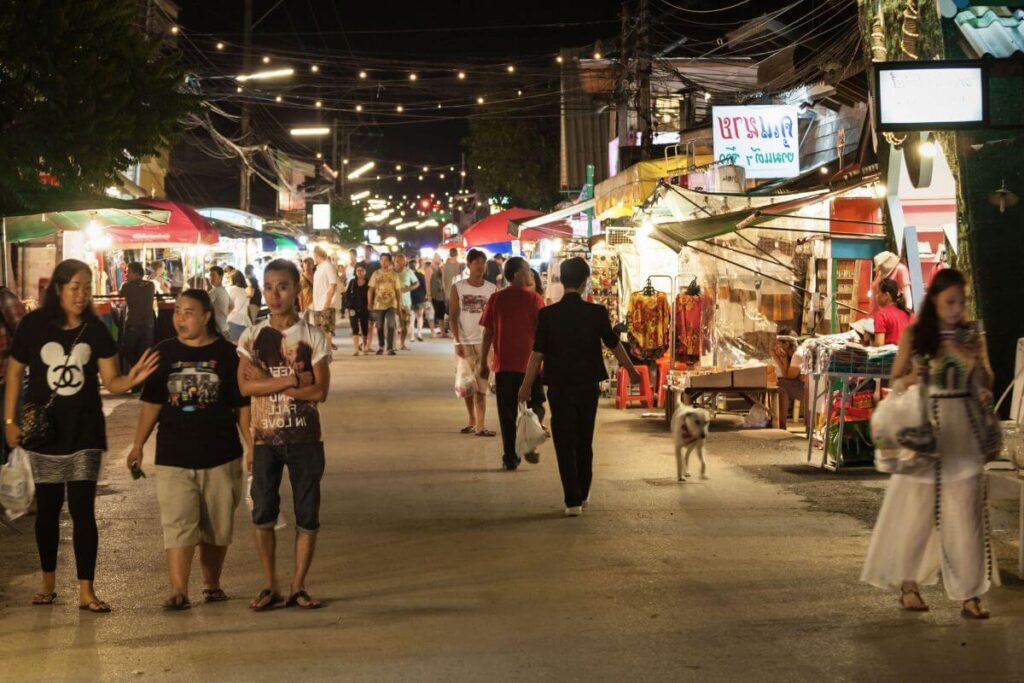
The Chiang Mai Night Bazaar on Chang Klan Road is the city’s original and most established tourist night market. It operates every evening from around 5 PM until midnight, making it the most accessible market for visitors.
After decades of visiting Chiang Mai, I still consider the Night Bazaar one of the best markets in Chiang Mai for convenience, especially if you want to shop and enjoy foot massages any night of the week.
This long market street is packed with stalls selling clothing, bags, souvenirs, Thai silk, handicrafts, and electronics. There’s also a large indoor section with more permanent shops and a food court area with live music playing. The street outside the bazaar stays vibrant well into the night.
Having lived in Chiang Mai on and off for decades, I usually head here for my weekly foot massage. There are loads of good food options, and it’s still my go-to place to pick up a souvenir before heading back home. The place never disappoints — the energy is consistent, and it’s convenient if you want to shop after dinner or during the week when the walking streets aren’t running.
While it’s very commercial and tourist-focused, with most items being imported or mass-produced for visitors, its central location and daily operation make it a reliable choice.
Chiang Mai Night Bazaar
Type: Daily tourist-oriented night market, a cluster of connected zones (street stalls, Kalare, Anusarn)
Neighborhood: Chang Klan Road, east of the Old City
Opening Hours: Daily, roughly 18:00–midnight (busiest between 19:00–22:00)
How to Get There: A short tuk-tuk, Grab, or Songthaew ride from the Old City (5–10 minutes), or a walkable distance from riverside accommodation
What to Buy: Souvenirs, handicrafts, hill-tribe textiles, ready-to-wear fashion, leather goods, lamps, paintings, plus food courts and a beer garden
Price Range: Marked up compared to local markets, bargaining is expected and part of the experience
Best For: Weeknight shopping when the Saturday/Sunday Walking Streets aren’t running, and first-timers wanting an easy, reliable option
Why Visit (Honestly): This is the market that shows up in every guidebook, and it’s genuinely the most convenient option since it runs every single night, unlike the weekend-only walking streets. But it’s more commercial and tourist-priced than the markets in Chiang Mai covered elsewhere in this guide. Treat it as three separate zones rather than one continuous market, the open-air stalls, Kalare (better for food and Muay Thai), and Anusarn, each with a different price tier and purpose.
4. Warorot Market (Kad Luang)
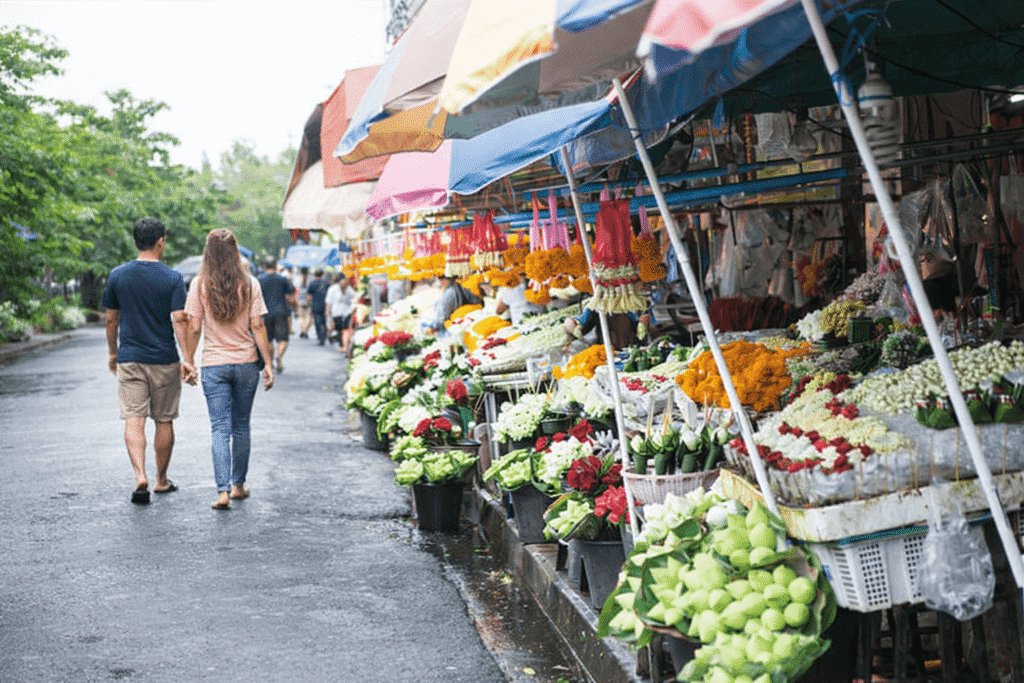
If you want to see where locals actually shop on a daily basis, Warorot Market (also known as Kad Luang) is one of the most important markets in Chiang Mai.
Located near the river, this large two-story market has been operating for decades. Downstairs you’ll find fresh produce, spices, dried goods, flowers, and household items. Upstairs focuses more on clothing, fabrics, and wholesale goods.
This market always reminds me a bit of Chinatown in Bangkok — bustling with wholesale prices on everything from textiles and food to flowers. You name it, they’ve got it. It’s also a great place to grab a coffee or a quick snack if you’re spending the morning in the area.
Many small shop owners and restaurant suppliers come here to buy stock. Prices are noticeably cheaper than in tourist areas, and the atmosphere is that of a proper working Thai market — busy, functional, and full of local life. Right next to it is Ton Lam Yai Market, which is excellent for fresh flowers and more produce. Together, these two markets form the real commercial heart of the city.
On a personal note: I used to source Hmong textiles and bags here and successfully sold a little bit on Etsy before the pandemic. If you’re interested in doing business, finding suppliers, or even exporting goods (textiles, t-shirts, etc.), you can build real relationships with the business owners here — some can even help organize logistics.
Come in the morning for the freshest goods and best energy. It is not as photogenic as the walking streets, but this is where you will see how Chiang Mai truly operates on a daily basis and why it earns its place among the best markets in Chiang Mai for anyone who wants to understand the city beyond the surface.
Warorot Market (Kad Luang) is hands-down one of the best markets in Chiang Mai for experiencing real local life, wholesale prices, and understanding how the city actually functions on a daily basis.
Warorot Market (Kad Luang)
Type: Indoor/outdoor local market, food, produce, textiles, daily goods, with a night market alley next door
Neighborhood: Wichayanon Road, in Chiang Mai’s Chinatown, near the Ping River, next to Ton Lamyai Flower Market
Opening Hours: Indoor market daily ~04:00–18:00 (busiest early morning); an outdoor night market alley runs alongside it roughly 17:00–23:00
How to Get There: A 10-minute walk from Tha Phae Gate, or a short Grab/songthaew ride, look for the yellow clock tower building on Wichayanon Road
What to Buy: Sai oua (Northern Thai sausage), nam prik noom, moo yo, dried fruit and snacks, fresh produce, textiles, clothing on the upper floors, plus household goods
Price Range: ฿20–150 for most food items, generally lower than tourist-oriented markets
Best For: Locals, early risers, food shopping, and long-stay visitors looking to stock up on Northern Thai pantry staples
Why Visit: Chiang Mai’s oldest and largest market complex, this is where the city actually shops, not a market built around tourists. It’s a three-story building: food and daily goods on the ground floor, clothing and inexpensive merchandise above, with the whole area shifting into a lively night market once the sun goes down. Go early for the freshest produce and the most authentic version of the market in full swing.
Culinary Deep Dive: Beyond the Basics
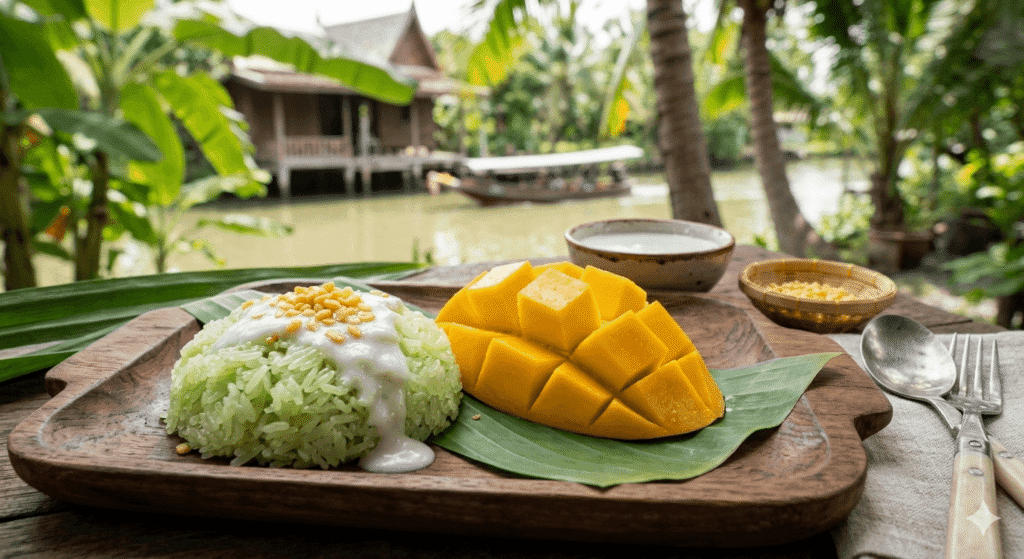
Markets are also one of the best places to experience northern Thai food, and several of the markets in Chiang Mai are worth visiting for the food alone.
One interesting dish worth trying is Sai Oua, a herbal sausage made with pork, lemongrass, kaffir lime leaves, and chili. It’s grilled over charcoal and sliced into bite-sized pieces. The fragrance alone tells you when you’ve found a good stall.
Another regional specialty is Khao Soi Noi, a lesser-known Shan-style noodle dish.
Then there’s Khanom Krok, small coconut pancakes cooked in cast-iron pans. The outside is slightly crisp while the inside stays soft and creamy.
Check out our Culinary Explorations travel style if you prefer to discover cultures through food.
Market Etiquette
The markets in Chiang Mai operate on a few simple principles.
Rules of Engagement
- Bring your own tote bag where possible.
- Respect the 8 AM / 6 PM national anthem when it plays.
- Bargaining is normal for souvenirs but unnecessary at food markets.
Conclusion
Chiang Mai has no shortage of markets. The challenge is not finding them — it is knowing which of the markets in Chiang Mai reflect the genuine heartbeat of the city and which ones were built around the idea of what tourists expect a Thai market to look like.
The famous markets around the Old City are of course still very entertaining, but they represent only one small portion of Chiang Mai’s market culture.
The rest of it unfolds in student markets, fresh produce markets, neighborhood food streets, and wholesale markets scattered throughout the city.
Travelers tend to shop. Explorers tend to understand how places actually work.
I have spent years filtering through the markets in Chiang Mai to understand where residents really go and how the city functions beyond the obvious attractions.
If choosing between two iconic destinations it often comes down to your personal travel style, as exploring Chiang Mai vs Pai reveals distinct differences in pace, atmosphere, and local attractions.
If you’d like help navigating it all, we can arrange private local guides and drivers who’ll pick you up directly from your hotel so you can explore these places with someone who understands the city and its markets inside out. Just Contact us here.
Prefer a quick chat?
Message us directly on WhatsApp
If you already have an idea of your trip, send us a message — we’ll guide you through the best options for your travel style.
Chat on WhatsAppMarkets in Chiang Mai: FAQ
What are the best markets in Chiang Mai for authentic experiences?
The best markets in Chiang Mai are the ones residents use daily rather than the spots built around tourist foot traffic. Top picks among the markets in Chiang Mai include Muang Mai Market for fresh produce, Malin Plaza for student shopping and street food, Kadmanee Market for neighborhood atmosphere, and Ban Haw Muslim Market for community-focused culinary experiences.
Are Chiang Mai night markets worth visiting for authentic food?
Yes, but it depends on what you are looking for. Tourist favorites like the Night Bazaar and Sunday Walking Street are good for first-time visitors, but among the markets in Chiang Mai, the smaller produce markets, student markets, and neighborhood spots are where you’ll find genuine everyday life, the ones residents actually return to each week.
Where do locals shop among the markets in Chiang Mai?
Locals shop at produce hubs like Muang Mai, student-focused spots near Chiang Mai University, neighborhood areas such as Kadmanee, and community markets throughout the city. These are some of the best markets in Chiang Mai for practical daily shopping, fresh ingredients, and food that reflects how the city actually eats.
What are the best markets in Chiang Mai for cheap food and shopping?
Malin Plaza is one of the best markets in Chiang Mai for affordable food, clothing, accessories, and everyday goods. Serving mainly students, vendors keep prices competitive and designs original, making it a strong pick among markets in Chiang Mai for overall value and a genuinely local atmosphere.
What food should you try at the markets in Chiang Mai?
At the best markets in Chiang Mai, look for sai oua (Northern Thai sausage), khao soi, and khanom krok. Finding these dishes is usually a sign you’ve reached a market that serves real local demand rather than tourist tastes, giving you a more honest and memorable eating experience.
Which markets in Chiang Mai are best for crafts and wholesale goods?
Baan Tawai Woodcarving Village is one of the most interesting craft hubs near the city and one of the best markets in Chiang Mai for understanding where handmade goods actually come from. You’ll find carved woodwork, statues, lanterns, and decorative items sourced directly from makers before they reach the tourist-facing stalls at the weekend walking streets and Night Bazaar.
What is the biggest market in Chiang Mai?
Warorot Market (Kad Luang) is widely considered the biggest and oldest of the markets in Chiang Mai. It’s a three-story complex sitting alongside the Ton Lamyai Flower Market, covering everything from fresh produce and Northern Thai food on the ground floor to clothing and household goods above, with a lively night market taking over the surrounding streets each evening.
Where did Anthony Bourdain eat in Chiang Mai?
Anthony Bourdain famously visited the Chang Phuak Gate Night Market, one of the markets in Chiang Mai known for its “Cowboy Hat Lady” stall serving khao kha moo (braised pork leg rice). The market has remained genuinely local since, still drawing a mostly Thai crowd rather than catering primarily to tourists.

About the author
Written by Dee, Thai-born founder of Off Path Thailand. My life changed after renting a scooter in Chiang Mai nearly a decade ago. I still remember the moment my jaw dropped at the natural beauty around me — riding into the distance with mountains on both sides felt more alive than any PS4 game I had ever played. Since that day, I’ve been hooked on this kind of travel — because there’s so much wonder to discover in Thailand’s quiet, hidden places. I’ve spent close to ten years exploring these off the beaten path corners and helping others experience parts of the country that feel far more meaningful than the usual tourist stops. About the founder
If you want to explore more peaceful destinations like this, start with our Northern Thailand hidden gems guide and see how Chiang Dao fits into a slower, more authentic journey through the region.